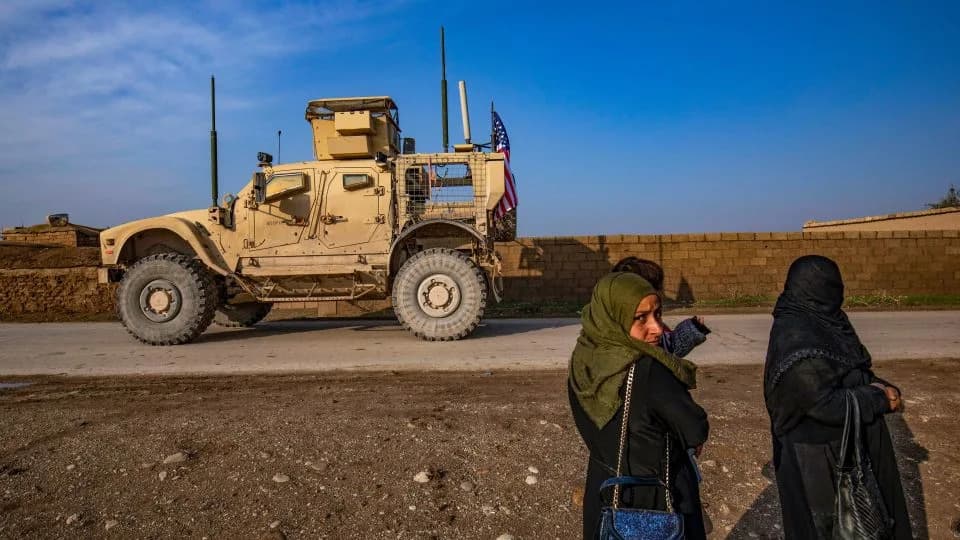
Analysts say 2025 disproved the narrative that the U.S. was withdrawing from the Middle East: American diplomatic and military engagement helped secure a Gaza ceasefire and the return of most Israeli hostages. Joint operations with Israel and regional partners reportedly degraded Iranian proxy networks and nuclear-related capabilities. Experts warn the ceasefire remains fragile and that sustained U.S. involvement will be necessary to hold gains into 2026.
Hostages Freed, Iran Struck, Ceasefire Holds — How 2025 Undermined Claims the U.S. Was Leaving the Middle East

Israeli hostages freed, Iran hit, ceasefire held — 2025 shattered idea that US was exiting the Middle East
For years Washington publicly discussed reducing its footprint in the Middle East. Analysts cited by Fox News Digital argue that 2025 delivered the opposite: American political and military power reshaped the regional balance.
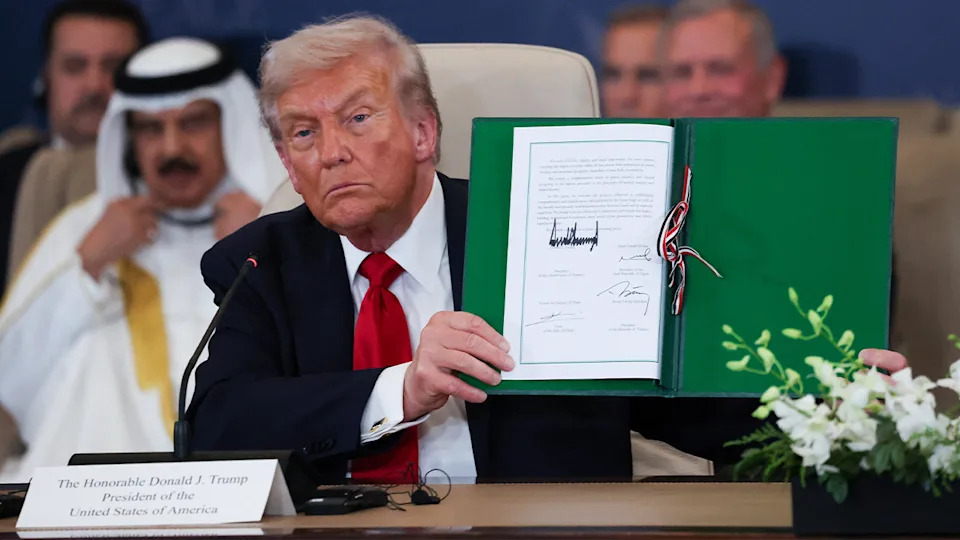
President Donald Trump poses with the signed agreement at a world leaders' summit on ending the Gaza war, amid a U.S.-brokered prisoner-hostage swap and ceasefire deal between Israel and Hamas, in Sharm el-Sheikh, Egypt, Oct. 13, 2025.
U.S. Reasserts Influence
Blaise Misztal, vice president for policy at the Jewish Institute for National Security of America (JINSA), said the year confirmed a long-standing strategic lesson. "2025 underscored what Middle East watchers have long known...that strength is the currency of the realm and there is no substitute for U.S. leadership," he said.

Israeli hostages released in the Trump-brokered ceasefire deal met with U.S. Special Envoy Steve Witkoff and Jared Kushner.
Ceasefire and Hostage Deal
Analysts credit the Trump administration with brokering a ceasefire that ended the two-year war in Gaza and secured the return of nearly all Israeli hostages. The agreement reportedly left only the body of Ran Gvili in Hamas custody. The deal involved complex regional coordination, prisoner exchanges and visits by President Donald Trump to Israel and Egypt to finalize terms.
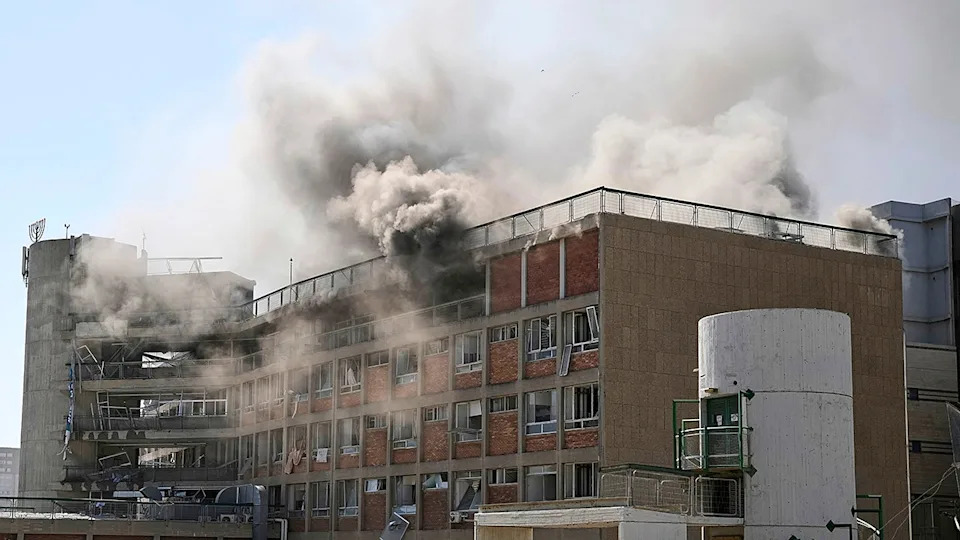
Smoke rises from a building of the Soroka hospital complex after it was hit by a missile fired from Iran in Be'er Sheva, Israel, June 19, 2025.
"Without President Trump’s intervention, this could have lasted much longer, or ended in tragedy," said Israeli analyst Nadav Eyal, who credited U.S. insistence and regional mediation for the breakthrough.
Military Pressure and Coordinated Operations
Officials and analysts described the outcome as the product of combined diplomatic pressure and military action. They point to joint Israeli-U.S. operations — named in reporting as Operations Rising Lion and Midnight Hammer — Israeli strikes across the region, and an asserted U.S. strike on elements tied to Iran’s nuclear program as factors that weakened Tehran’s ability to support proxies and pressured Hamas to negotiate.
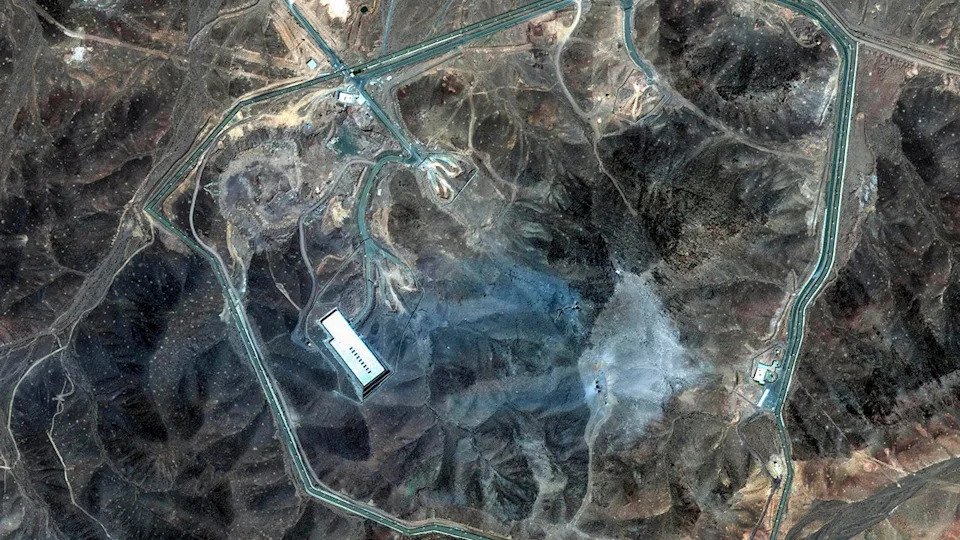
This satellite image provided by Maxar Technologies shows damage at the Fordow enrichment facility in Iran after U.S. strikes, June 22, 2025.
Shifts in Regional Balance
Reporting says an Israeli victory over Hezbollah and the collapse of the Assad regime on Dec. 8 shifted power dynamics, contributing to momentum that carried into 2025. The campaigns highlighted close U.S.-Israeli coordination and, according to analysts, significantly degraded Iran’s proxy network and some nuclear-related capabilities.
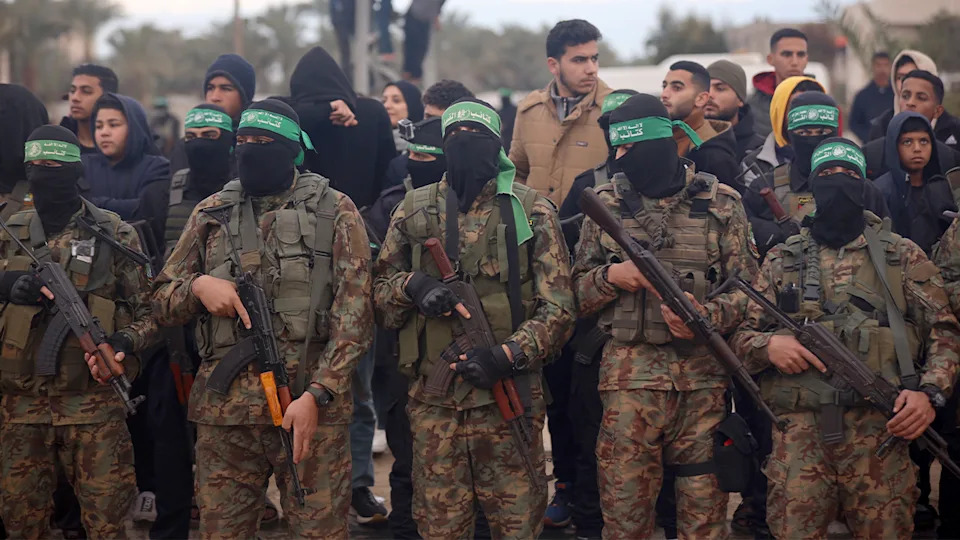
Hamas terrorists stand in formation to watch the handover of three Israeli hostages to a Red Cross team in Deir el-Balah, central Gaza, on Feb. 8, 2025.
Iran’s Uncertain Future
Analysts warned Iran faces deep uncertainty. Nadav Eyal said Tehran will likely attempt to rebuild influence after losing much of its proxy infrastructure and parts of its nuclear program, but that a battered economy and domestic dissatisfaction raise questions about the regime’s stability into 2026.
Hamas After 2025
While analysts argue Hamas suffered heavy military losses and territorial setbacks in 2025, they also note the group was not eliminated as an armed actor. "There will be some sort of presence of Hamas," Eyal said, adding the challenge will be reducing its armed power and influence over time.
Risks Ahead
Experts caution the ceasefire is fragile. Misztal warned sustained U.S. engagement will be required to preserve the gains of 2025. He predicted adversaries may test boundaries in 2026 — from Iran probing U.S. and Israeli resolve to extremist groups seeking spectacular attacks — and said the region’s stability depends on continued diplomatic and military attention.
Note: This account summarizes analysis and claims reported by media and quoted analysts. Some operational details and attributions derive from those sources and reflect the perspectives of the officials and commentators cited.
Help us improve.