Mercury will be visible in the pre-dawn eastern sky beginning Nov. 25, 2025, with the best viewing on Dec. 7 at its greatest western elongation. The planet orbits the Sun in 88 days at roughly 29 miles per second and endures extreme temperatures from about -290°F to 800°F. Observers should look low on the eastern horizon shortly before sunrise, use binoculars or a small telescope, and take care never to point optics at the Sun.
Catch Mercury Before Dawn — Rare Morning Viewing Peaks Dec. 7, 2025

Mercury, the smallest and fastest planet in our solar system, will make a rare pre-dawn appearance this late November and into December. Starting Nov. 25, 2025, the planet will be far enough west of the Sun to rise above the eastern horizon shortly before sunrise; the best opportunity comes on Dec. 7 when Mercury reaches its greatest western elongation.
How to spot Mercury
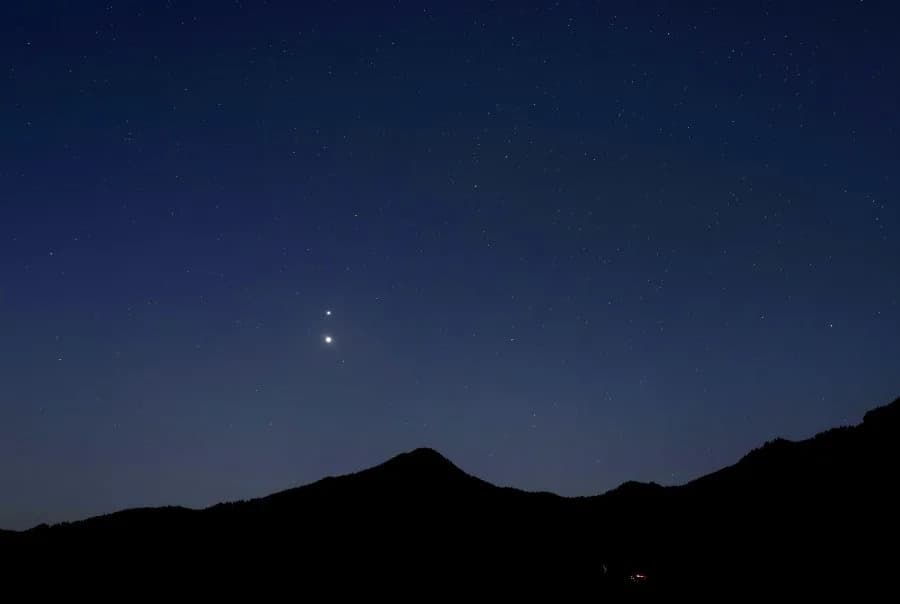
Look low toward the eastern horizon in the half hour before local sunrise. Mercury will appear as a small, bright point of light low in the sky. Venus will be much brighter and easier to spot; use it as a reference point but remember Mercury will sit much lower and closer to the Sun.
Tips for observing:
- Use binoculars or a small telescope to improve your chances — Mercury is often faint to the naked eye.
- Find a clear, unobstructed eastern horizon (no buildings, trees or hills).
- Never point binoculars or a telescope toward the Sun. Close your optics well before sunrise to avoid eye damage and equipment harm.
- Plan to observe shortly after Mercury rises: the viewing window is brief because dawnlight quickly washes it out.
What makes Mercury interesting
Mercury orbits about 36 million miles from the Sun on average and completes an orbit in just 88 days. It travels at roughly 29 miles per second, compared with Earth’s ~18.5 miles per second. Because Mercury has virtually no atmosphere, the sky there remains black even under a blazing Sun.
Surface temperatures on Mercury vary dramatically: daytime highs can reach about 800°F, while nights can plunge to roughly -290°F. Mercury’s slow rotation combined with its orbital motion produces a long solar day of about 176 Earth days — longer than its year — so the Sun can appear to rise, set and rise again.
The surface is heavily cratered from billions of years of impacts. Some scientists have even proposed that impact processes could create tiny diamonds in surface materials, though that idea remains speculative. Mercury also has a weak magnetic field; interactions with the solar wind can create dynamic phenomena sometimes described as magnetic "tornadoes," funneling charged plasma toward the surface.
When to watch
The morning apparition begins around Nov. 25, 2025, with Mercury becoming increasingly visible before dawn through December. The peak occurs on Dec. 7 at greatest western elongation — that’s when Mercury rises earliest and climbs highest above the horizon for this apparition. After that it will gradually sink back toward the Sun and fade from view.
Enjoy this rare chance to add Mercury to your observing list. With a clear eastern horizon, a little patience, and safe use of optics, you can see the closest planet to the Sun from the comfort of Earth.
Safety reminder: Never look directly at the Sun with your eyes or through optical equipment. Always close or cover binoculars and telescopes before sunrise.
Help us improve.