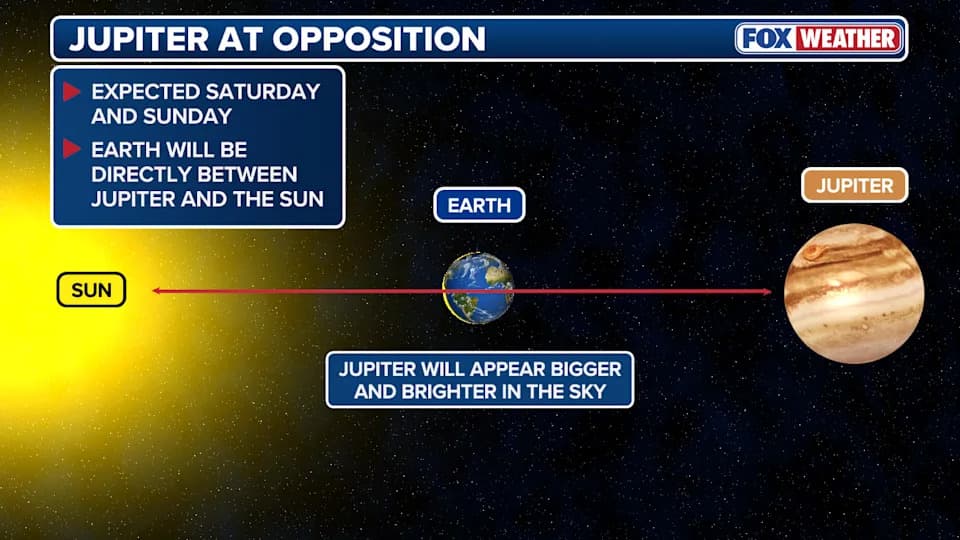
Jupiter reaches opposition on Jan. 10, 2026, when Earth lines up directly between the planet and the Sun, producing its brightest and largest appearance of the year. At magnitude −2.7, Jupiter will be one of the brightest objects in the night sky and will be visible in Gemini from dusk through dawn for much of January. Its closest approach occurs on Jan. 9 at about 393 million miles (≈633 million km), since geometric opposition and minimum distance don’t always coincide.
Jupiter’s Brightest, Biggest Appearance Of 2026 Peaks Jan. 10 — When And How To See It
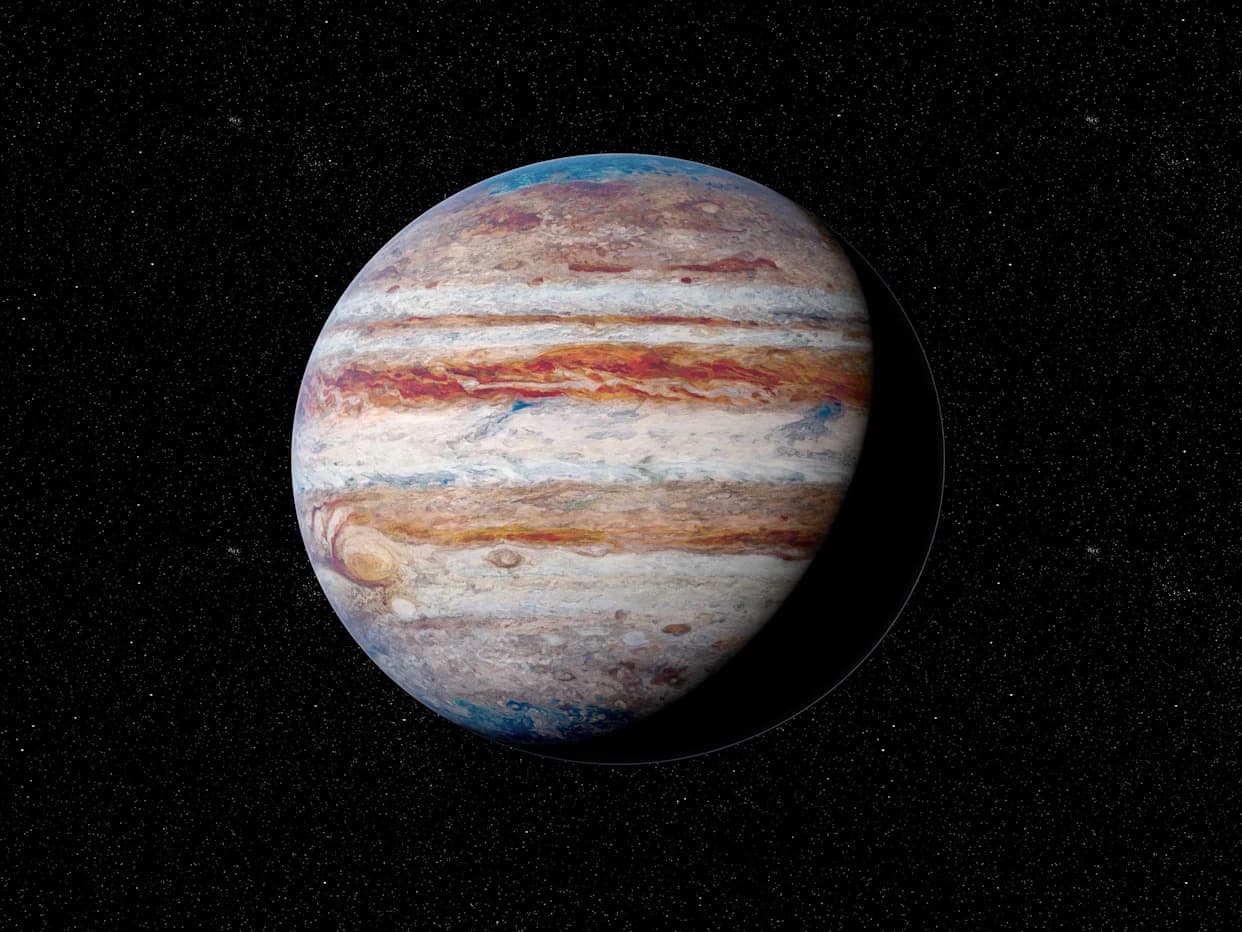
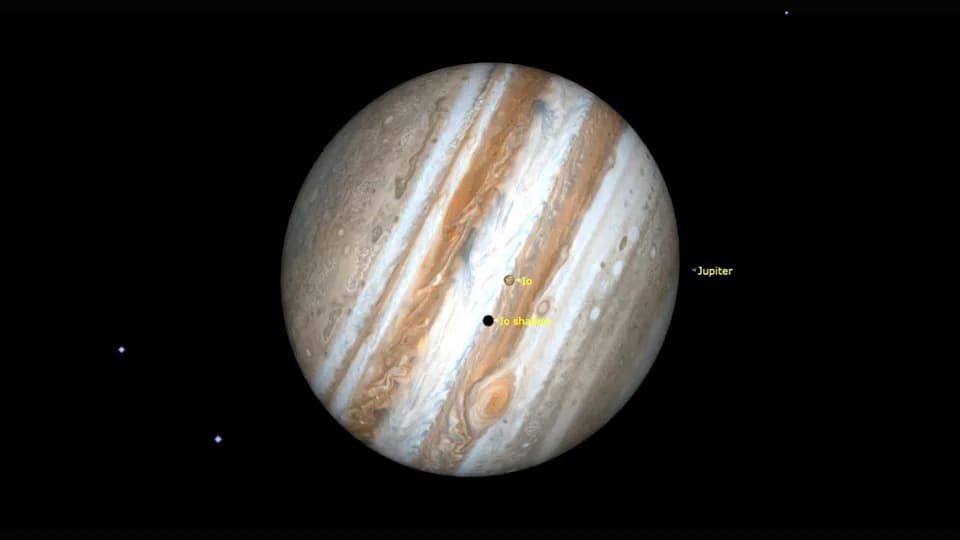
SCIEPRO/SCIENCE PHOTO LIBRARY / Getty ImagesIllustration of Jupiter in the night sky.
Jupiter will reach opposition on Saturday, January 10, 2026, producing its largest and brightest appearance of the year as Earth lines up between the gas giant and the Sun.
What You’ll See
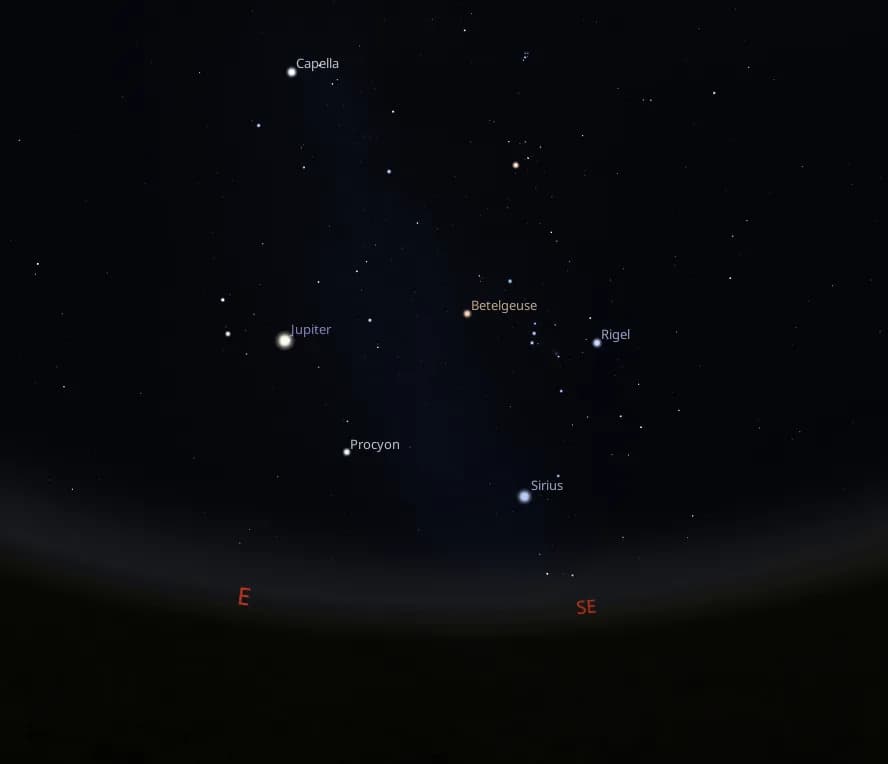
At opposition Jupiter will shine at an apparent magnitude of −2.7, making it one of the brightest objects in the night sky after the Moon and Venus. The planet will sit in the constellation Gemini and will be visible from dusk through dawn for much of January.
Timing And Distance
Although opposition occurs on Jan. 10, Jupiter’s closest approach to Earth happens one day earlier, on Jan. 9, at roughly 393 million miles (≈633 million kilometers). Because Earth and Jupiter travel in slightly tilted, elliptical orbits, the moment of exact geometric alignment (opposition) does not always match the moment of minimum distance.
Where To Look
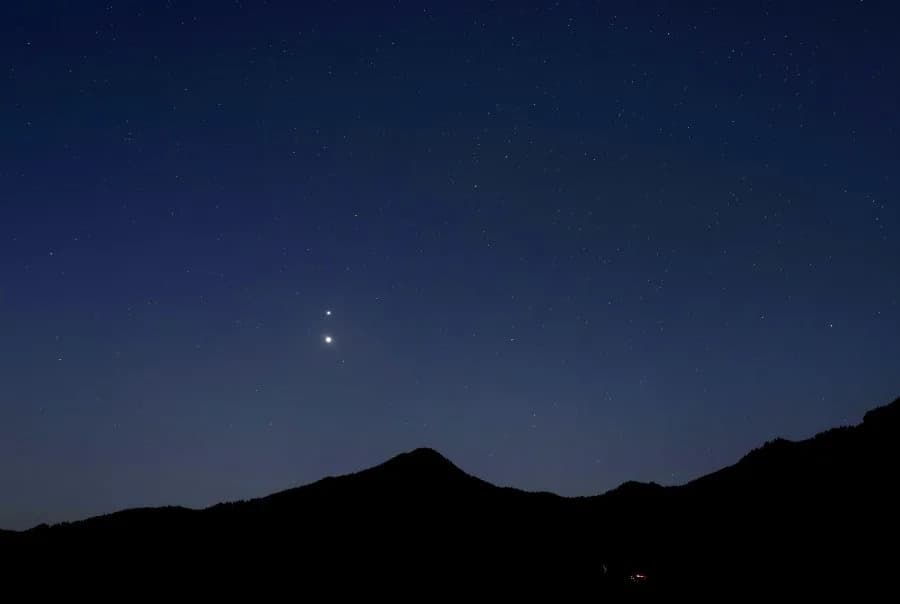
After sunset, look toward the eastern sky to spot a steady, bright “star” rising in Gemini. Jupiter will remain prominent through the night and, for most of January, will set shortly before sunrise. This extended visibility gives skywatchers many opportunities to observe the planet.
Tips For Observing
- Naked Eye: Jupiter is easy to find thanks to its brightness.
- Binoculars: You may see the four largest moons (the Galilean moons) as tiny points of light near the planet.
- Telescope: A small telescope will reveal cloud bands and larger details in Jupiter’s atmosphere.
- Plan Ahead: Find a dark, open horizon to the east and give your eyes ~15 minutes to adapt to the dark for best viewing.
Why It Matters
Jupiter takes about 12 years to orbit the Sun, so it comes to opposition roughly every 13 months. Because of that schedule, there wasn’t an opposition during the previous calendar year, making this January’s appearance a particularly good chance to catch the planet at its 2026 peak.
Whether you’re an experienced amateur astronomer or just enjoying the night sky, the Jan. 9–10 window offers a stunning view of the solar system’s largest planet.
Help us improve.