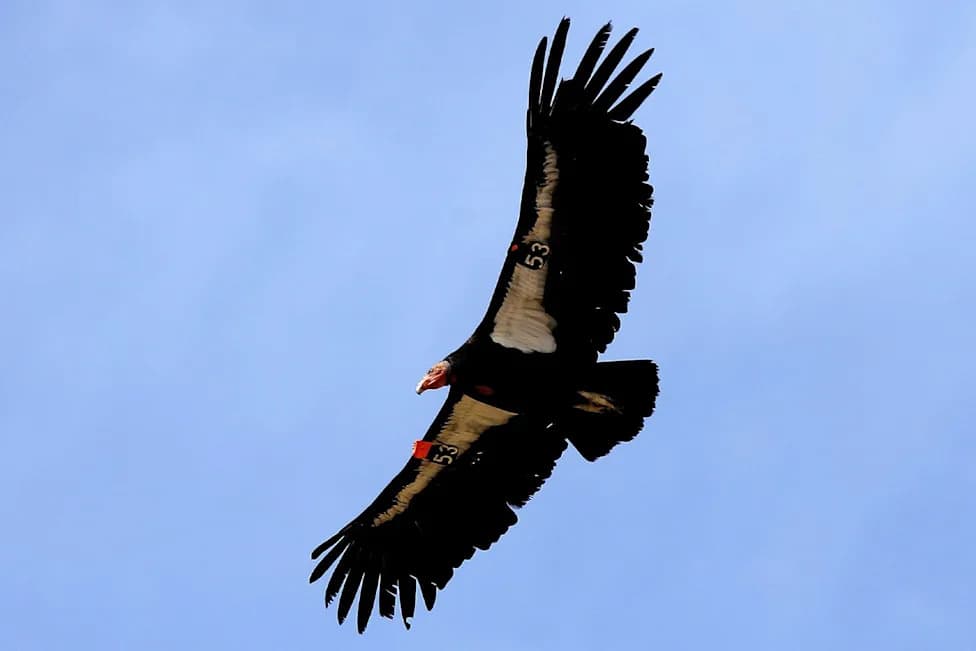
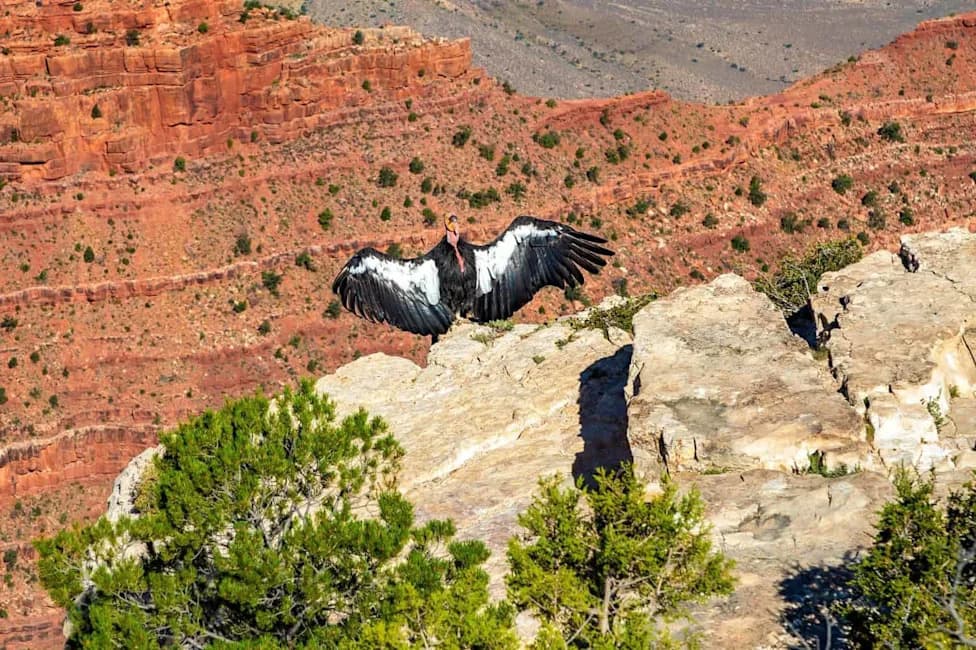
A California condor identified as B9 was observed in Oregon for the first time since 1904, completing an estimated 380-mile loop over four days. Released last year by the Yurok Tribe, B9 averaged nearly 100 miles per day and was seen near Medford, Cave Junction and Brookings. The Yurok Tribe now reports 23 wild condors, and recent nesting activity—though the egg did not hatch—signals ongoing progress in restoration efforts.
California Condor Spotted In Oregon For First Time Since 1904 — Young Condor B9’s 380‑Mile Journey
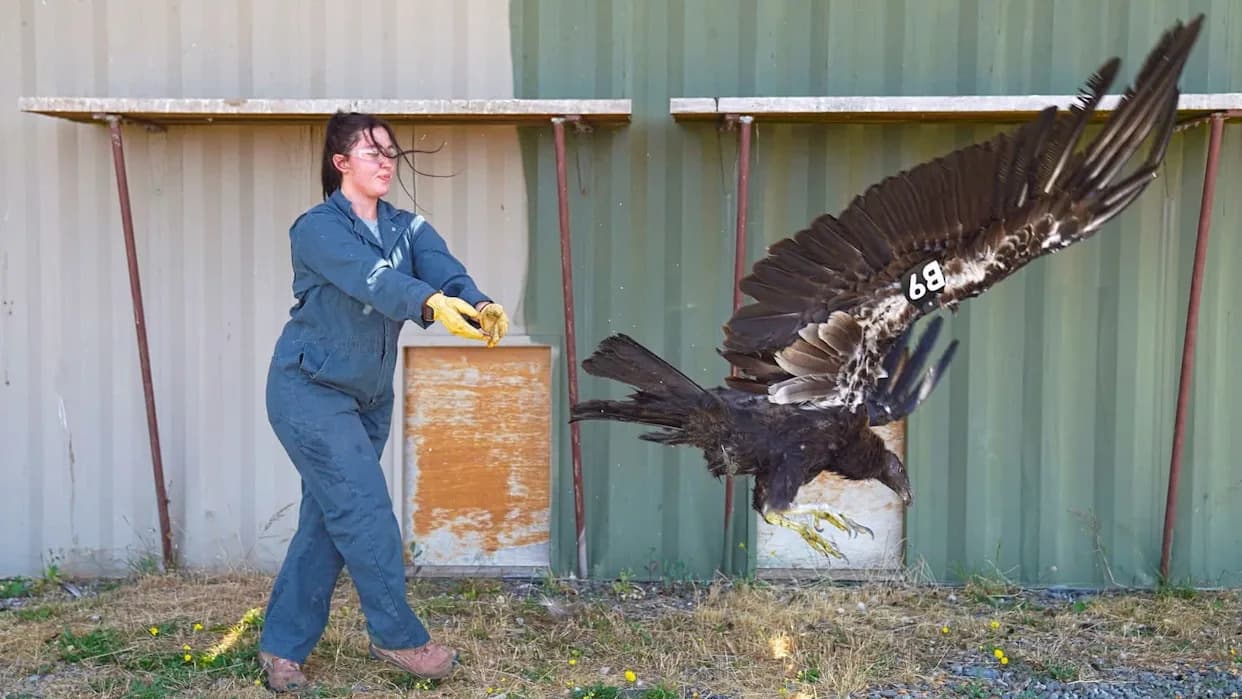
Photo Credit: Yurok Tribe
A free-flying California condor was documented in Oregon for the first time since 1904, a rare and hopeful sign for the species' long-term recovery.
The bird, known as B9, is just over two years old and was released into the wild last year through the Yurok Tribe's condor restoration program. Over four days last month she completed an approximately 380-mile loop, averaging nearly 100 miles per day.
B9 flew north from Redwood National Park, passed near Redding, and then crossed into Oregon. Observers reported sightings near Medford, Cave Junction and Brookings as the condor explored new terrain.
California condors were pushed to the brink of extinction by the 1980s, and the remaining wild birds were captured for a captive-breeding program. Since then, tribal nations, wildlife agencies and conservation groups have worked together to rebuild populations and restore the species to parts of its historic range.
Local Restoration Progress
The Yurok Tribe has been releasing condors since 2022. Today the tribe reports 23 condors living in the wild, all of which have passed recent health checks—an encouraging milestone for the fledgling population.
“She flew almost 100 miles per day,” Yurok Tribe Wildlife Department Director Tiana Williams Claussen told Oregon Public Broadcasting, adding that B9 was “really utilizing the landscape the way that only a condor can.”
In March, two Yurok condors nested in a redwood cavity and laid the Northern California flock's first egg; the egg did not hatch, but the event was still regarded as a meaningful step in the recovery effort.
Williams Claussen noted that B9’s long-range movement may foreshadow natural range expansion by other condors, since the species is highly social and young birds often explore with or follow companions.
Why This Matters
B9’s appearance in Oregon is more than a singular sighting: it demonstrates that released condors are behaving much like wild birds—dispersing, exploring, and testing available habitat. Conservationists say such movements are essential to reestablishing the species across its historic territory.
What to Watch For: researchers and wildlife managers will continue tracking condor movements, monitoring health, and supporting habitat needs to encourage safe, long-term recolonization.
Help us improve.