The northern spotted owl population in British Columbia has nearly collapsed, with the last confirmed sighting recorded in 2023. Primary threats are the wholesale loss of big‑tree old‑growth (less than 3% of productive old growth remains) and competition from invasive barred owls. A Langley breeding program holds about 40 owls and has been releasing birds since 2022 with mixed results. Recovery remains possible but requires rapid habitat protection, restoration and effective barred‑owl management.
Over 1,000 Northern Spotted Owls Have Disappeared From Canada — Rescuers Race to Save the Species
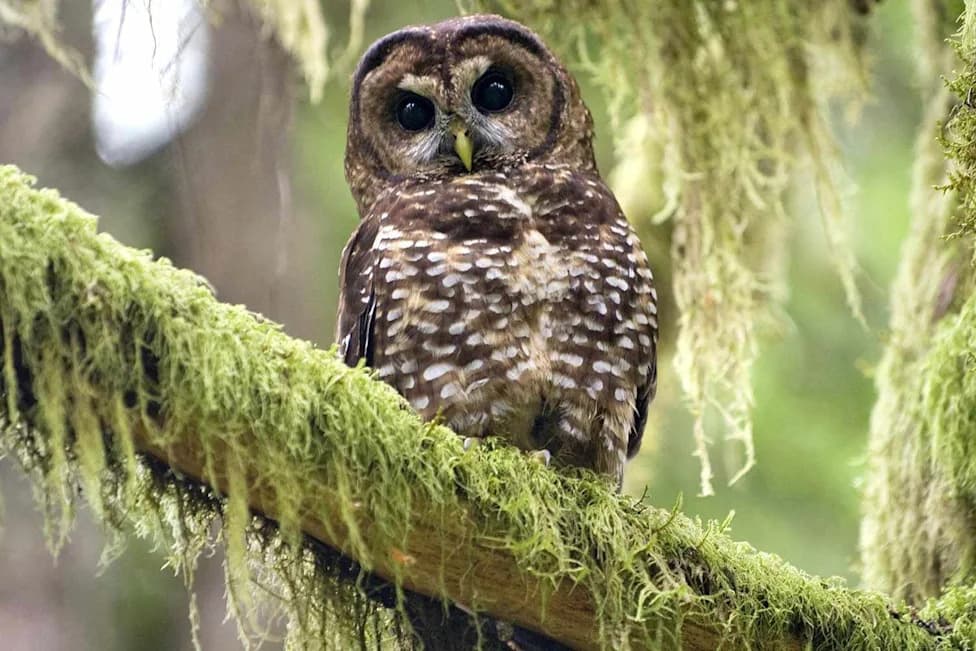
July 12, 2010 - Roseburg, Oregon, U.S - An endangered wild northern spotted owl perches in a tree in an old growth section of forest on Bureau of Land Management property near Roseburg.Credit: Robin Loznak/ZUMA Wire/Shutterstock
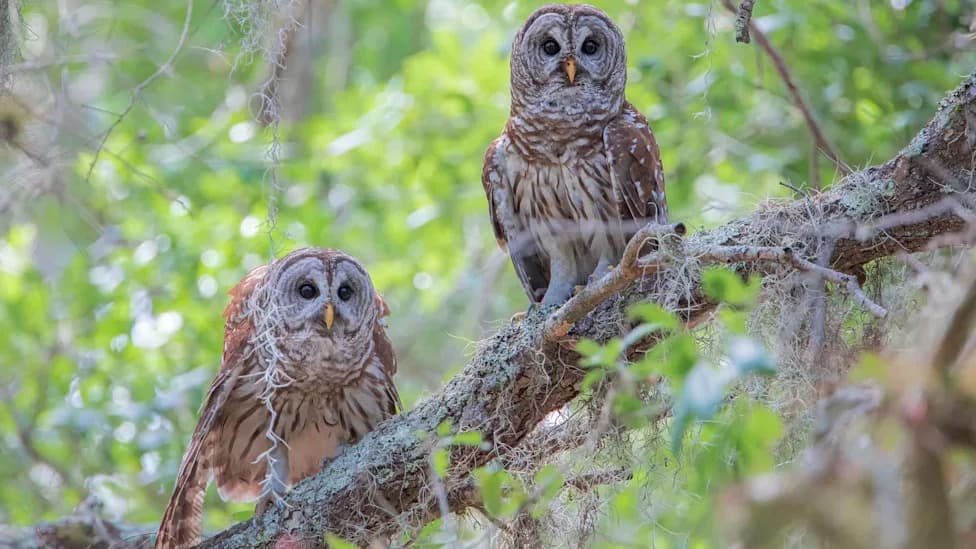
The northern spotted owl population in British Columbia has all but vanished after decades of habitat loss and increasing pressure from the invasive barred owl. Though a small captive-breeding effort and release program continues, the species’ future in Canada depends on rapid habitat protection and careful management of barred owls.
Where the Owls Stand
It is unclear whether any northern spotted owls still complete their full life cycles in the wild in British Columbia. The last confirmed sighting recorded in federal species records dates to 2023. Once estimated at roughly 1,000 birds in southwestern B.C., the Canadian population has declined to the brink of local extinction.
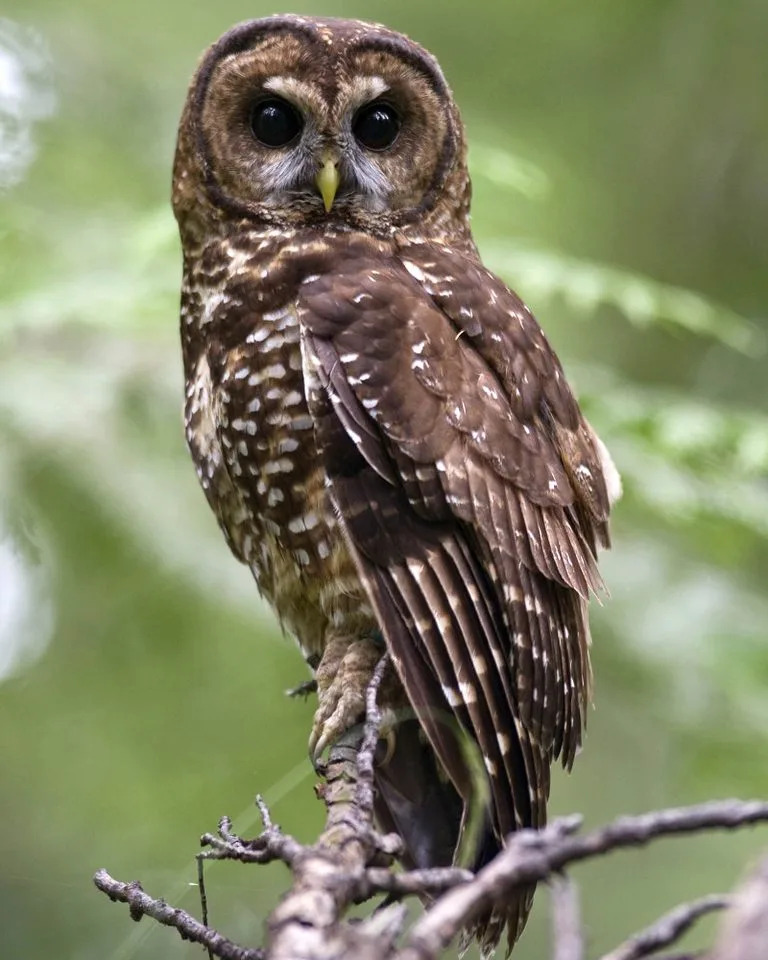
July 12, 2010 - Roseburg, Oregon, U.S - An endangered wild northern spotted owl perches in a tree in an old growth section of forest on Bureau of Land Management property.Credit: Robin Loznak/ZUMA Wire/Shutterstock
Primary Threats
Conservationists identify the loss of mature, big-tree old-growth forest as the main driver of decline. A 2020 assessment, "Last Stand for Biodiversity," found that less than 3% of British Columbia’s most productive big-tree old-growth remains after a century of logging. Fragmentation forces juveniles into second-growth stands and clear-cuts that are unsuitable for hunting and leave them exposed to predators.
Competition from the barred owl — a larger, more aggressive species that occupies the same habitat and prey base — has compounded the crisis. In the U.S., a 2024 management plan proposed the removal of more than 350,000 barred owls over 30 years to help spotted owl recovery; Canada has carried out limited removals and relocations, but not at that scale.
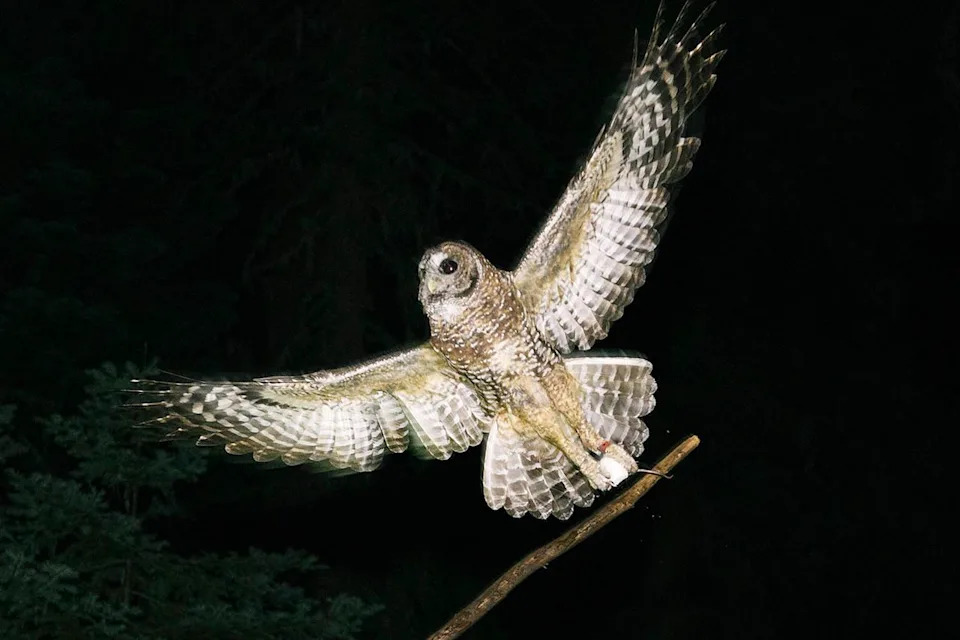
A female northern spotted owl catches a mouse on a stick held by Mark Higley, wildlife biologist for the Hoopa Valley Tribe on the Hoopa Valley Reservation on Aug. 28, 2024.Credit: The Washington Post via Getty
Conservation Efforts Underway
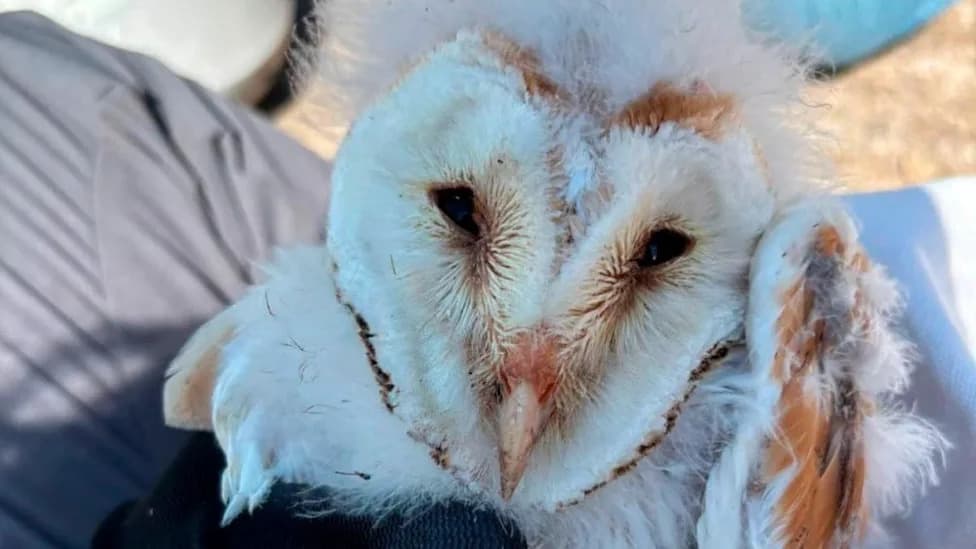
The Northern Spotted Owl Breeding Program in Langley, B.C., currently cares for roughly 40 owls and has been releasing birds since 2022. Results have been mixed: some released birds have survived and dispersed, while others were later found dead. Managers say the effort is still evolving and describe captive breeding and release as an act of desperation to buy time while habitat protections and restoration proceed.
"It is an act of desperation and we have to hope like heck that it works because … the only other hope would be owls coming back from the States," said Joe Foy of the Wilderness Committee.
Cultural and Community Response
For the Spô'zêm (Spuzzum) First Nation, who live in the region that was home to the last known wild owls, the birds are cultural ancestors and "knowledge keepers." The Spô'zêm have partnered with the provincial government on recovery efforts since 2022 and are active participants in planning and stewardship.
Outlook
Biologists say recovery is still possible if British Columbia secures and restores enough suitable old-growth habitat and implements effective barred-owl management. That window is shrinking: success depends on coordinated conservation action, sustained funding, and strong habitat protections to give captive-bred and wild recolonizing birds a chance to survive and reproduce.
Help us improve.