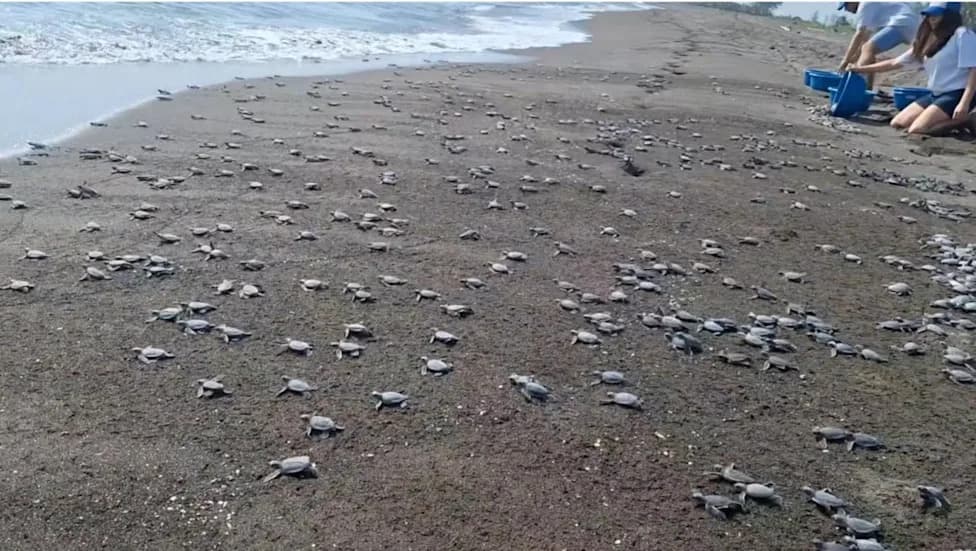
Two olive ridley sea turtles nested on Southern California beaches in late September, marking the first recorded natural sea turtle nesting on the U.S. West Coast. NOAA and the Aquarium of the Pacific attribute the events to a strong El Niño, unusually warm coastal waters, and possible navigational errors. Scientists say the events extend the species' nesting range roughly 700 miles north and could lead hatchlings to imprint on California beaches, potentially establishing a new nesting lineage.
Historic First: Two Olive Ridley Sea Turtles Nest on U.S. West Coast Amid Strong El Niño
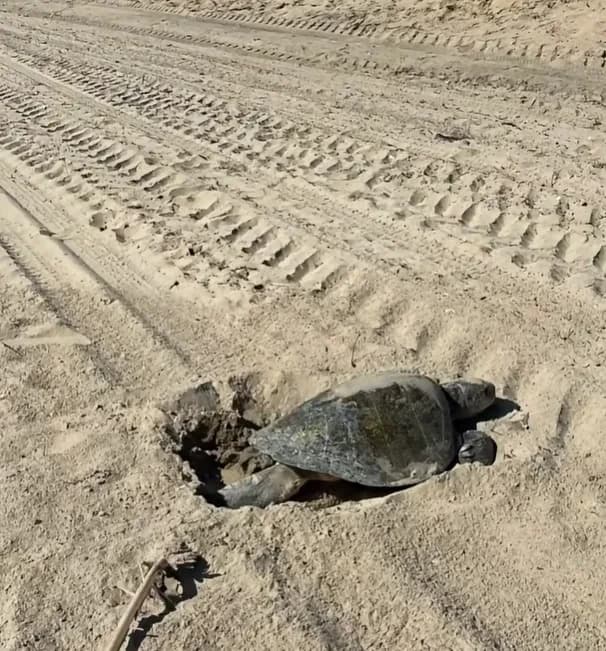
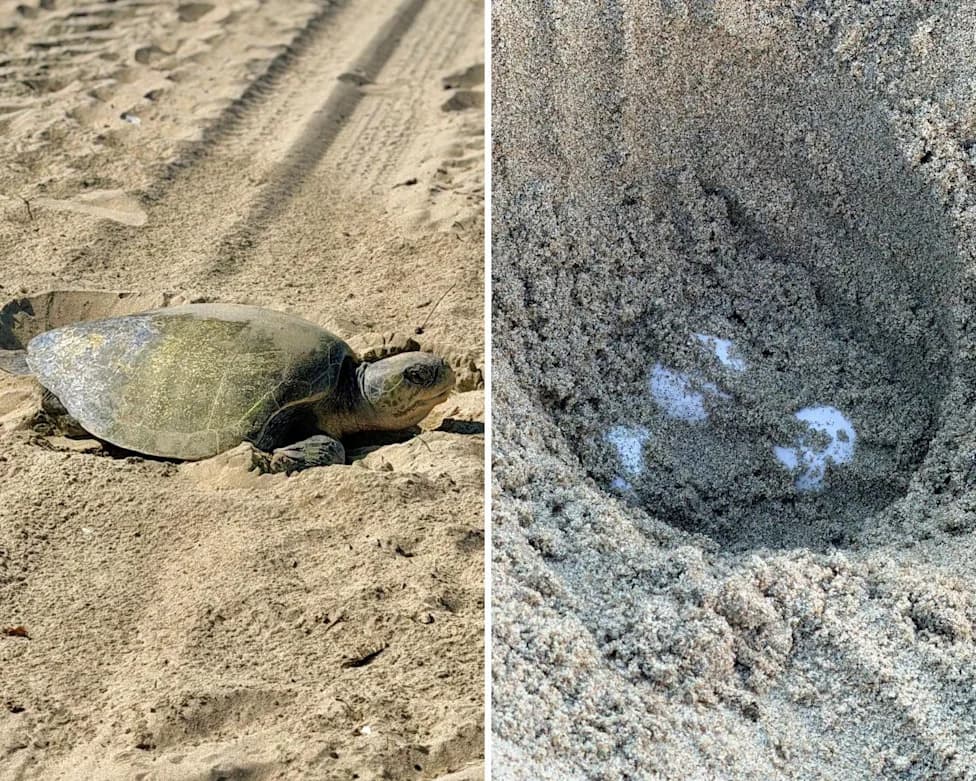
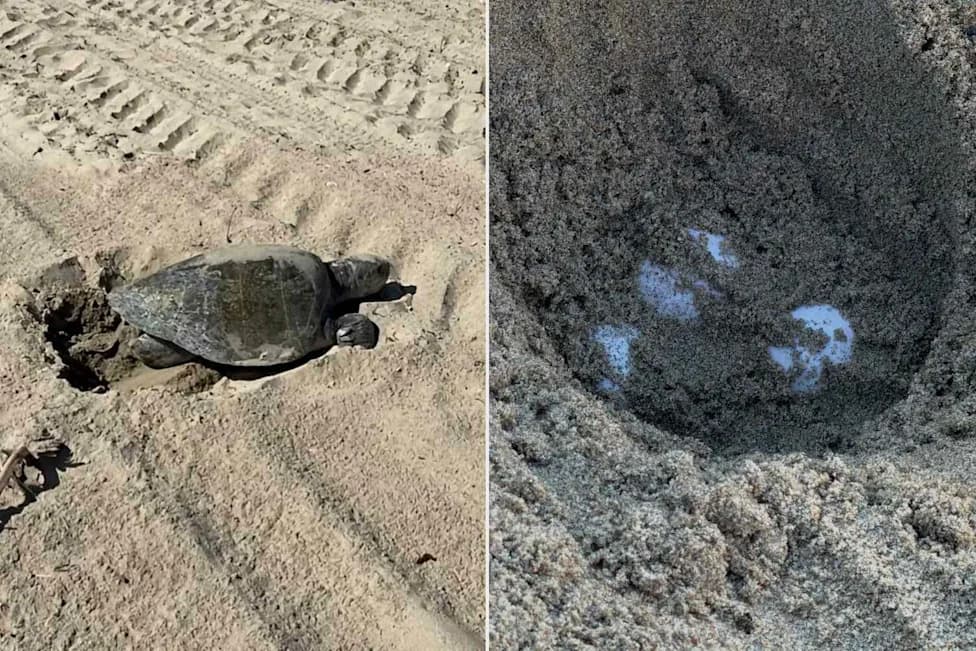
Huntington Beach Fire Department Marine Safety lifeguards established a perimeter in response to a sea turtle found laying eggs near Surfside in Southern California on Sept. 16. On Sept. 19, they responded to a sea turtle sighting near the Huntington Beach Pier.
In late September, researchers documented a surprising wildlife milestone: two olive ridley sea turtles nested on Southern California beaches — the first recorded natural sea turtle nestings on the U.S. West Coast, NOAA Fisheries reported on Sept. 22 and 23.
The first turtle was seen digging a nest and laying eggs near Seal Beach in Orange County; days later, a second olive ridley nested several miles south near Huntington Beach. NOAA confirmed both events, prompting scientists to re-evaluate regional sea turtle behavior and distribution.
Why This Happened
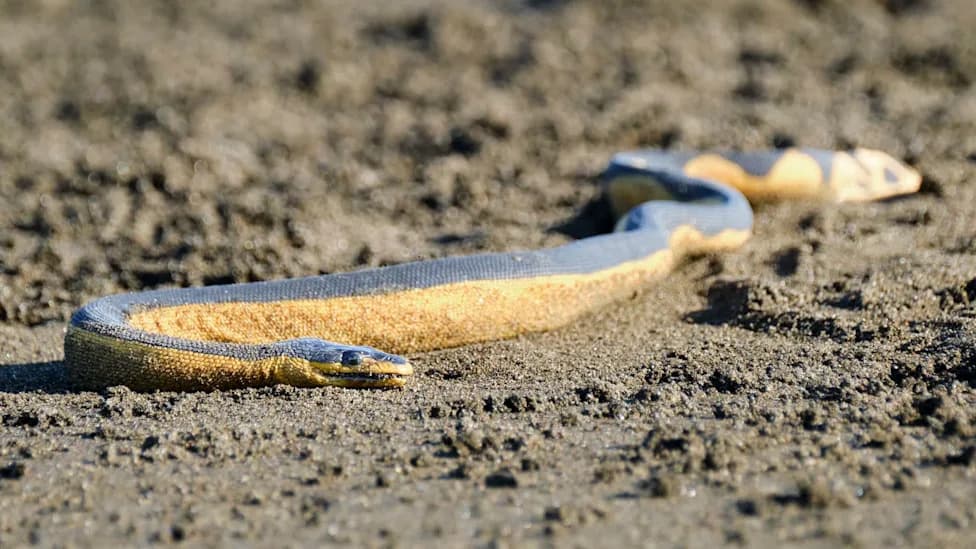
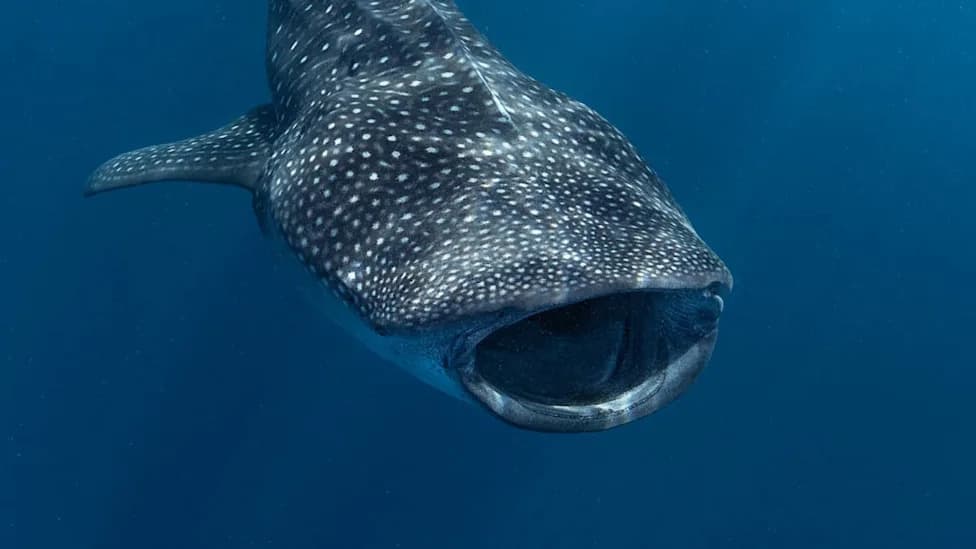
Scientists point to a strong El Niño and unusually warm coastal waters as likely drivers. "Coastal waters off California are anomalously warm right now," said Jeff Seminoff, leader of the Marine Turtle Ecology & Assessment Program at NOAA Fisheries' Southwest Science Center. Those conditions can allow tropical species to push farther north than usual — recent sightings in the region have even included a whale shark.
“This is the first time in California that nesting has happened, so it really has turned the turtle world upside down,” Seminoff said, noting that the olive ridley’s known nesting range has effectively extended roughly 700 miles north.
Sea turtles use multiple cues to navigate — internal magnetic compasses, currents, and local food availability among them. Seminoff suggested that these olive ridleys may have been "duped" into thinking they were in tropical waters, or that storms and currents altered their usual routes.
What It Means
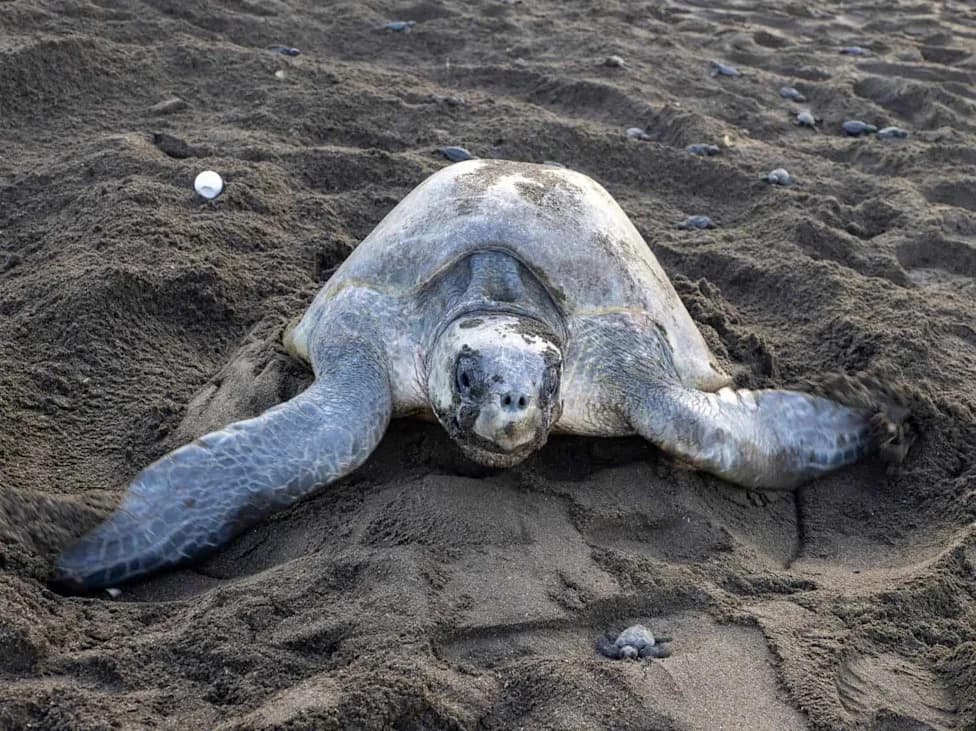
Olive ridleys are among the smallest sea turtles and are known for ecological flexibility: they tolerate a range of climates and diets and typically nest two to three times a year. If these nestings represent first-time attempts for these females, it is likely they could return to the same area in coming months.
Importantly, female sea turtles often return to the beach where they hatched. If the hatchlings from these nests survive and imprint on Southern California sands, their internal navigation could lead future generations back to the same beaches decades from now — potentially establishing a new local nesting lineage.
“Their internal compass in 15, 20, 25 years, when they become adults, will be telling them to come back to Southern California. That is that founding event,” Seminoff said.
The Aquarium of the Pacific, which cares for two olive ridleys rescued from illegal wildlife trafficking, also cited El Niño, a recent tropical storm, range expansion, or navigational mistakes as possible contributors to the unusual nesting events.
What To Watch For
Scientists will monitor the nests, watch for additional nesting attempts, and study hatchling survival and movement. These observations will help researchers understand whether this is a temporary anomaly linked to El Niño or the beginning of a longer-term shift in olive ridley distribution.
Reporting: Paris Barraza, USA TODAY Network. Sources: NOAA Fisheries, Aquarium of the Pacific.
Help us improve.