Researchers report controlled evidence that Kanzi, a language-trained bonobo, represented and reasoned about imaginary objects. In 2024 tests he selected a juice-filled bottle in 18/18 trials and identified cups containing pretended juice or a fictitious grape above chance (68% and 68.9%). A follow-up choice test (real vs. imaginary juice) showed he preferred the real juice 14/18 times, indicating he distinguished real from pretend. The findings, published in Science, are promising but limited because they come from a single, highly trained individual.
Language-Trained Bonobo Kanzi Shows Signs of Pretend Play in Controlled Tests
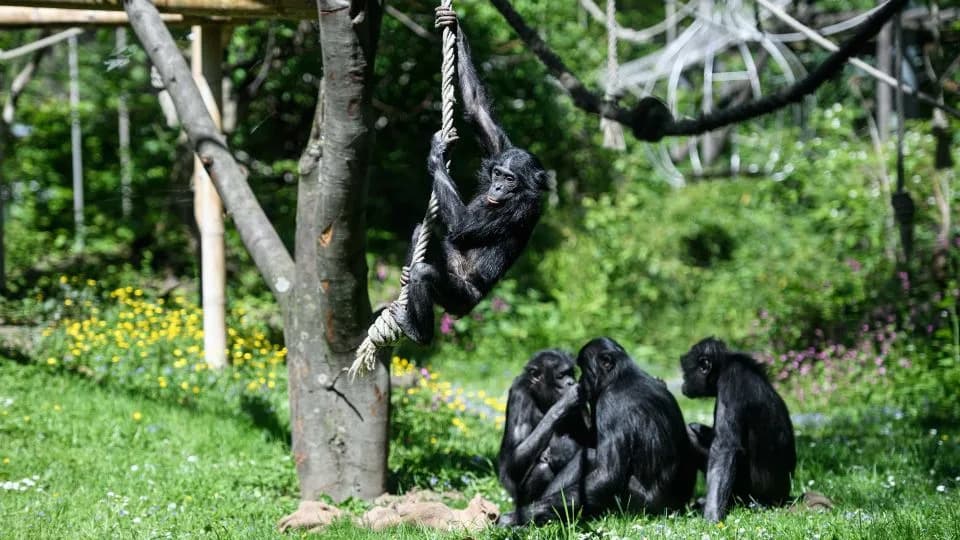
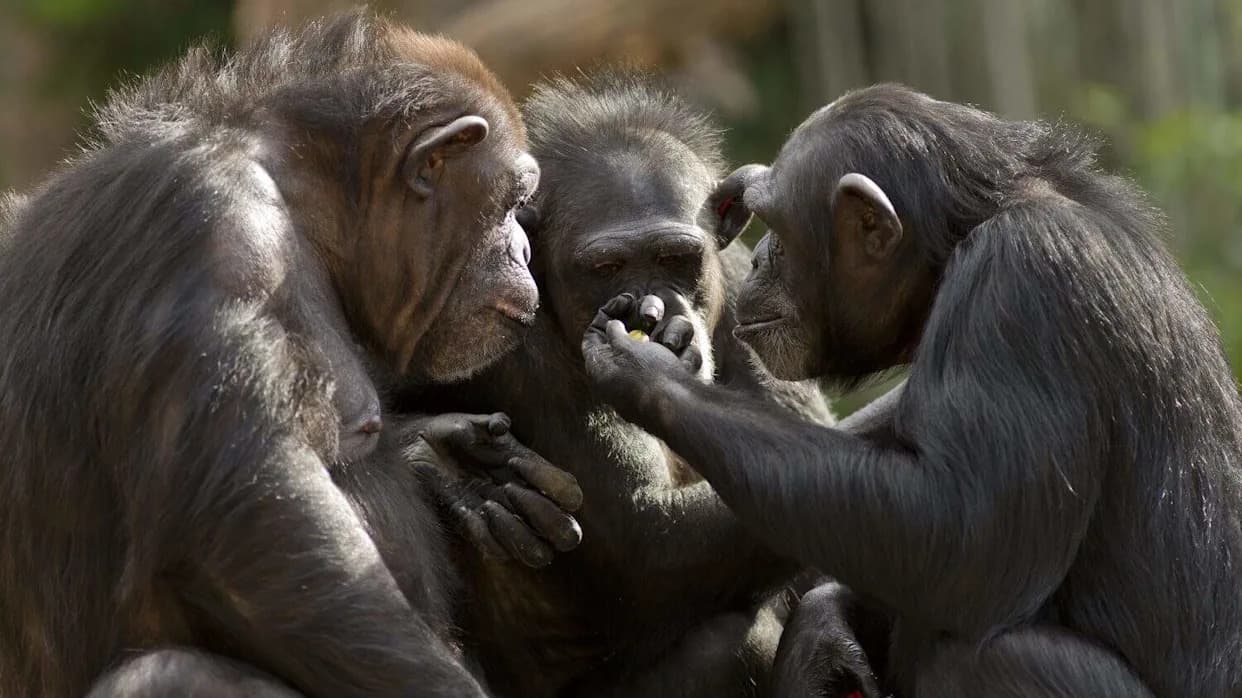
Bonobos are seen during the reopening of Cologne's zoo during the coronavirus crisis on May 5, 2020 in Cologne, Germany. - Jörg Schüler/Getty Images
New controlled experiments suggest that the ability to imagine and represent pretend objects — a hallmark of human childhood play — may also occur in great apes. Researchers Amalia Bastos and Christopher Krupenye of Johns Hopkins University tested a language-trained bonobo named Kanzi and report their results in the journal Science.
Controlled Tests of Pretend Representation
To move beyond anecdote, the team ran a series of behavioral experiments with Kanzi in 2024, when he was 43. The tests used familiar rewards (juice and grapes) and staged actions that mimicked pouring or placing items without any real object present.
Key Experiments
Bottle Choice: Kanzi was shown two squirt bottles — one containing juice and one empty — and asked to pick the bottle with juice. Across 18 trials he selected the correct bottle every time (18/18).
Pretend Pouring (Juice): An experimenter used an empty pitcher and two transparent cups, pantomiming pouring juice into both cups and then pretending to pour the imaginary juice out of one cup. When asked, "Where's the juice?" Kanzi chose the cup that still contained the pretended juice 68% of the time, a rate above chance.
Real vs. Imaginary Choice: To ensure Kanzi was not mistaking empty cups for real juice, researchers gave him a direct choice between a cup with real juice and a cup that had only been filled with imaginary juice. Over 18 trials he chose the real juice 14 times, indicating he could distinguish real from pretend.
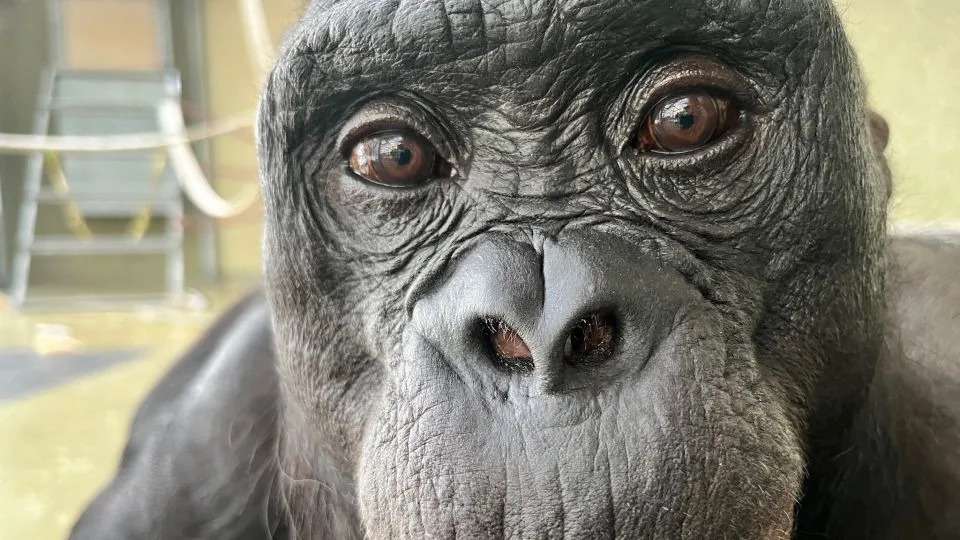
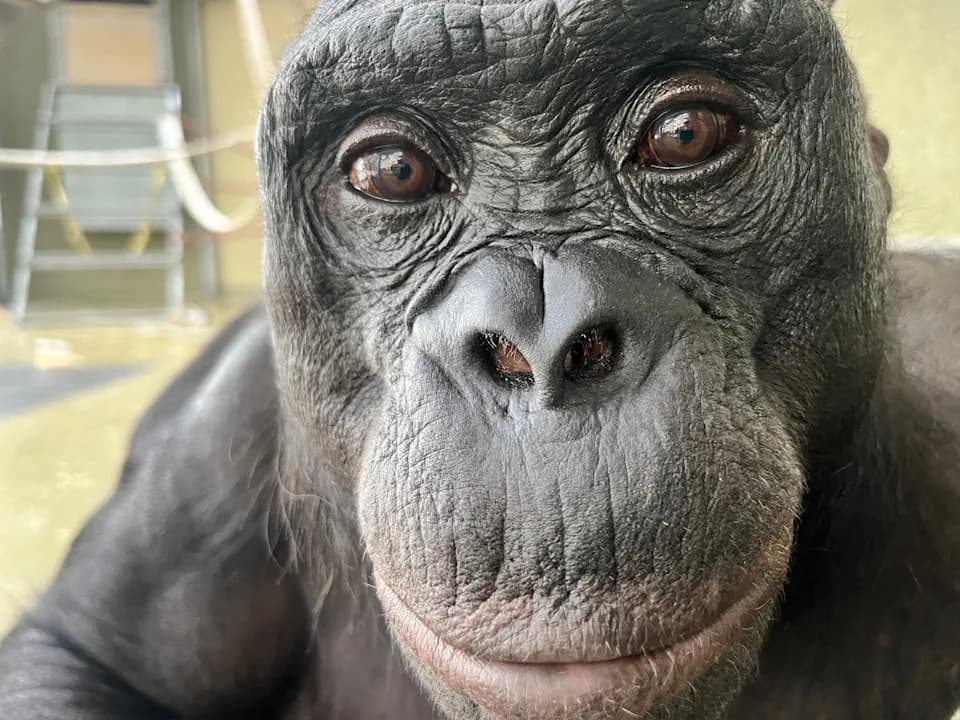
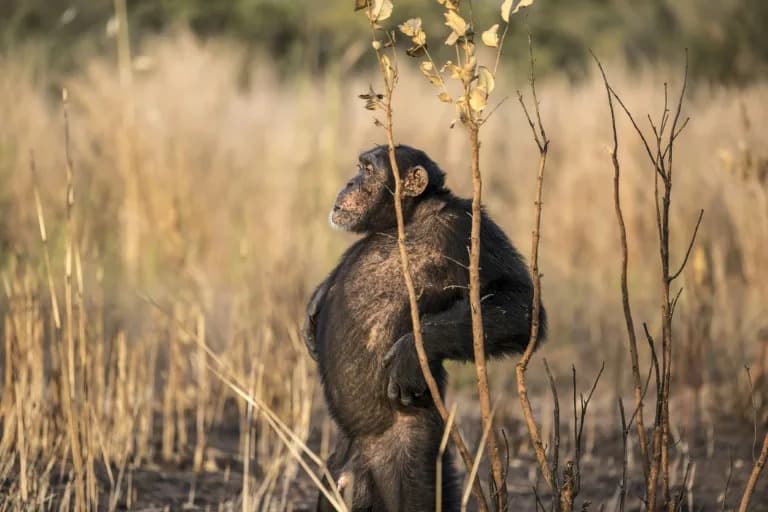
Kanzi the bonobo, who participated in the study in 2024, died in March 2025. - Ape Initiative
Pretend Grape: In a final variation using a grape instead of juice, Kanzi identified which jar would contain an imaginary grape 68.9% of the time and made selections faster than in the first experiment.
Interpretation and Limits
The authors conclude these results support the idea that the capacity to represent pretend objects is not uniquely human. Because Kanzi was language-trained and understood verbal prompts (he used a lexigram board of more than 300 symbols), the researchers emphasize that their findings come from a single, exceptional individual. Generalizing to other bonobos or ape species will require further, broader testing.
"Throughout his life, Kanzi repeatedly demonstrated skills that required us to reevaluate our understanding of ape cognition," said primate behavioural ecologist Nicholas E. Newton-Fisher (University of Kent), who was not involved in the study. He called the controlled evidence of imagination "an exciting finding."
Why This Matters
These experiments move beyond anecdotal observations by using controlled trials to show: (1) consistent selection of real rewards, (2) above-chance tracking of imagined items, and (3) the ability to distinguish real from pretend. Together, these results strengthen the case that at least some great apes can form mental representations of absent or fictitious objects, a cognitive capacity linked to imagination and flexible social play.
Caveats: The study tested only one individual, and Kanzi's unusual bilingual and lexigram training may have influenced his performance. Further research is needed to determine how widespread pretend representation is across apes and how it manifests in species-specific ways.
Note: Kanzi was 43 during the 2024 experiments and died the following year in March. He participated in long-term cognitive research at the Ape Initiative, which helped make these controlled tests possible.
Help us improve.