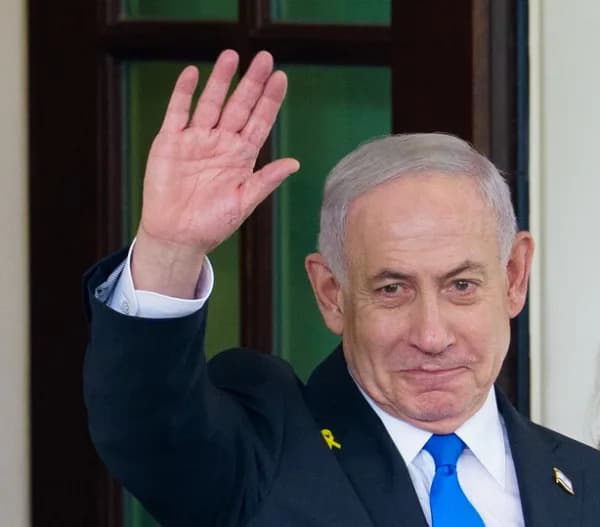
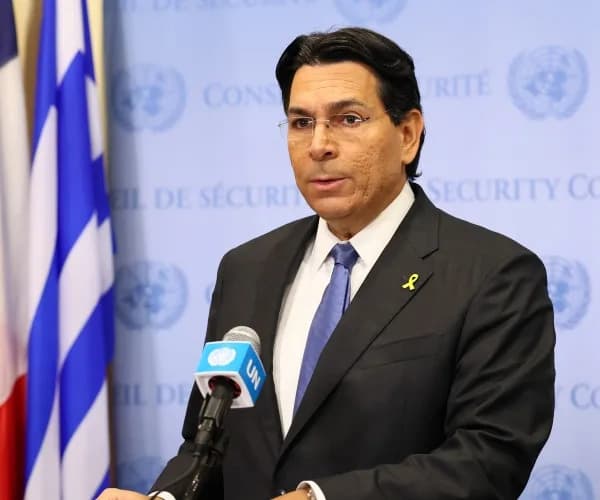
Benjamin Netanyahu is travelling to Washington this week to press U.S. leaders not to accept a narrowly framed Iran deal that would focus solely on nuclear enrichment. The trip was accelerated after initial U.S.–Iran talks in Oman; the White House delegation reportedly included Jared Kushner and Steve Witkoff. Iran’s nuclear chief suggested Tehran might dilute 60% enriched uranium in exchange for full sanctions relief, even as authorities crack down on reformist politicians after deadly protests. The U.S. has bolstered forces in the region and Israel is preparing to share intelligence, while Gulf states lobby Washington against military action.
Netanyahu Flies to Washington to Press U.S. Against a ‘Narrow’ Iran Deal
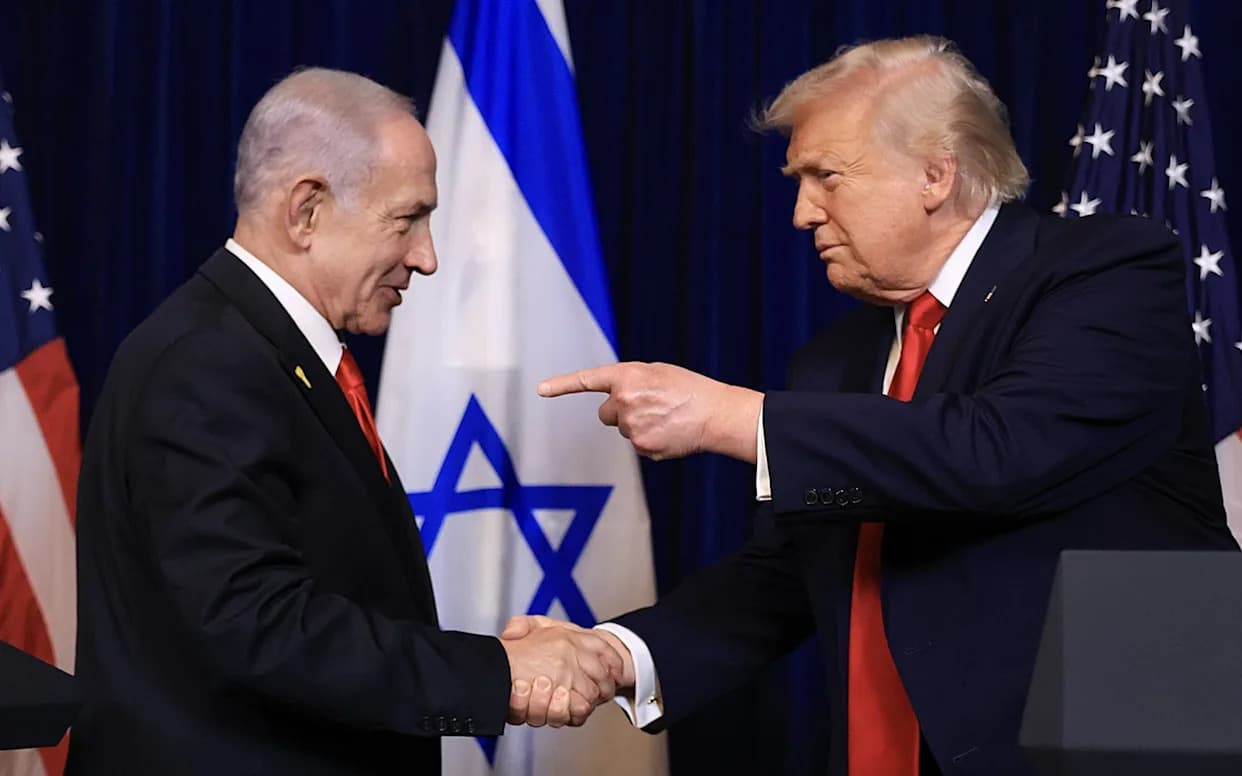
Benjamin Netanyahu hopes Donald Trump will agree a deal with Iran that goes beyond nuclear restrictions - Getty
Israeli prime minister Benjamin Netanyahu will travel to Washington this week in a bid to persuade U.S. officials not to accept a limited agreement with Iran that addresses only nuclear enrichment while leaving Iran’s missile programme and regional activities largely untouched.
Trip Accelerated After Oman Talks
The visit was moved forward following an initial round of U.S.–Iran discussions held in Oman. The U.S. delegation reportedly included Jared Kushner, a senior White House adviser, and Steve Witkoff, a private businessman who has been described in some reports as an informal envoy. Israeli officials say they fear a narrowly scoped deal on enrichment could leave Israel’s broader security concerns unaddressed.
Israel’s Red Lines
Tel Aviv insists any agreement with Tehran should cover more than the nuclear file. Israeli demands include verifiable limits on Iran’s ballistic missile development and curbs on its support for militant groups across the region. Israeli leaders say failing to secure those issues would leave Israel exposed to significant long-term threats.
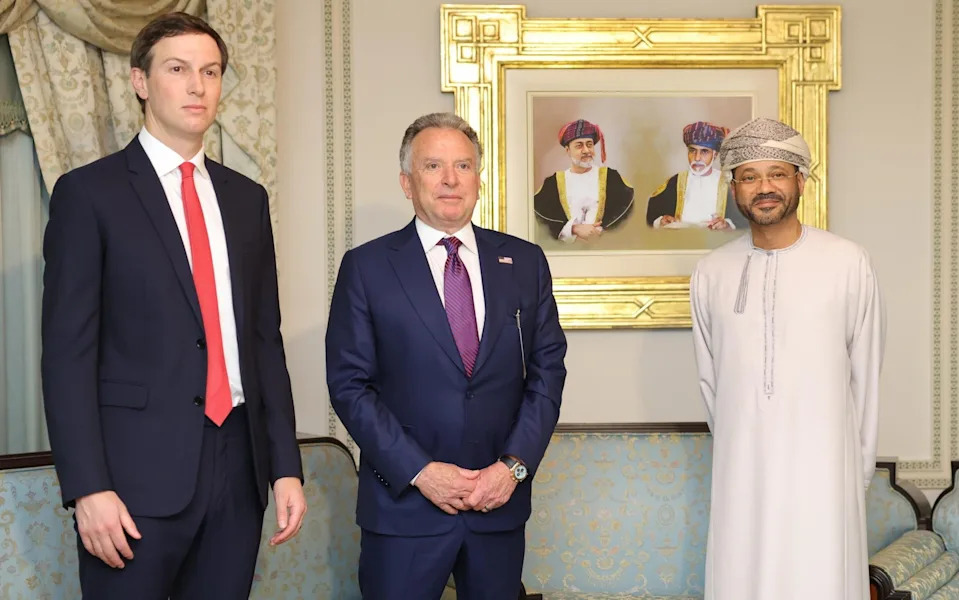
Jared Kushner and Steve Witkoff, with Badr bin Hamad Al Busaidi, the Omani foreign minister, in Muscat for US-Iran talks on Friday - Getty
Mixed Signals From Tehran
While initial accounts of the Oman meeting were upbeat, Iran’s deputy foreign minister Abbas Araghchi later said Tehran would not abandon uranium enrichment. Observers suggested that statement may have been aimed at placating domestic hardliners rather than signalling a final negotiating position.
“The possibility of diluting 60 per cent enriched uranium ... depends on whether, in return, all sanctions are lifted or not,” said Mohammad Eslami, head of Iran’s Atomic Energy Organisation, indicating Tehran might trade highly enriched stock for sanctions relief.
Domestic Crackdown and Political Pressure
Back in Iran, authorities have carried out a sweeping crackdown on prominent reformist politicians who criticised the regime’s response to mass protests. Police detained several leaders associated with the Reformist Front, a coalition of 27 parties that supported President Masoud Pezeshkian in the 2024 elections. Arrests reported include Azar Mansouri, Ebrahim Asgharzadeh, Mohsen Aminzadeh, Javad Imam and Ali Shakouri Rad.
The Reformist Front had demanded an independent truth‑finding committee and a transparent report into how, despite the presence of extensive security and intelligence forces, “unknown armed elements” were allegedly able to operate across the country and contribute to widespread killings. That statement directly challenged official accounts that blamed the violence on foreign-backed groups.
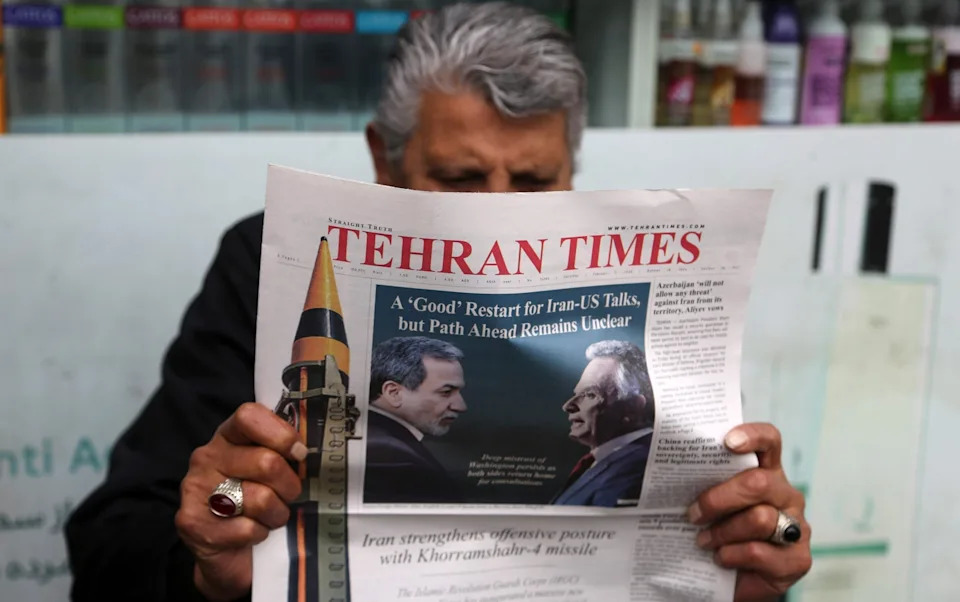
A newspaper in Tehran covers the start of nuclear talks between the US and Iran, which follow the deaths of thousands of protesters - Anadolu
Human rights advocates and some political figures say the arrests are intended to silence voices that might complicate negotiations with foreign powers or expose the government’s handling of the protests. Nobel laureate Narges Mohammadi was also given an additional seven-and-a-half-year sentence, authorities reported.
Military Posture and Intelligence Sharing
The United States has reportedly strengthened its military posture in the region, deploying a substantial strike force near Iran. Israel, which was initially cautious about military action, is said to be preparing to share intelligence with U.S. counterparts to improve coordination. Accompanying Mr Netanyahu on the trip is Brigadier General Omer Tischler, the incoming head of Israel’s air force, who is expected to discuss intelligence-sharing arrangements.
Within Washington, debate continues over the merits and risks of military strikes. Some U.S. officials and regional allies have warned that strikes would not necessarily produce a decisive outcome, such as toppling Iran’s leadership, and could trigger wider instability.
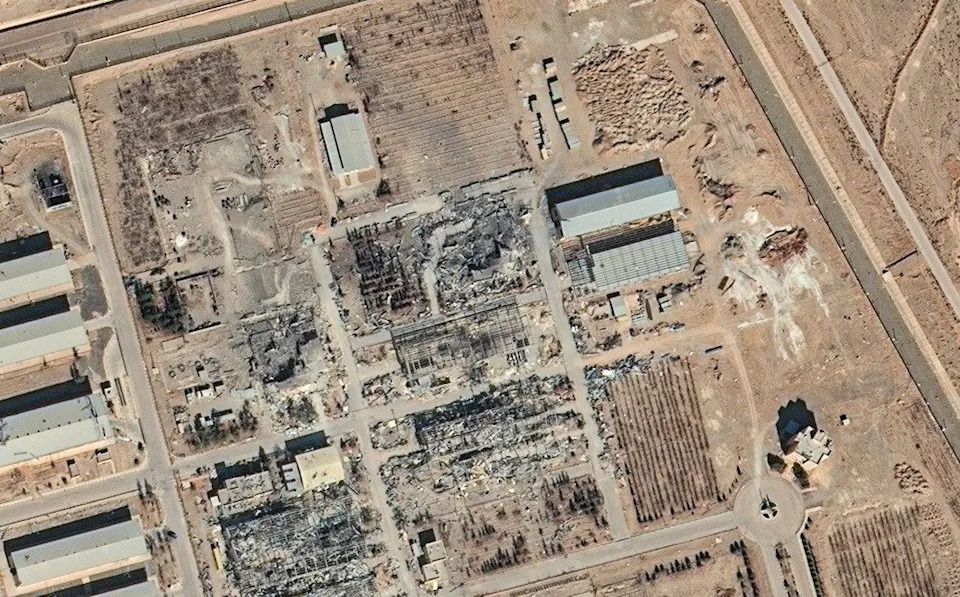
Satellite imagery shows damage to Iran’s Isfahan nuclear complex following air strikes in June - Vantor
Regional Concerns
Gulf states—key partners in diplomatic initiatives including Mr Trump’s so-called Board of Peace—have reportedly lobbied intensively against open conflict, arguing that a destabilised Tehran could be more dangerous for the region than the current status quo.
Iranian adviser Kamal Kharazi called the talks “good,” urging Washington to recognise that past approaches had failed and that new paths are needed. Meanwhile, Iran’s supreme leader has reduced public appearances, a move observers say is intended to minimise perceived security risks.
As Netanyahu seeks to shape U.S. policy in the coming days, the outcome of these behind-the-scenes consultations will help determine whether negotiations broaden to include missiles and regional activity—or remain focused narrowly on nuclear enrichment.
Help us improve.