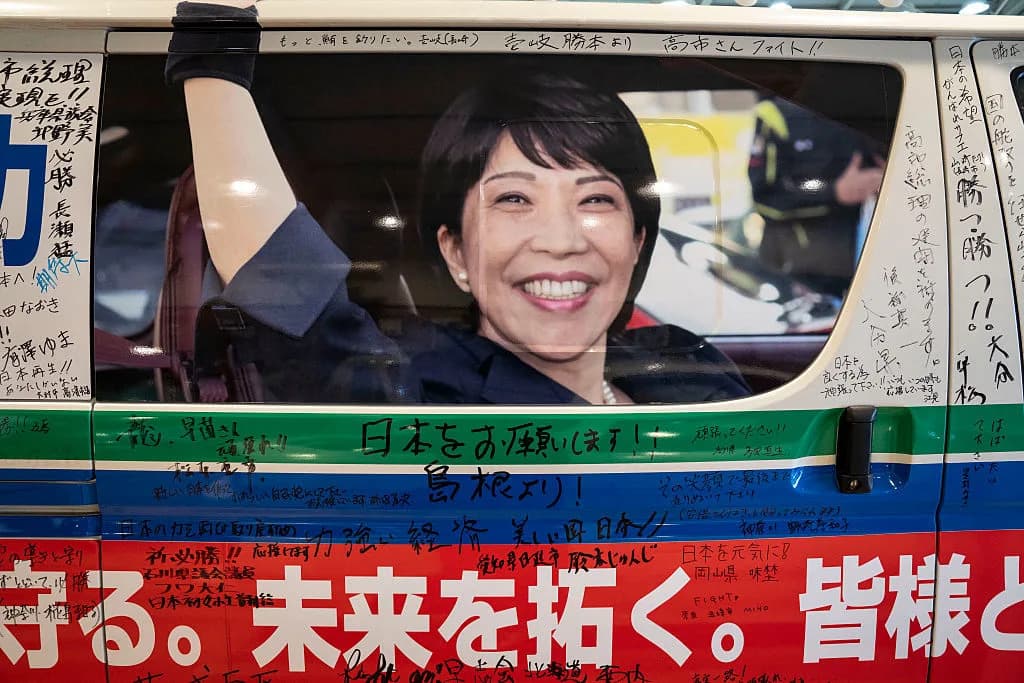
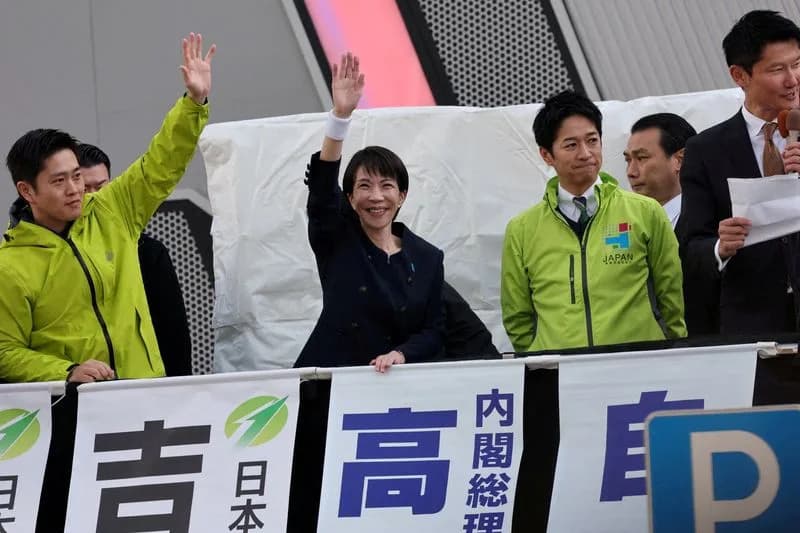
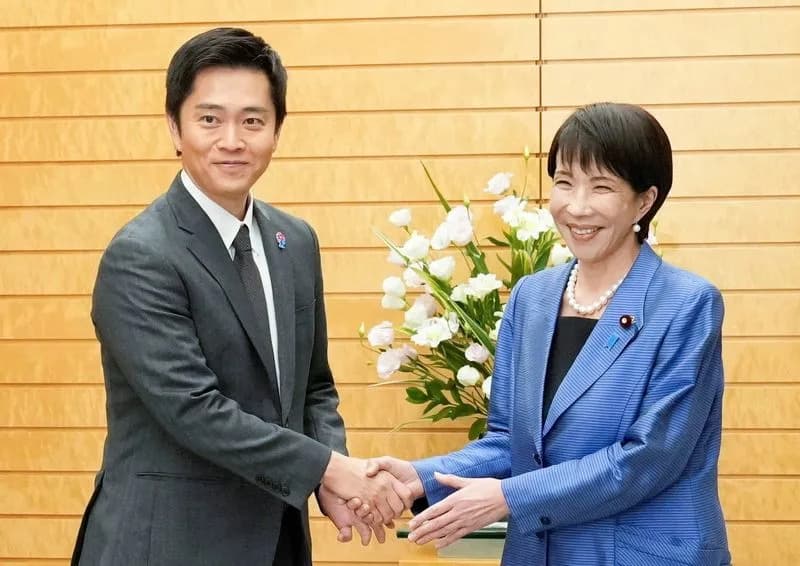
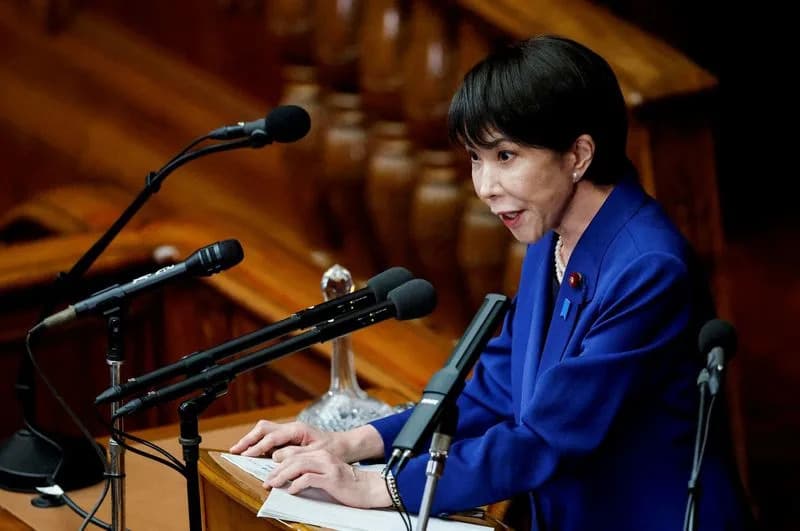
Japan's snap election saw Prime Minister Sanae Takaichi seeking a strong mandate as polls projected the LDP would exceed the 233-seat majority and possibly reach about 310 seats for a two-thirds supermajority. Her platform mixes a $135 billion stimulus and a temporary food tax suspension with tougher immigration screening. Markets remain wary: public debt exceeds twice GDP and recent swings in bond yields and the yen have heightened investor concern. Takaichi's hawkish comments on China and Taiwan have provoked a diplomatic row that may have, paradoxically, strengthened her domestic support.
Takaichi Poised For Big Win As Japan Votes — Markets And Beijing Watch Closely
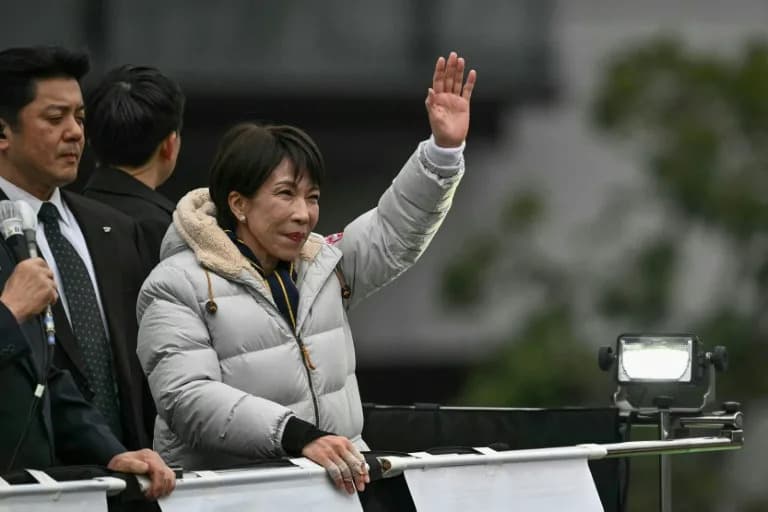
Japan's Prime Minister Sanae Takaichi has defied pessimists to be a hit with voters, especially young ones (Yuichi YAMAZAKI)·Yuichi YAMAZAKI/AFP/AFP
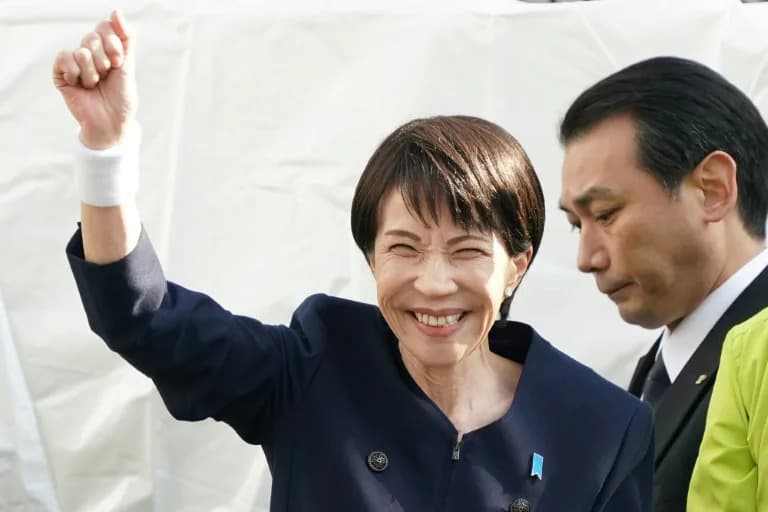
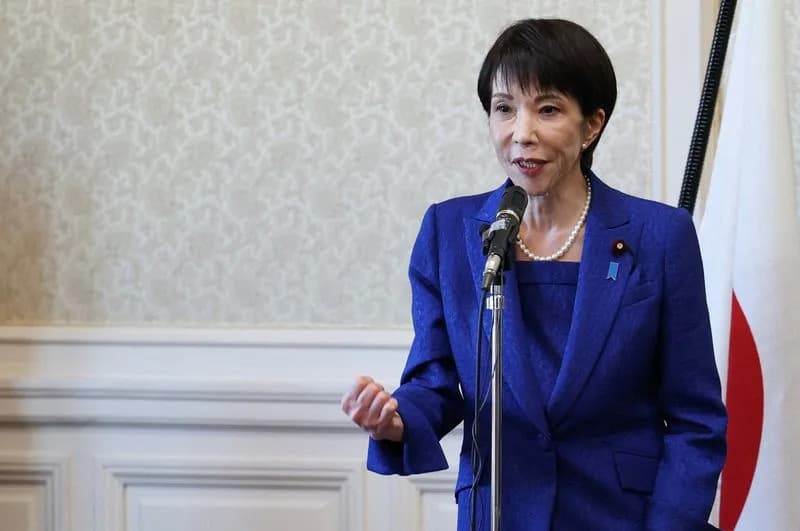
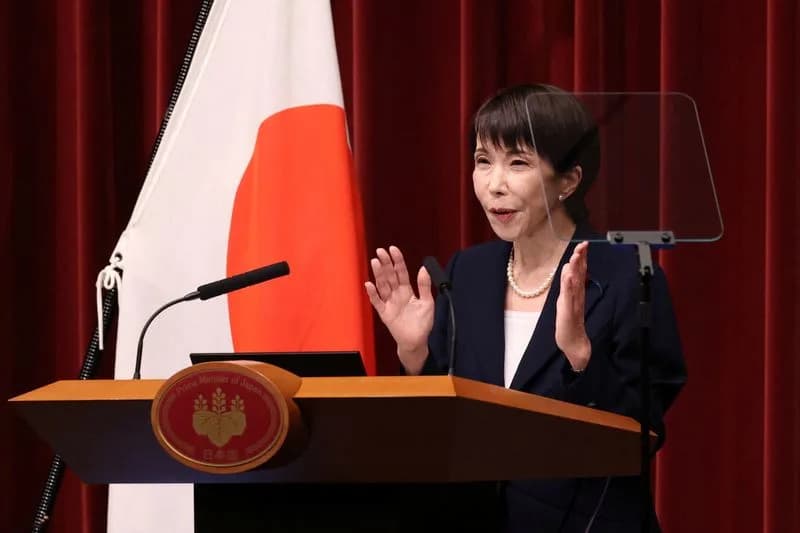
Japan held snap elections on Sunday with Prime Minister Sanae Takaichi seeking to convert early popularity into a decisive parliamentary mandate that could unsettle markets and strain ties with China.
Election Outlook
Opinion polls indicated that Takaichi's Liberal Democratic Party (LDP), which has dominated Japanese politics for decades, was on track to comfortably exceed the 233 seats required for a lower-house majority in the 465-member House of Representatives. Some pollsters suggested the LDP and its coalition partner could approach the roughly 310 seats needed for a two-thirds supermajority — a level of control that would significantly strengthen the government's legislative hand.
Personality And Appeal
Since becoming leader in October, Takaichi — Japan's first woman premier — has cultivated a high-profile image. Once a heavy-metal drummer and an admirer of Britain's "Iron Lady" Margaret Thatcher, she has surprised skeptics by attracting notable support among younger voters. "I came just to have a look at her. I think she is amazing," 17-year-old Yuka Ando told AFP after attending a campaign speech in Tokyo.
Policy Agenda And Economic Concerns
Takaichi has pushed a mix of populist and fiscal measures. She announced a roughly $135 billion stimulus package aimed at easing inflationary pain and pledged a temporary suspension of the consumption tax on food. At the same time, Japan's public debt remains more than twice the size of its economy, and in recent weeks long-term government bond yields rose to record levels while the yen swung sharply — developments that have raised investor concern about fiscal sustainability and market volatility.
Immigration, Security And China
On immigration, Takaichi has promoted stricter screening and enforcement. "Immigration screening has already become a little stricter, so that terrorists, and also industrial spies, cannot enter easily," she said, calling for checks on whether foreign residents pay taxes and health insurance premiums.
Just weeks into office, Takaichi — long regarded as hawkish on China — suggested Japan might intervene militarily if Beijing tried to seize self-ruled Taiwan by force. Beijing reacted angrily: it summoned Japan's ambassador, warned its citizens about travel to Japan, and conducted joint air drills with Russia. In a high‑profile symbolic move, Japan also returned its last two giant pandas to China amid the spat.
International Reaction
U.S. former President Donald Trump publicly praised Takaichi as a "strong, powerful, and wise Leader," while analysts said the China incident likely boosted her domestic standing. Margarita Estevez-Abe, an associate professor of political science at Syracuse University, told AFP that the episode had strengthened Takaichi's popularity and that the prime minister now has more room to focus on repairing relations with China.
"So the best scenario for Japan is that Takaichi kind of takes a deep breath and focuses on amending the relationship with China," Estevez-Abe said.
As results came in, markets and diplomats were closely watching whether a large LDP majority would translate into faster policy shifts on fiscal stimulus, national security, and Japan's stance toward Beijing.
Help us improve.