RHIC concluded 25 years of operation on February 6, 2026, after repeatedly recreating the quark–gluon plasma and producing transformative results on the strong force and proton structure. The collider’s last campaign generated unprecedented data volumes, including evidence probing virtual particles in the plasma. RHIC’s infrastructure will help host the upcoming Electron–Ion Collider (EIC), slated for construction over the next decade to provide precision studies of quarks and gluons.
RHIC Shuts Down After 25 Years — A New Era Begins With the Electron–Ion Collider

Darío Gil, the U.S. Department of Energy’s under secretary for science (right) and interim laboratory director John Hill (left) officially ended the operational era of the Relativistic Heavy Ion Collider at an event held at Brookhaven National Laboratory on Friday, February 6, 2026.Kevin Coughlin/Brookhaven National Laboratory
After a record-setting 25-year run, Brookhaven National Laboratory’s Relativistic Heavy Ion Collider (RHIC) concluded its final operational shifts on February 6, 2026. The event marked the end of a long chapter in U.S. nuclear and particle physics — and the start of another: construction of the Electron–Ion Collider (EIC), which will reuse much of RHIC’s infrastructure and push studies of quarks and gluons to new precision.
A Quarter-Century of Discovery
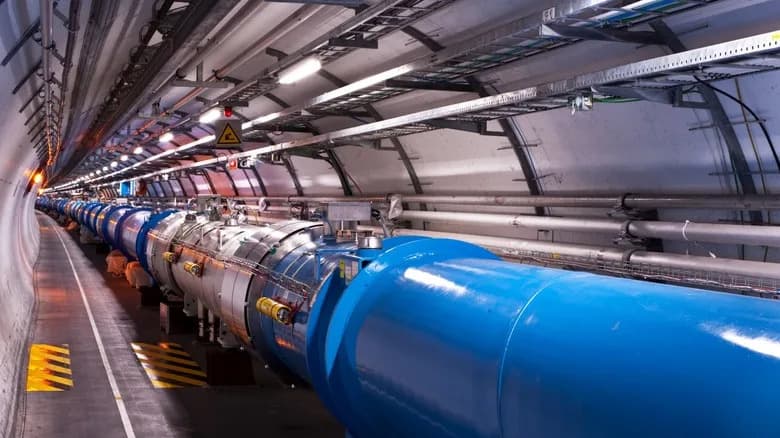
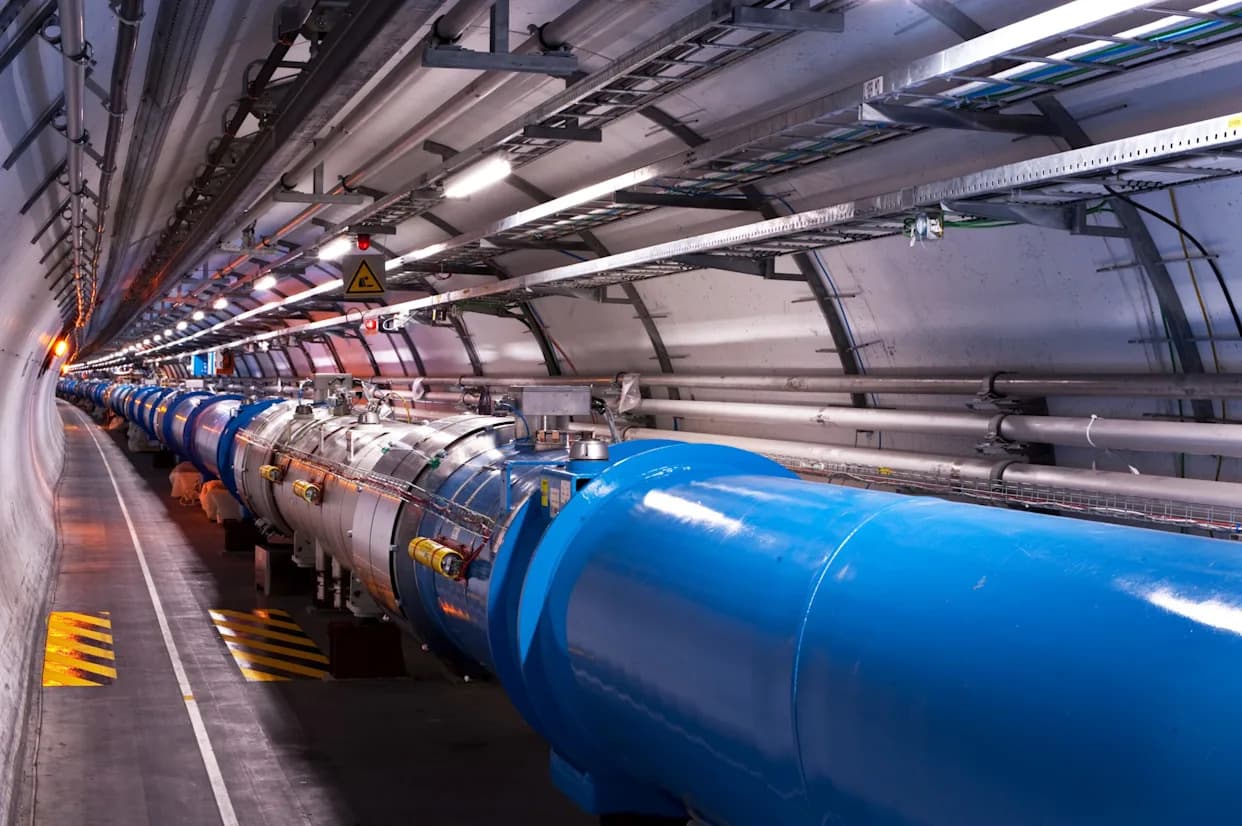
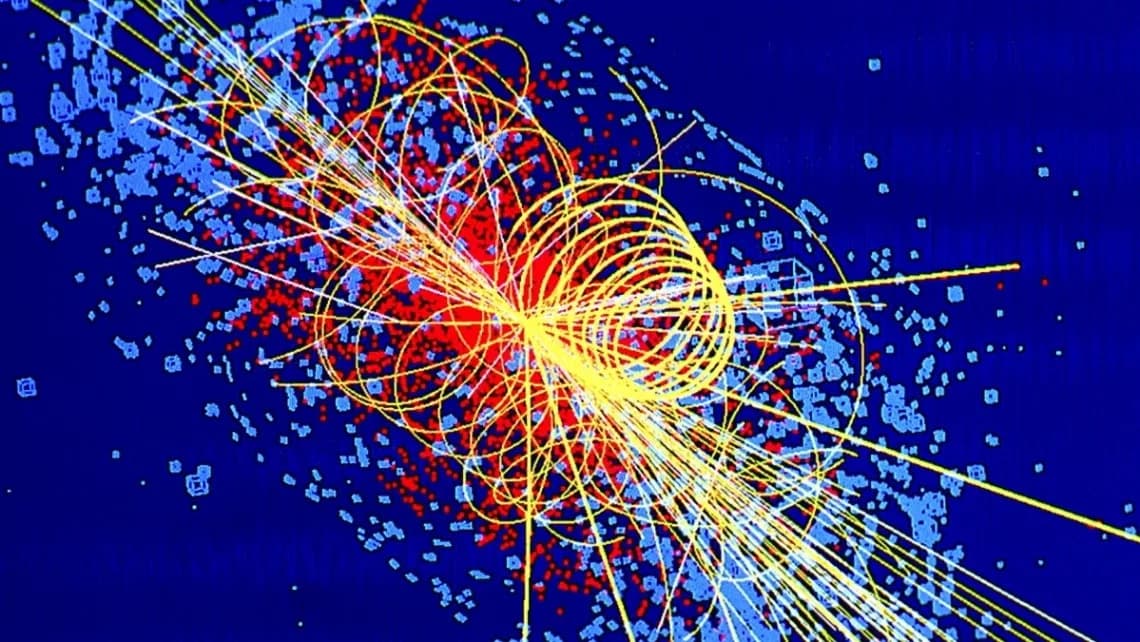
RHIC was built to recreate the extreme conditions of the universe’s first microseconds, when matter existed as a hot, dense quark–gluon plasma. By colliding heavy nuclei (such as gold ions stripped of their electrons) at roughly 99.995% of the speed of light in a pair of 2.4-mile-circumference storage rings, RHIC revived that primordial state in microscopic fireballs lasting far less than a trillionth of a billionth of a second.
From its first full operations in 2000, RHIC repeatedly produced matter consistent with a quark–gluon plasma. By about 2010, accumulated evidence showed the plasma behaved not like a gas of free particles but like an almost “perfect” low-viscosity liquid with remarkable vorticity — a finding that reshaped theoretical understanding of the strong nuclear force.
Major Scientific Milestones
RHIC’s long program yielded many headline results and steady progress on deep puzzles:
- It produced and characterized quark–gluon plasma, revealing liquid-like flow and near-zero viscosity.
- It generated some of the heaviest and most intricate antimatter assemblages ever observed.
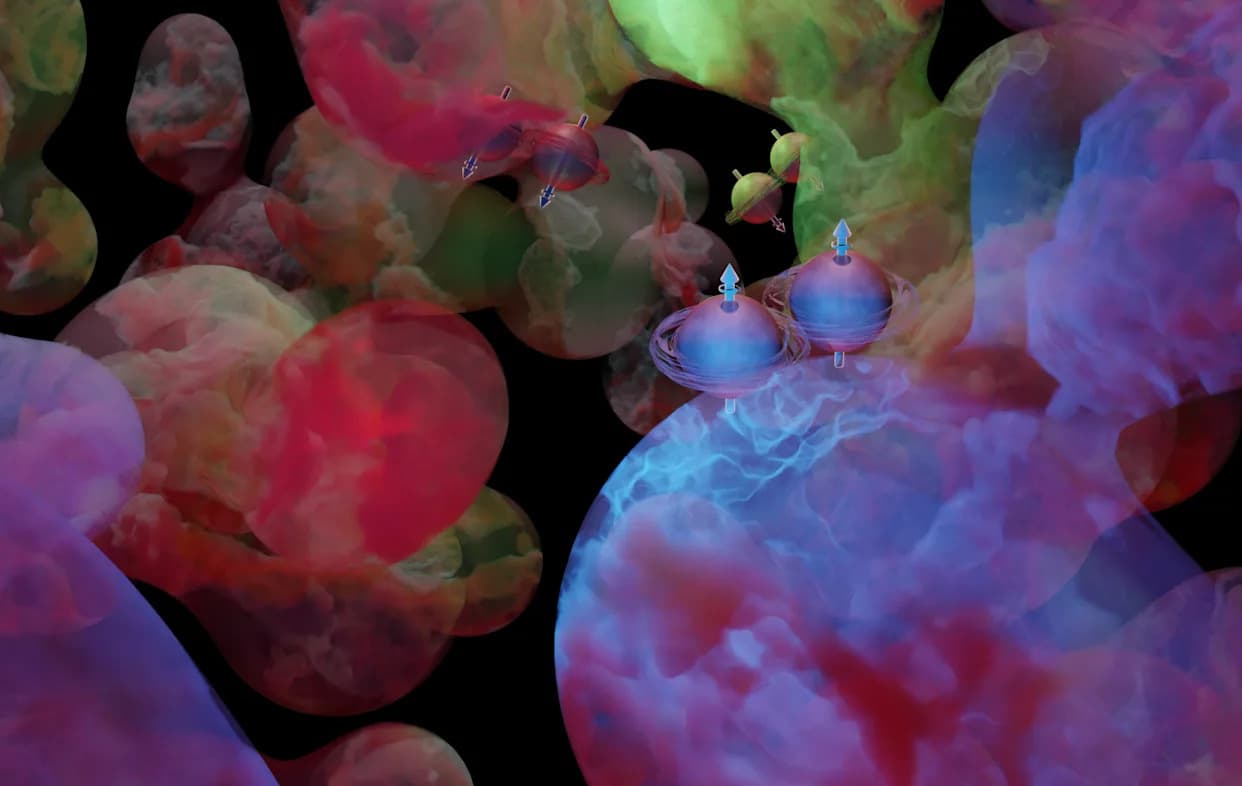
- It advanced understanding of the proton spin puzzle: 2023 analyses of trillions of spin-aligned proton collisions greatly clarified how quarks and gluons contribute to proton spin, though a portion is still associated with the combined motion (orbital angular momentum and partonic dynamics) of those constituents.
- Data from RHIC’s final run produced new results — including reported direct evidence of virtual-particle effects in the quark–gluon plasma, opening fresh probes of the quantum vacuum.
The Final Run And Its Legacy
On February 6, 2026, scientists, administrators and reporters gathered in RHIC’s control room as Darío Gil, Under Secretary for Science at the U.S. Department of Energy, formally ended the collider’s operational era. Emotions were mixed: relief and pride about completed missions, and wistfulness at shutting down a longtime research home. As BNL staff noted, the shutdown was planned to make room for the EIC.
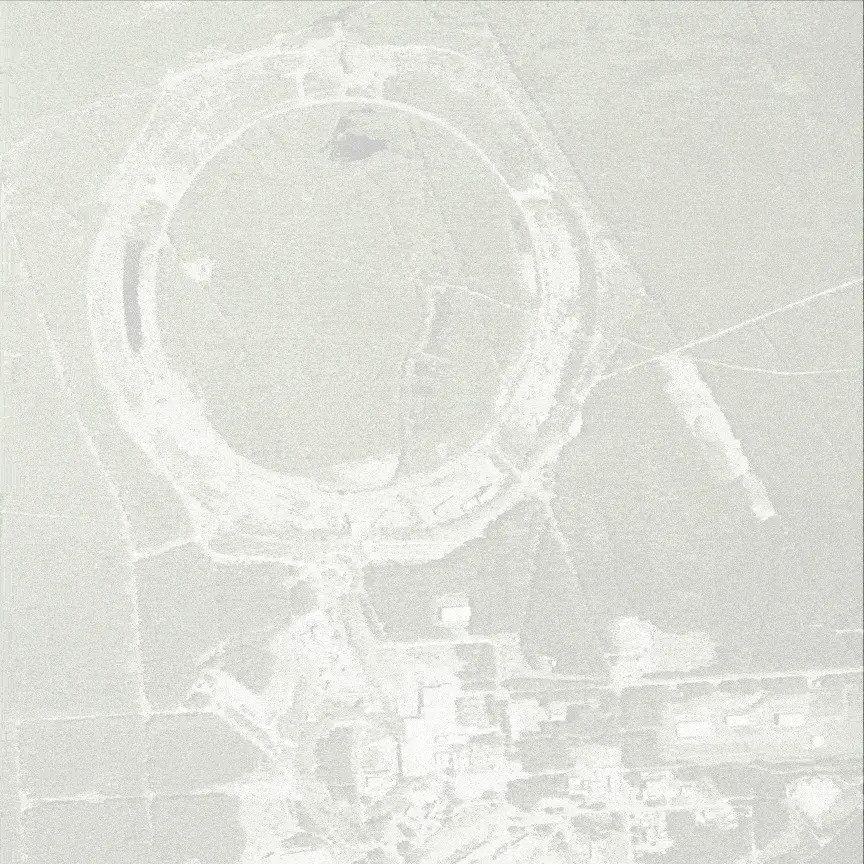
The Electron-Ion Collider (EIC) will use many of RHIC’s existing components, including one of its large ion-storage rings, and is scheduled to be constructed across the next decade.Valerie A. Lentz/Brookhaven National Laboratory
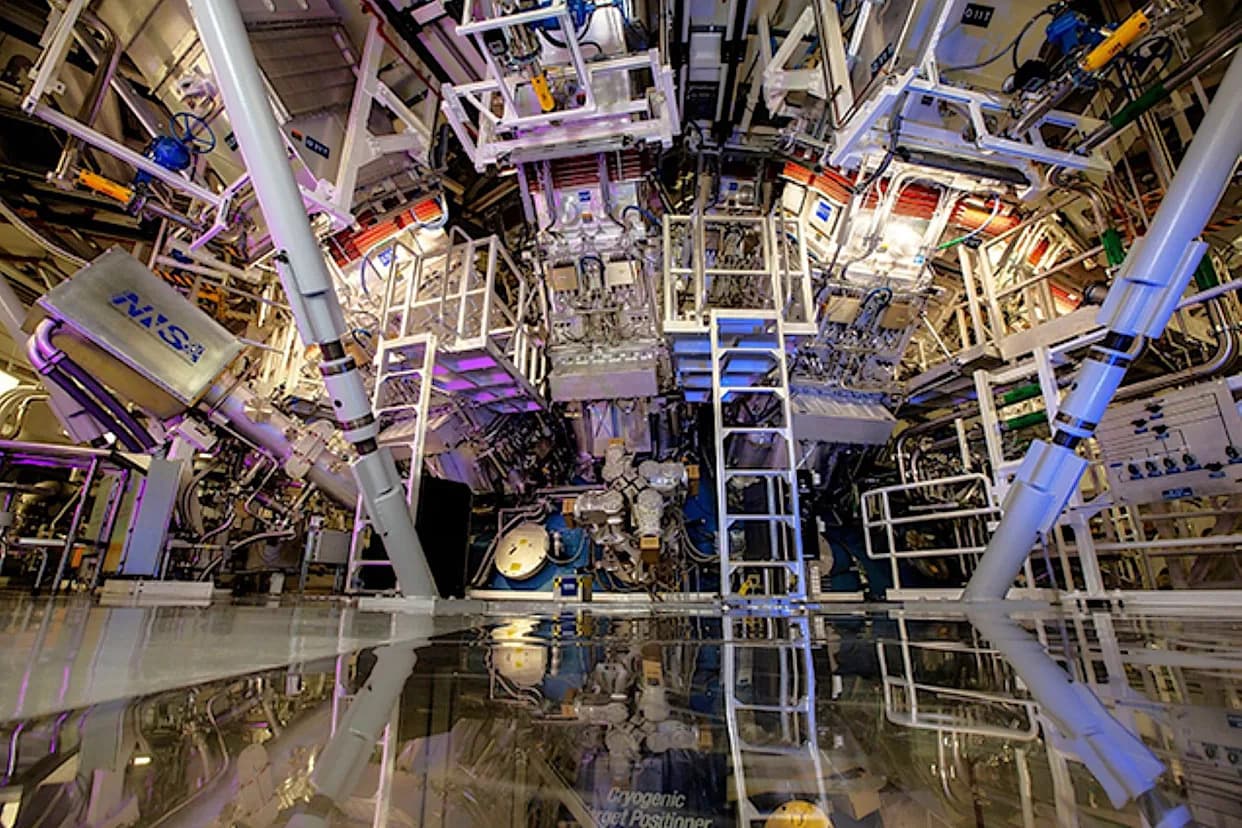
The sPHENIX detector, which began taking data just a few years before RHIC’s closure, focused on how high-energy particles traverse quark–gluon matter and produced the bulk of the hundreds of petabytes recorded during RHIC’s final campaign — more data than all earlier runs combined. These datasets will be mined for years, and many scientists emphasize that the best science from RHIC still lies ahead as analyses continue.
“The collider’s gone, but RHIC will live on through the data.” — Linda Horton, Interim Director, DOE Office of Science
Looking Ahead: The Electron–Ion Collider
The Electron–Ion Collider (EIC) is planned for construction across the coming decade and will repurpose major RHIC components, including one of the large ion-storage rings. EIC will replace the other ring with a new electron ring so that high-speed electrons can be collided with ions. Those electron–ion collisions act like precision scalpels to probe the internal distribution and dynamics of quarks and gluons, including their contributions to mass, spin and the emergent properties of nuclear matter.
For the U.S. nuclear and particle physics community, the EIC represents both continuity and renewal: continuity through the reuse of RHIC infrastructure and renewal through a new experimental program that many expect to be a global hub for young scientists for the next decade or more.
Why It Matters
RHIC answered fundamental questions about the strong force and the nature of visible matter, demonstrating that complex, collective behavior emerges from quarks and gluons. The collider’s legacy is scientific (new physics results), technical (large-scale detectors and computing), and institutional (training generations of physicists). The EIC will build on that legacy to deliver even more precise tests of how the strong force shapes the structure of protons, neutrons and nuclei.
Even as machines switch off and tunnels are repurposed, the data and discoveries from RHIC will continue to inform our understanding of the early universe and the forces that created everything we see today.
Help us improve.