The STAR Collaboration at Brookhaven’s RHIC analyzed millions of proton–proton collisions and found that lambda hyperons and antilambdas produced close together have strongly correlated spins. This alignment matches the expected spin correlation of virtual strange quark–antiquark pairs in the quantum vacuum, providing direct evidence that some quarks originate from vacuum fluctuations. The correlation vanishes for pairs produced farther apart, suggesting decoherence from environmental interactions. The result opens new ways to study how quarks bind into visible matter and can be explored further at the planned Electron‑Ion Collider.
Brookhaven’s RHIC Finds Direct Evidence That Matter Can Emerge From Quantum ‘Nothingness’
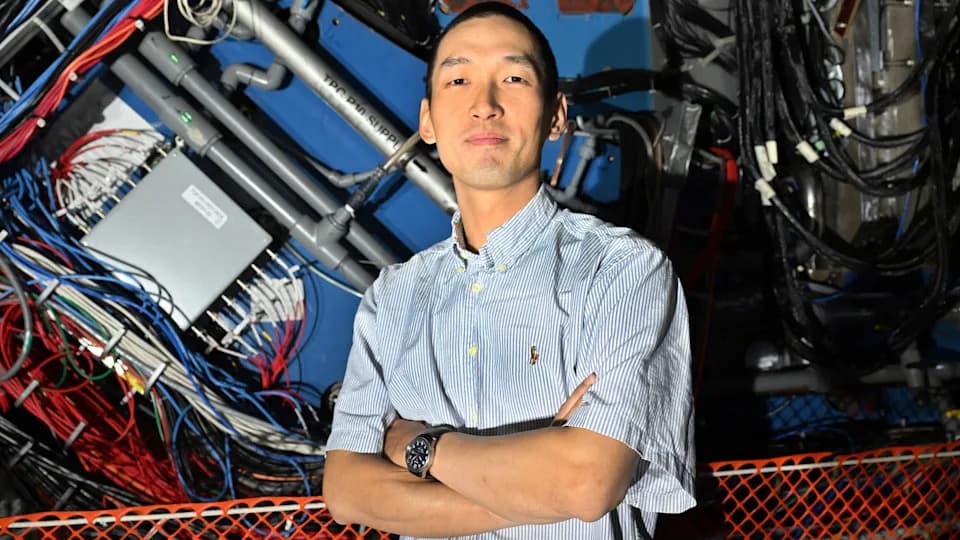
Zhoudunming Tu, PhD, a physicist at Brookhaven National Laboratory, in front of the STAR experiment/detector.Credit:Kevin Coughlin/Brookhaven National Laboratory
US physicists from the STAR Collaboration at Brookhaven National Laboratory report rare experimental evidence linking the quantum vacuum’s fleeting "nothingness" to the creation of real, detectable matter.
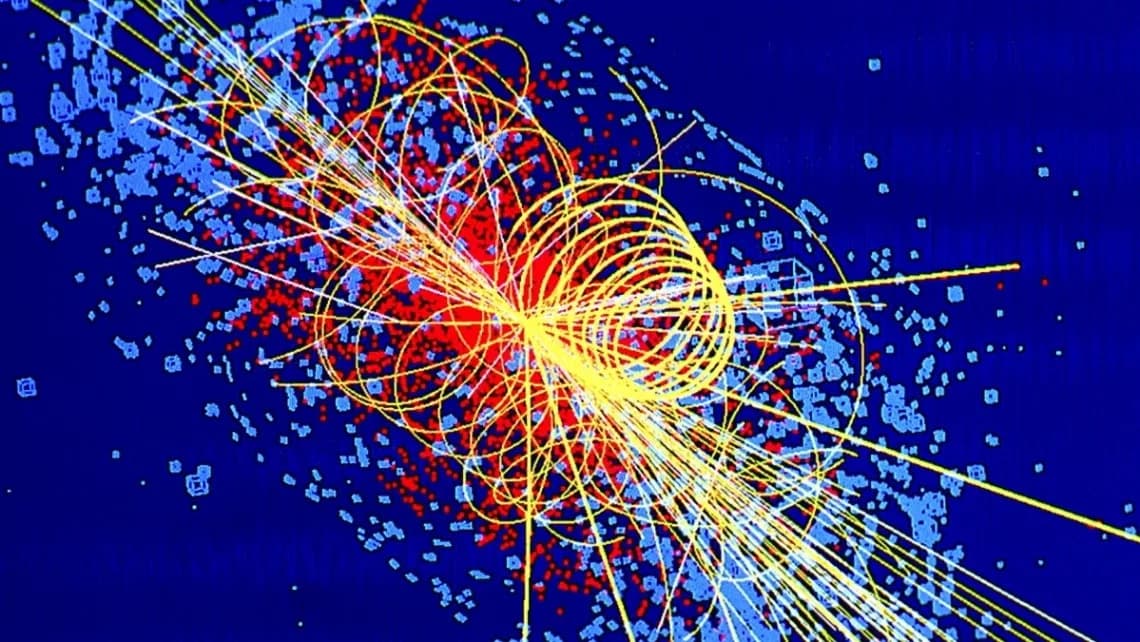
Using the Relativistic Heavy Ion Collider (RHIC) — the world’s first heavy‑ion collider — the team sifted through millions of proton–proton collisions to study pairs of lambda hyperons and their antimatter partners (antilambdas).
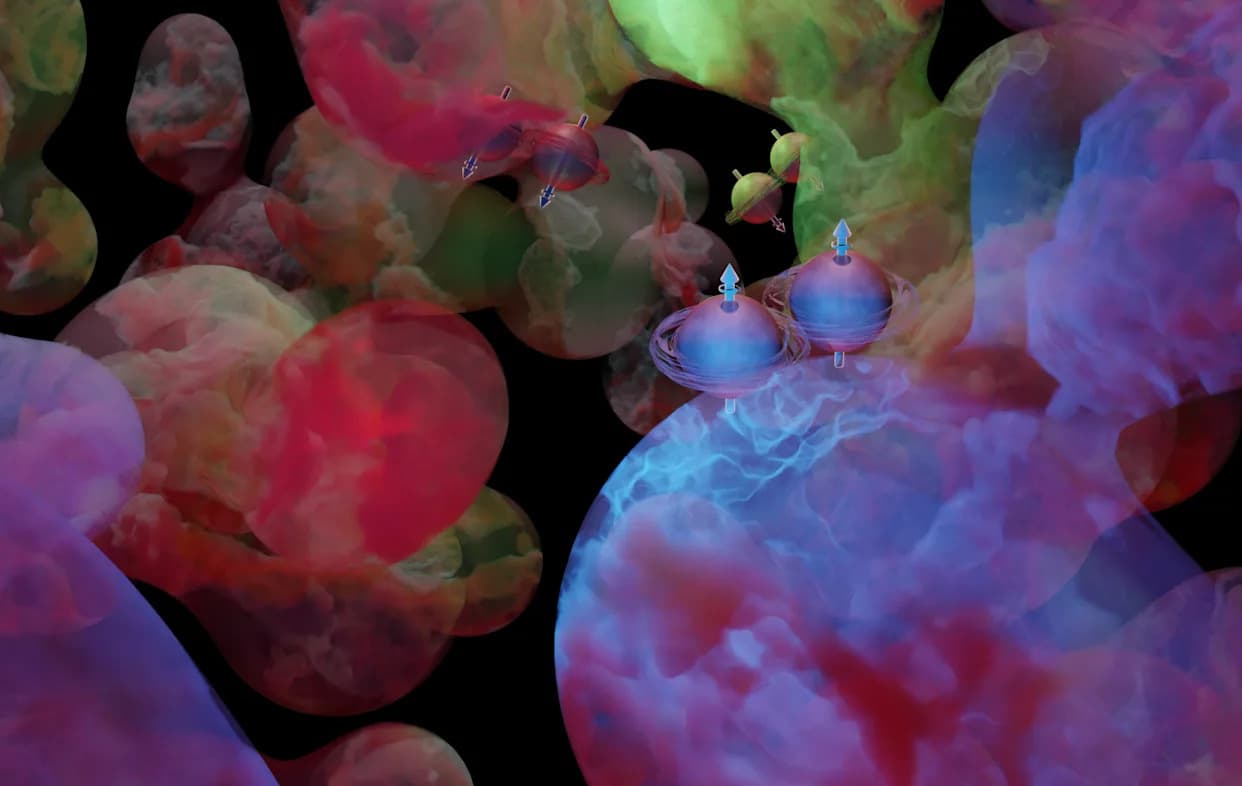
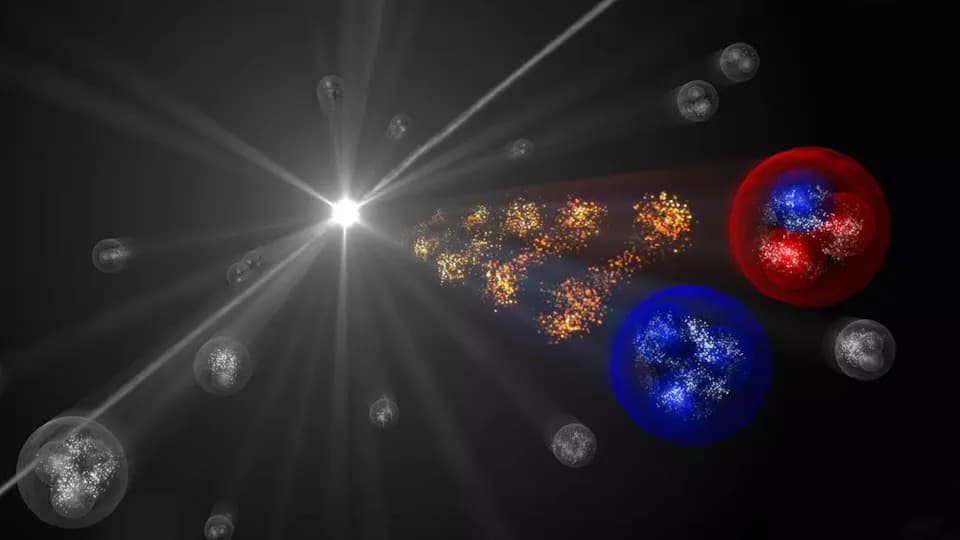
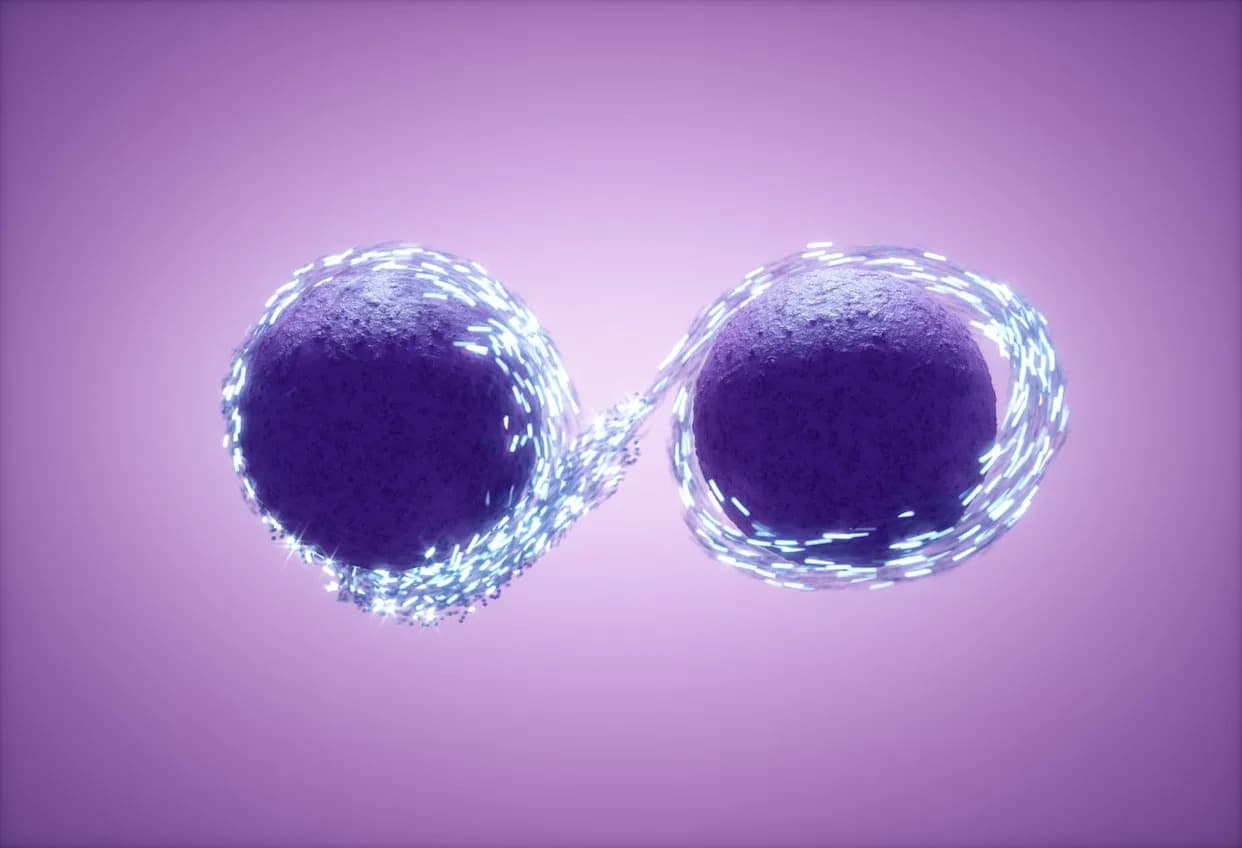
Lambda hyperons are especially useful for spin studies because the direction of a lambda’s spin can be reconstructed from the direction of its decay products (a proton and a pion); an antilambda decays to an antiproton and a pion. Crucially, virtual strange quark–antiquark pairs produced in the quantum vacuum are expected to be created with correlated spins. The STAR team therefore asked whether the spins of lambda–antilambda pairs emerging from collisions show the same alignment.
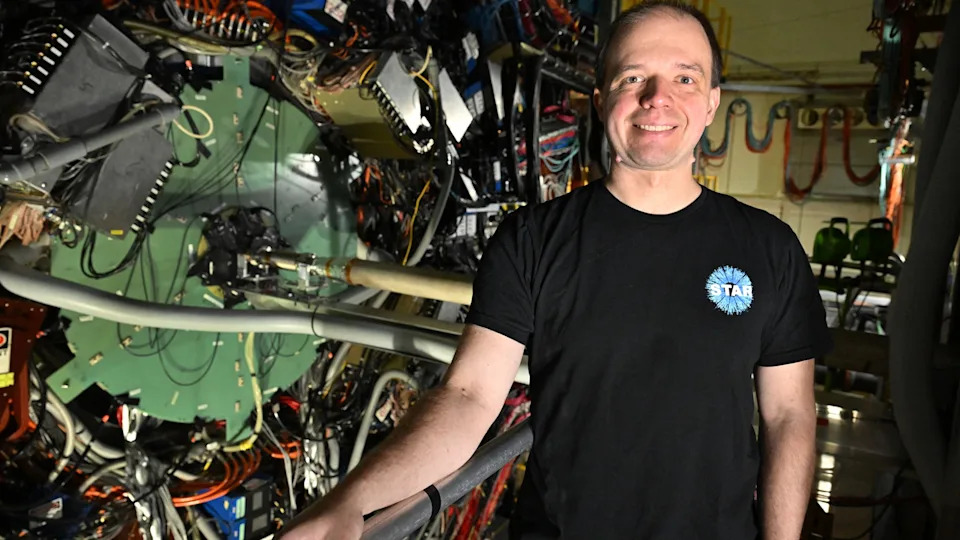
Jan Vanek, PhD, a physicist at the University of New Hampshire, in front of the STAR experiment/detector.Credit:Kevin Coughlin/Brookhaven National Laboratory
After analyzing millions of events, the researchers found that lambdas and antilambdas produced very close together in space and time emerge with strongly correlated — effectively perfectly aligned — spins. When the pairs are produced farther apart, the correlation disappears.
"This work gives us a unique window into the quantum vacuum that may open a new era in our understanding of how visible matter forms and how its fundamental properties emerge," said Zhoudunming (Kong) Tu, PhD, a STAR physicist at Brookhaven and co‑leader of the study.
The observation supports the interpretation that some strange quarks observed as constituents of lambdas and antilambdas originate as entangled quark–antiquark pairs in the vacuum, and that at least some of that quantum spin correlation survives the violent process that turns virtual pairs into real particles. The loss of correlation at larger separations suggests environmental interactions (for example, with other quarks and fields) cause decoherence as the particles separate.
The result provides a new experimental handle on how quarks produced from the vacuum become bound into hadrons such as protons and neutrons, and it opens the door to follow‑up studies in collisions of atomic nuclei and at future facilities such as the planned Electron‑Ion Collider. The study is published in Nature.
What This Means: The experiment captures a direct signature linking quantum vacuum fluctuations to the birth of real particles, offering fresh insight into entanglement and the quantum‑to‑classical transition in high‑energy collisions.
Help us improve.