Researchers using the LHC and the CMS detector recreated droplets of the early Universe's quark‑gluon plasma and detected wake‑like ripples left by single quarks. By pairing quarks with neutral Z bosons, the team isolated quark effects and identified ~2,000 clean events out of ~13 billion collisions. The observed patterns match hybrid‑model predictions and provide the first direct evidence that this primordial medium behaved as a near‑perfect liquid.
LHC Finds Primordial "Quark‑Gluon Soup" Acted Like a True Liquid — Direct Evidence of Quark Wakes
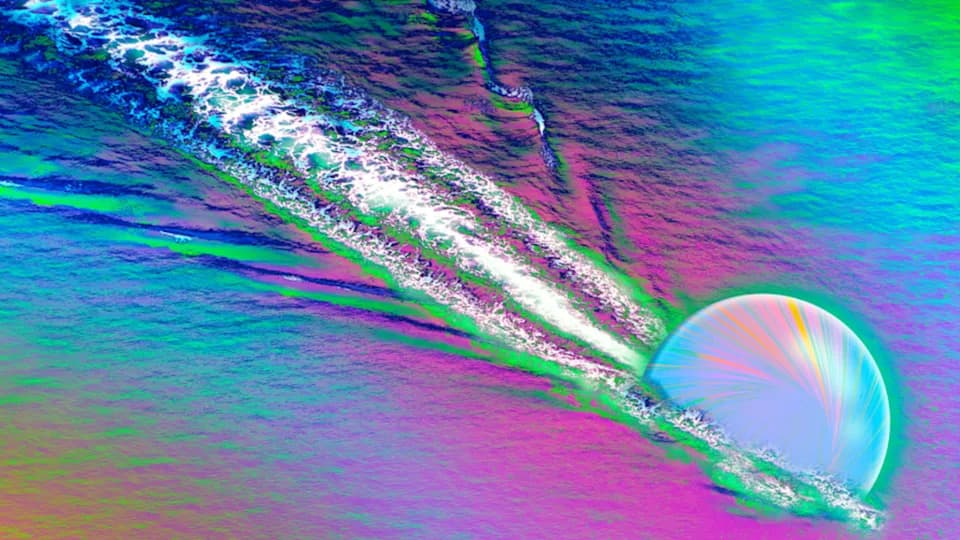
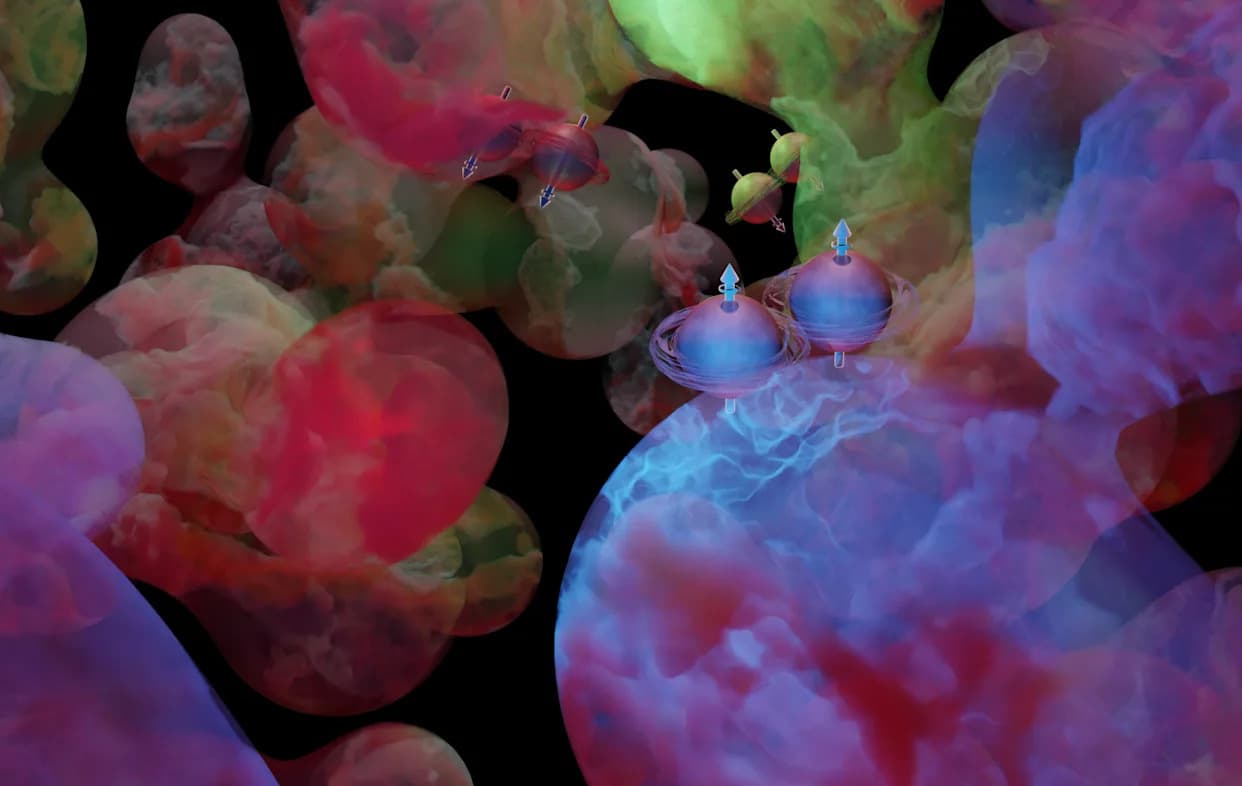
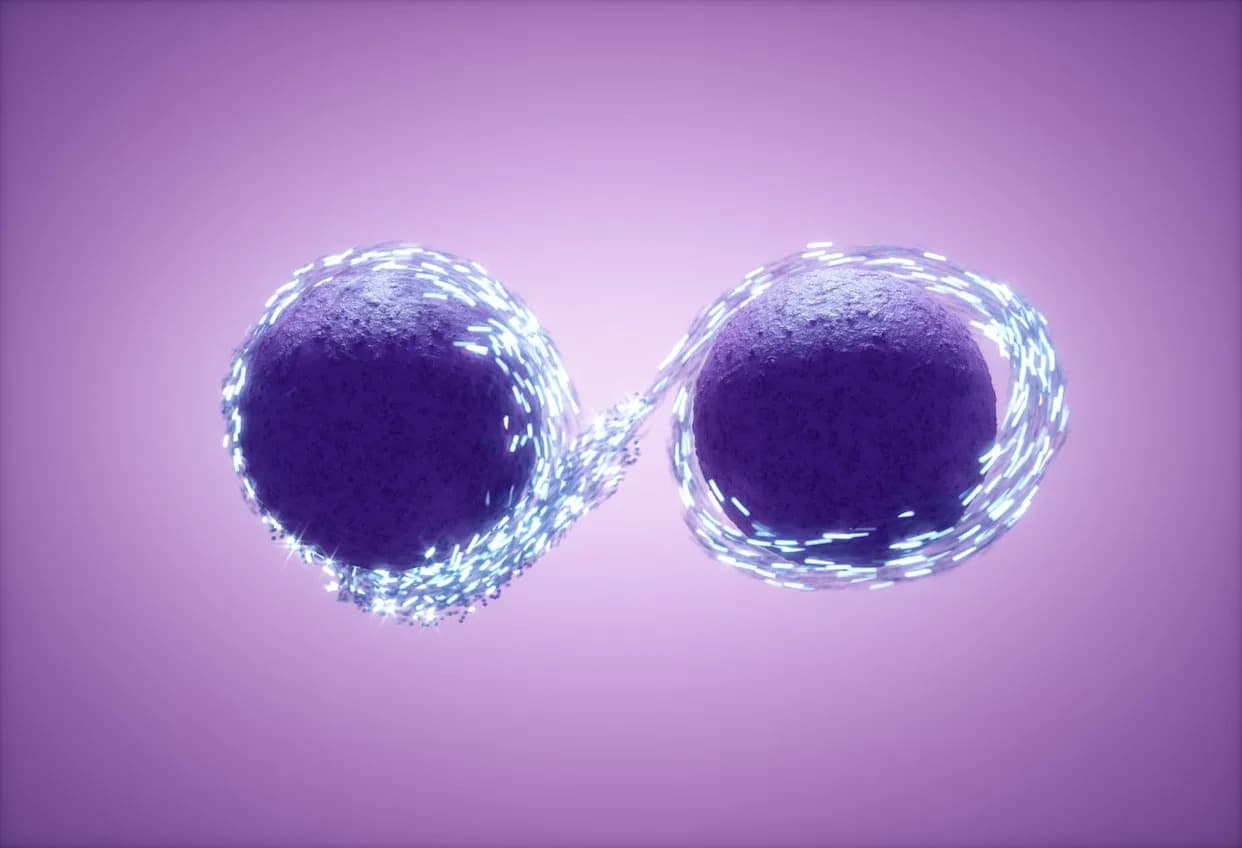
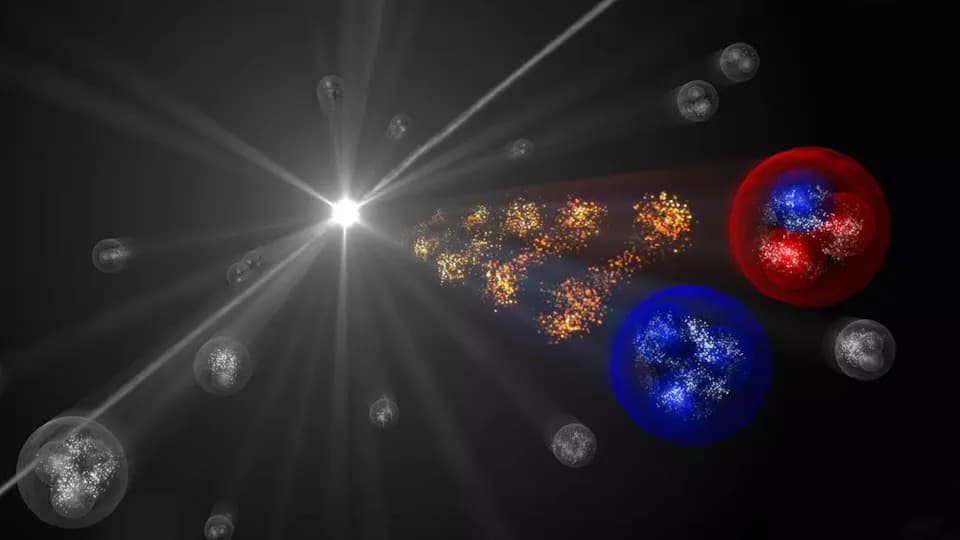
An illustration shows a quark racing through the primordial soup or quark-gluon plasma that filled the early universe, creating a wave. | Credit: Jose-Luis Olivares/ MIT
Using CERN's Large Hadron Collider (LHC), researchers have recreated tiny droplets of the primordial quark‑gluon plasma that filled the universe microseconds after the Big Bang and found direct evidence that this exotic matter behaved as a cohesive liquid.
What the Plasma Is
The quark‑gluon plasma is a searing, short‑lived state in which quarks and gluons — the fundamental constituents of protons and neutrons — are not confined inside particles. At temperatures of many trillions of degrees, this medium flowed with extremely low viscosity and is often described as a near‑perfect liquid.
How the Team Probed It
A Massachusetts Institute of Technology (MIT) team used the LHC's Compact Muon Solenoid (CMS) detector to analyze roughly 13 billion heavy‑ion collisions. They developed a new analysis technique that isolates events in which a high‑momentum quark is produced together with a neutral Z boson. Because the Z boson interacts very weakly with the plasma, any disturbance observed opposite the Z boson can be attributed to the passing quark alone.
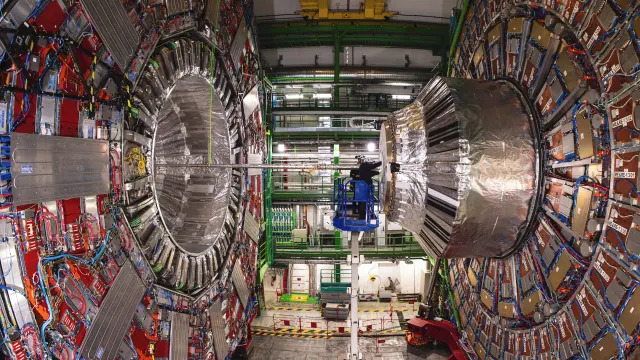
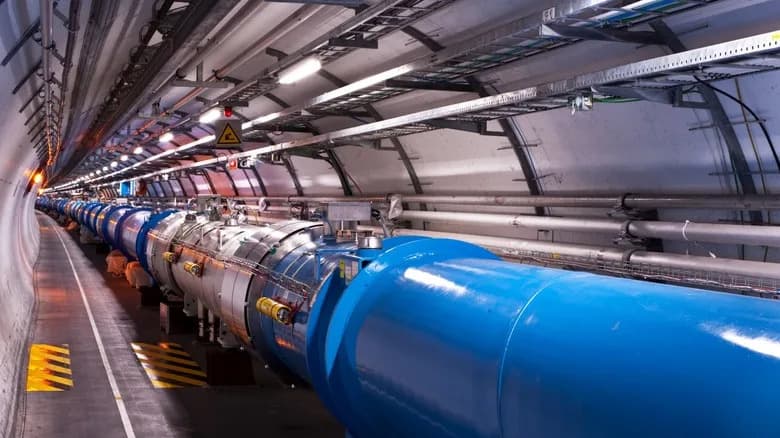
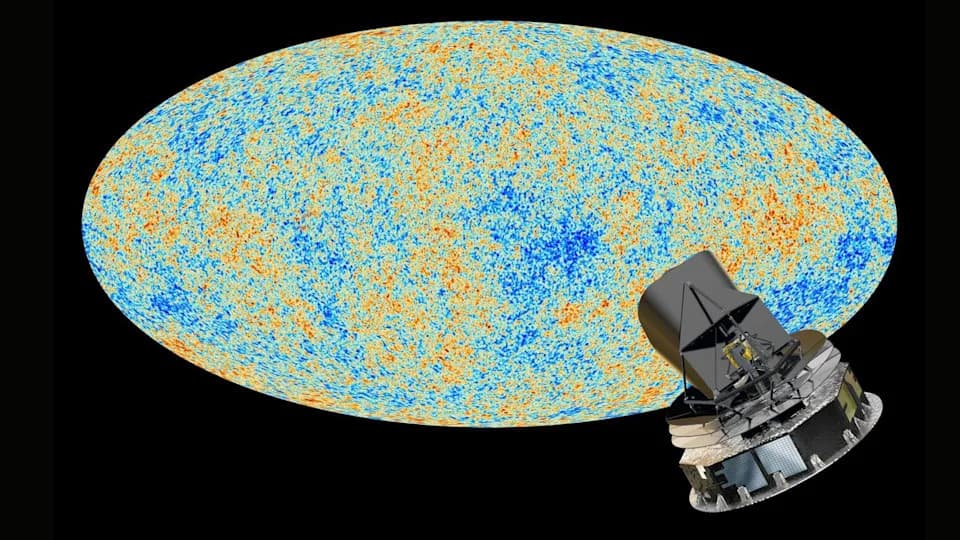
An image of the CMS detector at CERN's Large Hadron Collider. | Credit: CERN
Wakes, Ripples, and Liquid Behavior
Inside the recreated droplets, the researchers observed wake‑like patterns — splashes and ripples trailing the quark, analogous to a boat's wake in water. These signatures match predictions of the so‑called "hybrid model," which anticipates that a jet of quarks plowing through the medium will generate a liquid‑like wake. After scanning the collision data, the team identified approximately 2,000 Z‑boson events that clearly showed these fluidlike disturbances.
"Now we see the plasma is incredibly dense, such that it is able to slow down a quark, and produces splashes and swirls like a liquid. So quark‑gluon plasma really is a primordial soup," said Yen‑Jie Lee, professor of physics at MIT and a member of the team.
Why This Matters
This result is the first direct evidence that individual quarks drag and entrain the surrounding plasma, demonstrating collective, liquid behavior rather than random scattering expected for a dilute gas. Measuring the wakes' size, propagation speed, spatial extent, and decay time gives physicists new quantitative tools to constrain the plasma's transport properties and better understand how the very early universe expanded and cooled.
The research has been published in the journal Physics Letters B.
Help us improve.