The LHC now diverts warmed cooling water through two 5 MW heat exchangers at Point 8 to supply low-carbon heat to thousands of homes in Ferney-Voltaire. The collider sits in a 17-mile tunnel under the France–Switzerland border and needs extensive cryogenic cooling for its superconducting magnets. The scheme reduces wasted thermal energy and will be extended to Point 1; some heat recovery will continue, albeit at reduced levels, during the LHC’s long shutdown from after July 2026 until at least June 2030.
LHC Recycles Waste Heat to Warm Thousands of Homes Near Geneva
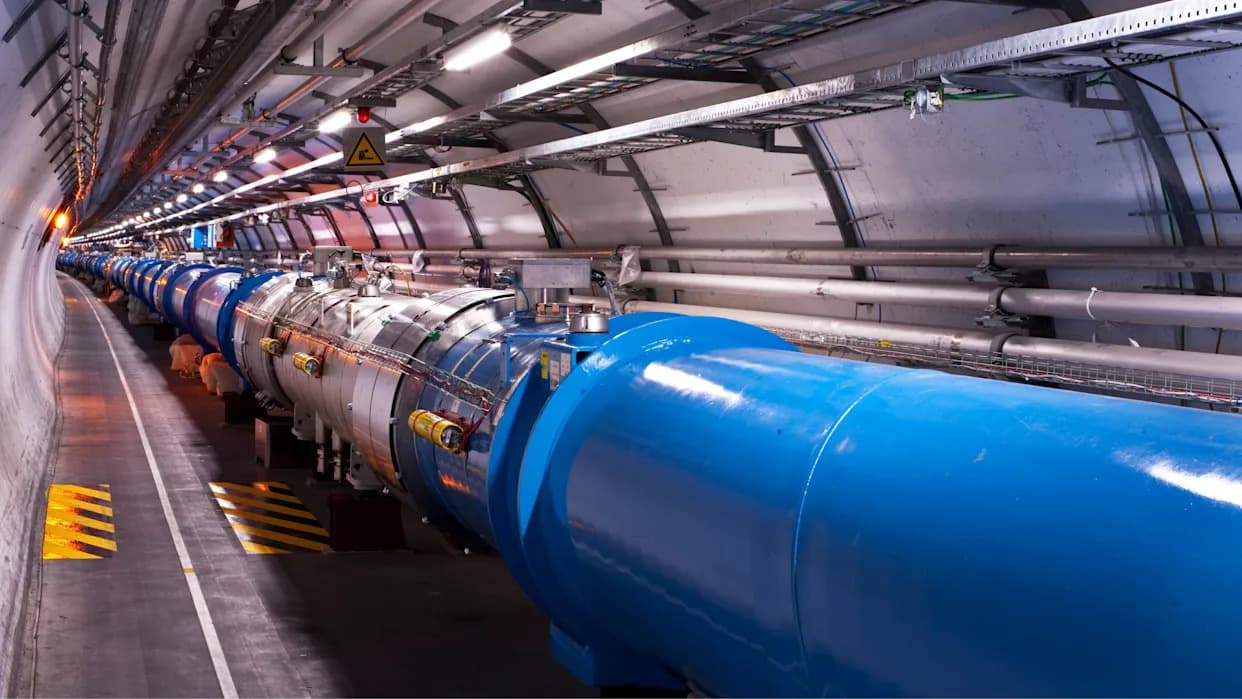
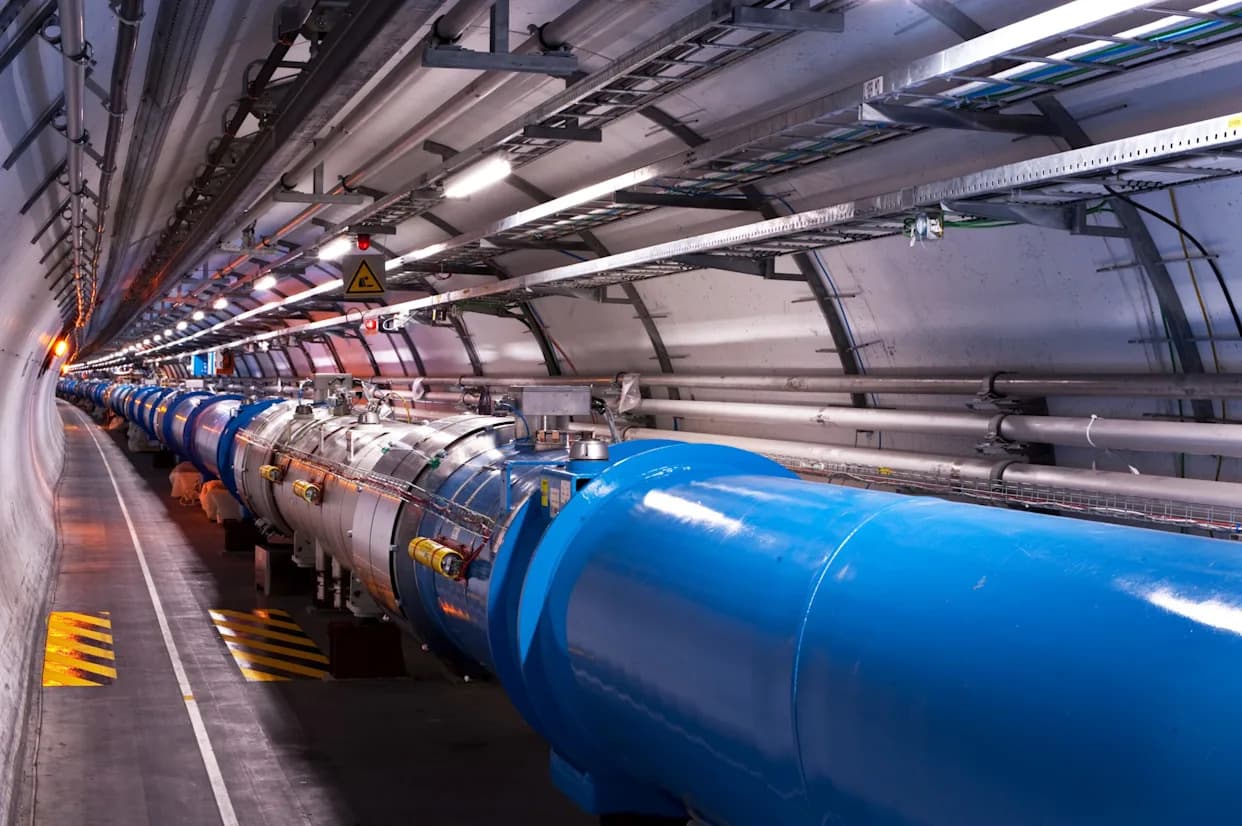
(Credit: Maximilien Brice/CERN/Wikimedia Commons)
The Large Hadron Collider (LHC) is now putting some of its excess thermal energy to practical use: warming homes in nearby France. Water from the collider’s cooling circuit is routed through two 5 MW heat exchangers at Point 8 and fed into a local district-heating network that serves thousands of residents in Ferney-Voltaire.
How It Works
The LHC — the world’s largest and most powerful particle accelerator, housed in a roughly 17-mile (27 km) circular tunnel beneath the France–Switzerland border near Geneva — requires massive cooling for its superconducting magnets. Until recently, warmed cooling water was typically released to cooling towers. The new system captures that otherwise wasted heat at Point 8, where the collider reaches the surface, and transfers it into the local heating grid via two 5 MW heat exchangers.
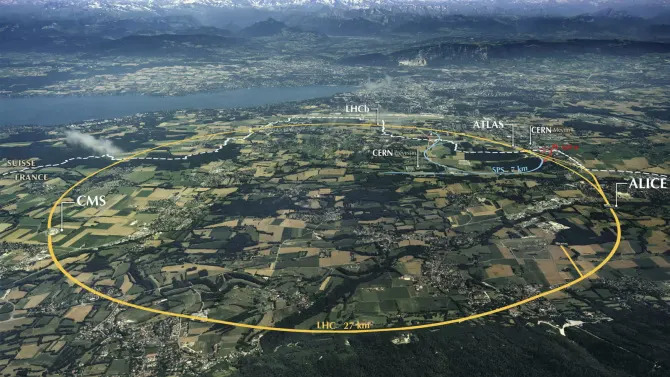
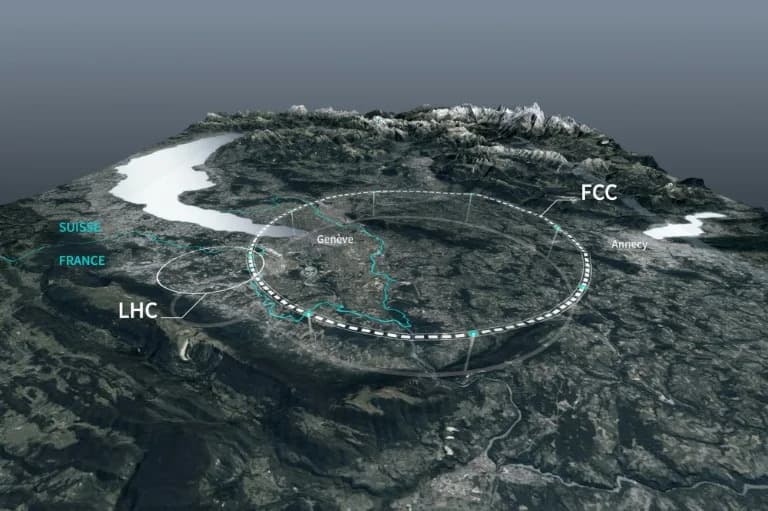
Illustration of the LHC under the French countryside.
Practical Benefits and Future Plans
The project makes environmental and economic sense: it reduces waste heat discharge and supplies low-carbon heat to a new residential and commercial district close to the site. CERN says the scheme will be extended to another surface access point on the ring, Point 1, as the programme develops.
“The third Long Shutdown (LS3) marks a critical milestone for CERN, enabling installation and commissioning of the High-Luminosity LHC equipment for the accelerator and the phase II upgrades of the ATLAS and CMS experiments,” CERN said in a statement.
Although the direct heat supply will be affected by the LHC’s planned long shutdown beginning after July 2026 — a pause expected to last until at least June 2030 while major High-Luminosity upgrades are installed — parts of Point 8 will continue to operate and generate usable waste heat during the downtime. That means a reduced but still valuable heat contribution to the local network throughout the LS3 period.
Credit: CERN
Help us improve.