The Higgs boson is the quantum excitation of a universal Higgs field that explains how certain fundamental particles acquire mass through electroweak symmetry breaking. Detected by the ATLAS and CMS experiments at CERN's LHC (announced July 4, 2012), the particle has a mass near 125 GeV/c² and spin 0. Ongoing and upgraded LHC runs aim to measure its properties with greater precision and to search for connections to dark matter and physics beyond the Standard Model.
What Is the Higgs Boson — The Particle That Helps Give Mass (Explained)
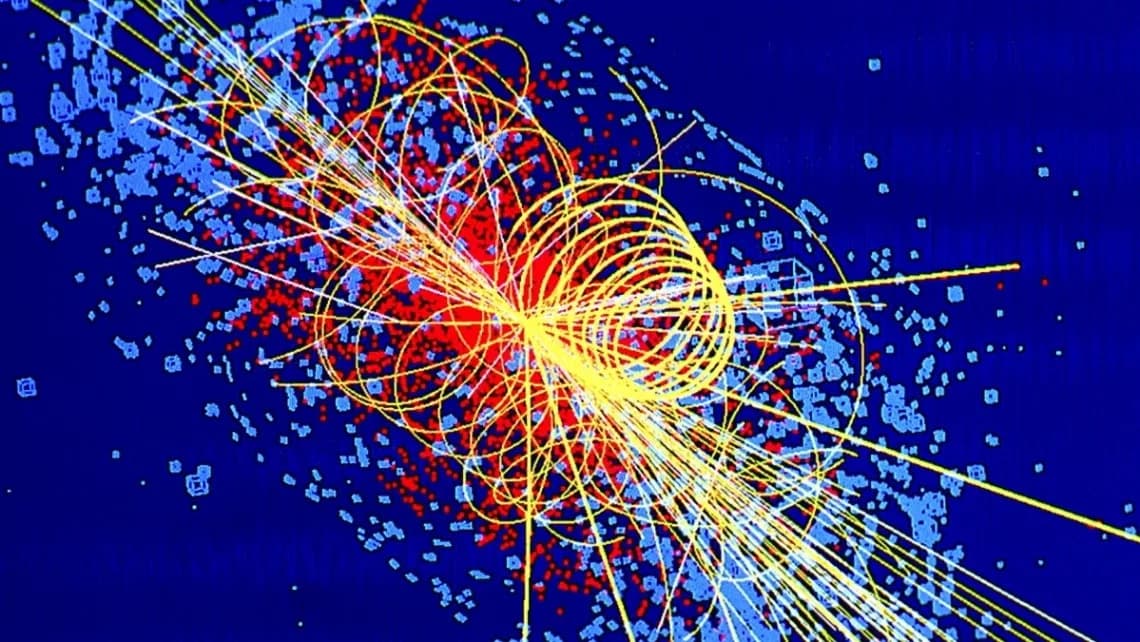
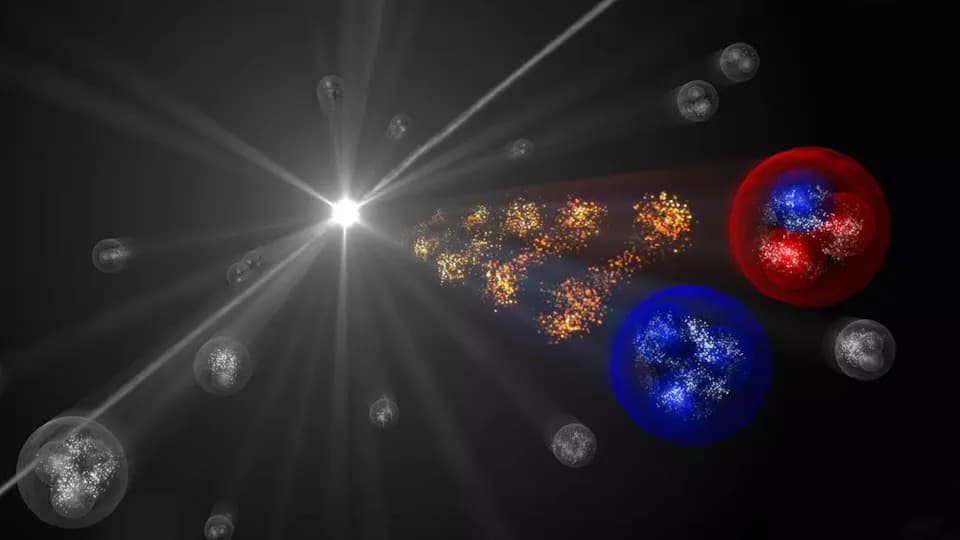
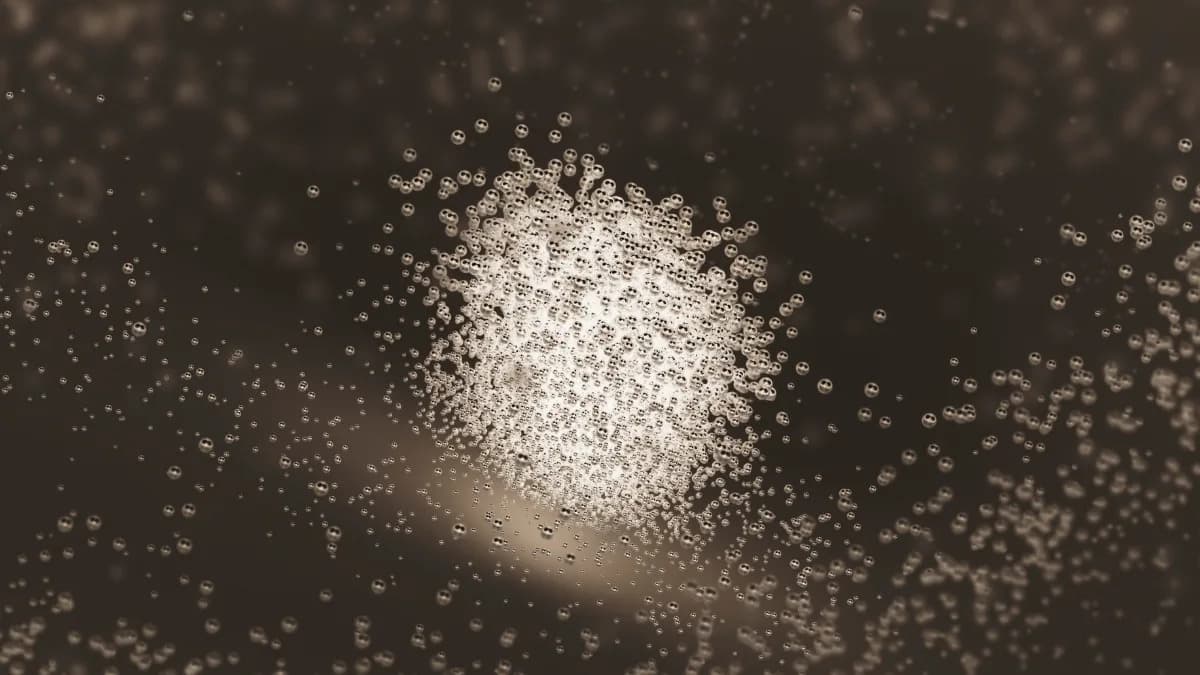
This is what the creation of a Higgs Boson looks like to the Large Hadron Collider. (Credit: CERN)
The Higgs boson is one of the most important discoveries in modern physics: the quantum excitation of a pervasive field that helps explain why some fundamental particles have mass. Its discovery required the world’s largest particle collider and a global effort by thousands of scientists. Though popularly nicknamed the "God Particle," the Higgs is best understood through careful theory and experiment rather than mythology.
The Higgs Field: A Universal Background
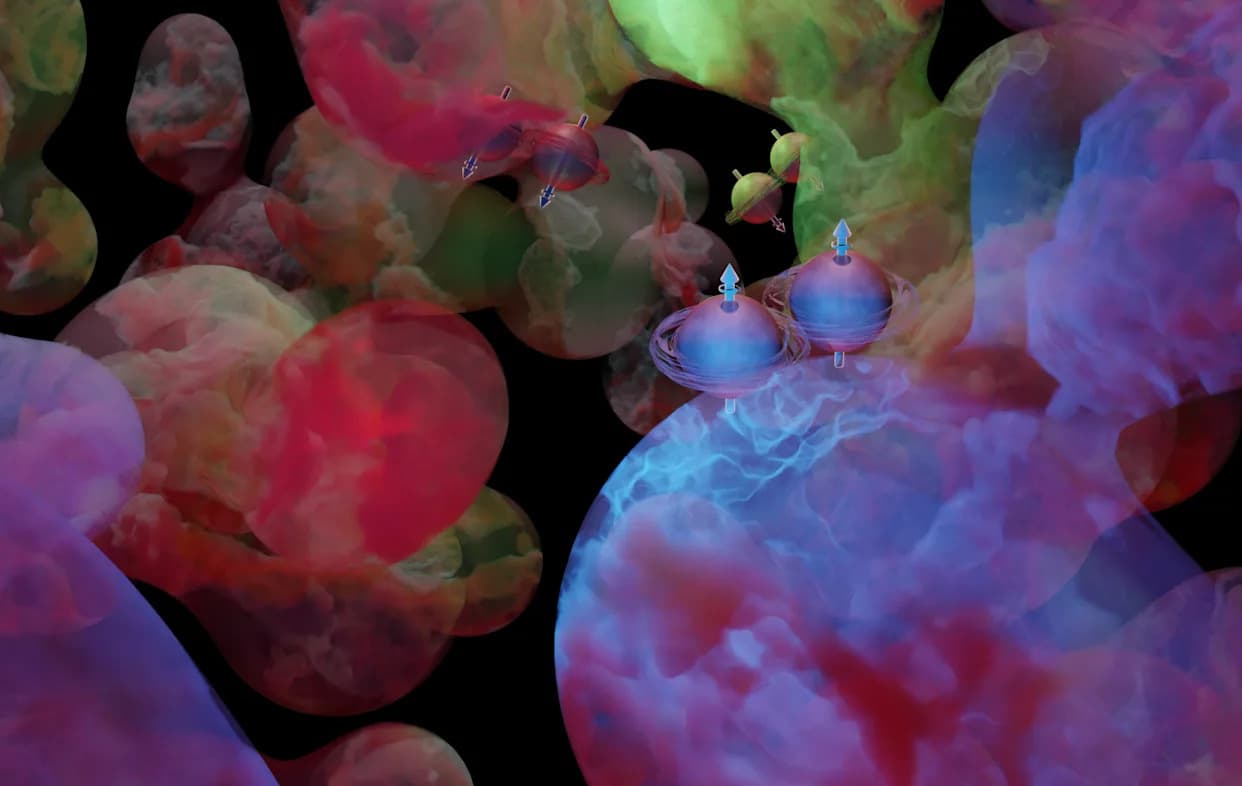
Physicists do not think of mass as an intrinsic, standalone property that magically appears. In the Standard Model the Higgs field is a nonzero field that fills space. Interactions with that field break certain symmetries of the electroweak force (a process called electroweak symmetry breaking), and through these interactions some particles—most notably the W and Z bosons and fundamental fermions—acquire mass. The mechanism is described by well-defined mathematical terms (Yukawa couplings for fermions) rather than literal pushing or dragging.
Why a Particle Was Predicted
Quantum fields have particle-like excitations. If the Higgs field exists, its smallest localized excitation would appear as a particle: the Higgs boson. Unlike force carriers such as photons (spin 1), the Higgs boson is a scalar particle (spin 0). Detecting a particle with the predicted properties is effectively the most direct experimental confirmation that the field itself exists.

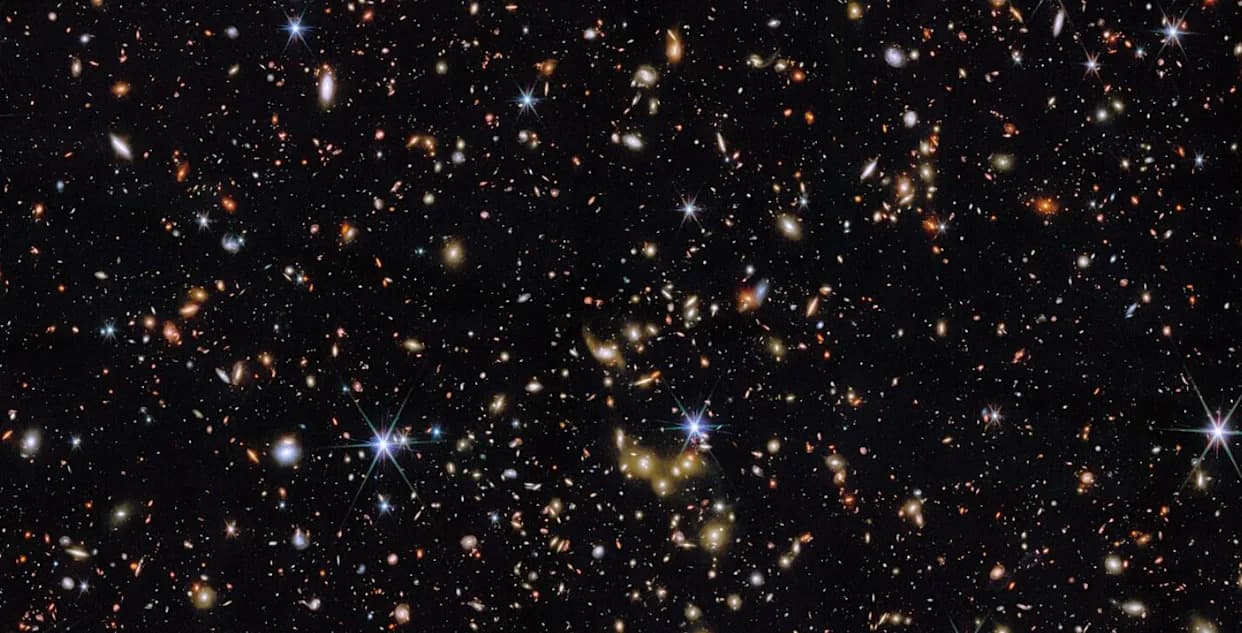
As you can see from this chart of the composition of the universe, understanding dark matter and dark energy is fundamental to understanding our universe.
The Hunt at the Large Hadron Collider
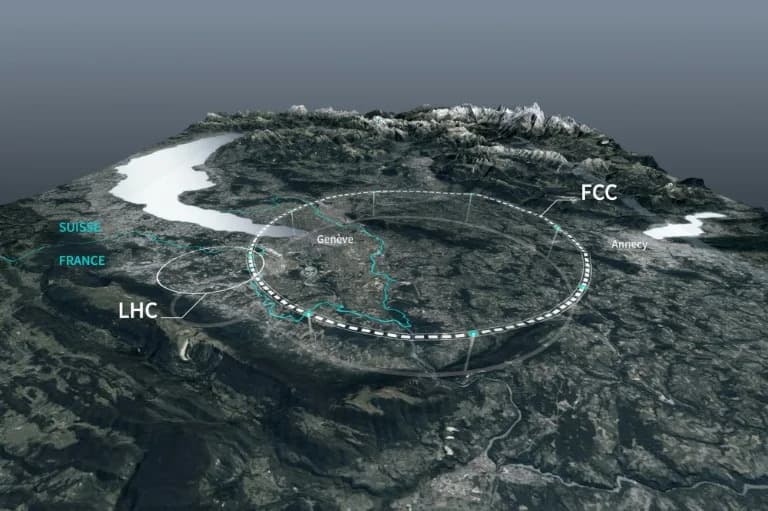
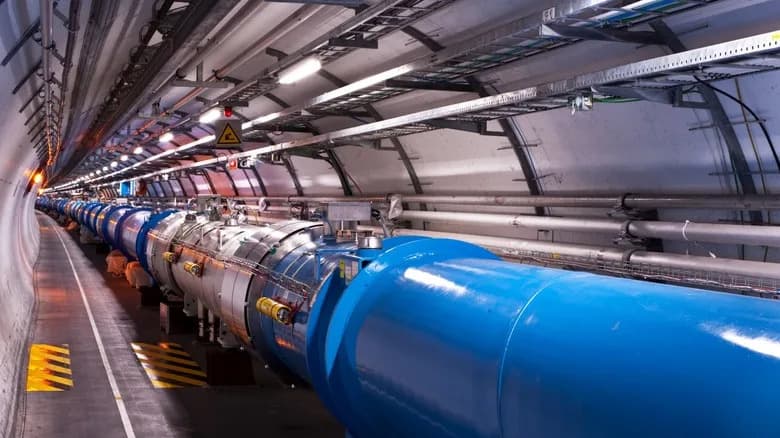
Finding the Higgs required enormous collision energies and very sensitive detectors. The Large Hadron Collider (LHC) at CERN—a 27-kilometer (17-mile) ring of superconducting magnets—accelerates protons to near light speed and collides them. ATLAS and CMS, the two general-purpose detectors, looked for the characteristic decay patterns and invariant mass peaks predicted for a Higgs particle.
Discovery and What Was Found
On July 4, 2012, CERN announced that ATLAS and CMS had each observed a new particle with properties consistent with the Higgs boson; its mass is about 125 GeV/c². Subsequent measurements have shown it behaves much like the Standard Model Higgs, though precision studies continue to test its couplings and quantum numbers and to search for any deviations that would signal new physics.
Important Clarifications
Although headlines sometimes suggest "the Higgs gives all mass," that is an oversimplification. Much of the mass of composite objects such as protons and neutrons arises from the strong force and the dynamics of quantum chromodynamics (QCD), not directly from the Higgs mechanism. The Higgs gives mass primarily to fundamental particles (W and Z bosons and many fermions) through specific interactions.
Open Questions and Future Research
Physicists are using upgraded runs of the LHC (including the High-Luminosity LHC) to measure the Higgs' properties with far greater precision and to search for rare decays, possible additional Higgs-like states, and links to dark matter or new symmetries such as supersymmetry. The Standard Model still does not include gravity, and although the Higgs is central to particle masses, how it might connect to a deeper unification of forces or to dark sectors remains an open and exciting question.
Bottom line: The Higgs boson confirms a key ingredient of the Standard Model and opens new experimental pathways. It is confirmed in existence, well measured in many respects, but still a gateway to deeper mysteries.
Help us improve.