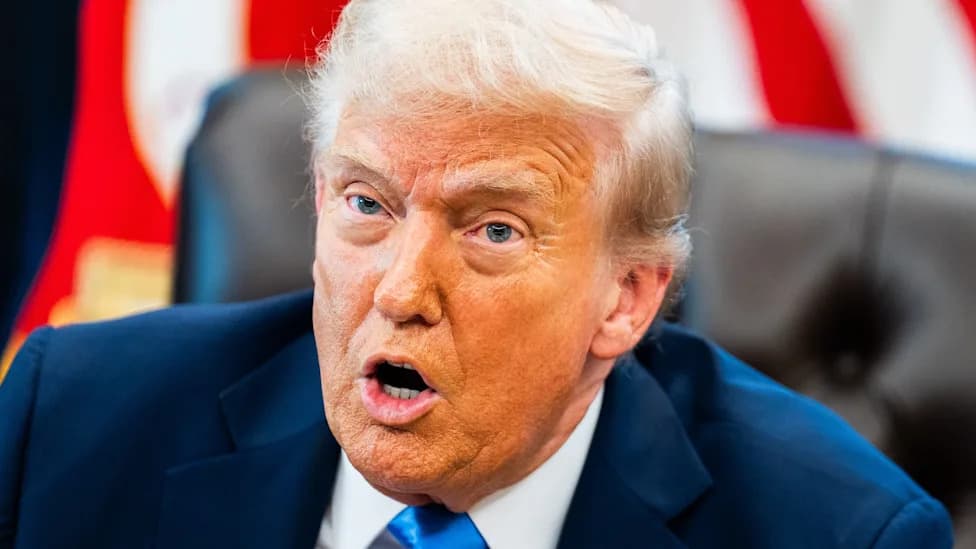
President Trump’s threats and mixed messages about Greenland and Europe suggest he is applying a ‘madman’ approach to allies, not just adversaries. Open hints of coercion against partners would corrode the trust that sustains NATO and transatlantic security. Misstatements about the Nobel Peace Prize and Greenland’s sovereignty compound diplomatic harm. Even if annexation plans are abandoned, the episode has already weakened U.S.-European relations and America’s negotiating credibility.
Trump’s 'Madman' Posture Toward Allies Is Undermining NATO and U.S. Credibility

Trump’s ‘madman’ approach to allies is a catastrophe for the U.S.
President Donald Trump’s recent comments about Greenland, his imposition of tariffs on some European countries, and a private text to Norway’s prime minister together suggest he is applying a “madman” strategy not only to adversaries but to longtime allies. That posture risks eroding the trust and institutions that have underpinned transatlantic security since World War II.
Volatility, Threats, and Diplomatic Damage
Madman theory holds that projecting unpredictability and a willingness to use extreme measures can intimidate rivals and produce concessions. While some strategists debate whether that approach can be effective against hostile states, using it against partners is dangerous. Suggesting the United States might seize territory from friendly countries would be catastrophic for the postwar Western order and for NATO.
In public remarks and private messages, the president has shifted between threatening language and reassurances. Asked how far he would go to acquire Greenland, he replied, "You'll find out." He later said he did not want to use force. At the same time, the administration announced tariffs on European countries that opposed U.S. designs on the Danish territory.
Mixed Messages and Misstatements
The president also sent a text message to Norway’s prime minister that conflated several facts: it suggested Norway personally denied him a Nobel Peace Prize, and it implied Greenland is a Norwegian possession. In truth, the Nobel Peace Prize is awarded by an independent Norwegian committee, and Greenland is an autonomous territory of Denmark. Such errors amplify diplomatic alarm and feed uncertainty about U.S. intentions.
"Considering your Country decided not to give me the Nobel Peace Prize... I no longer feel an obligation to think purely of Peace... but can now think about what is good and proper for the United States of America."
Broader Consequences
Officials in the administration have at times celebrated bold, risky operations abroad, and some senior aides have suggested that extreme measures can prove credibility. Whether or not plans to annex Greenland proceed, the rhetoric has already damaged U.S.-European relations. Allies now face the prospect that the United States might act unpredictably toward partners as well as adversaries.
That erosion of trust has real costs: it undermines bargaining leverage on trade and security, weakens alliance cohesion, and could invite rival powers to exploit divisions in the West. As European Commission President Ursula von der Leyen put it, "A deal is a deal. And when friends shake hands, it must mean something." If allies cannot count on American reliability, NATO’s deterrent posture and transatlantic cooperation will suffer.
What Comes Next
Even if the Greenland episode fizzles, repairing the damage will take sustained diplomatic effort and clearer, more consistent leadership. Restoring confidence requires accurate communication, adherence to international norms, and visible respect for partner sovereignty. Without that, the United States risks weakening the security architecture that has protected Western interests for decades.
Help us improve.