Douglas MacKinnon, a former White House and Pentagon official, defends Chris Matthews’s stature while criticizing Matthews’s claim that "Donald Trump is destroying our democracy" because he might "screw around" with the 2026 elections. MacKinnon warns that speculative, alarmist rhetoric can seed extreme fears — illustrated by a taxi driver who feared martial law before 2028 — and argues that such language risks radicalizing vulnerable people. He urges commentators and public figures to avoid inflammatory claims, stick to verifiable facts, and work to lower the temperature of political discourse.
Don’t Fan the Flames: Why Suggesting Trump Is ‘Screwing Around’ With Elections Is Dangerous
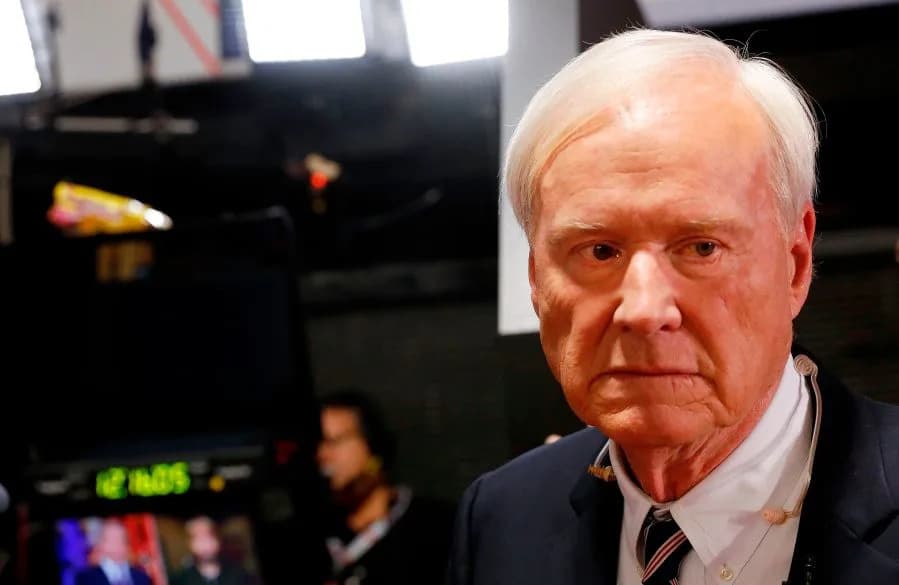
I grew up poor in a blue-collar Irish‑Catholic neighborhood in the heart of Boston, and for years I have been an admirer of Chris Matthews.
While working as a writer in the Reagan White House in the late 1980s, I returned again and again to two books. The first was Donald Trump’s The Art of the Deal; the second was Matthews’s Hardball. Trump’s book read like an advanced course in real-world dealmaking, and Matthews’s offered similarly practical lessons about politics. Both books were excellent and have stood the test of time.
Real-world experience matters, and Matthews has demonstrably walked the walk across the political landscape. For that reason his voice still carries weight. His words matter — and because they do, I felt compelled to respond to a recent comment he made.
“Donald Trump is destroying our democracy,” Matthews told co-host Mika Brzezinski on Morning Joe. “It’s unbelievable. And you know why? Because he wants to screw around with the ’26 elections.”
In my view, framing that sort of speculation as fact is inflammatory and dangerous, especially when it comes from a respected insider who knows how rhetoric shapes political behavior. Does Trump want his party to win the 2026 midterms? Absolutely. Does he hope a political ally succeeds him in 2028? Of course. Those are ordinary ambitions for any president.
No Democrat I talk with — and I speak with many across the ideological spectrum — truly believes Trump plans to abandon constitutional order, remain in office beyond his term, or cancel free elections. Yet the rhetoric suggesting those scenarios exists online and can seep into vulnerable minds.
I heard an unsettling example myself. In a taxi to Washington, D.C., a driver told me he feared Trump would declare martial law before the 2028 election so he could "remain a dictator for life," and that people should rise up against it. That fear was clearly stoked by overheated talk he had absorbed elsewhere.
Words matter. Political leaders, commentators and anyone with a platform should understand how easily extreme speculation can radicalize people and contribute to threats and violence. We have witnessed assassination attempts, threats against public figures, and other episodes of politically motivated violence in recent years. Overheated rhetoric, demonizing language, and dehumanizing smears have been factors in those incidents.
Matthews has long been a valuable and necessary voice in political conversation. He knows how politics is played — he wrote the book on it — and he has every right to criticize Trump and his policies. But when someone with his stature shifts from critique to alarmist speculation without clear evidence, it risks fanning sparks into flame.
If the goal is to preserve democratic norms and reduce violence, then those who shape public discourse should try to cool the temperature, stick to verifiable claims, and model sober, fact-based debate. We are a nation on a razor’s edge. Let’s open the steam valves and talk to one another again.
Douglas MacKinnon is a former White House and Pentagon official.
Help us improve.