Power was restored Thursday to the eastern Cuban provinces of Holguín, Granma, Santiago de Cuba and Guantánamo after a substation fault triggered a wider grid disconnect. Authorities said the provinces were reconnected but warned that scheduled rolling cuts will continue because the country faces a national capacity shortfall. The outage highlights persistent problems in Cuba's ageing power system, which generated only about half the electricity it needed last year, and is exacerbated by fuel constraints, underinvestment and the effects of sanctions and economic decline.
Lights Return Across Eastern Cuba After Major Grid Failure — Rolling Cuts Continue
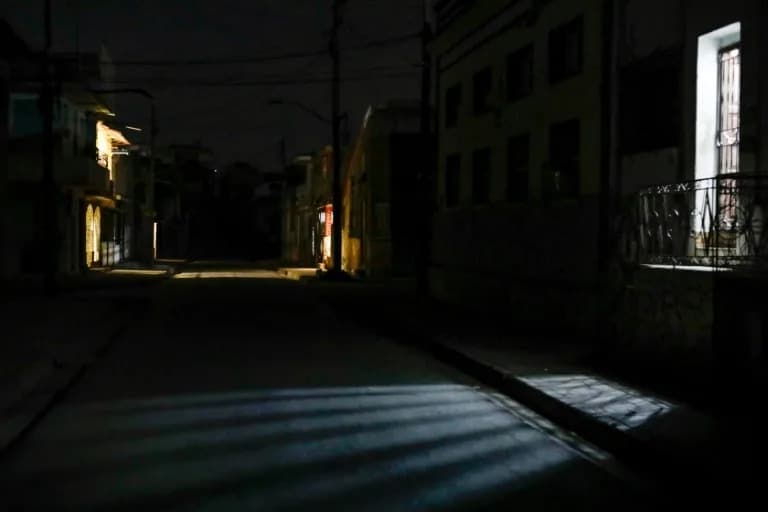
This photo shows homes using generators during a blackout in Santiago de Cuba on February 5, 2026 (STR)(STR/AFP/AFP)
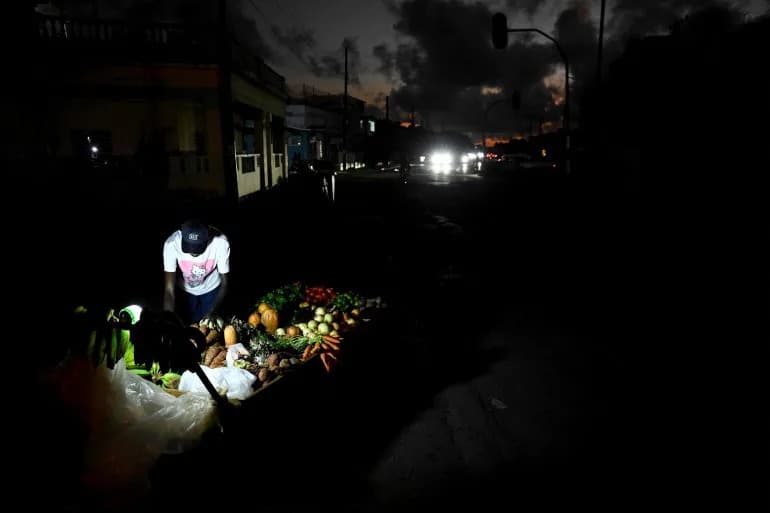
Power was restored on Thursday to eastern Cuba after a failure in the national electricity grid plunged three provinces and part of a fourth into darkness the night before, authorities said.
In the early hours of Thursday, the provinces of Holguín, Granma, Santiago de Cuba and Guantánamo were "synchronized to the national power grid," Felix Estrada of the Ministry of Energy and Mines told state television.
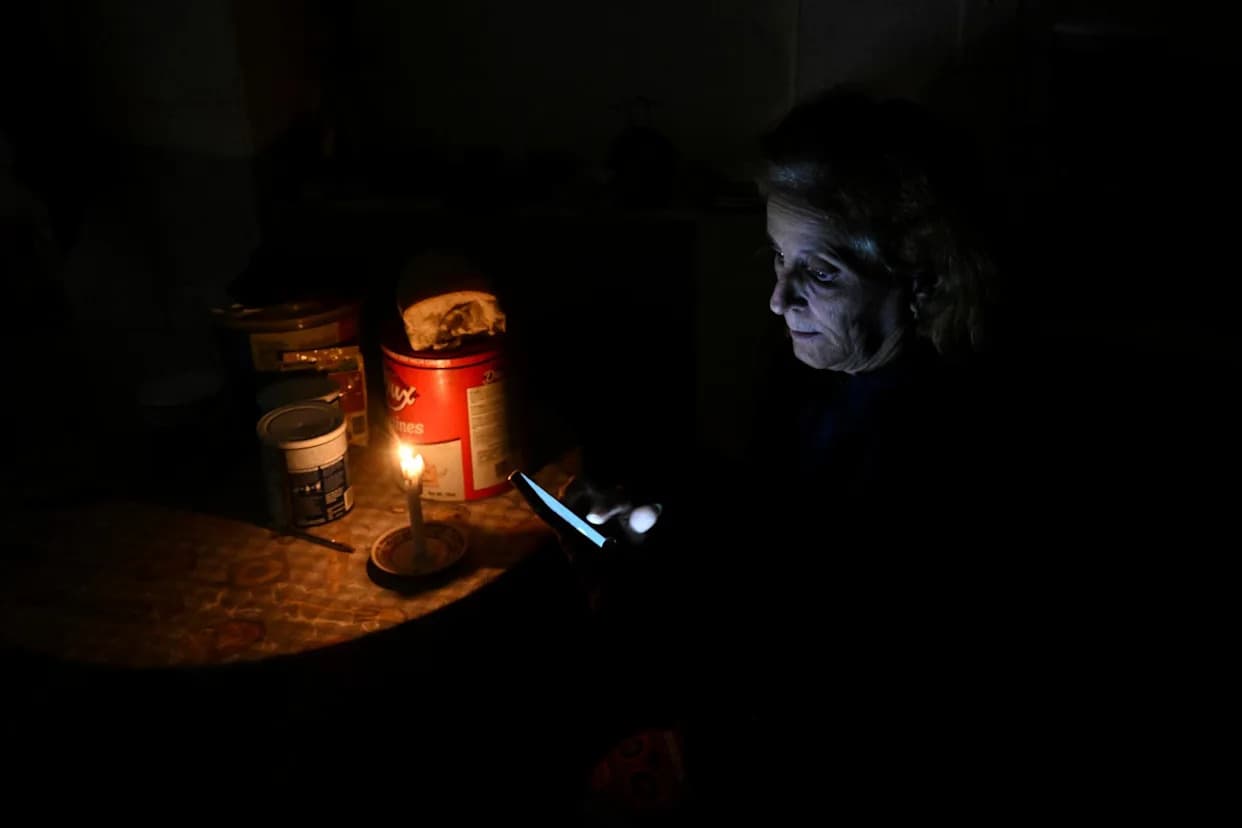
Estrada warned that, despite the reconnection, scheduled rolling power cuts remain in effect across the four provinces because the country continues to face a broader "capacity deficit" beyond this latest incident, which left hundreds of thousands of people without electricity.
What Caused the Outage
The state-owned utility, Unión Eléctrica de Cuba, said on X (formerly Twitter) that a fault at a substation in Holguín on Wednesday night triggered an electrical-system disconnect that affected the four provinces. Cuba's second-largest city, Santiago de Cuba, home to more than 400,000 people, was among the areas hit.
"Since it goes out all the time, I didn't even realize it was a widespread outage," said Isabel, 28, who declined to give a last name, describing how her power went out at about 5:00 p.m. local time (22:00 GMT).
Longer-Term Problems
The outage underscores long-standing weaknesses in Cuba's ageing electricity system. An AFP analysis of official figures found the island generated only about half the electricity it needed last year. Officials point to tight U.S. sanctions as a major factor in the crisis, but they also cite years of underinvestment, economic mismanagement and a severe tourism downturn after the COVID-19 pandemic.
Despite the U.S. trade embargo imposed in 1962, Cuba still operates eight thermal power plants built in the 1980s and 1990s. Thirty solar installations built with Chinese assistance have helped but have not been sufficient to stop repeated blackouts.
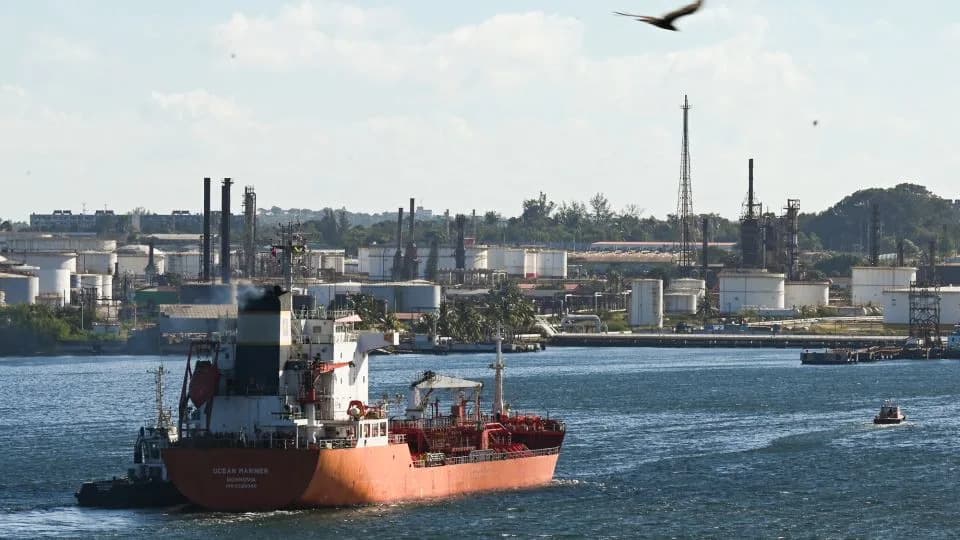
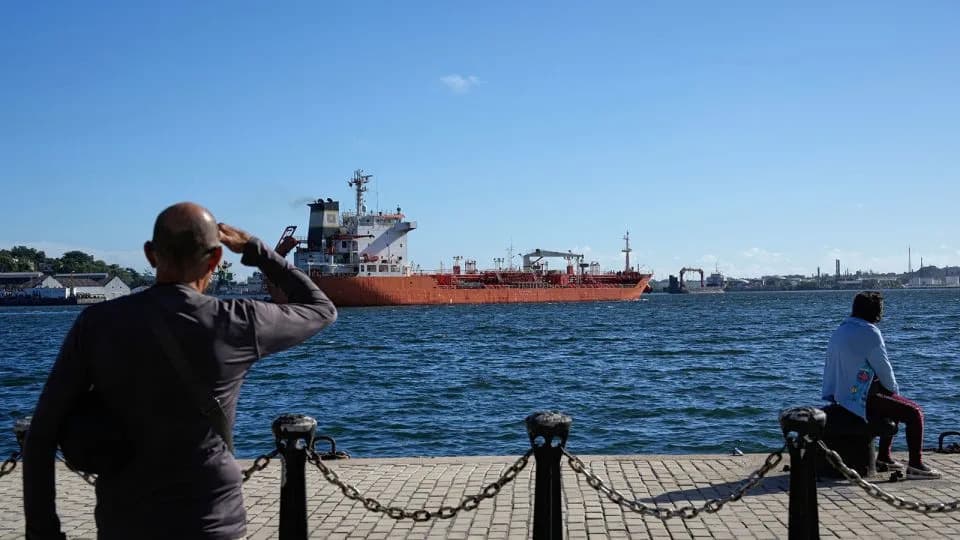
Compounding concerns, U.S. officials have recently threatened to penalize countries that continue to supply subsidized Venezuelan oil to Cuba — a move that could deepen fuel shortfalls. The U.N. secretary-general has warned that a significant oil shortage could precipitate a humanitarian crisis on the island.
In December, a large-scale outage in western Cuba left millions without power, including in Havana, a city of about 1.7 million people. Cuban authorities say the system remains vulnerable and that rolling outages will continue until generation and infrastructure can be stabilized.
What to Watch: Officials will need to demonstrate quicker fixes to infrastructure and to secure reliable fuel supplies to prevent further prolonged blackouts. Meanwhile, households and businesses continue to face uncertainty as rolling cuts persist.
Help us improve.