
Miguel Díaz‑Canel accused US President Donald Trump of trying to “suffocate” Cuba’s economy after an executive order threatened tariffs on countries that sell oil to the island. The move comes amid fuel shortages and rolling blackouts in Cuba and follows reports of a violent raid in Venezuela, claims that remain unverified. Mexico said it would seek ways to continue supplying fuel, while UN experts warned that prolonged sanctions are worsening shortages and human‑rights impacts.
Díaz‑Canel: Trump’s Tariff Threat Will 'Suffocate' Cuba Amid Fuel Shortages
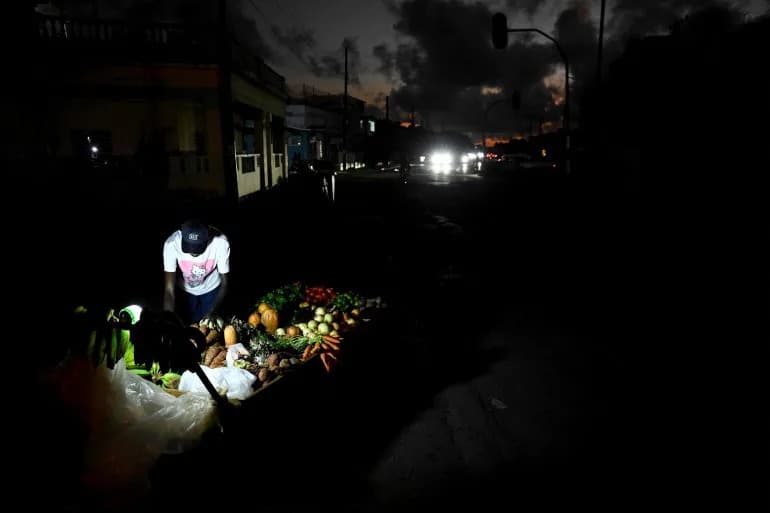
A man sells vegetables on the street during a blackout in Havana on January 22 [Norlys Perez/Reuters]
Cuban President Miguel Díaz‑Canel sharply condemned an executive order signed by US President Donald Trump that threatens tariffs on countries that continue to sell oil to Cuba. Washington described the measure as a response to an “unusual and extraordinary threat” to US national security; Havana says the move is intended to “suffocate” an economy already strained by long‑running sanctions.
“Under a false and baseless pretext, they plan to suffocate our economy,” Díaz‑Canel wrote on social media, accusing US policymakers of pursuing the policy for political ends. His remarks singled out Senator Marco Rubio — a prominent Cuban‑American critic of the Cuban government — rather than a US cabinet official.
Disrupted Oil Supplies And Domestic Impact
Cuba has reported rolling power cuts and fuel shortages in recent weeks. Cuban officials and residents say those shortages have aggravated medicine, food and transport problems. International reporting cited by Cuban authorities links the disruption to a violent raid in Venezuela earlier this month; some accounts allege an abduction of President Nicolás Maduro and the deaths of Cuban security personnel, though these specific claims have not been independently verified.
Mexican President Claudia Sheinbaum said Mexico would explore alternatives to continue supplying fuel after temporarily pausing shipments amid heightened rhetoric from Washington. Financial Times figures cited in reporting indicate Mexico supplied roughly 44% of Cuba’s oil imports until last month, Venezuela 33%, and Russia about 10%, with smaller volumes from Algeria.
Diplomatic And Humanitarian Responses
Cuba’s foreign minister, Bruno Rodríguez, declared an “international emergency” in response to the US order. Venezuela also condemned the action, calling it a violation of international law and the principles of global commerce.
“This new measure reveals the fascist, criminal and genocidal nature of a clique that has hijacked the interests of the American people for purely personal ends,”
United Nations experts, including Alena Douhan — the UN special rapporteur on the negative impact of unilateral coercive measures on human rights — have warned that long‑running sanctions against Cuba have contributed to shortages of food, medicine, electricity and essential spare parts, and have harmed the enjoyment of basic human rights.
What Officials Are Saying
Reporting from Havana, international correspondents described the US move as a major economic and psychological blow to the island. In social media posts, President Trump urged Cuba to strike a deal “before it is too late,” without specifying terms, and suggested Senator Rubio could be a future Cuban leader.
On the ground, residents described mounting anxiety. “My food is going bad. We haven’t had electricity since 6am,” one Havana resident told journalists. An elderly resident who lived through Cuba’s 1990s “Special Period” said current shortages felt as severe or worse, given ongoing blackouts and scarce fuel.
Note on Reporting: Some reports referenced in this article describe a violent operation in Venezuela that allegedly involved Maduro and Cuban personnel. Those specific allegations remain contested and have not been independently confirmed by reliable, independent sources at the time of publication.
Help us improve.





















