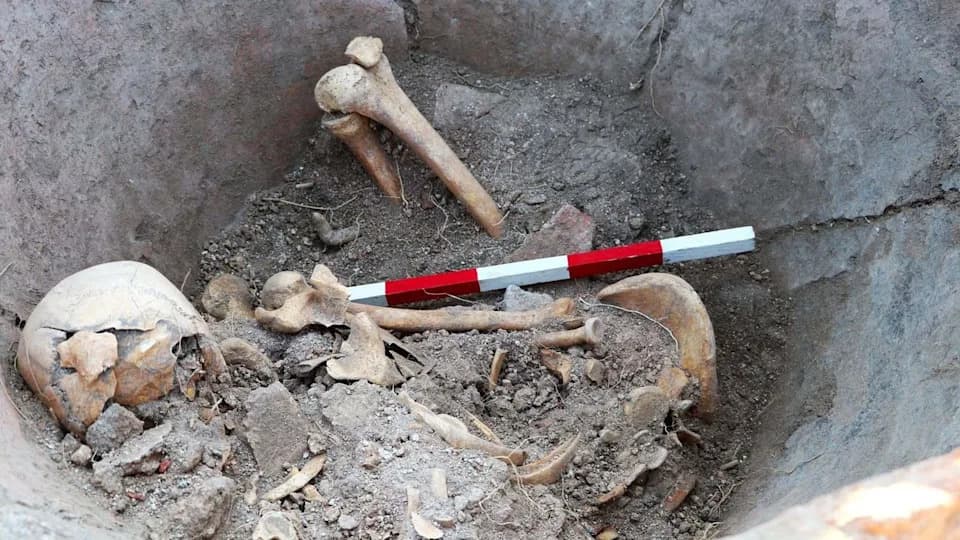
New research by zooarchaeologist Stella Nikolova, published in December 2025, finds butchery marks on canine bones from 10 Iron Age sites in Bulgaria, indicating dog meat was eaten around 2,500 years ago. The strongest evidence comes from Emporion Pistiros, where about 2% of 80,000 animal bones were canine and nearly 20% of those show metal-tool cut marks. Most processed animals were adult dogs, with cuts concentrated on the upper hind limbs and some evidence of singeing for hair removal. The study suggests consumption likely occurred in ritual or communal-feasting contexts rather than as a primary protein source, and similar finds in Greece and Romania point to a regional practice in the 1st millennium BC.
Were Dogs a Delicacy? New Study Finds Butchery Marks on Iron Age Canine Remains in Bulgaria
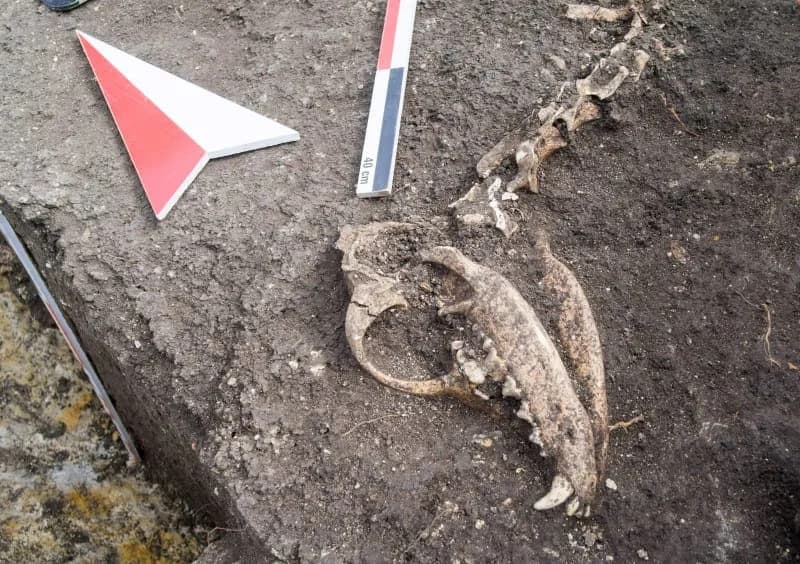
Dog skull found during an archaeological excavation. (photo credit: Stoyan G. Ivanov via Shutterstock)
A recent zooarchaeological study led by Stella Nikolova suggests that dog meat was consumed in parts of Iron Age Bulgaria roughly 2,500 years ago, possibly as a ritual food or delicacy rather than out of necessity.
Study and Evidence
The research, titled "Dog Meat in Late Iron Age Bulgaria: Necessity, Delicacy, or Part of a Wider Intercultural Tradition?" was published in the International Journal of Osteoarchaeology in December 2025. Nikolova, of the National Archaeological Institute with Museum of the Bulgarian Academy of Sciences, reviewed previously published zooarchaeological data from 10 Iron Age sites across Bulgaria and identified consistent butchery patterns on canine remains.
Key Findings From Emporion Pistiros
The largest concentration of canine remains was found at Emporion Pistiros, an Iron Age trading center linking Thrace and Greece. Excavations at Pistiros have recovered roughly 80,000 animal bones; about 2% of these were identified as canine. Nearly 20% of the canine bones at Pistiros bear cut marks made by metal tools—most likely knives, since no cleavers were found at the site.
Two lower jaws were found with burned teeth, which researchers interpret as evidence of singeing to remove hair during butchery. Several bones show signs of further portioning and fragmentation; the highest number of cuts and fragmentation occurs on parts with the densest muscle tissue, notably the upper quarter of the hind limbs. Cuts are also present on ribs, though dog ribs would have provided relatively little meat.
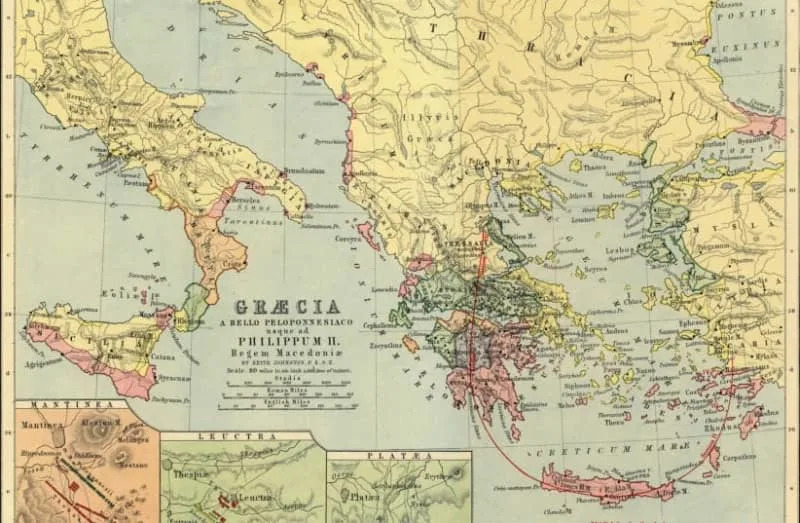
Map of Greece, Thrace and Southern Italy as it was in the time of Phillip II of Macedon (4th century BC), drawn by Keith Johnston, and published in The Unrivalled Classical Atlas by W. and A.K. Johnston in 1877. (credit: Culture Club/Bridgeman via Getty Images)
Interpretation
“Evidence shows that dog meat was associated with some tradition involving communal feasting,”
Nikolova told Live Science, noting that the sites she studied are abundant in livestock, which served as the primary protein source. Because canine remains appear alongside dozens of slaughtered livestock and represent a small percentage of the assemblages, she argues dog consumption was unlikely to be a poverty-driven necessity.
The similarity of butchery patterns between dog bones and those of sheep and cattle at Pistiros supports the interpretation that canines were deliberately processed for consumption. The study also points out that some cooking methods—such as boiling—would not leave the same marks on bone, so the archaeological record may undercount the number of animals actually consumed.
Regional Context
While the paper focuses on Bulgarian sites, it notes comparable canine remains have been documented in parts of Greece and Romania. This suggests that eating dog meat was not unique to Ancient Thrace but part of wider practices in the North-East Mediterranean during the 1st millennium BC.
Conclusions and Caveats
Nikolova concludes that dog meat in Iron Age Bulgaria was most plausibly linked to special social contexts—communal feasting, ritual practice, or treatment as a delicacy—rather than forming a regular staple of the diet. As with all zooarchaeological interpretation, the conclusions depend on preservation, excavation contexts, and the limits of the available data; the true scale of consumption could be higher if some processing and cooking methods left no trace on bone.
Sources: Stella Nikolova, International Journal of Osteoarchaeology (Dec 2025); interview with Live Science.
Help us improve.