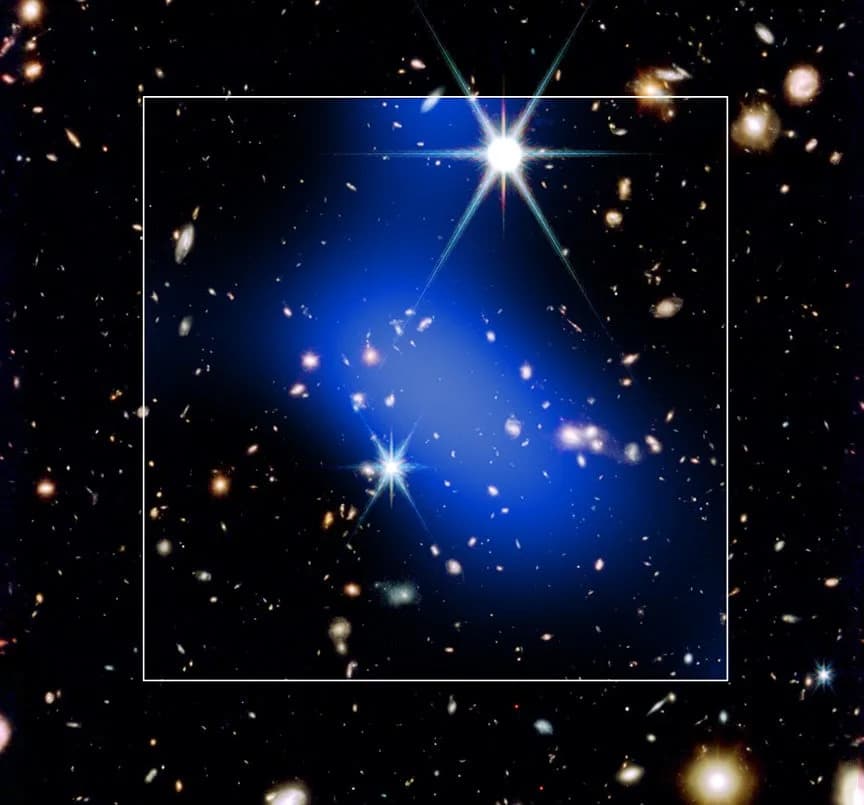
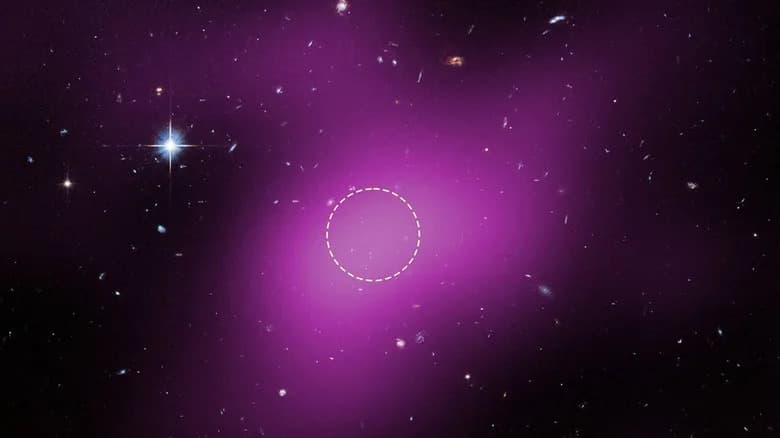
A massive, metal-rich cloud eclipsed the sun-like star J0705+0612 for just over eight and a half months after an abrupt dimming was detected in September 2024. High-resolution spectra from Gemini South’s GHOST spectrograph revealed abundant metals (iron, calcium) and internal motions indicating a heavy object at the cloud’s center. The bound body could be a gas giant, a brown dwarf, or a low-mass star; strong infrared emission makes a stellar host more likely. Researchers estimate the cloud is about 2 billion years old and may have formed from a catastrophic planetary collision; a similar occultation is predicted around 2068.
Giant Metal Cloud Eclipsed a Sun-Like Star for Months — Could It Hide a Second Star or Giant Planet?
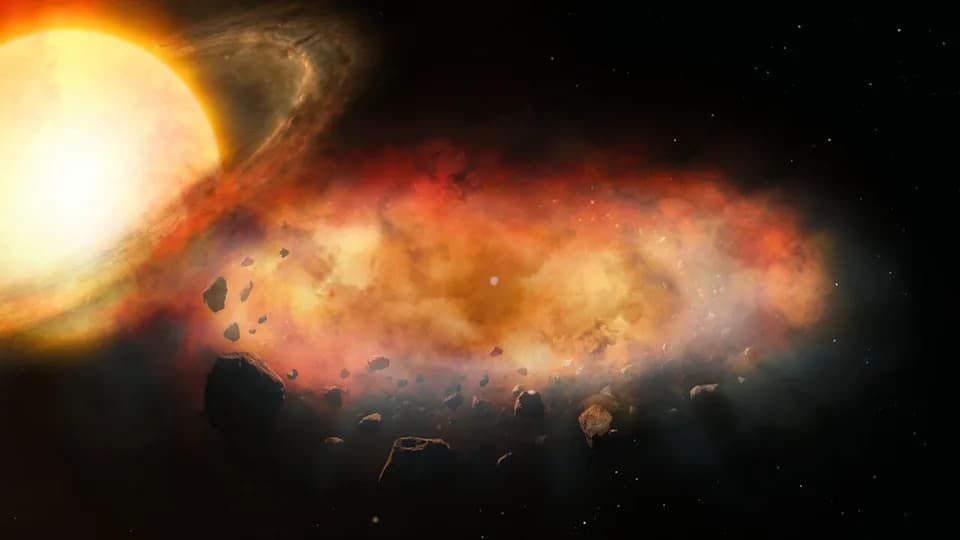
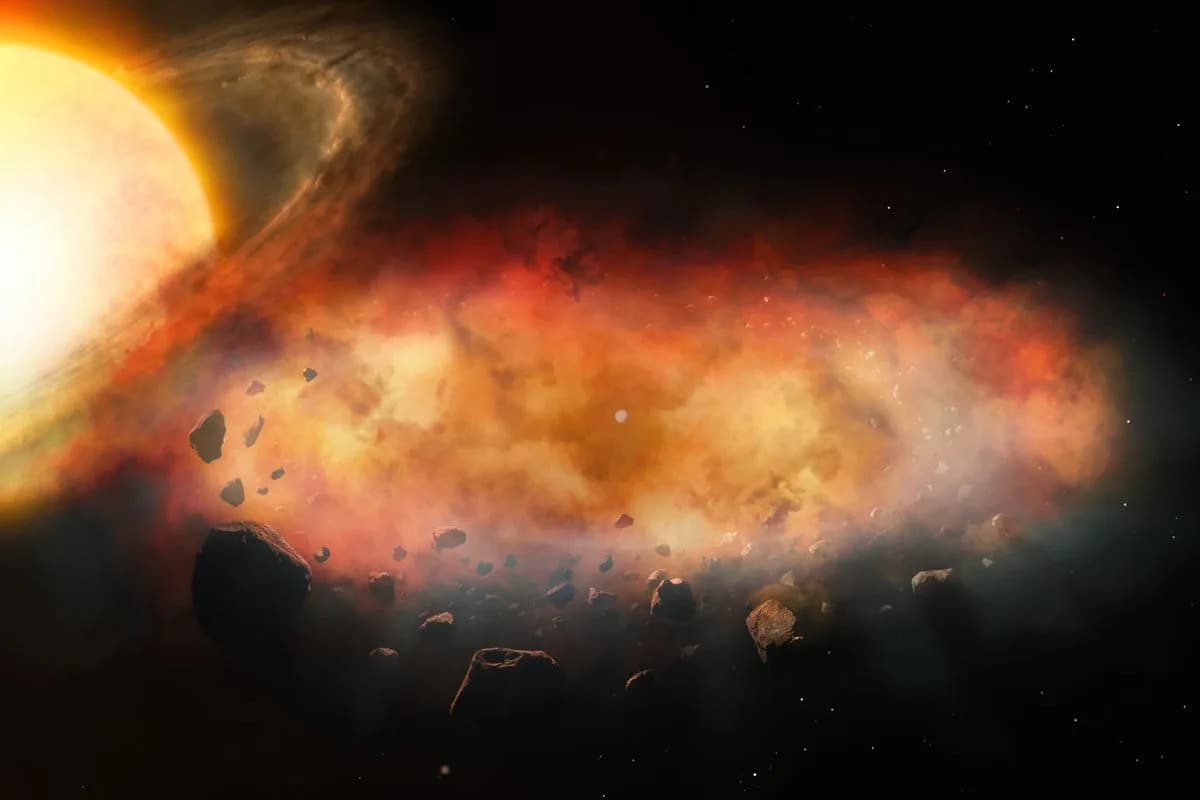
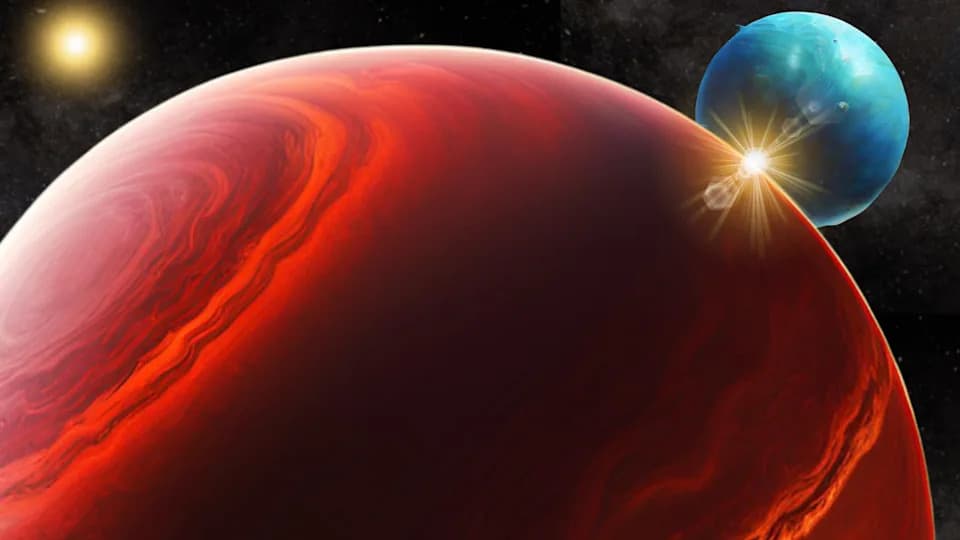
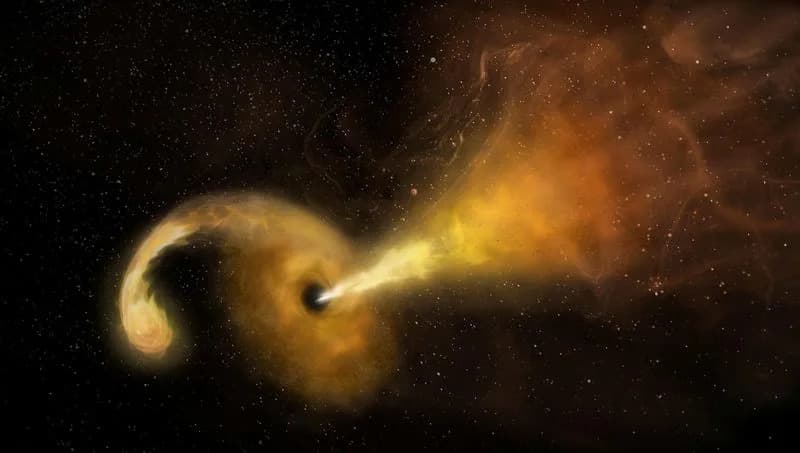
The giant metallic cloud (illustrated here) is bound together by a mysterious object that could be a large planet of dwarf star. | Credit: International Gemini Observatory/NOIRLab/NSF/AURA/P. Marenfeld & M. Zamani
A vast, metal-rich cloud temporarily obscured the sun-like star J0705+0612 (also catalogued as ASASSN-24fw), dimming it by about 97% for just over eight and a half months, researchers report. The occulting structure — roughly 125 million miles (200 million kilometers) across — passed between the star and Earth, producing one of the most dramatic stellar dimming events seen in recent years.
Observations and Instruments
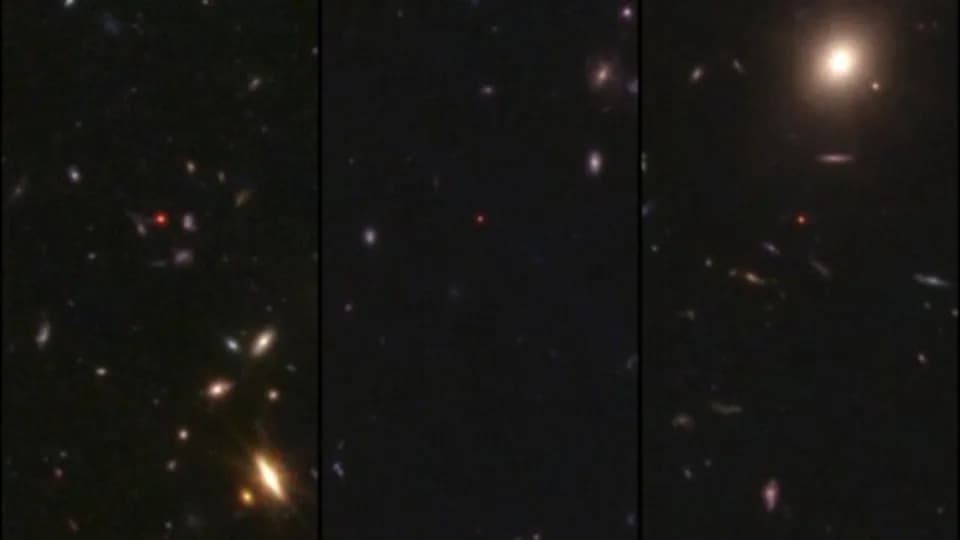
Astronomers first noticed the sudden brightness drop in September 2024. The star’s visible light fell to roughly 3% of its normal luminosity and stayed suppressed until May 2025. The team published their analysis on Jan. 21 in The Astronomical Journal, using spectroscopy and imaging from Chile’s Gemini South telescope (including the new GHOST spectrograph) and the Magellan Telescopes.
What the Spectra Revealed
High-resolution spectra from Gemini South’s GHOST instrument probed the occulting structure in detail. The data showed abundant metals — notably iron and calcium — and measurable internal motions across the cloud. Those motions indicate the cloud is gravitationally bound to a massive central object rather than being a diffuse, transient feature.
"Stars like the sun don't just stop shining for no reason," said study lead author Nadia Zakamska of Johns Hopkins University. "So dramatic dimming events like this are very rare."
Possible Origins and Central Object
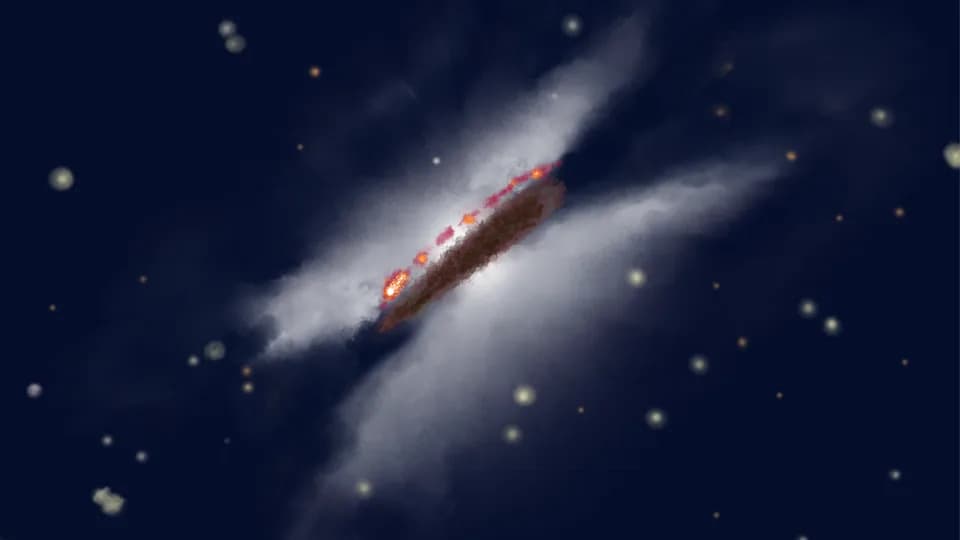
Based on its size (about 13.3 astronomical units from J0705+0612 — roughly midway between Saturn and Uranus in our solar system) and the cloud’s internal kinematics, the bound body could be one of several possibilities: a gas giant several times the mass of Jupiter, a brown dwarf, or a low-mass stellar companion in a binary system. If the central object is a small star, astronomers would call the structure a circumsecondary disk; if it is a planet, it would be a circumplanetary disk.
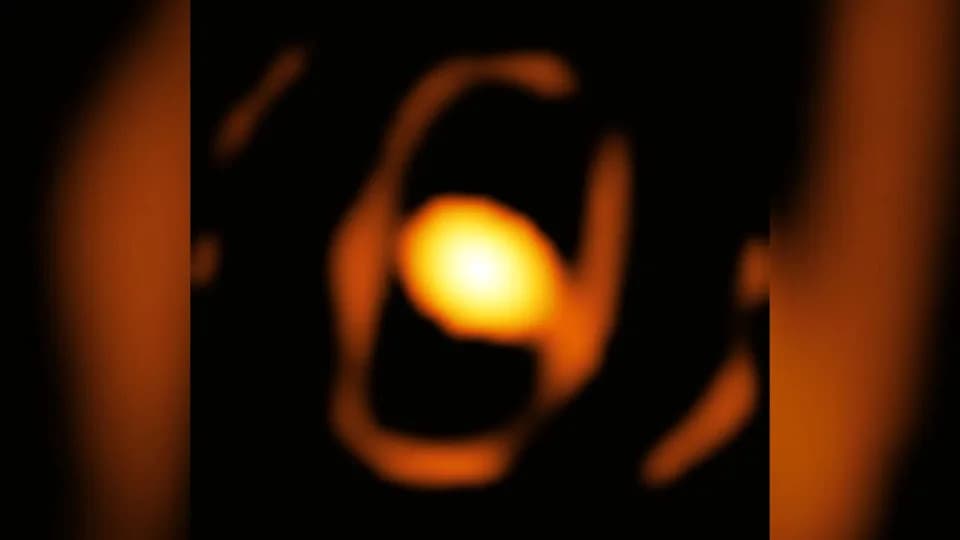
Credit: International Gemini Observatory/NOIRLab/NSF/AURA/Kwon O Chul
The researchers favor a stellar host partly because the cloud emits substantial infrared radiation, which is easier to explain if a warm, self-luminous object lies at its center. However, they caution that the evidence is not yet definitive and further observations will be needed to distinguish between a planetary or stellar origin.
Age and Formation Hypothesis
Estimating the cloud’s age at roughly 2 billion years — significantly younger than J0705+0612 (likely closer to the Sun’s age of ~4.6 billion years) — the team argues the cloud is unlikely to be a primordial remnant from the system’s formation. Instead, they propose a dramatic origin: a catastrophic planetary collision that vaporized metal-rich material and produced the observed cloud, similar in concept (though not scale) to the giant impact thought to have formed Earth’s Moon.
Where We Go From Here
The cloud orbits at about 13.3 AU, which implies an orbital period on the order of 44 years. Based on that estimate, the next similar alignment of the cloud between J0705+0612 and Earth should occur around 2068 — offering a rare future chance to study the structure again. In the meantime, astronomers plan follow-up observations across optical, infrared and radio wavelengths to pin down the central object's nature and refine the cloud’s composition and dynamics.
Why it matters: This discovery highlights that even mature planetary systems can experience large-scale, metal-rich collisions long after their formation, and it provides a unique laboratory for studying circumplanetary or circumsecondary disks and the late-stage evolution of planetary systems.
Help us improve.