A long-term observing campaign combining Hubble and ground-based telescopes has detected a dense, boat-like wake in Betelgeuse’s outer atmosphere that points to a faint companion, proposed to be named Siwarha. The wake appears after the companion transits and matches a roughly six-year orbital period, offering a convincing explanation for Betelgeuse’s longer brightness cycle. Researchers are now building hydrodynamic models to reproduce the wake, refine the companion’s orbit and mass, and predict how this interaction may influence Betelgeuse’s future evolution.
Hidden Companion Carves a Boat‑Like Wake Through Betelgeuse — New Observations Point to a Six‑Year Orbit
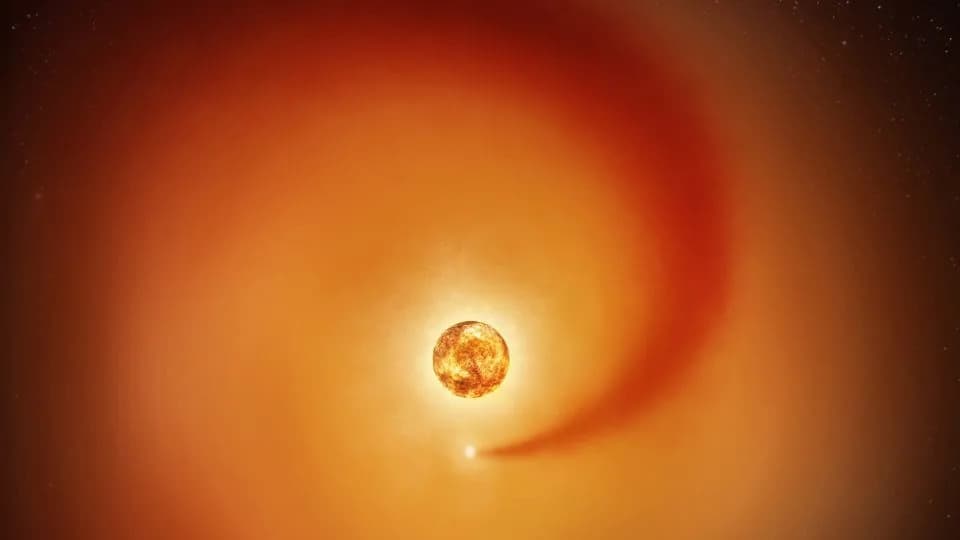
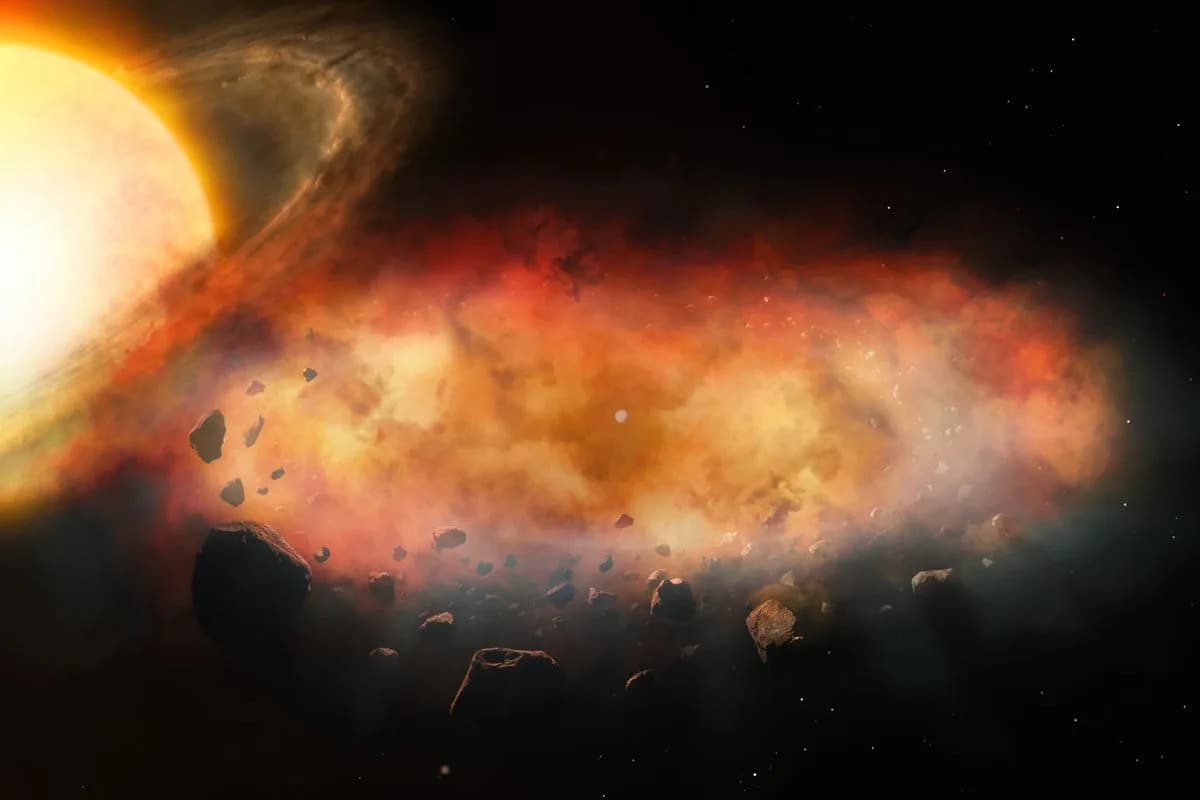
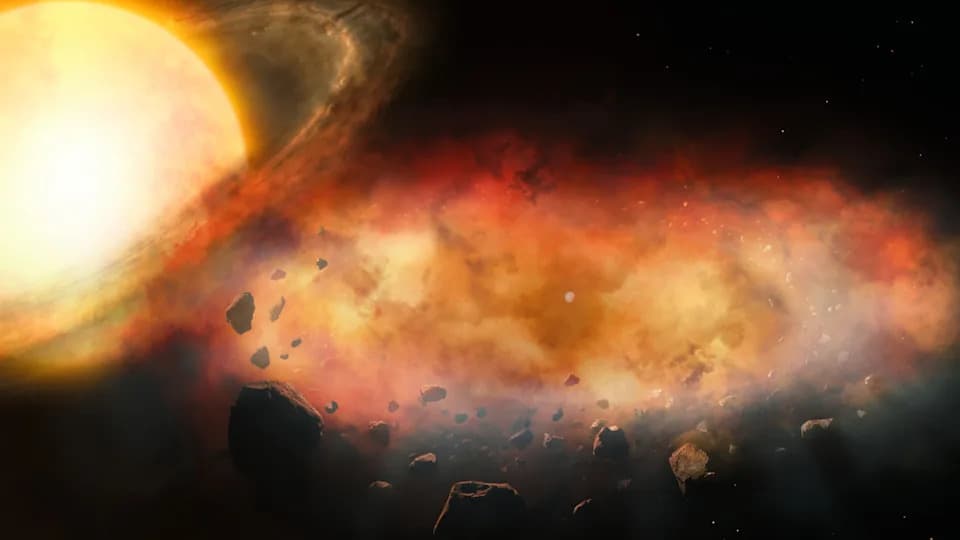
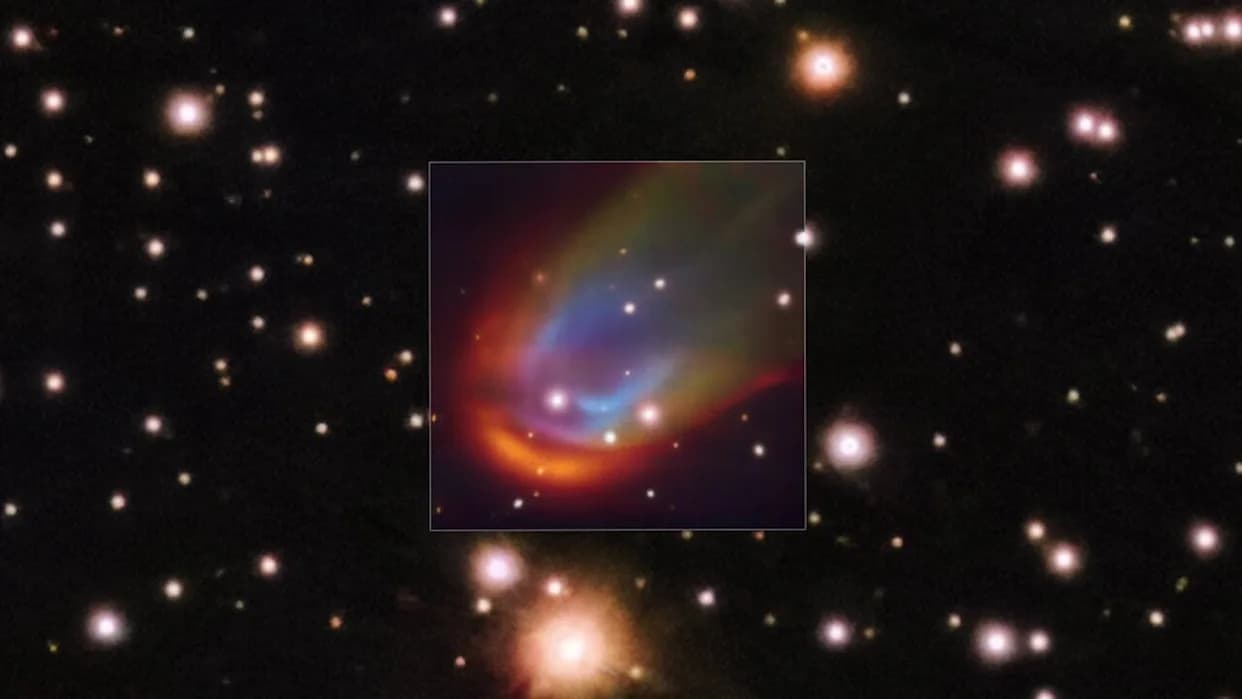
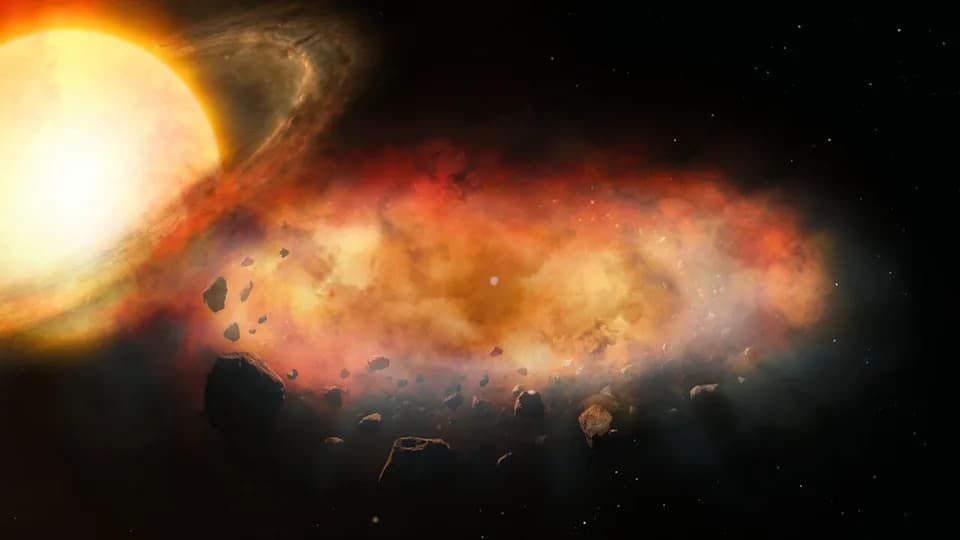
This artist’s concept shows the red supergiant star Betelgeuse and an orbiting companion star creating a wake in the larger object's atmosphere. - Elizabeth Wheatley/ESA/NASA
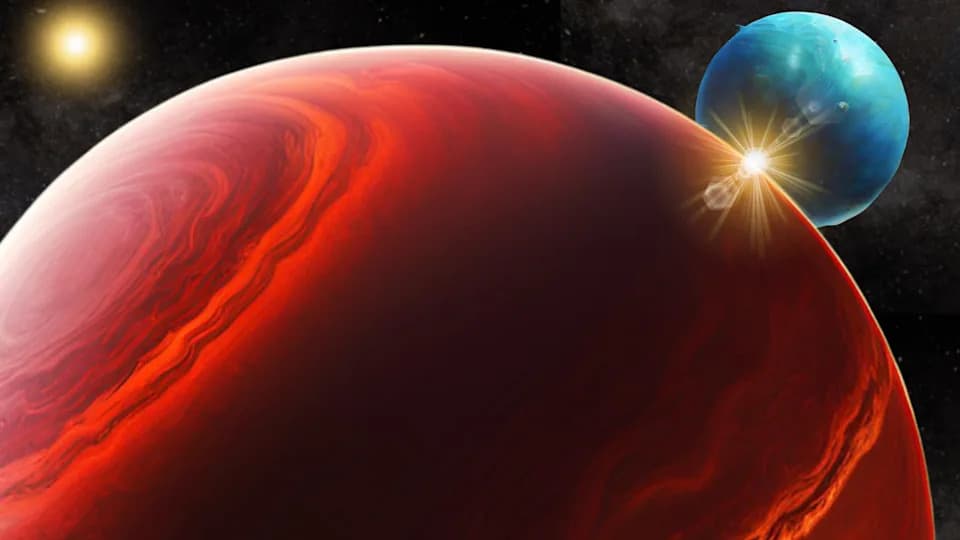
A long-term observing campaign has uncovered a dense, boat-like wake cutting through the extended atmosphere of the red supergiant Betelgeuse, offering fresh evidence that a faint, close companion is shaping the star’s behavior. The companion — informally nicknamed “Betelbuddy” and proposed to be named Siwarha — appears to orbit Betelgeuse with a period of about six years, matching one of the star’s longer known brightness cycles.
What Was Found
Researchers combining eight years of data from the Hubble Space Telescope and ground observatories (including the Fred Lawrence Whipple Observatory and the Roque de los Muchachos Observatory) detected a persistent trail of dense gas moving through Betelgeuse’s outer atmosphere. The trail appears after the companion transits in front of the star from Earth’s vantage point and behaves like the wake behind a boat as the smaller star plows through the supergiant’s extended, hot envelope.
“It’s a bit like a boat moving through water. The companion star creates a ripple effect in Betelgeuse’s atmosphere that we can actually see in the data.” — Andrea Dupree, lead author
Instruments, Measurements, And Interpretation
Hubble observations revealed how Betelgeuse’s chromosphere (its deep, dynamic atmosphere) responds to the passing companion, while ground-based spectroscopy traced shifts in gas velocity and direction farther from the star. Together these signatures form a coherent picture: a small, likely sub-solar-mass companion orbiting within Betelgeuse’s extended atmosphere and leaving a detectable gaseous wake.
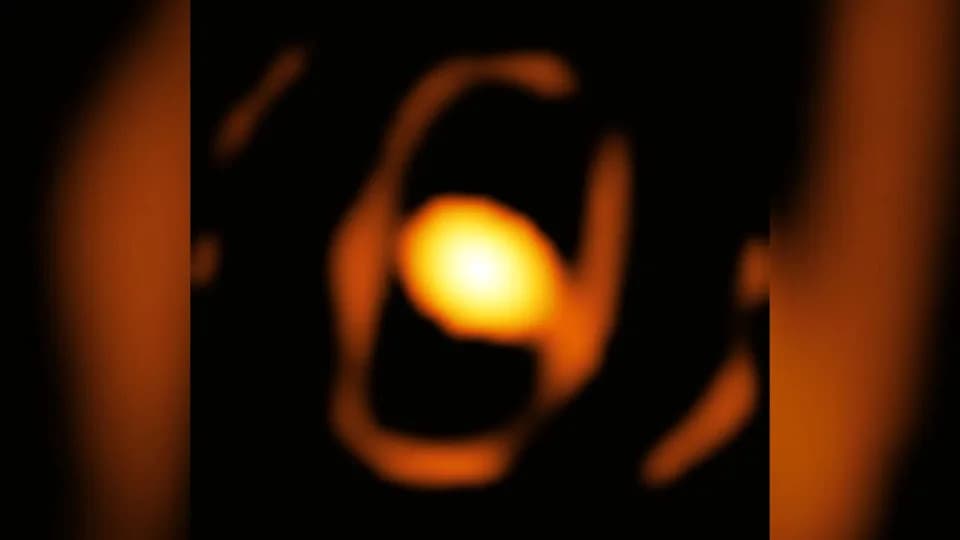
The new study, accepted to the Astrophysical Journal, builds on prior work suggesting a broadened, plasma-rich region around the companion rather than a simple, naked stellar photosphere. That earlier 2025 work by Steve Howell and colleagues found a larger, irregular source consistent with an expanding wake surrounding the companion.
Why This Matters
Betelgeuse is one of the most studied red supergiants: roughly 650 light‑years away, about 15 times the Sun’s mass, with a diameter some 1,400 times that of the Sun and a volume large enough to contain hundreds of millions of Suns. Despite its prominence, Betelgeuse exhibits puzzling variability: a well-known short pulsation of ~416 days originating in the star’s interior, and a longer ~2,100‑day (~six‑year) cycle whose origin has been debated.
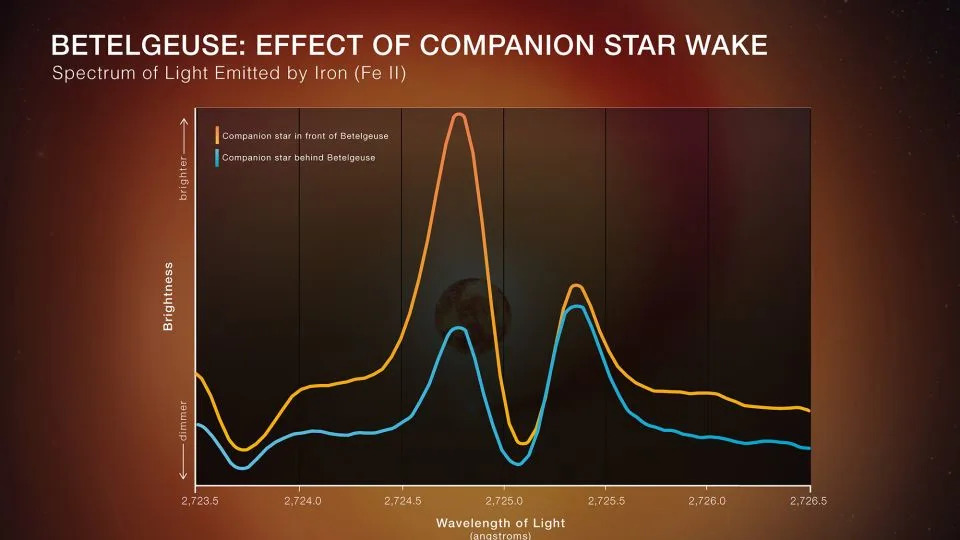
A graph of Hubble data shows the signature of the companion star orbiting Betelgeuse. - Elizabeth Wheatley/ESA/NASA
The newly observed wake provides a plausible, observable mechanism for the longer cycle: as the companion orbits, it disturbs gas and dust in the envelope and modulates the star’s apparent brightness. If confirmed, this mechanism could apply to other supergiants that show similar long-term variability.
Open Questions And Future Work
Teams are developing hydrodynamic models to reproduce how a solar-size companion moving through a red supergiant’s atmosphere would produce the observed wake and affect observed brightness. Those simulations will help quantify mass exchange, angular‑momentum transfer, and how soon the companion might merge with Betelgeuse.
Current orbital estimates place Siwarha on the far side of Betelgeuse from Earth, with the companion predicted to re-emerge into view around 2027. Some researchers estimate that gravitational inspiral could lead to a merger within roughly 9,000 years, potentially altering Betelgeuse’s rotation and the character of any eventual supernova.
Context And Historical Notes
Betelgeuse famously experienced the “Great Dimming” from late 2019 to early 2020, an episode now attributed to a large ejection of dust that temporarily obscured part of the star. The new companion-wake results do not contradict that dust explanation but add an additional, dynamical ingredient to how Betelgeuse’s atmosphere evolves over years and decades.
Bottom line: Multiple lines of observational evidence now point to a faint, close companion sculpting Betelgeuse’s outer atmosphere. Continued monitoring, optical searches around 2027, and hydrodynamic modeling will be crucial to confirm Siwarha’s properties and to understand how such interactions influence the lives and deaths of massive stars.
Help us improve.