Linda Losurdo, a Ph.D. candidate at the University of Sydney, recreated analogue cosmic dust by exposing a near-vacuum mix of CO2, N2 and acetylene to a 10,000-volt electrical discharge, producing particles containing carbon, hydrogen, oxygen and nitrogen that condensed on a silicon chip. The results, published with supervisor David McKenzie in The Astrophysical Journal, demonstrate a laboratory route to study interstellar chemistry up close. The team plans to compile a database of infrared spectra from lab-grown dust to help astronomers match observations to specific formation pathways and better understand how life’s building blocks may form in space.
Grad Student Recreates Cosmic Dust in the Lab to Decode Interstellar Chemistry
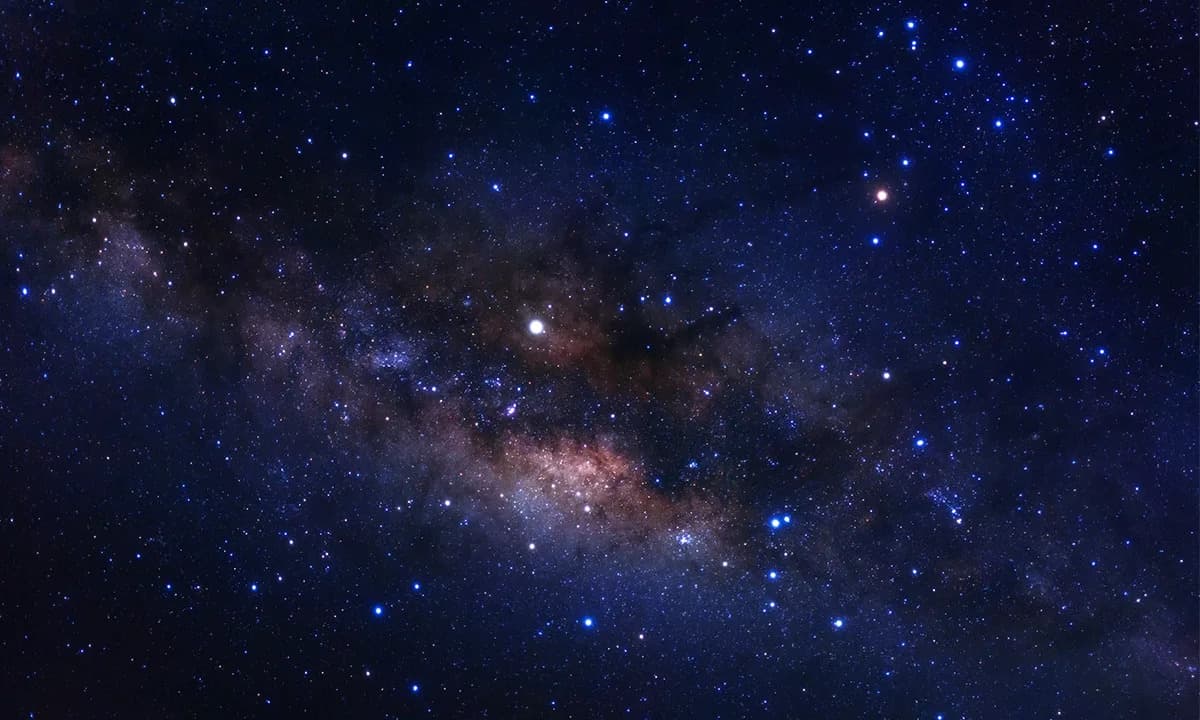
Lead image: klyaksun / Shutterstock(Cosmic nebula with vibrant purple and blue gas clouds. Credit: klyaksun / Shutterstock.)
Cosmic dust clouds drifting between the stars host molecules and elements that are central to the chemistry of life, but they are too distant for direct sampling. Traditionally, researchers have relied on infrared signatures from afar or waited for meteorites and comet fragments to reach Earth. Now, a Ph.D. candidate has reproduced analogue interstellar dust in the laboratory—opening a faster, controllable way to study astrochemical processes.
What the team did
Linda Losurdo, a Ph.D. candidate at the University of Sydney, synthesized laboratory analogues of cosmic dust inside a vacuum chamber. To replicate conditions found in interstellar dust clouds, she pumped the chamber down to a near vacuum, introduced carbon dioxide (CO2), nitrogen (N2) and acetylene (C2H2), and applied a 10,000-volt electrical discharge to mimic the plasmas produced in supernova remnants. The electrical energy broke apart the original molecules and allowed atoms to recombine into particles containing carbon, hydrogen, oxygen and nitrogen.
The newly formed particles condensed as a thin film on a silicon chip placed inside the chamber. Losurdo and her supervisor, David McKenzie, reported the experiment and its results in The Astrophysical Journal.
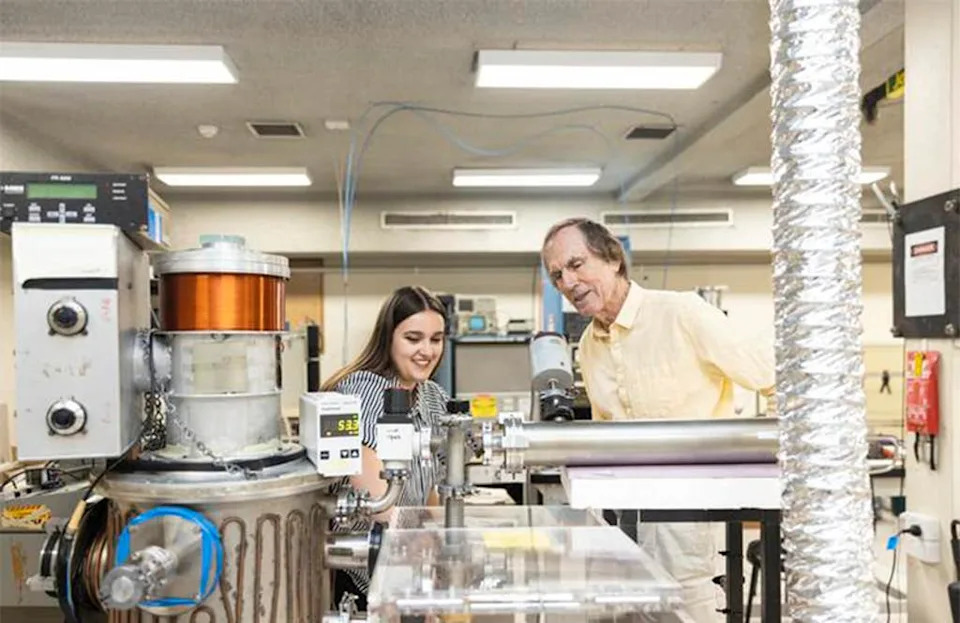
SPACE DUST ENGINEERS:Linda Losurdo, (left) and her Ph.D. advisor, David McKenzie, recently recreated cosmic dust in an Earth-bound lab.Photo by Fiona Wolf / the University of Sydney.
“We no longer have to wait for an asteroid or comet to come to Earth to understand their histories,” Losurdo said. “You can build analogue environments in the laboratory and reverse engineer their structure using the infrared fingerprints.”
Why this matters
Infrared spectra serve as fingerprints for the chemical composition of dust in space. By creating lab-grown dust analogues and measuring their infrared signatures under controlled conditions, Losurdo and McKenzie aim to build a reference database that astronomers can use to match observations of interstellar clouds to specific formation histories and chemical processes.
Linking laboratory spectra to formation pathways could sharpen scientists' interpretations of how prebiotic molecules and the elemental building blocks of life formed and evolved in space—insights that bear directly on theories about the origins of life on Earth and elsewhere.
Next steps
The researchers plan to expand their measurements into a comprehensive database of infrared spectra from different laboratory-grown dust analogues and varying experimental conditions. That resource will help astronomers infer the physical and chemical environments that produced observed interstellar features.
Bottom line: Recreating cosmic dust in the lab gives astronomers a powerful new tool for decoding the chemistry of distant clouds—and for tracing the cosmic origins of the molecules tied to life.
Help us improve.