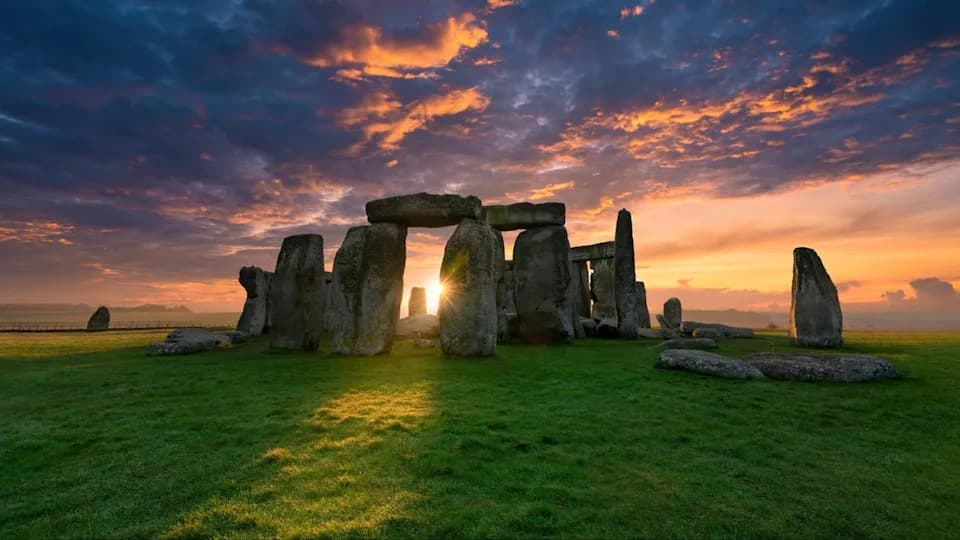
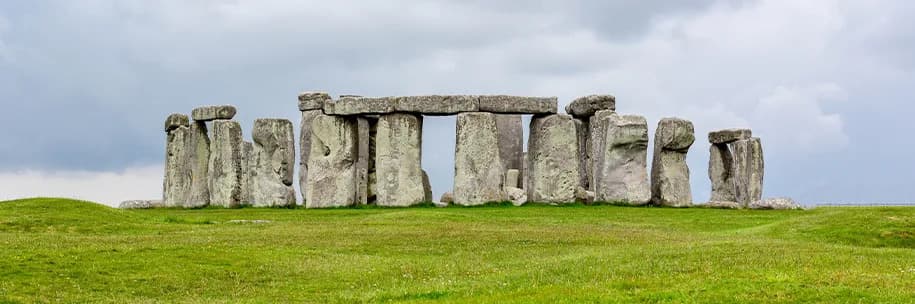
A new peer-reviewed study in Communications Earth & Environment used detrital zircon–apatite fingerprinting to test whether glaciers could have carried Stonehenge’s exotic stones to Salisbury Plain. After dating and analysing more than 700 mineral grains from local river sediments, researchers found no evidence that ice sheets reached as far south as the monument. The results support earlier provenance work: the bluestones came from the Preseli Hills in western Wales (~225 km), and the Altar Stone likely originated in northern England or Scotland (~500 km), reinforcing the conclusion that people deliberately transported these stones.
Humans, Not Ice: New Study Confirms People Transported Stonehenge’s Stones
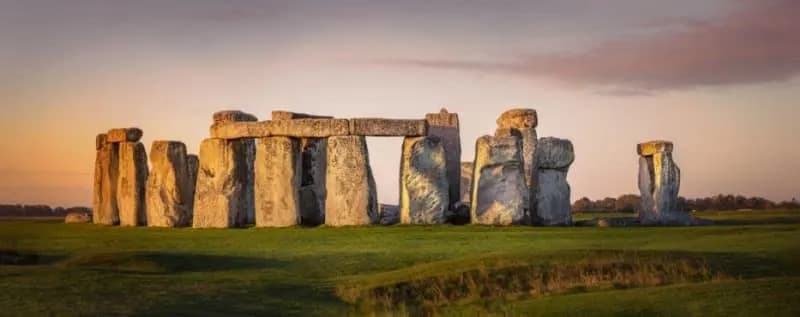
Ken Follett returns with an epic on building Stonehenge in 2500 BCE. (photo credit: Chedko. Via Shutterstock)
A peer-reviewed paper published in Communications Earth & Environment strengthens the case that people — not glaciers — transported Stonehenge’s exotic stones to Salisbury Plain.
The research, titled Detrital Zircon–Apatite Fingerprinting Challenges Glacial Transport Of Stonehenge’s Megaliths, re-examines the long-debated "glacial transport theory," which proposed that the monument’s bluestones and the central Altar Stone were carried south by ice during the last ice age.
What the Researchers Did
The team used detrital zircon–apatite fingerprinting: they measured radioactive-decay ages in tiny zircon and apatite grains preserved in river sediments around Stonehenge. These mineral "age fingerprints" reveal the likely source regions of parent rocks that once contributed sediment to local rivers.
Key Findings
After analysing more than 700 zircon and apatite grains from local river sediments, the authors found no significant fingerprint matches to rock provinces in Scotland or Wales. That absence of glacial-age signatures implies that ice sheets probably did not extend as far south as Salisbury Plain during the last glaciation.
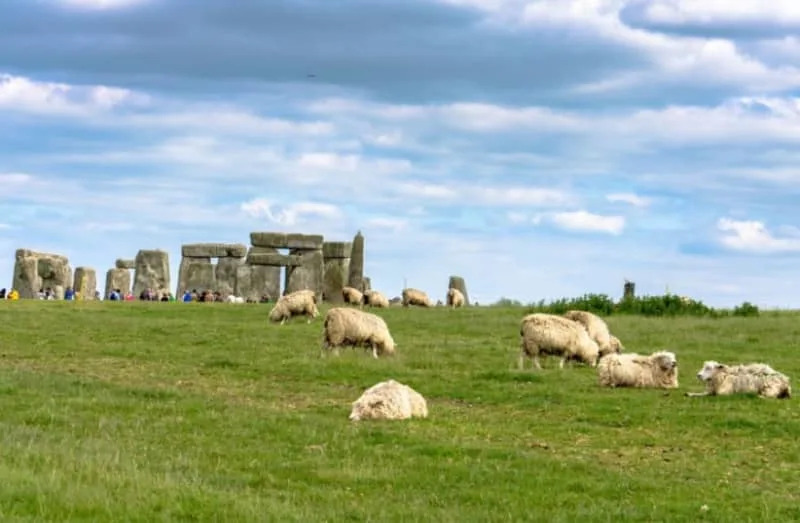
Sheep grazing near Stonehenge. (credit: Tim M at Shutterstock)
While previous work raised doubts about glacial transport, our mineral fingerprinting provides stronger evidence linking the stones to distant human sourcing and movement, the authors write.
The study corroborates earlier provenance work showing that Stonehenge’s bluestones originate in the Preseli Hills of western Wales — roughly 225 km from Salisbury Plain — and indicates the Altar Stone likely came from northern England or possibly Scotland, at least ~500 km away.
Why This Matters
By showing rivers around Stonehenge lack the expected mineral-age signals from Scotland or Wales, the study weakens the hypothesis that glaciers deposited the stones locally. Instead, the evidence supports deliberate selection and long-distance human transport of these megaliths, a conclusion with important implications for understanding Neolithic transport capabilities, social organization, and ritual choices.
The paper adds a robust, geochemical line of evidence to archaeological observations that many of the stones lack the physical wear patterns expected from glacial carriage. Together, these lines of evidence make human agency the most parsimonious explanation for how some of Stonehenge’s most geographically distant stones came to the monument.
Study Authors: Anthony Clarke and Christopher Kirkland. Samples Analysed: >700 zircon and apatite grains from river sediments around Stonehenge.
Help us improve.