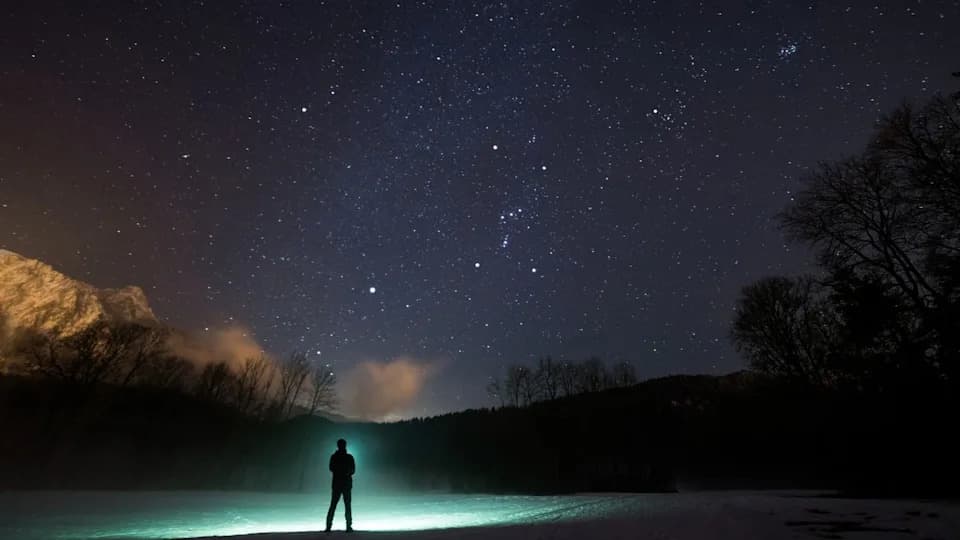
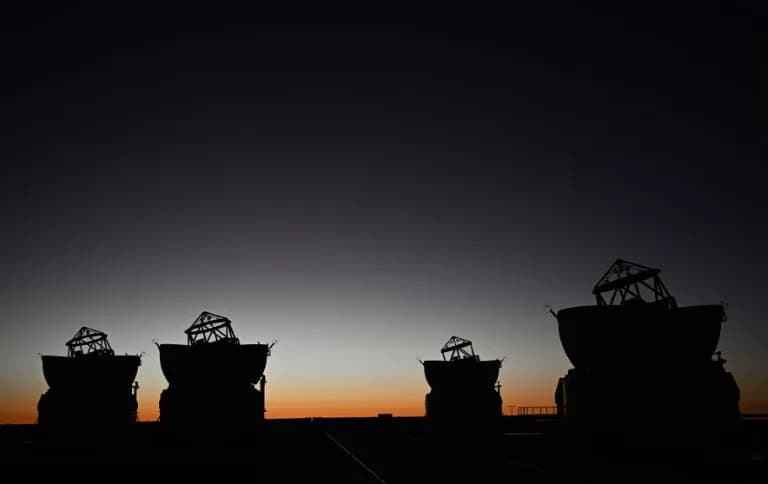
Photographer Petr Horálek captured a panoramic image of the Milky Way arching above the Gemini South Observatory on Cerro Pachón, Chile. Gemini South is one half of the International Gemini Observatory — twin 26.5-foot (8.1 m) optical/infrared telescopes that enable high-resolution imaging and spectroscopy. Both sites employ wide-field, adaptive-optics-assisted infrared imaging to reduce atmospheric blurring. Onsite solar panels help lower emissions and power remote operations.
Milky Way Arches Over Gemini South: A Nighttime Panorama From Cerro Pachón

A panorama shows the breathtaking views of the Milky Way in the skies above Chile. . | Credit: International Gemini Observatory/NOIRLab/NSF/AURA/P. Horálek (Institute of Physics in Opava)
Perched on a remote ridge in the Chilean Andes, the large silver dome of the Gemini South Observatory opens each night to collect faint, ancient starlight. In a striking panoramic photograph, NOIRLab Audiovisual Ambassador Petr Horálek captured the Milky Way arching over the telescope and the surrounding field of solar panels that help power the site.
Gemini: Twin Eyes On The Sky
Gemini South is one half of the International Gemini Observatory — a matched pair of 26.5-foot (8.1 meters) optical and infrared telescopes that give astronomers access to nearly the entire sky by operating from both hemispheres. The large mirrors at each site let researchers observe fainter, more distant and more finely detailed targets. From sharp imaging to spectroscopy (splitting light into its component colors), Gemini supports a broad range of techniques used to probe the composition, motion and physical conditions of astronomical objects.

The panorama taken from the Gemini South Observatory shows the Milky Way glowing in the night sky. | Credit: International Gemini Observatory/NOIRLab/NSF/AURA/P. Horálek (Institute of Physics in Opava)
Sharper Views With Adaptive Optics
Both Gemini telescopes are renowned for advanced observing methods that counteract the blurring effects of Earth’s atmosphere. According to NOIRLab, both sites employ wide-field, adaptive-optics-assisted infrared imaging, which sharpens views of everything from star-forming regions to the surroundings of distant galaxies. These capabilities complement other ground-based NOIRLab facilities — such as the Vera C. Rubin Observatory — which also work to mitigate atmospheric distortion.
Science And Sustainability
Gemini South sits high atop Cerro Pachón in Chile. The solar panels visible in Horálek’s image highlight NOIRLab’s efforts to boost energy efficiency and reduce emissions across its observatory sites. Large telescopes require substantial power to run instruments, cooling systems and computing hardware in remote locations; onsite solar generation helps harvest local energy and lower reliance on fossil fuels.
Astronomy rewards patience and careful planning. Horálek’s panoramic composite is the result of both: skillful nightscape photography and an eye for how human-built science infrastructure and the natural night sky can create a single, compelling image.
Photographer: Petr Horálek, NOIRLab Audiovisual Ambassador
Location: Gemini South Observatory, Cerro Pachón, Chile
Help us improve.