Trump’s penchant for spectacle may paradoxically hinder a quieter, more durable assault on democracy. Highly visible actions — most notably the Minnesota immigration operation and the deaths of Renee Good and Alex Pretti — have produced public outrage and bipartisan scrutiny. While some allies pursue a long-term strategy of institutional capture, the administration’s theatrical tactics invite oversight and mobilization that can blunt those efforts. Defenders of democracy should keep abuses visible and documented to raise the political cost of authoritarian moves.
Trump’s Spectacle May Be Democracy’s Unlikely Safeguard
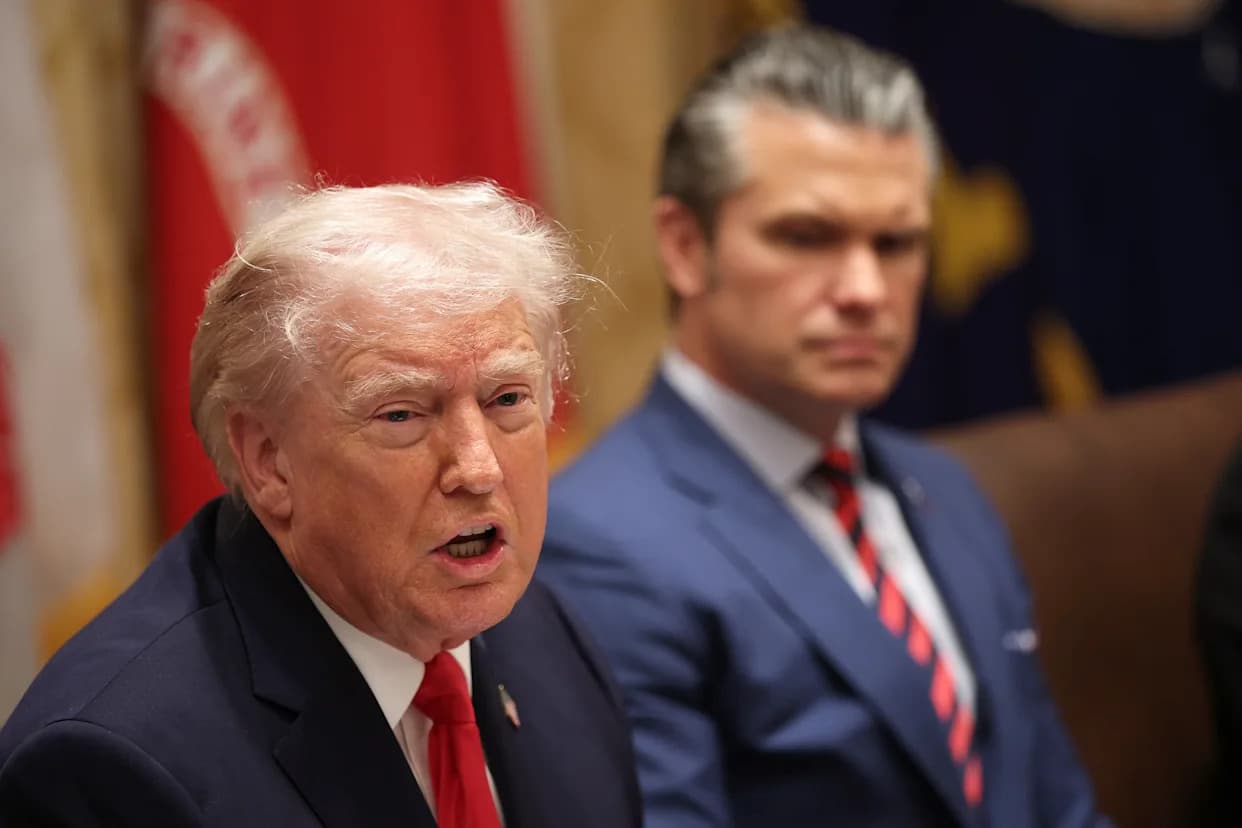
President Donald Trump speaks as Secretary of Defense Pete Hegseth looks on during a meeting of the Cabinet at the White House on January 29, 2026. | Win McNamee/Getty Images
President Donald Trump’s appetite for theatrical confrontation — from provocative rhetoric to highly visible federal operations — has long been a defining feature of his politics. That same compulsion for spectacle, however, may make it harder for a subtler, long-term effort to hollow out democratic institutions to succeed.
Spectacle Vs. Quiet Authoritarianism
Modern authoritarian projects often rely less on constant displays of brute force and more on slow, administrative capture: quietly reshaping courts, regulatory agencies, media ownership, and election rules so that formal institutions remain but real checks on power disappear. Durable electoral-authoritarian regimes maintain a kind of normalcy — elections continue, markets function, and daily life goes on — while opposition is steadily weakened and independent institutions are corroded.
Why Minnesota Mattered
The White House’s highly publicized immigration operation in Minneapolis — accompanied by loud declarations like “RETRIBUTION” and the deployment of armed federal officers — turned that quiet approach on its head. The deaths of Renee Good and Alex Pretti at the hands of federal officers, widely seen and debated, made Minneapolis feel like a testing ground for a more violent, public style of enforcement. Such spectacles draw intense scrutiny and public outrage in ways that slow institutional erosion does not.
Allies With a Long Game
Some advisors and allies — including figures named publicly as Stephen Miller and J.D. Vance — appear to be pursuing a longer-term strategy to weaken independent centers of power: the judiciary, career civil servants, news organizations, and activist networks. They can point to models such as Viktor Orbán’s Hungary, where governing parties gradually consolidated influence across civil society and state institutions. Signs of similar tactics include efforts to influence media ownership, public pressure on independent economic institutions like the Federal Reserve, and politically motivated investigations by the Justice Department.
How Spectacle Can Frustrate That Project
Because Trump’s approach prizes attention, many of his administration’s most consequential moves are loud and public rather than hidden. Officials post provocative social-media content, broadcast confrontations, and make boastful public statements. In Minnesota, the ICE agent involved in the killing of Renee Good was recording the encounter on a cellphone — a detail some observers linked to a broader pattern of pushing viral videos of arrests. That very openness invites congressional inquiries, bipartisan backlash, media investigation, and public mobilization.
What This Means For Defenders Of Democracy
Quiet institutional capture is effective because it is unremarkable; spectacle is disruptive because it is hard to ignore. The practical lesson for those who want to defend democratic norms is therefore straightforward: make abuses public, document them, and ensure voters see the consequences. Public exposure increases the political cost of heavy-handed tactics and can prompt oversight that slows or reverses efforts to entrench power.
Bottom line: Trump’s need for constant, high-profile confrontation undermines the secrecy and gradualism that make long-term authoritarian capture possible. If citizens and institutions insist on transparency and accountability, spectacle can become a liability for those seeking to quietly subvert democracy.
Help us improve.