One year after Donald Trump’s second inauguration, scholars and former intelligence officials warn that rapid centralization of power and attacks on independent institutions have weakened U.S. democratic norms. Independent indexes from Bright Line Watch and the Century Foundation show sharp declines in democratic-health scores, while courts, civil-society groups and public protests have provided notable pushback. Experts caution the erosion could accelerate before the 2026 midterms but stress that recovery remains possible through voting, legal challenges and civic engagement.
American Democracy at a Crossroads: Scholars Warn One Year After Trump’s Inauguration
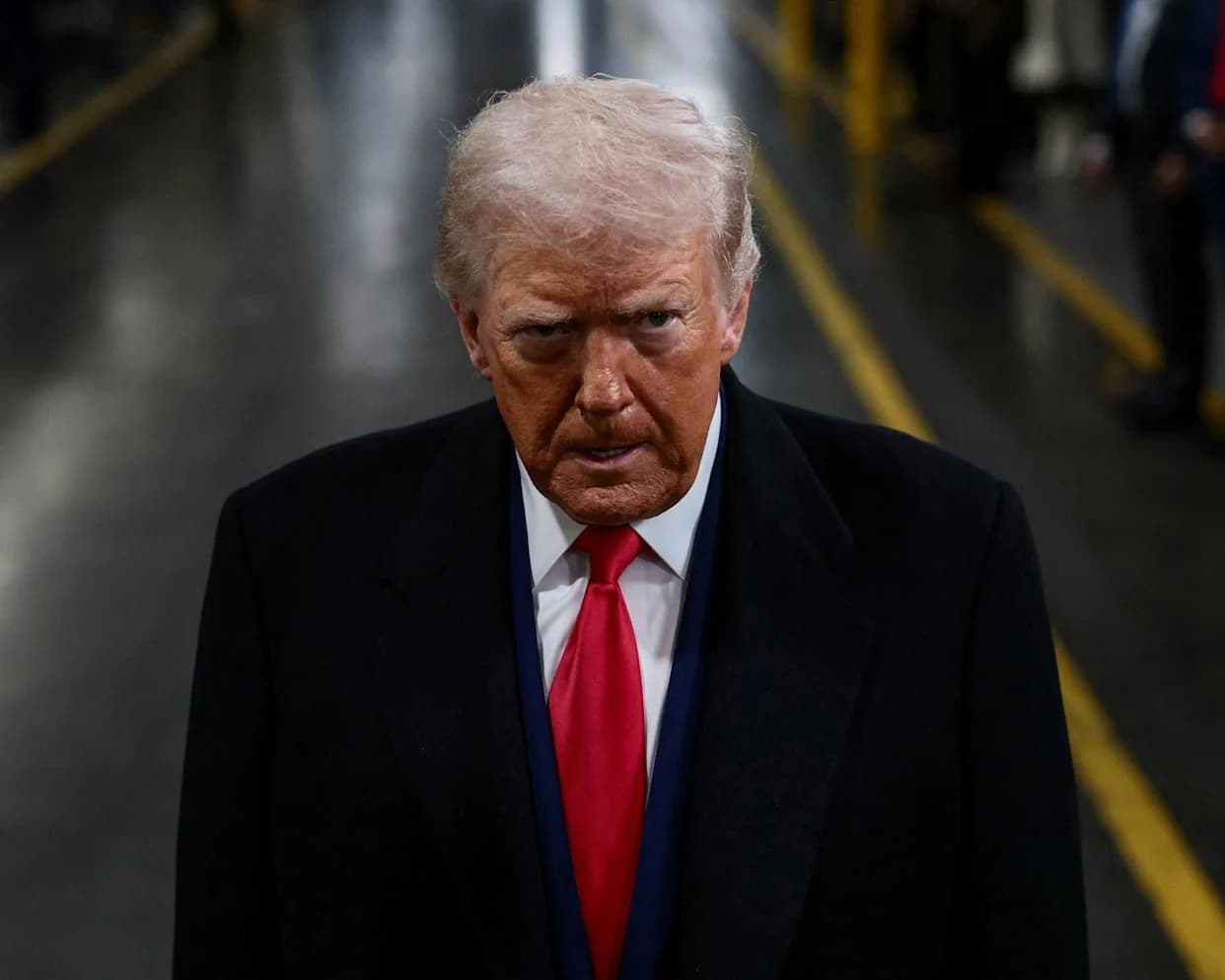
Donald Trump at the Ford plant in Dearborn, Michigan, last week.Photograph: Evelyn Hockstein/Reuters(Photograph: Evelyn Hockstein/Reuters)
Three hundred and sixty-five days after Donald Trump’s second inauguration, historians, political scientists and former intelligence officials warn that his administration’s rapid consolidation of power has placed U.S. democratic norms under severe strain. What began as contentious policy fights has, critics say, evolved into systematic efforts to centralize authority, sideline independent institutions and weaken checks on executive power.
What Experts Are Saying
Prominent scholars Steven Levitsky and Daniel Ziblatt, together with Lucan Way, argued in Foreign Affairs that the United States has moved toward competitive authoritarianism—a system in which elections continue but the ruling party uses state power to tilt competition in its favor. Other researchers describe the country as drifting toward an illiberal or autocratizing trajectory, while some caution that indices and expert warnings can overstate risks.
Quantitative Measures And Institutional Responses
Independent assessments underscore the alarm. Bright Line Watch reported experts scored U.S. democracy 54/100 in a September survey, placing the country closer to hybrid regimes than the full democracies of most G7 peers. The Century Foundation’s new index recorded a dramatic one-year decline—an estimated 28% drop in democratic-health scores between 2024 and 2025. A network of former intelligence and national-security officials released an intelligence-style assessment concluding with "moderate to high confidence" that the country was on a trajectory toward authoritarian rule.
At the same time, legal and civic institutions have mounted significant pushback. The American Civil Liberties Union has filed more than 200 legal challenges to federal policies over the past year and reports a nearly 65% rate of success in defeating, delaying or diluting those policies. Courts, advocacy groups and persistent public protest have served as active constraints on several administration actions.
Key Tactics And Consequences
Critics list a pattern of measures taken in the first year of the term: dismantling or reshaping federal agencies, broad personnel purges and hiring shifts across the civil service, removals of independent watchdogs, efforts to curb academic freedom and repeated attacks on the news media. The administration has also deployed federal forces to cities governed by Democrats and pursued expanded immigration enforcement. Estimates cited in reporting indicate that more than 300,000 federal employees left the government amid wide-ranging personnel reductions.
Another contentious development is the administration’s closeness to prominent tech billionaires. Early in the term, a high-profile appointment to a newly created office nicknamed the "Department of Government Efficiency (Doge)" drew scrutiny for granting powerful private figures a direct line into government decision-making on technology, procurement and staffing.
Politics, Public Opinion And The Road To 2026
Despite institutional pressures, the White House rejects the characterization of authoritarianism, calling critics partisan and insisting the administration is delivering on a democratic mandate. White House spokesperson Abigail Jackson said the president was "delivering on all his campaign promises—that’s democracy in action." Polling after the first year shows the president remains unpopular nationally, and Democrats posted gains in several 2025 off-year races, putting control of Congress in play for 2026.
Scholars warn threats could intensify before the 2026 midterms—including increased political violence, the weaponization of government agencies against opponents, efforts at aggressive gerrymandering and attempts to alter election administration. At the same time, experts emphasize that democratic backsliding is not inevitable: civic engagement, vigilant courts, sustained protest and political organizing can slow or reverse erosions of democratic norms.
“You still have elections. And you can use them.” — Yulia Navalnaya, quoted by historian Ruth Ben‑Ghiat
Correction: This article was updated on 21 January 2026 to note that Donald Trump did not place his hand on a Bible during his second oath of office in January 2025, and to clarify that the headline marks one year since his inauguration, not his election.
Help us improve.