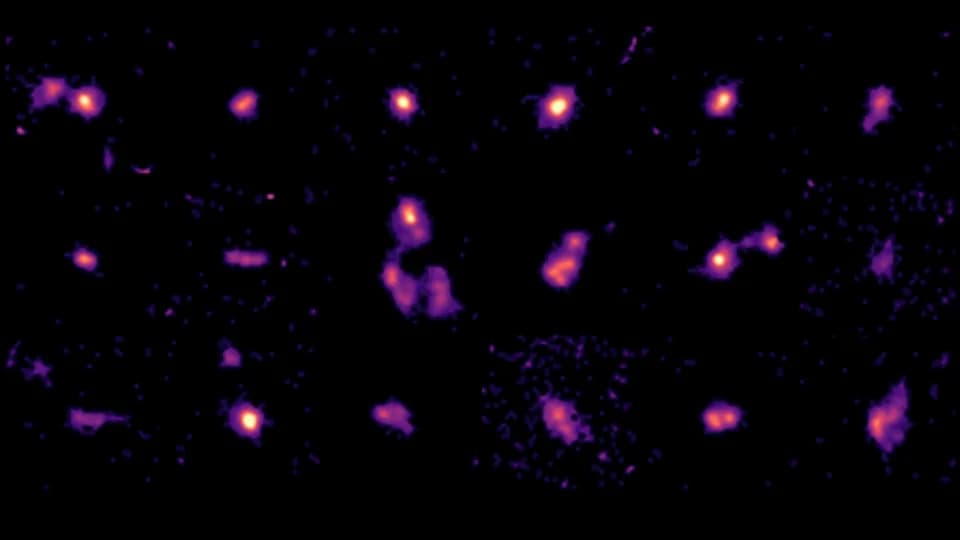
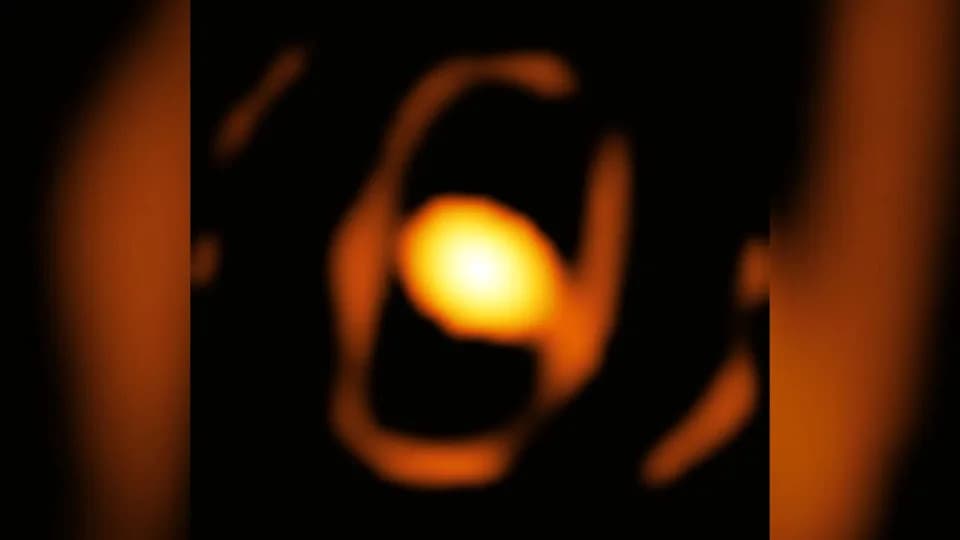
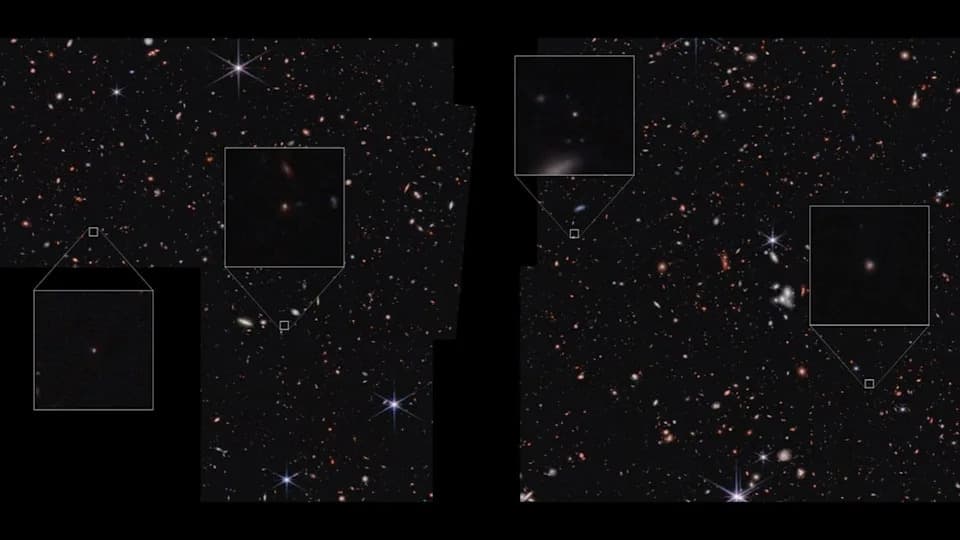
Using JWST's ultraviolet imaging, astronomers surveyed 48 globular clusters and over 3,400 blue stragglers and found that most of these "forever‑young" stars gain fresh hydrogen by siphoning mass from binary companions. The data favor mass transfer in binaries as the principal formation route rather than stellar collisions. Blue stragglers are surprisingly rarer in dense cluster cores — where binaries are disrupted — and their distribution can serve as a "dynamical clock" to probe cluster evolution.
JWST Reveals How 'Vampire' Stars Cheat Death — Blue Stragglers Steal Mass to Stay Young
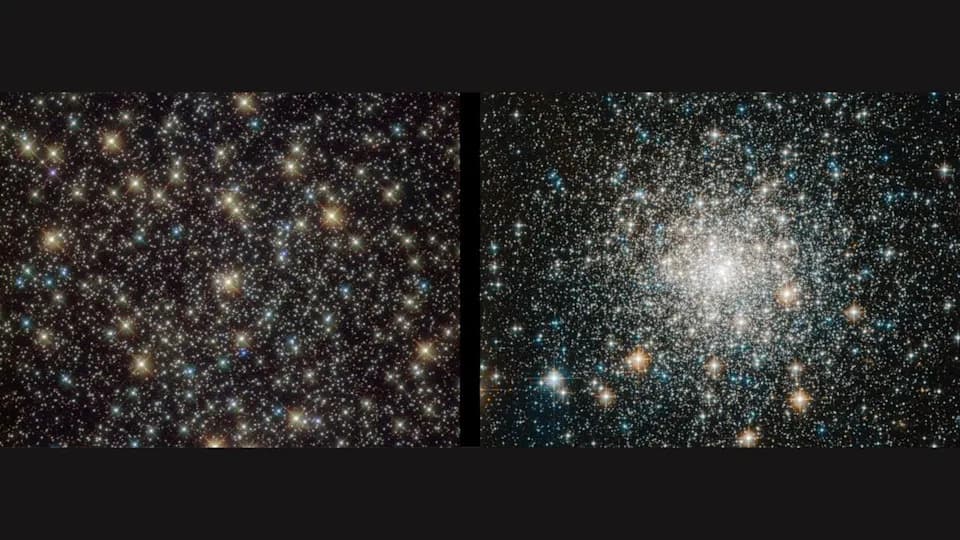
Researchers analyzed blue straggler stars in 48 galactic globular clusters of diverse sizes, ages, densities, distances and metallicities. This image shows the difference between a loose cluster and a dense cluster. | Credit: ESA/Hubble & NASA
A new study using the James Webb Space Telescope (JWST) helps solve a decades‑old astronomical puzzle: why some stars in ancient clusters look unexpectedly young and blue. Known as blue stragglers, these stars remain hot and luminous long after their peers have cooled — and the JWST data point to one clear cause: mass transfer from companion stars.
What the Study Did
The research, published Jan. 3 in Nature Communications, analyzed ultraviolet observations from JWST of 48 galactic globular clusters and more than 3,400 blue straggler stars in the Milky Way. By using ultraviolet filters that highlight hotter, bluer stars, the team separated blue stragglers from the surrounding older, redder stellar populations.
Mass Transfer — Not Collisions — Drives Most Blue Stragglers
Blue stragglers were long thought to arise via two main channels: direct stellar collisions or mass exchange in binary systems. The JWST survey shows that the latter — steady siphoning of gas from a companion — is the dominant formation path in galactic globular clusters. That transferred mass rejuvenates the recipient star, fueling additional hydrogen burning and making it appear bluer and brighter than expected for its age.
“Blue stragglers are anomalously massive core hydrogen‑burning stars that, according to the theory of single‑star evolution, should not exist,” the authors write. Lead author Francesco Ferraro (University of Bologna) notes that globular clusters are nearly as old as the Universe, so these stars formed very early and later gained mass.
Dense Cores Are Surprisingly Poor Nurseries For Blue Stragglers
One surprising result: blue stragglers are less common in the densest cluster regions. Although collisions are more likely where stars crowd together, tight environments also disrupt fragile binary systems before mass transfer can occur. The team found that the efficiency of forming and keeping blue stragglers is about 20 times higher in lower‑density zones than in the densest cluster cores.
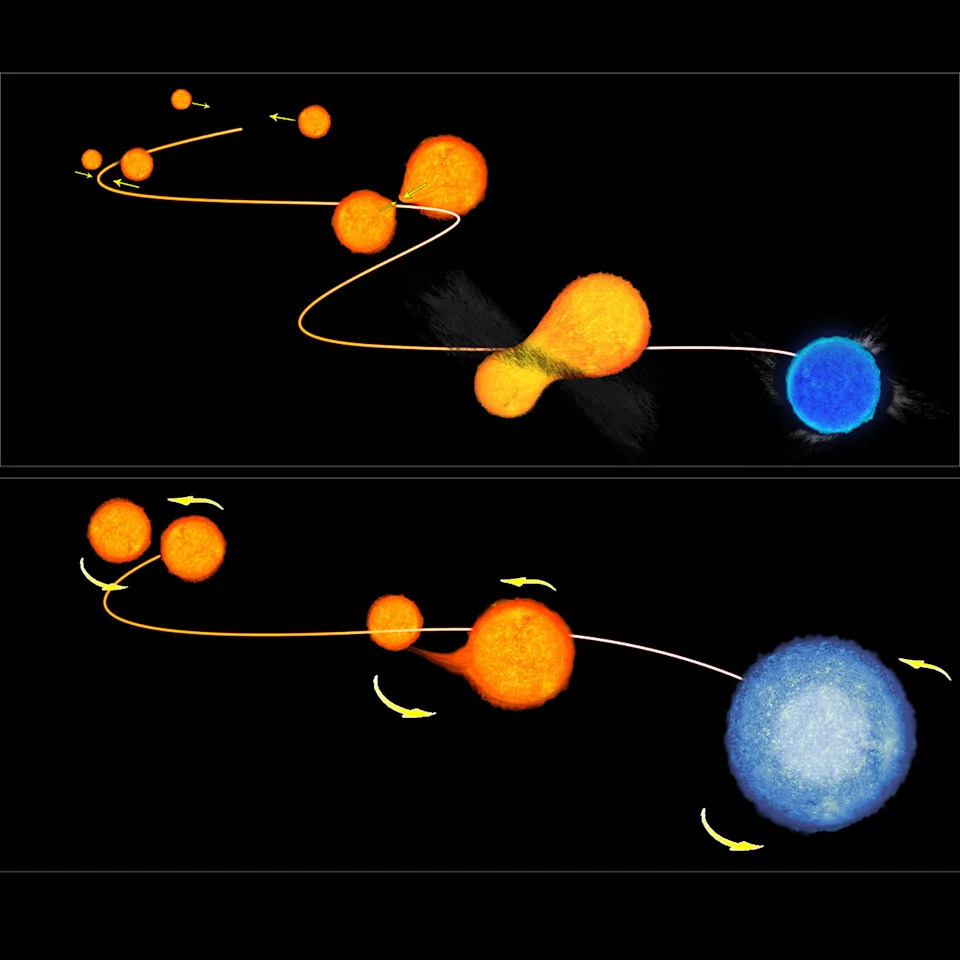
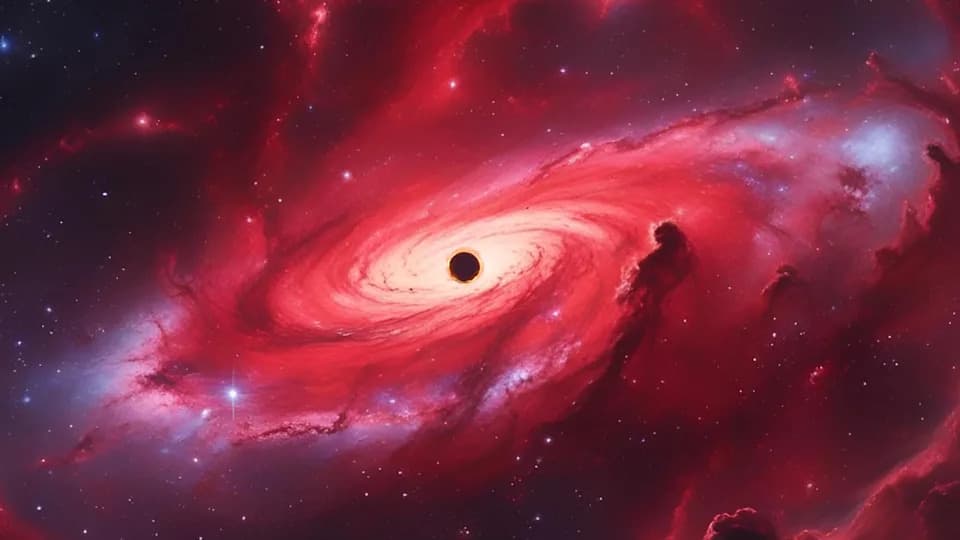
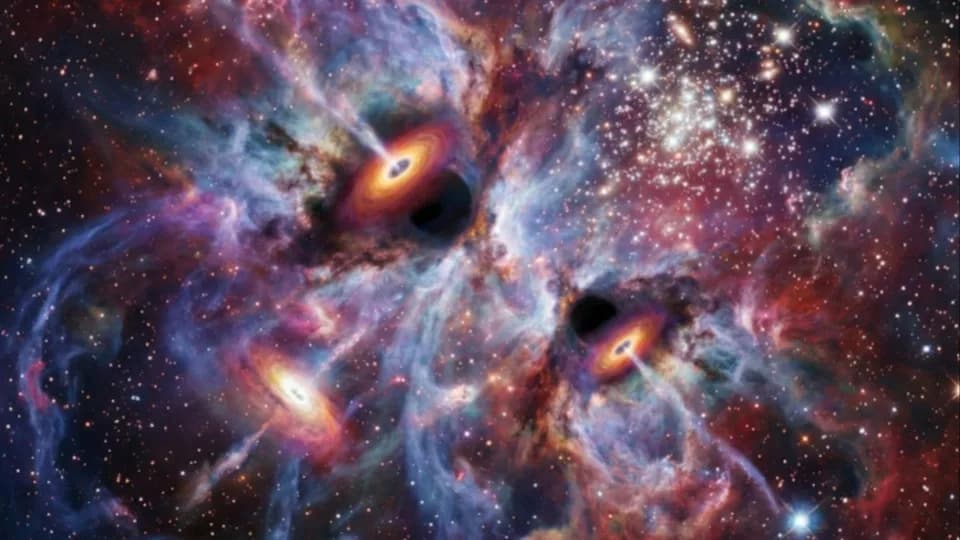
According to theory, blue straggler stars can form in two ways: through mergers of two low-mass stars, or through a vampiric process in which a star steals gas from its companion. | Credit: NASA/ESA
Quantitative Findings
Using a standard metric that relates blue straggler counts to cluster luminosity (where one unit equals the brightness of 10,000 suns), the researchers measured wide variation in straggler frequency across clusters — roughly three to 58 blue stragglers per luminosity unit. The number of ordinary (single) stars remains comparatively stable, indicating that blue straggler populations are especially sensitive to environmental density and binary survival.
Why This Matters
Blue stragglers are typically more massive than their neighbors and thus slowly migrate toward cluster centers through dynamical friction. Because their spatial distribution changes predictably with time, astronomers can use blue stragglers as a practical “dynamical clock” to probe a cluster’s evolutionary history. Co‑author Enrico Vesperini (Indiana University) likens crowded cluster centers to a cosmic bumper‑car arena that destroys binaries; co‑author Barbara Lanzoni (University of Bologna) says the findings offer “a new way to understand how stars evolve over billions of years.”
Final Perspective
Many blue stragglers began life as modest, long‑lived stars (under ~0.8 solar masses) that survived to the present epoch and later extended their lifetimes by consuming companions. Had they been born substantially more massive, they would have died earlier as supernovae or evolved into white dwarfs. The JWST ultraviolet survey and statistical analysis of thousands of objects across dozens of ancient clusters strongly support mass transfer in binaries as the primary channel creating these seemingly ageless stars.
Study Details: Francesco Ferraro et al., published Jan. 3, Nature Communications. JWST ultraviolet imaging of 48 galactic globular clusters; sample includes >3,400 blue stragglers.
Help us improve.