Federal Judge Brian Murphy temporarily paused DHS's planned Feb. 13 termination of Temporary Protected Status for more than 5,000 Ethiopians to allow a legal challenge to proceed. The stay will give the court time to review internal DHS records explaining the agency's decision. Plaintiffs—three Ethiopian nationals and African Communities Together—argue DHS unlawfully ended the 2022 designation with only 60 days' notice despite continuing conflict in parts of Ethiopia. DHS says TPS was not intended as "a de facto amnesty program" and has moved to end TPS for about a dozen countries.
Federal Judge Pauses DHS Termination Of TPS For Over 5,000 Ethiopians
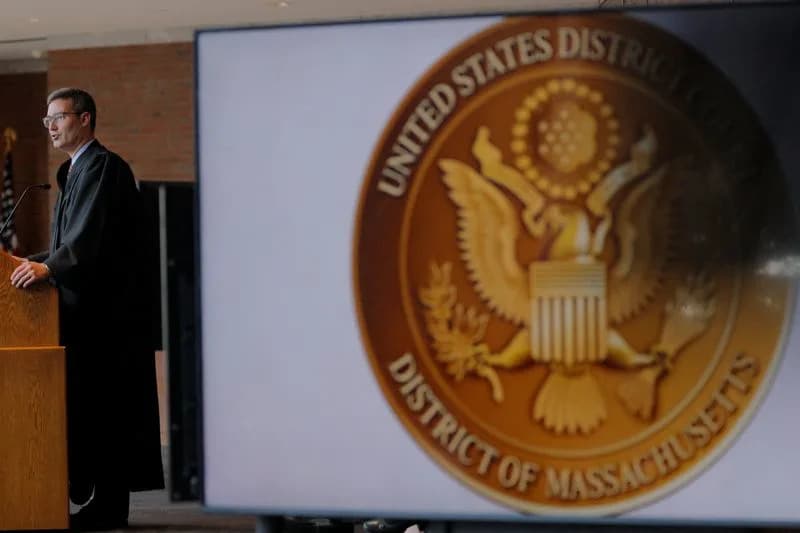
U.S. District Judge Brian Murphy speaks during his Investiture Ceremony at the federal courthouse in Boston, Massachusetts, U.S., September 17, 2025. REUTERS/Brian Snyder
BOSTON, Jan. 30 — A federal judge on Friday issued a temporary administrative stay preventing the U.S. Department of Homeland Security (DHS) from allowing Temporary Protected Status (TPS) for more than 5,000 Ethiopians to expire on Feb. 13, giving courts time to review a legal challenge.
Court Hearing and Ruling
U.S. District Judge Brian Murphy, who was appointed by President Joe Biden, said during a virtual hearing that he would delay the Feb. 13 effective date so DHS can produce internal records explaining how it decided to terminate the TPS designation for Ethiopia. Murphy said he needs those documents before determining whether to extend or convert the temporary stay into a longer injunction.
"I want to do everything I can to keep this case going," Murphy said at the hearing.
Background Of The Dispute
The lawsuit was filed last week by three Ethiopian nationals together with the advocacy group African Communities Together after DHS announced on Dec. 12 that it would end Ethiopia's TPS designation, citing improved conditions in the country. The plaintiffs contend DHS unlawfully rescinded the status that the Biden administration first granted in 2022 and did so with only 60 days' notice despite ongoing armed conflicts in parts of Ethiopia.
Under federal law, TPS may be granted to people whose home countries have suffered natural disasters, armed conflict, or other extraordinary conditions. The designation provides eligible migrants temporary protection from deportation and authorization to work in the United States.
"TPS was never intended to be a de facto amnesty program, yet that's how previous administrations have used it for decades," said DHS spokesperson Tricia McLaughlin.
Allegations And Next Steps
The plaintiffs also allege that Homeland Security Secretary Kristi Noem acted with unconstitutional animus toward non-white immigrants; Ethiopia's population is predominantly Black. The Department of Justice had requested additional time to respond to the lawsuit and opposed a court-ordered delay, but a government lawyer told the court DHS could produce the requested records within weeks.
Judge Murphy said he will schedule further arguments after reviewing the records produced by DHS, leaving the temporary stay in place for now while the parties prepare for the next phase of litigation.
What This Means: The administrative stay preserves work authorization and protection from deportation for the affected Ethiopians while the court evaluates whether DHS followed legal requirements in ending TPS. The decision also highlights judicial scrutiny of administrative decision-making and the role of records in reviewing agency actions.
Help us improve.