U.S. District Judge Indira Talwani issued a 14-day temporary restraining order blocking DHS from terminating Family Reunification Parole programs for migrants from seven countries, citing likely failures to provide individualized written notice. DHS announced the FRP terminations in December, effective Jan. 14, but exempted parolees who filed Form I-485 by Dec. 15, 2025. The court ordered DHS to produce decision records by Jan. 13 and set an expedited briefing schedule with government filings due Jan. 15 and plaintiff replies due Jan. 20.
Federal Judge Temporarily Blocks DHS From Ending Family Reunification Parole Programs Over Notice Failures
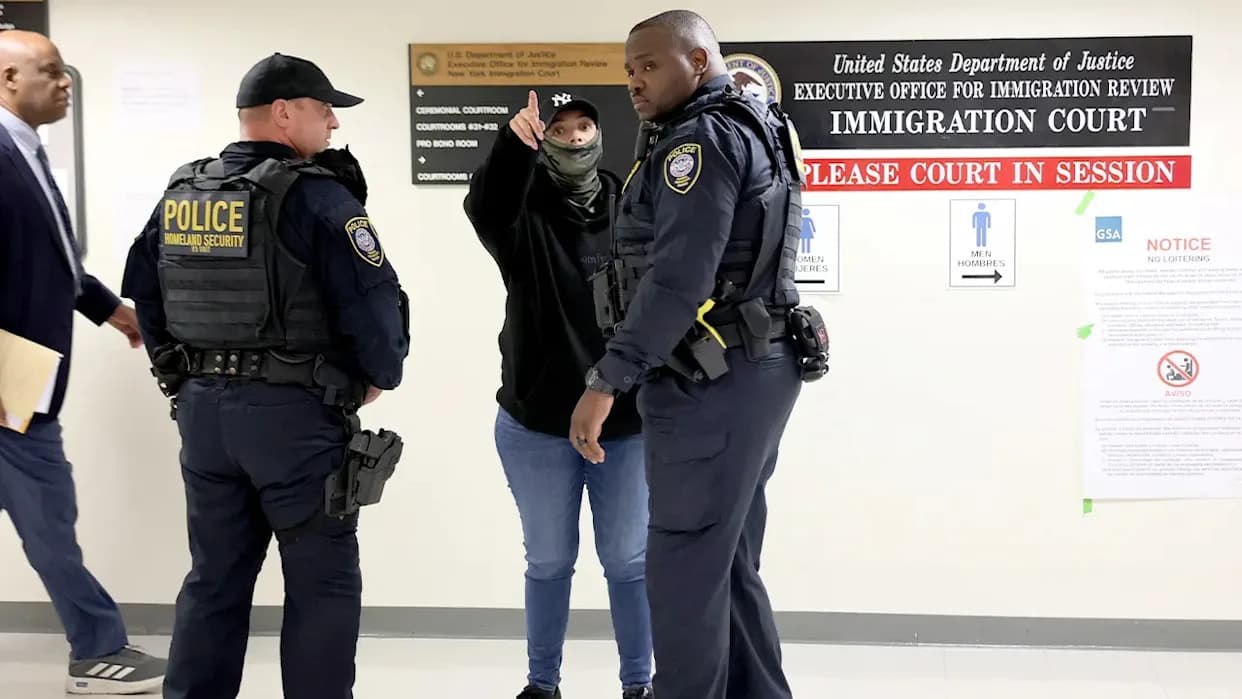
Federal judge temporarily blocks DHS termination of Family Reunification Parole programs over notice concerns
A Massachusetts federal judge on Saturday issued a temporary block on the Department of Homeland Security's (DHS) plan to terminate several Family Reunification Parole (FRP) programs, concluding the agency likely did not provide required individualized written notice to parole recipients before revoking their status.
U.S. District Judge Indira Talwani, in a five-page order, granted a 14-day temporary restraining order while the court evaluates whether DHS complied with notice requirements. The order pauses DHS's planned termination of country-specific FRP programs for migrants from seven countries.
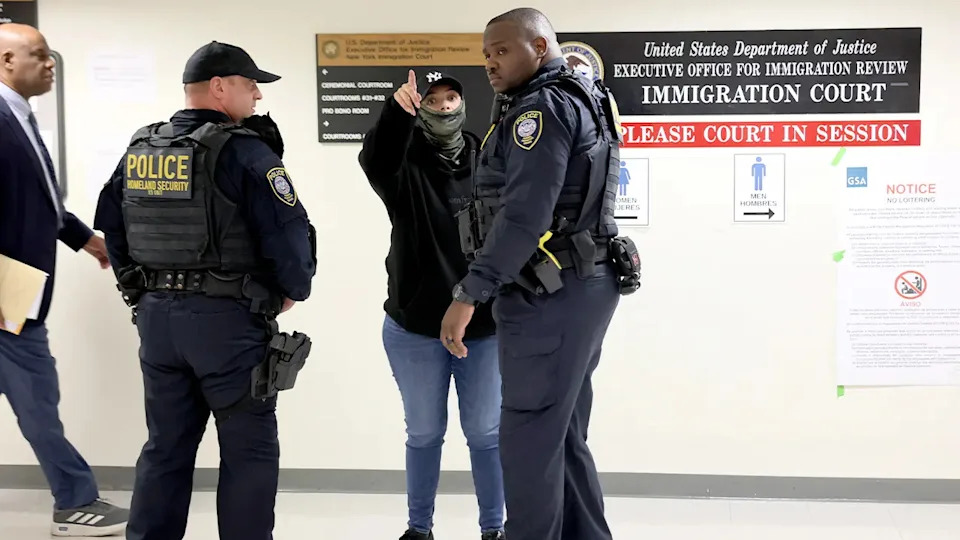
Homeland Security officers speak with a federal agent while patrolling immigration court at the Jacob K. Javits Federal Building on Oct. 16, 2025, in New York City.
What FRP Does
FRP permits certain qualifying relatives of U.S. citizens or lawful permanent residents to enter the United States temporarily while awaiting immigrant visas, a process that can take years.
DHS Action And Rationale
In December, DHS announced it would terminate all FRP programs covering migrants from Colombia, Cuba, Ecuador, El Salvador, Guatemala, Haiti and Honduras, including immediate family members. The agency said the move was intended to curb what it described as misuse of humanitarian parole and to restore parole decisions to individualized, case-by-case determinations.
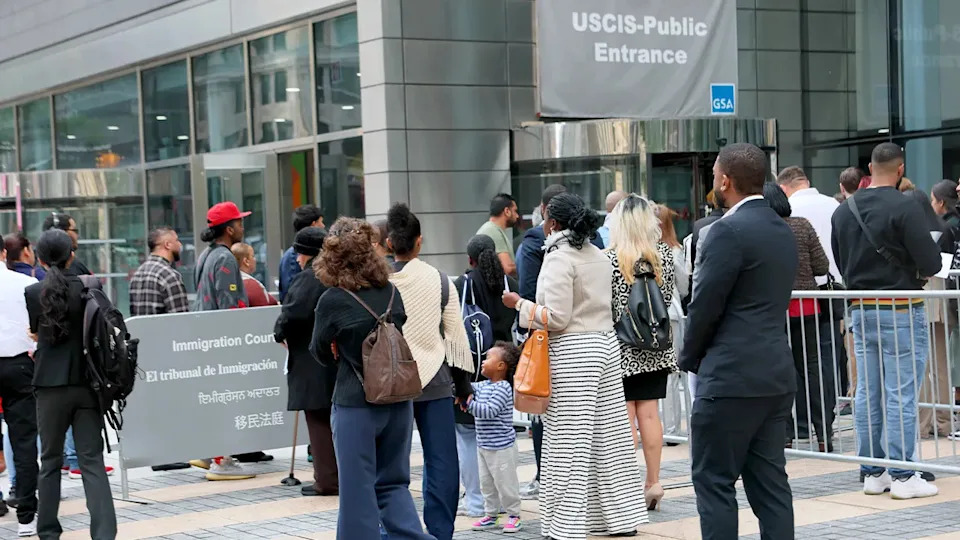
People wait to enter the Jacob K. Javits Federal Building on Oct. 15, 2025, in New York City.
DHS told the public it planned to notify parole recipients individually that their parole and related work authorization were being terminated, and said the terminations would take effect on Jan. 14. The agency also said the terminations would not apply to parolees who had filed Form I-485 (Application to Register Permanent Residence or Adjust Status) by Dec. 15, 2025, and whose applications remain pending.
Judge's Reasoning
Judge Talwani found sparse evidence that individuals actually received the individualized written notices DHS said it would send via U.S. Citizenship and Immigration Services (USCIS) online accounts or by mail. The court noted the Federal Register notice assumed parolees would have USCIS online accounts, but the record before the court did not show that most parolees had such accounts or that notices were sent.
The judge ordered DHS to produce records explaining the decision by Jan. 13 and set an expedited briefing schedule: the government must file its legal response by Jan. 15, and plaintiffs may file a reply by Jan. 20.
Implications
The temporary restraining order preserves the status quo while the court examines whether DHS followed legal notice procedures. The expedited schedule signals the court's intent to resolve the notice issue quickly; any longer-term policy change will depend on the court's forthcoming rulings.
Help us improve.