Rep. Wesley Hunt (R‑Texas) introduced a bill to end Temporary Protected Status for nationals of Sudan, Syria, Yemen, Lebanon and Somalia and to require refugees from those countries to leave the U.S. within 180 days of enactment. The proposal was announced amid expanded federal fraud probes in Minnesota, including allegations that more than $240 million was stolen through the Feeding Our Future nonprofit. Hunt says revoking TPS is a step toward addressing the alleged abuses; the bill now faces the legislative process and likely legal and policy challenges.
House GOP Bill Would End TPS For Five Countries, Require Some Refugees To Self‑Deport After Minnesota Fraud Probe
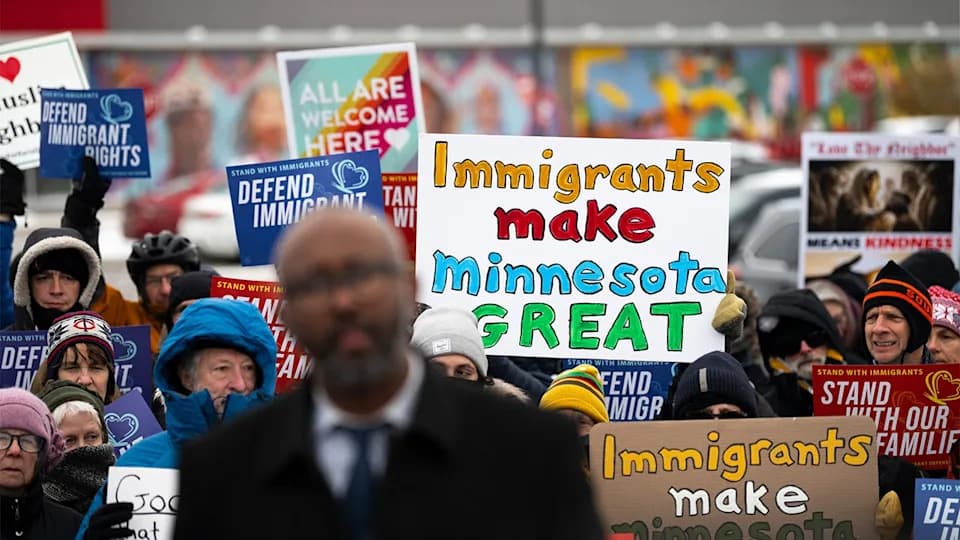
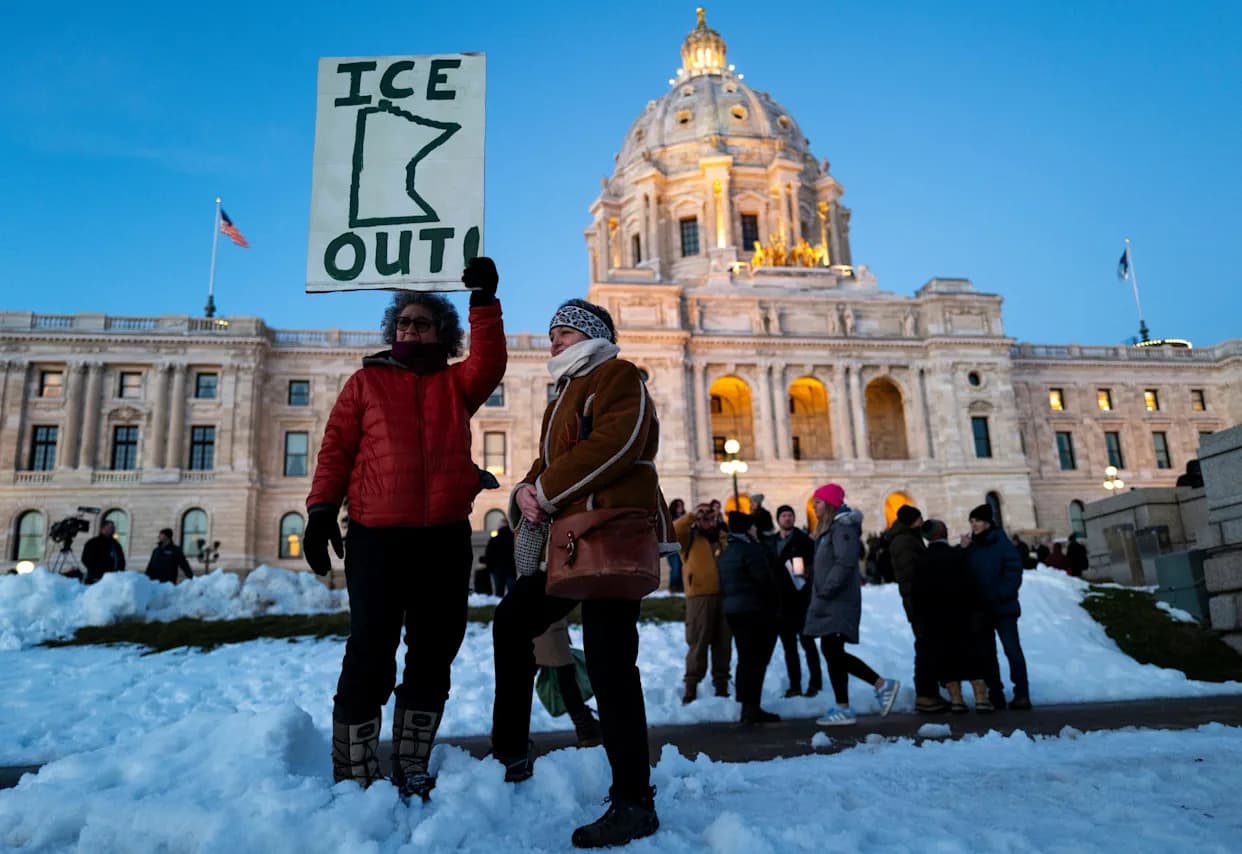
Demonstrators rally outside a Target location on Dec. 4, 2025, in Minneapolis, Minn.
A House Republican has introduced legislation that would roll back Temporary Protected Status (TPS) for nationals of Sudan, Syria, Yemen, Lebanon and Somalia and require certain refugees from those countries to leave the United States within 180 days of the bill becoming law.
What the Bill Would Do
Rep. Wesley Hunt (R‑Texas) filed the measure on Tuesday. The proposal would terminate current TPS designations for the five listed countries and set a 180‑day deadline for refugees from those nations to depart the U.S. or otherwise lose their protected status.
Context: Minnesota Fraud Investigations
Hunt said the timing of his bill is tied to federal investigations in Minnesota. Prosecutors have charged multiple people in an alleged scheme that, they say, stole more than $240 million from the Federal Child Nutrition Program through the Minnesota nonprofit Feeding Our Future. Authorities have since expanded inquiries into other state‑run programs and warned that the total impact could be larger.
Childcare providers that receive state funding — many serving Minnesota’s Somali community — have come under increased scrutiny as part of the probes. The controversy has also had political consequences: Minnesota Gov. Tim Walz announced he would not seek a third term, saying he did not want a campaign to distract from efforts to protect residents and address criminal activity.
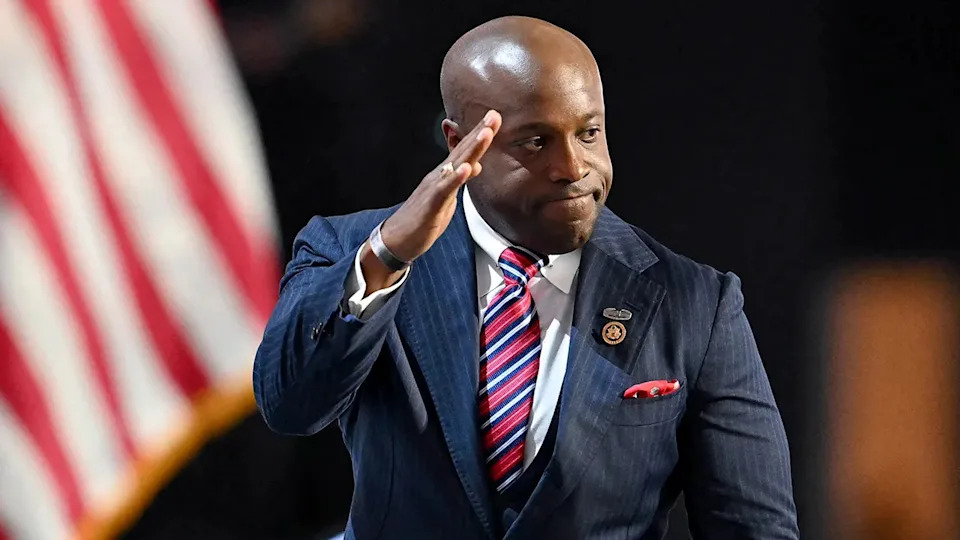
Rep. Wesley Hunt gestures after speaking during the first day of the 2024 Republican National Convention at the Fiserv Forum in Milwaukee, Wis., July 15, 2024.
"Every minute that I spend defending my own political interests would be a minute I can't spend defending the people of Minnesota against the criminals who prey on our generosity, and the cynics who want to prey on our differences," Gov. Walz said.
Lawmakers' Statements
Hunt argued current vetting has failed and said revoking TPS designations is a first step to "cleaning up this mess." He also said the legislation would accelerate efforts by the Trump administration to end TPS protections for certain foreign‑born Somalis in Minnesota.
Hunt framed part of his argument in national security and cultural terms, saying his military experience informed concerns about the spread of Sharia law and that the bill would help "keep people that hate our country out of here." He is also a candidate for the U.S. Senate in Texas.
Next Steps
The bill faces the usual legislative process in the House and — if passed — would need to clear the Senate and be signed by the president to become law. Supporters say it addresses perceived gaps in immigration vetting; critics may raise legal, humanitarian and due‑process concerns about mass revocation of TPS and rapid deportation requirements for refugees.
Facts To Watch: developments in the Minnesota fraud investigations, legislative progress on the bill, official guidance for affected TPS holders and responses from immigrant‑rights groups and legal advocates.
Help us improve.