The Greenland shark — possibly the longest-living vertebrate at up to 400 years — appears to preserve a functional visual system adapted to dim light despite cloudy eyes and corneal parasites. Researchers analyzed eyeballs (some ~130 years old), compared them with bovine and human tissue, and examined the shark genome. They found intact retinal cell types, adaptations consistent with low-light vision, and strong expression of DNA-repair genes in the retina, which may support vision maintenance over extreme lifespans. These findings could point to new strategies for preventing age-related human eye diseases.
How Greenland Sharks Preserve Sharp Vision for Centuries — What Their Eyes Could Teach Us
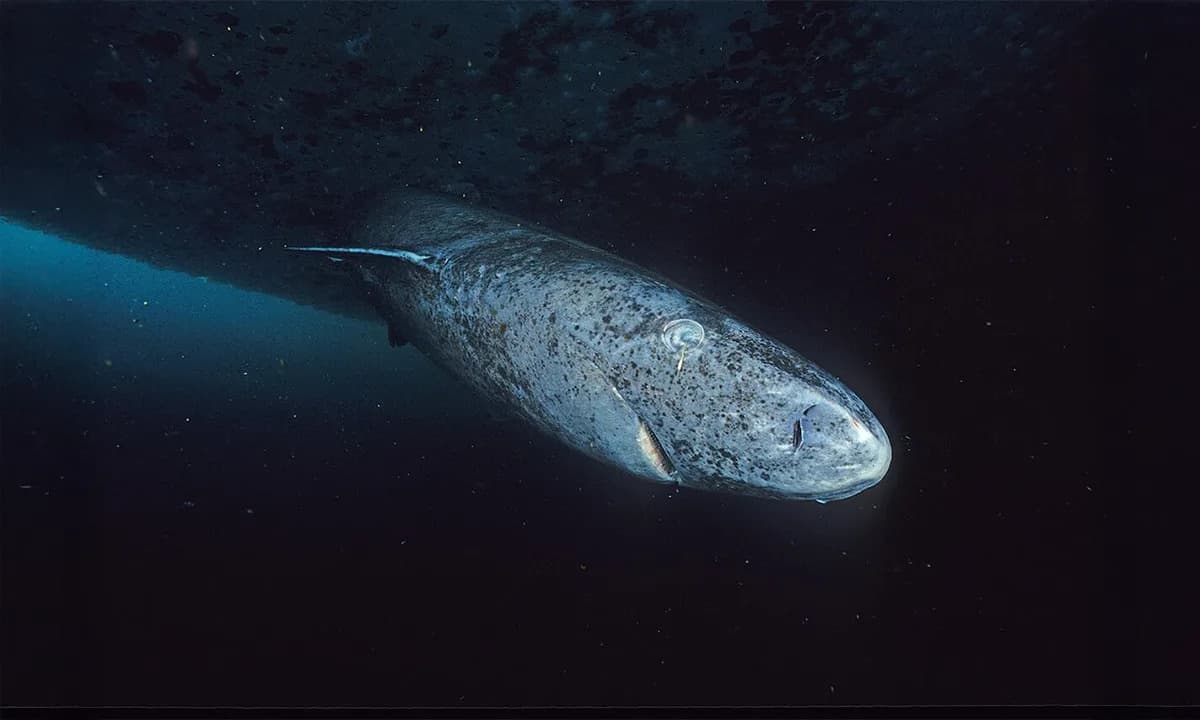
Lead image: Hemming1952 / Wikimedia Commons
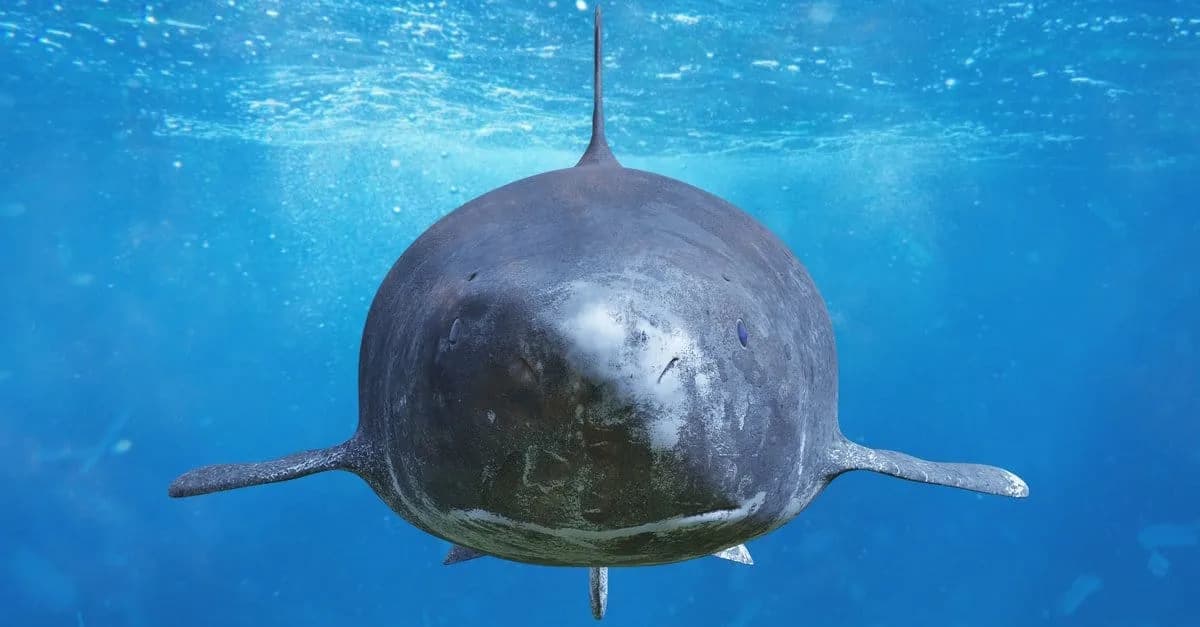
In the cold, dim waters of the Arctic and North Atlantic, Greenland sharks can live for centuries — as long as four hundred years. Despite often cloudy eyes and corneal parasites, new research shows these long-lived sharks retain a functional visual system adapted to low light, offering clues that might inform treatments for human age-related eye diseases.
What the study found
Researchers led by Dorota Skowronska-Krawczyk (University of California, Irvine) examined baseball-sized eyeballs taken from Greenland sharks, including specimens estimated to be as old as roughly 130 years. The team compared the shark eyes with bovine and human tissue and analyzed the Greenland shark genome and gene expression to identify visual-system features and evolutionary changes.
Key observations
- Microscopy showed the retina contains the cell types required for vision, with no clear signs of widespread retinal degeneration.
- Corneal parasites, while common, did not appear to prevent light from reaching the retina in the samples examined.
- Anatomical traits such as thinner inner retinal layers and molecular signatures indicate strong adaptation to dim-light environments (the species can dive to great depths).
- Notably, the retina exhibited robust expression of genes associated with DNA repair, suggesting mechanisms that help maintain retinal integrity over exceptionally long lifespans.
Why it matters
These findings, published in Nature Communications, challenge assumptions that deep-dwelling, long-lived animals necessarily lose sight. The discovery of sustained DNA-repair activity and retained retinal structure raises the possibility that similar protective pathways could be explored to slow or prevent age-related vision loss in humans, including conditions such as glaucoma and macular degeneration.
Limitations and next steps
The research is still in early stages. Sample sizes are limited by the difficulty of collecting large, well-preserved eyes from very old sharks, and the functional consequences of the molecular signatures require further study. The team plans long-term and comparative work to clarify the precise mechanisms that preserve shark retinal health and test whether those mechanisms or their principles can be translated into therapies for humans.
“Evolutionarily speaking, you don’t keep the organ that you don’t need,” said Skowronska-Krawczyk, explaining why the shark’s active visual system was surprising to researchers.
Bottom line: Greenland sharks appear to maintain dim-light vision across centuries, with molecular and anatomical features that protect retinal integrity. Unlocking those mechanisms could inspire new approaches to combat human age-related vision loss.
Help us improve.