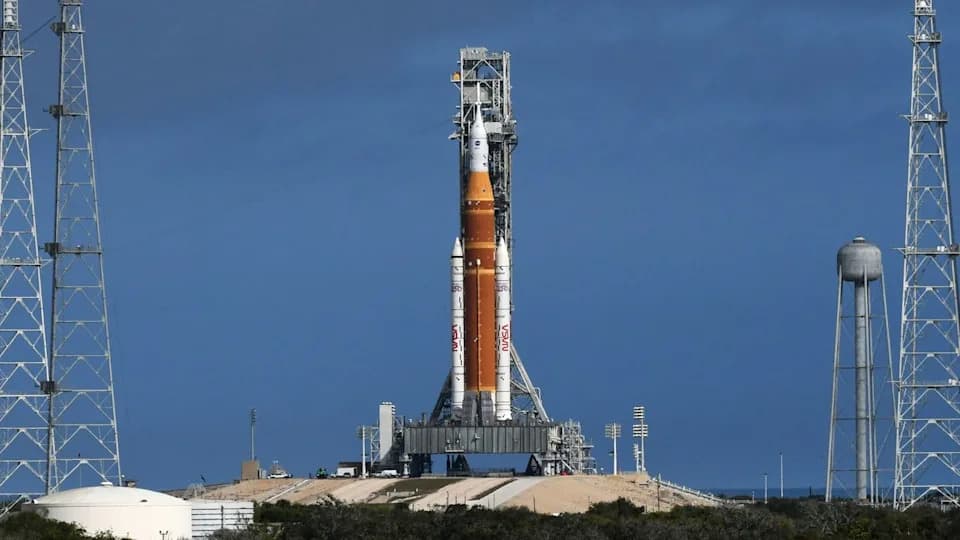
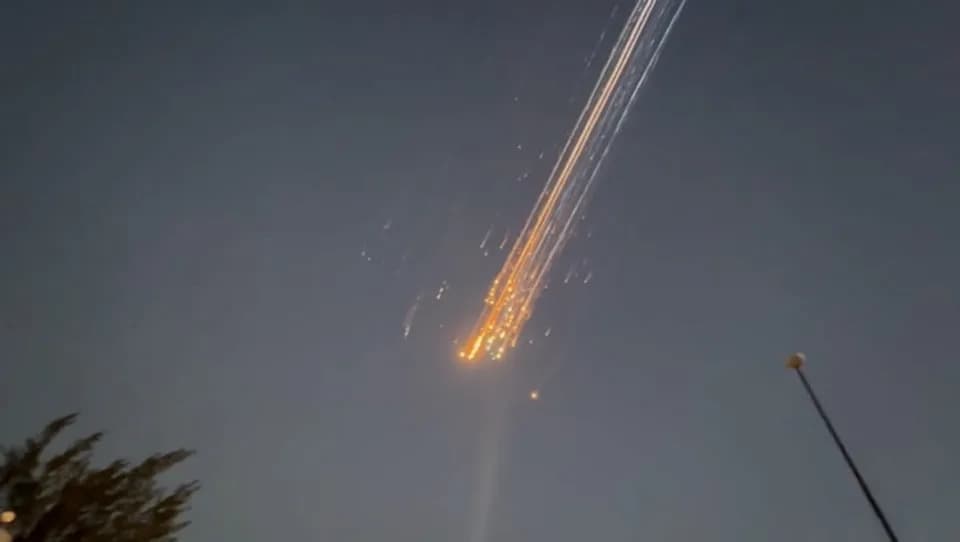
NASA is tracking an unusually cold spell in Florida that could complicate the Artemis 2 launch, a 10-day crewed lunar flyby carrying three Americans and one Canadian. Cape Canaveral forecasts show temperatures dipping into the 20s, and NASA prohibits launches when ambient readings are between 38°F and 49°F. The SLS launch window runs Feb. 6–Apr. 6, pending a wet dress rehearsal (~700,000 gallons of cryogenic propellant) and a flight readiness review; the crew entered quarantine on Jan. 23.
Could Cold Florida Weather Push Back Artemis 2 Launch? NASA Watches Forecast

Firefly's Blue Ghost lunar lander captures its shadow on the moon's surface after completing a successful landing March 2 near a volcanic feature on the moon called Mons Latreille. The vehicle became the first of two landers manufactured by a U.S. company to reach the moon is 2025 in crucial missions to lay the groundwork for NASA to return humans to the lunar surface in the years ahead.
NASA is closely monitoring an unusually cold spell in Florida that could affect the planned Artemis 2 launch. The mission will send three American astronauts and one Canadian on a roughly 10-day crewed flyby of the moon to test systems and procedures needed for future lunar surface missions.
Weather And The Launch Window
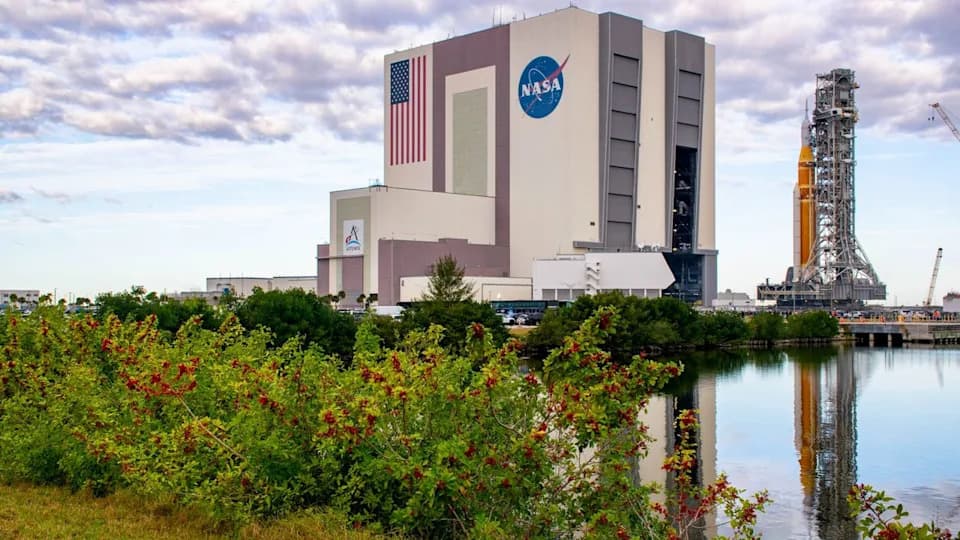
Forecasters expect temperatures at Cape Canaveral and the Kennedy Space Center to dip into the 20s over the weekend, with daytime highs hovering near the 50s before rebounding into the 60s. Under NASA's Artemis 2 weather constraints, launches are restricted when ambient temperatures fall between 38°F and 49°F — a range that could complicate operations if site conditions fall into that band.
Prelaunch Tests And Timing
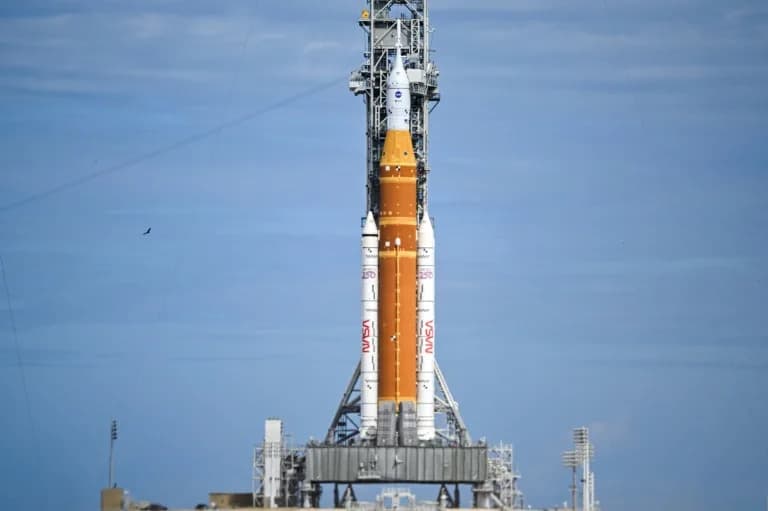
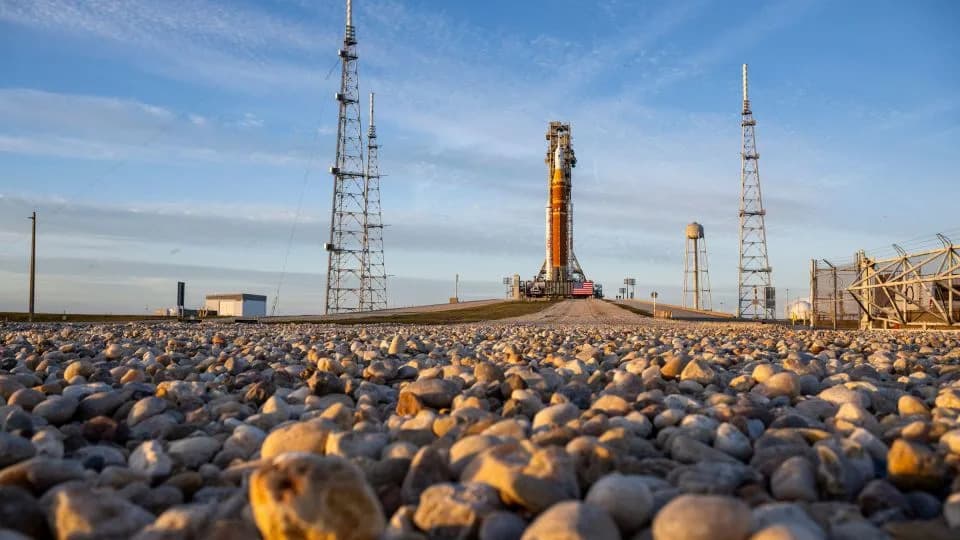
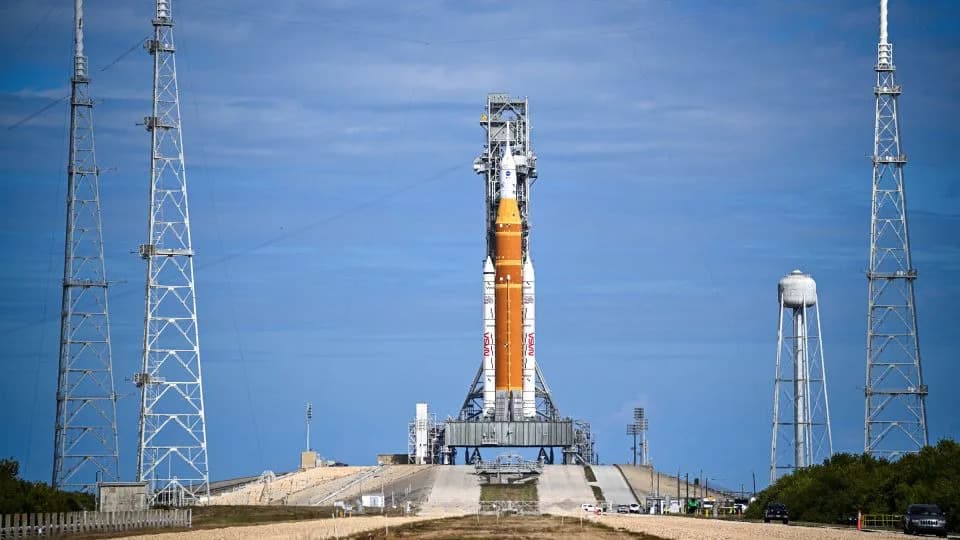
The Space Launch System (SLS) carrying the Orion capsule is scheduled to lift off as early as Feb. 6 or as late as April 6. NASA will announce an official target date only after completing a wet dress rehearsal — a full-length mock countdown that includes fueling the rocket with about 700,000 gallons of cryogenic propellants — and a formal flight readiness review.
"With cold weather sweeping the country and lower than normal temperatures expected in Florida, technicians are taking steps to ensure environmental control systems keeping Orion and SLS elements at the proper conditions are prepared for the cold," NASA said in a recent blog post.
Crew, Mission Profile And Purpose
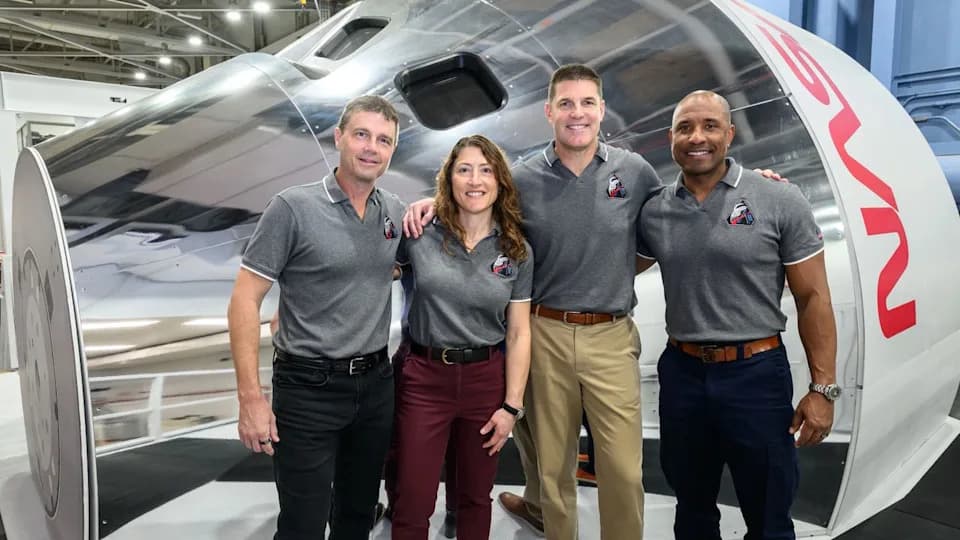
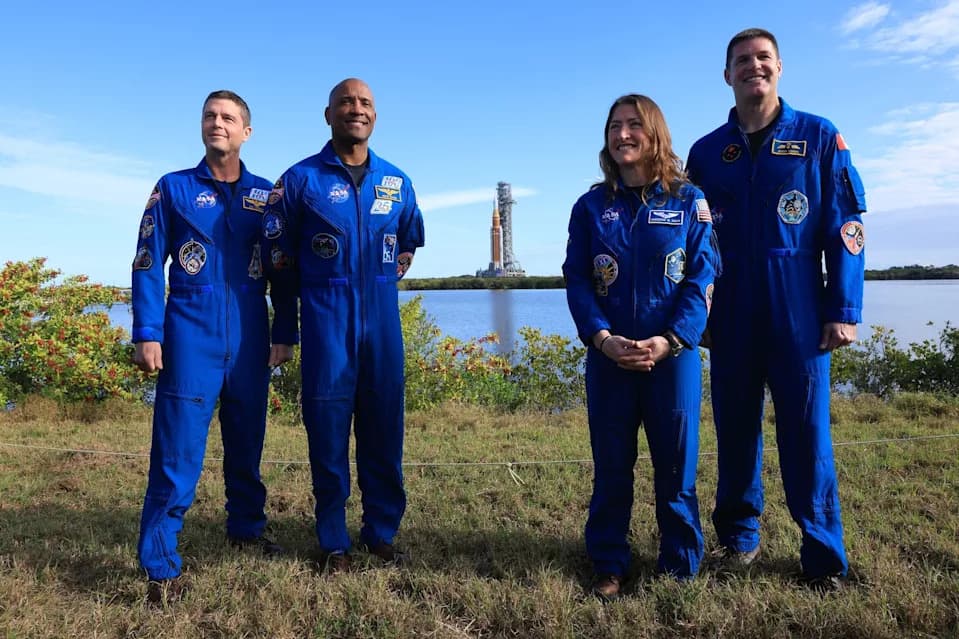
The Artemis 2 crew — NASA astronauts Reid Wiseman, Victor Glover and Christina Koch, joined by Canadian Space Agency astronaut Jeremy Hansen — entered quarantine on Jan. 23, following standard preflight protocol to minimize illness risk. The flight will not include a lunar landing; instead, the crew will loop around the moon on a mission designed to validate spacecraft systems, communications and operational procedures for future surface missions.
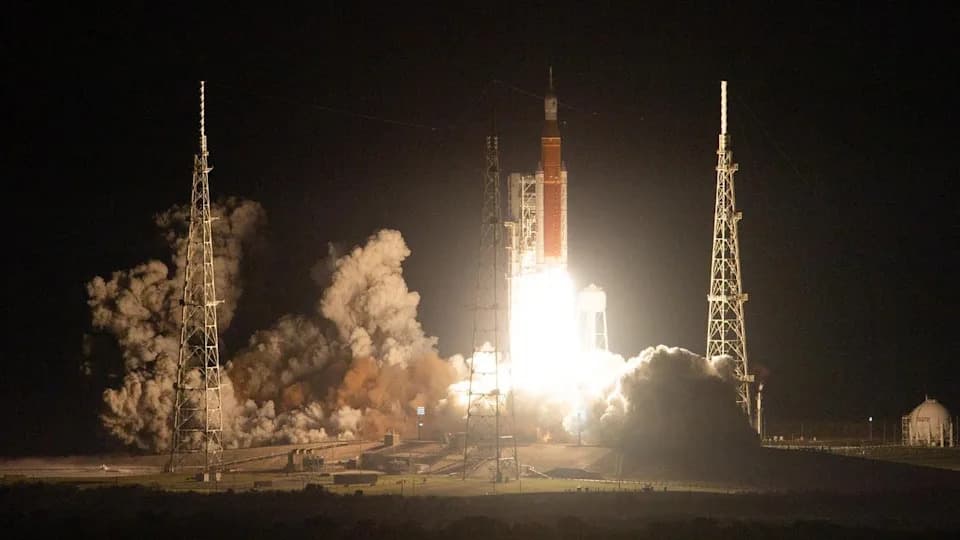
The Lockheed Martin-built Orion capsule is expected to travel roughly 4,700 miles beyond the far side of the moon, taking the astronauts farther from Earth than any humans have gone before returning them safely home. Artemis 2 builds on the uncrewed Artemis 1 test flight (Nov. 16, 2022) and paves the way toward a planned lunar landing on Artemis 3.
Why This Matters
Cold-weather constraints affect more than scheduling: environmental controls, propellant handling and ground operations all must meet strict temperature limits to protect hardware and crew. Artemis is NASA's multi-mission effort to establish a sustainable human presence on the moon — including a prospective settlement near the lunar south pole where water ice could support life support and fuel production — and to use that experience as a stepping stone to Mars.
Next Steps: Mission teams will complete the wet dress rehearsal and the flight readiness review, adjust environmental controls as needed, and then announce a formal launch date when conditions and checks are satisfactory.
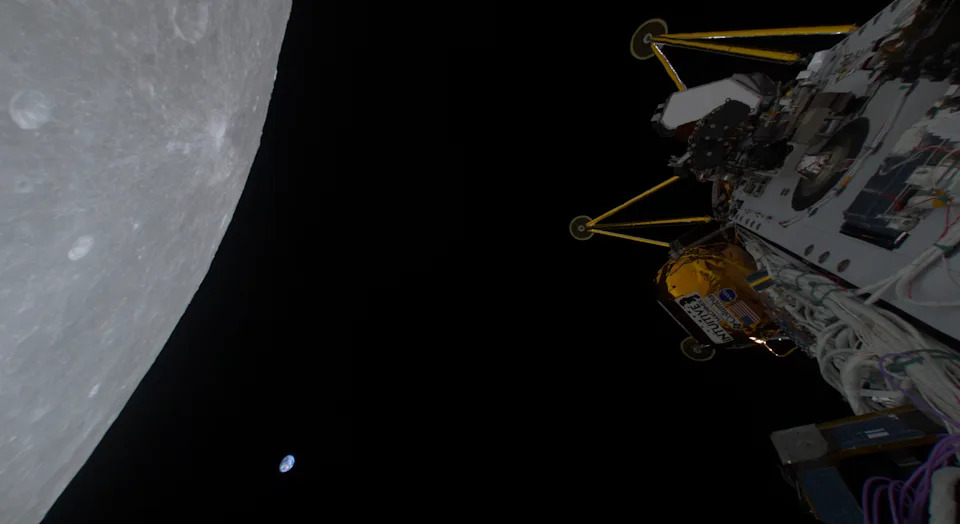
Athena, the lunar lander on Intuitive Machines' IM-2 mission, captured this image of the moon's surface with Earth seen in the distance ahead of a March 6 landing attempt. While the lander was the second U.S. vehicle to reach the moon within a week, it ultimately landed on its side, which hindered much of its mission.
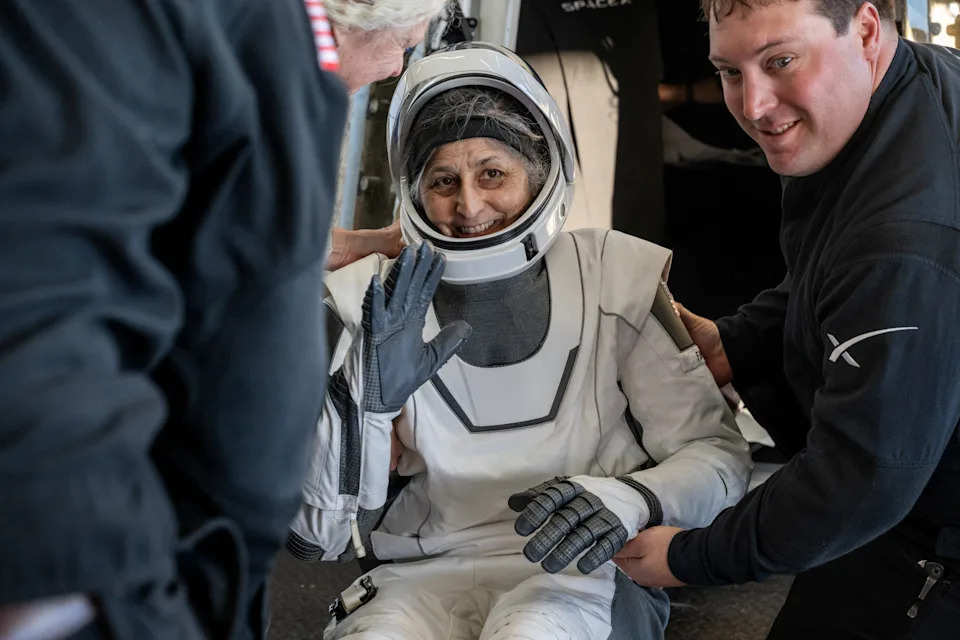
NASA astronaut Suni Williams is helped out of a SpaceX Dragon spacecraft March 18 following a return to Earth after a nine-month stay at the International Space Station. She and NASA astronaut Butch Wilmore crewed the Boeing Starliner, which had launched in June 2024 on a failed test flight that was meant to return them to Earth a few days later.
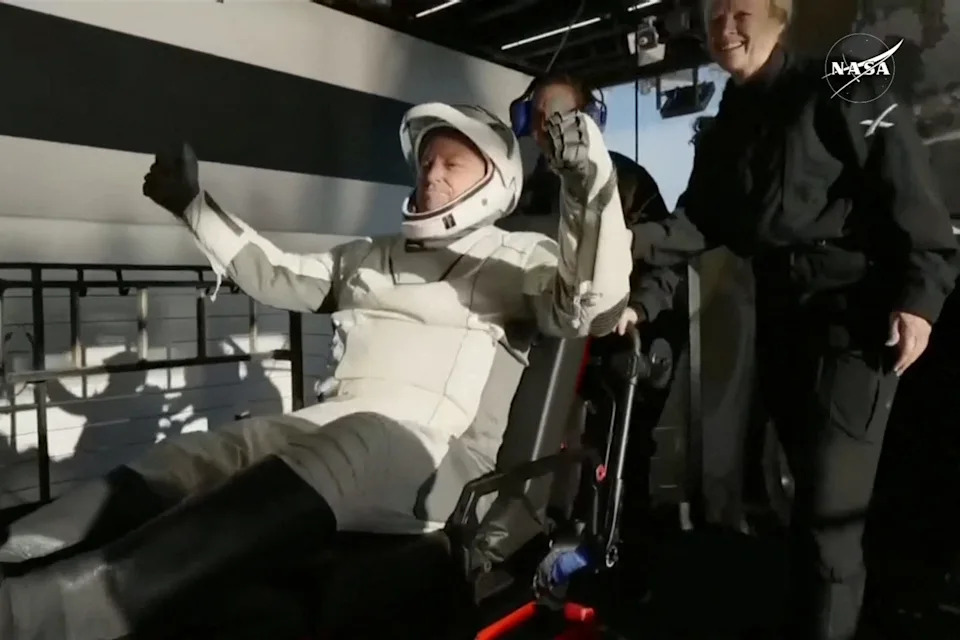
Butch Wilmore reacts after he and Suni Williams and two other astronauts splashed down March 18 in a Crew Dragon space capsule following their return to earth from the International Space Station off the coast of Florida. The astronauts' extended stay at the orbital outpost dominated the news cycle for months.
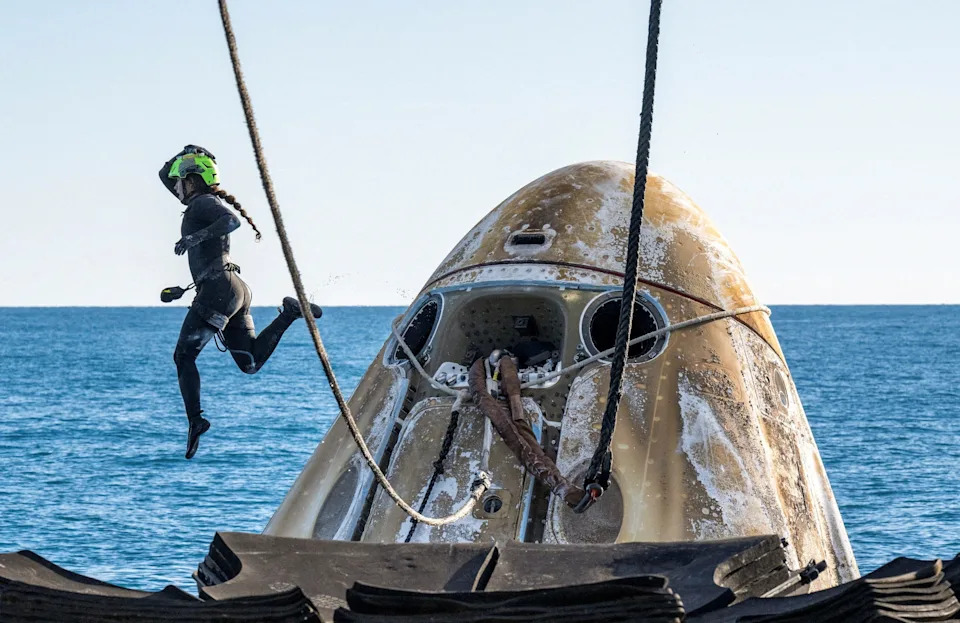
A SpaceX support team member is seen airborne while working to lift the SpaceX Dragon capsule that returned the Starliner astronauts and two others onto a recovery vehicle following its landing off the coast of Florida.

This picture shows the crew of a privately-funded mission known as Fram2, from left to right, mission specialist and medical officer Eric Philips, mission commander Chun Wang, pilot Rabea Rogge and vehicle commander Jannicke Mikkelsen on March 19, 2025 in Hawthorne, California. Launched March 31 from Florida using a SpaceX Dragon capsule, the mission became t first ever human spaceflight over the Earth's polar regions.
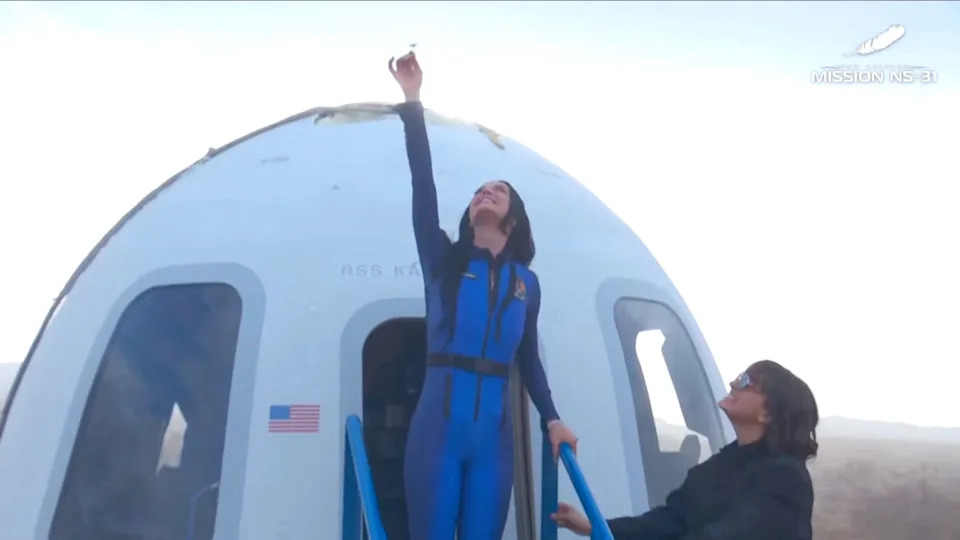
Pop musician Katy Perry emerges April 14 from Blue Origin's New Shepard capsule in West Texas following a brief flight to the edge of space. Perry was part of an all-women crew that also included broadcast journalist Gayle King that took the ride from Blue Origin's facility called Launch Site One. The high-profile launch attracted plenty of headlines and even drew some backlash from those who viewed the mission as a wasteful publicity stunt.
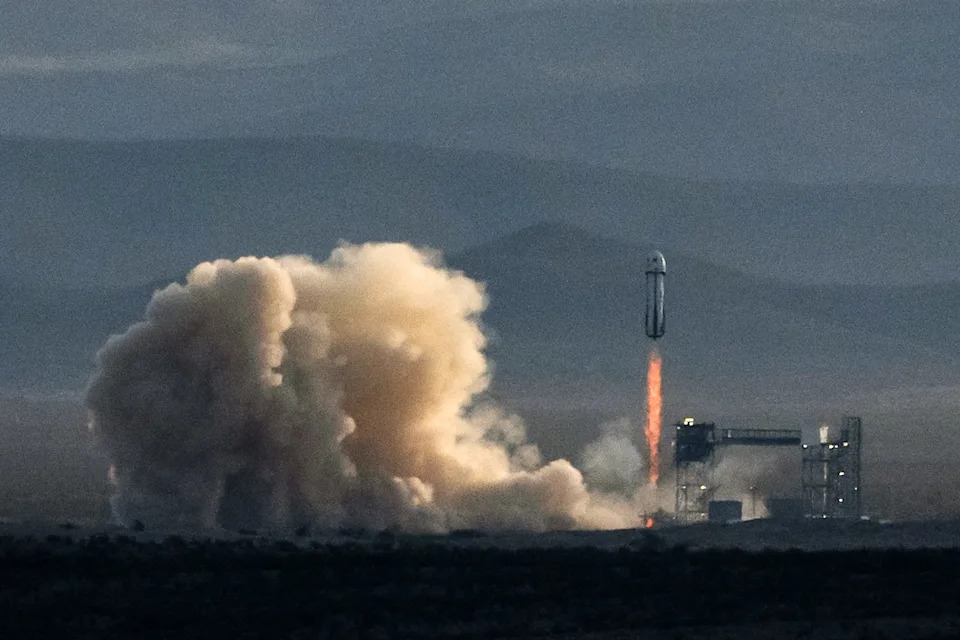
Blue Origin's New Shepard rocket carrying astronauts Aisha Bowe, Amanda Nguyen, Kerianne Flynn, Gayle King, Katy Perry, and Lauren Sanchez lifts off April 14 from Launch Site One near Van Horn, Texas. Blue Origin has since launched five more human spaceflights on the New Shepard in 2025.
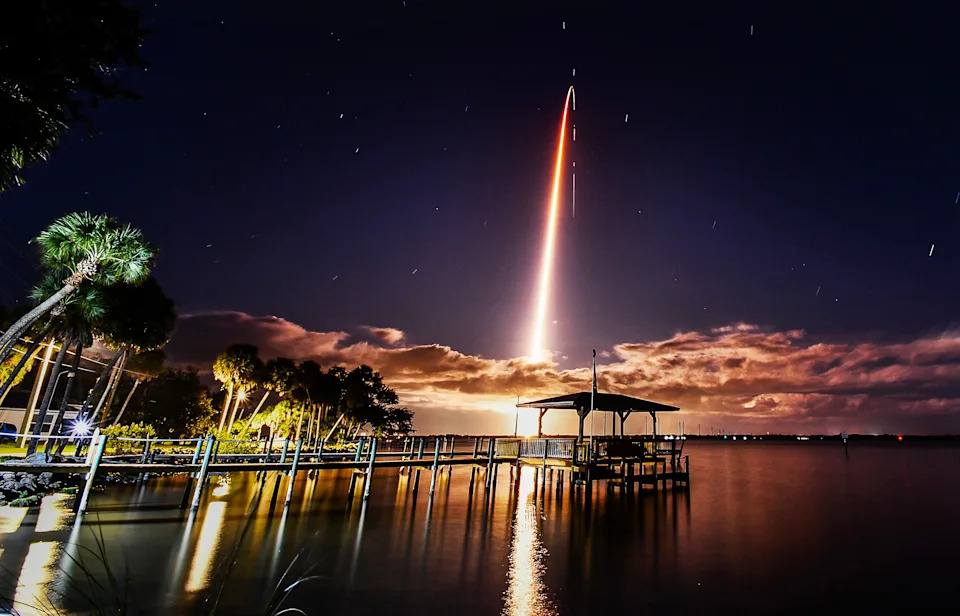
This photo depicts a United Launch Alliance Atlas V rocket carrying the latest batch of Amazon's broadband satellites on Dec. 16 to low-Earth orbit after launching from the Cape Canaveral Space Force Station in Florida. Formerly called Project Kuiper, the venture has since been renamed Amazon Leo. Since its debut April launch, Amazon Leo has deployed 180 of 3,000 satellites planned for its first constellation, which could challenge SpaceX's Starlink.
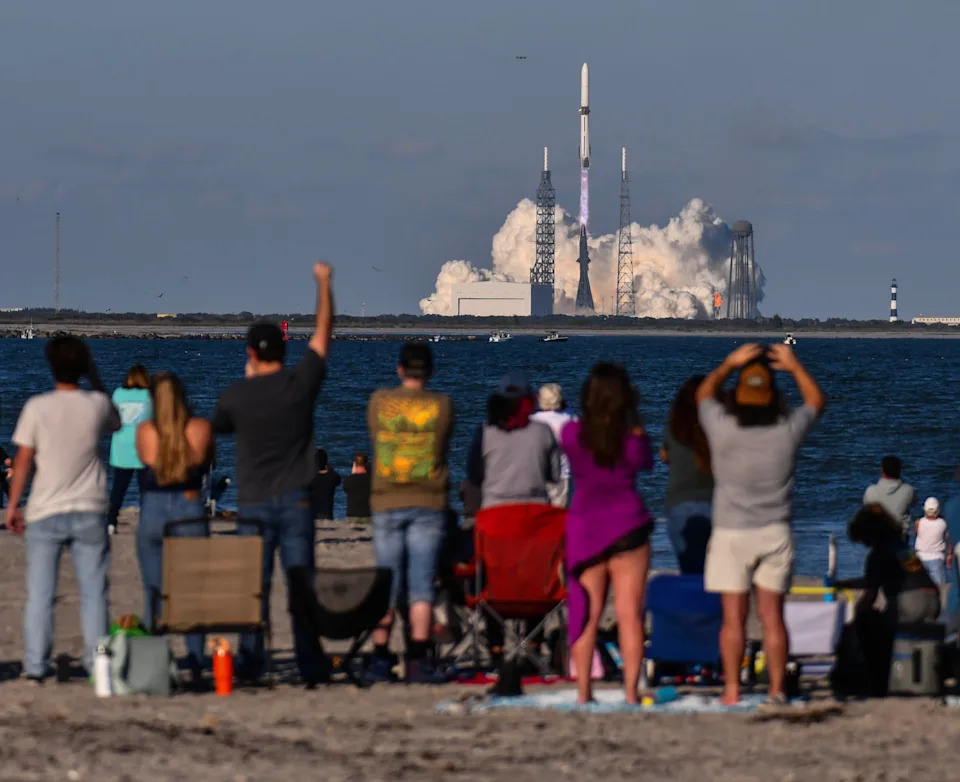
A group of Blue Origin employees with their friends and families gather on the beach in Cape Canaveral for the launch of Blue Origin's second New Glenn rocket in 2025. Following its January debut, the rocket launched for the second time Nov. 13 from Launch Complex 36 at Cape Canaveral Space Force Station, sending NASA's twin ESCAPADE spacecraft on their trek to Mars.
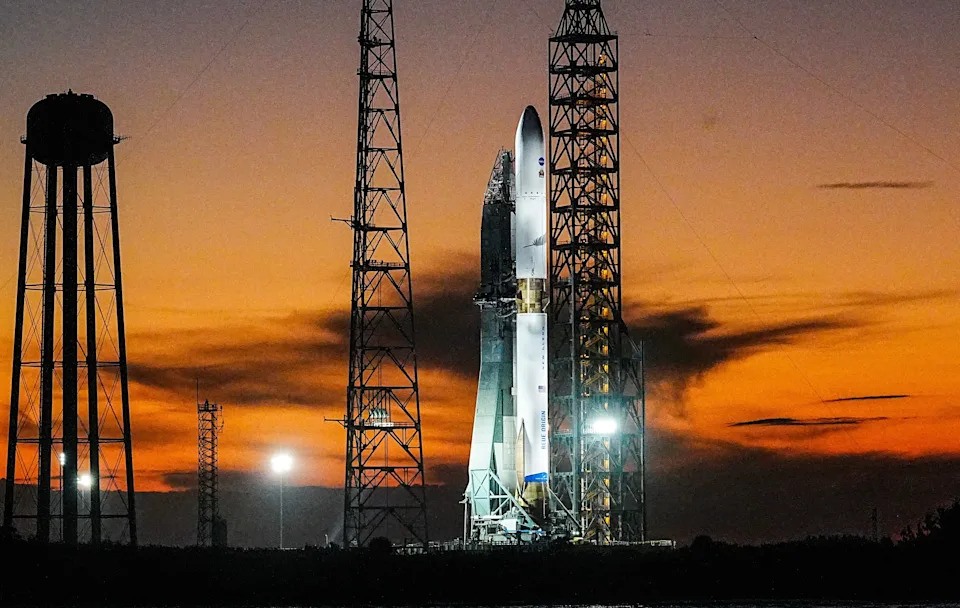
Darkness falls Nov. 9 as a Blue Origin New Glenn rocket is prepped for its second-ever launch from the Cape Canaveral Space Force Station. Blue Origin is developing the towering rocket for heavy-lift missions that could see Jeff Bezos' company compete with Elon Musk and SpaceX.
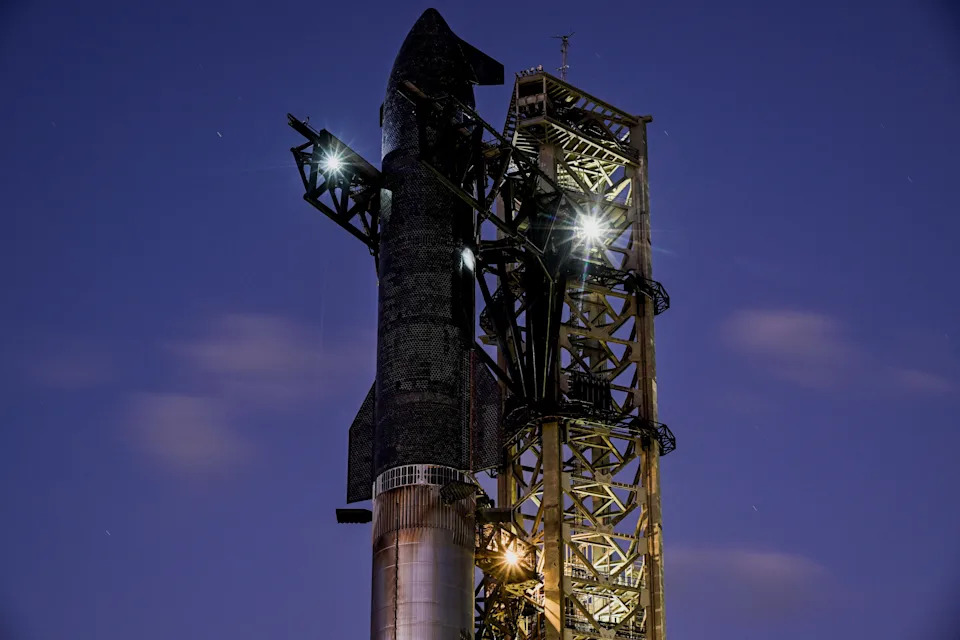
The SpaceX Starship spacecraft sits Oct. 12, 2025 atop the Super Heavy booster before sunrise as preparations continue for its 11th test flight from the company's complex in Starbase, Texas.
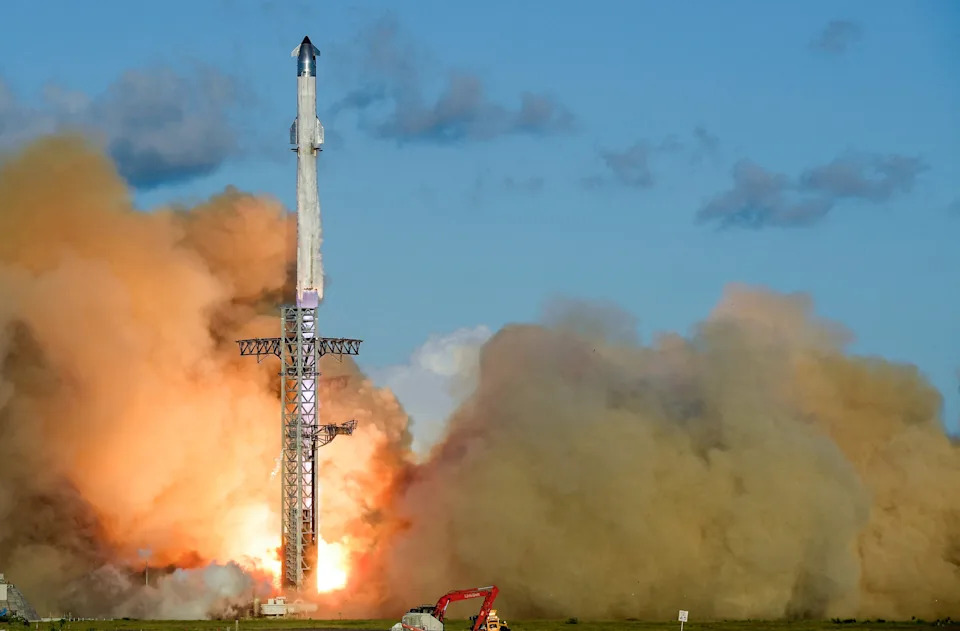
A SpaceX Super Heavy booster carrying the Starship spacecraft lifts off Oct. 13, 2025, on its 11th ever test flight at the company's launch pad in Starbase, Texas. The launch was Starship's fifth of 2025, and second consecutive successful test flight following a year that was early on marked by explosive failures. SpaceX is developing the rocket for future missions that would help NASA astronauts land on the moon and also potentially transport the first humans to Mars.
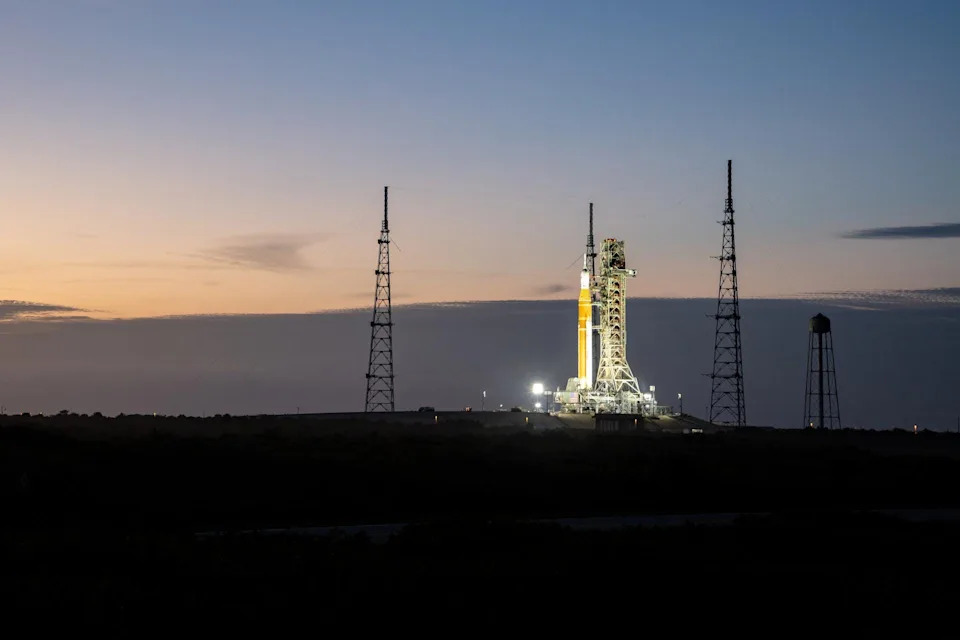
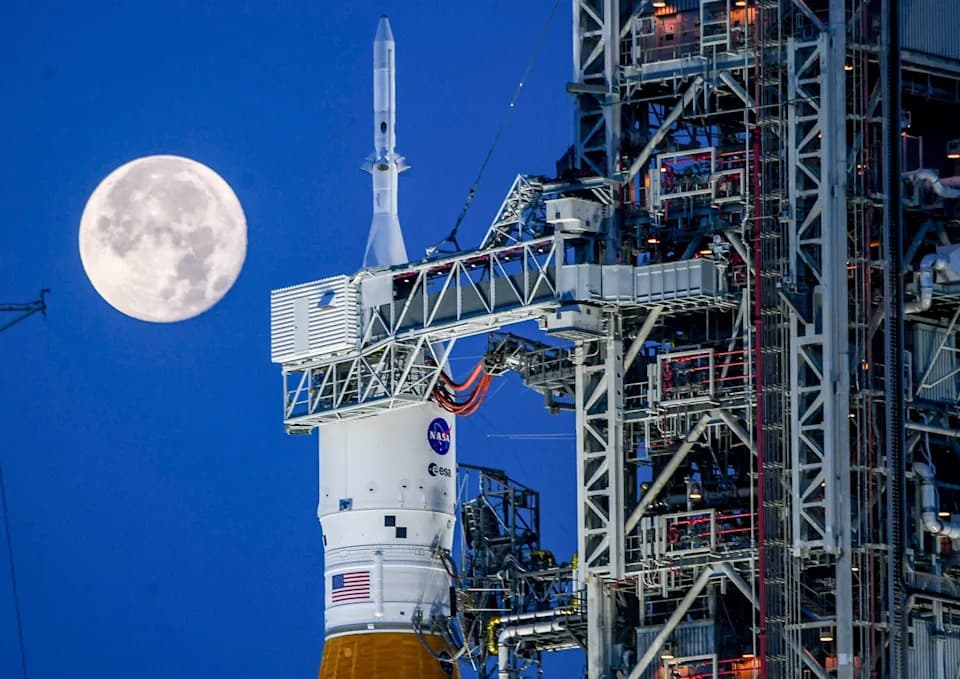
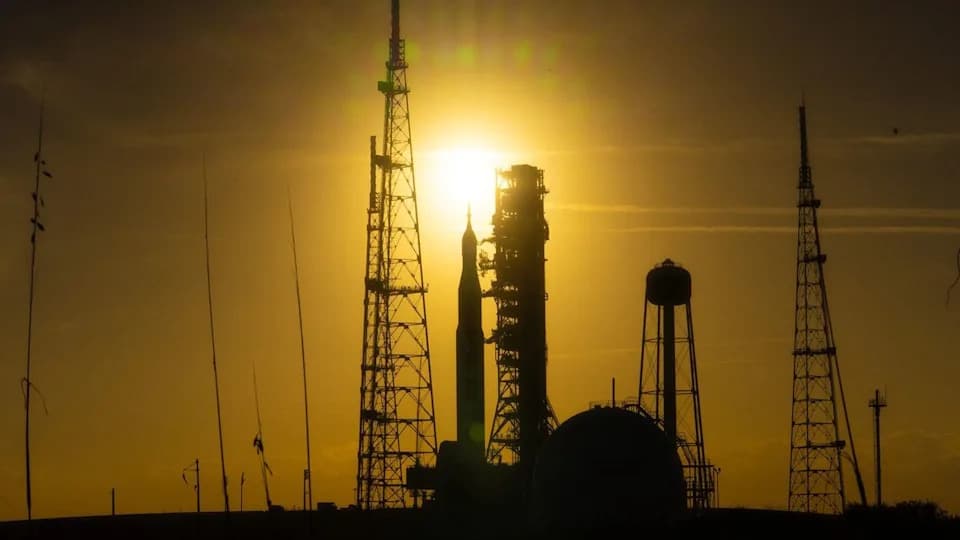
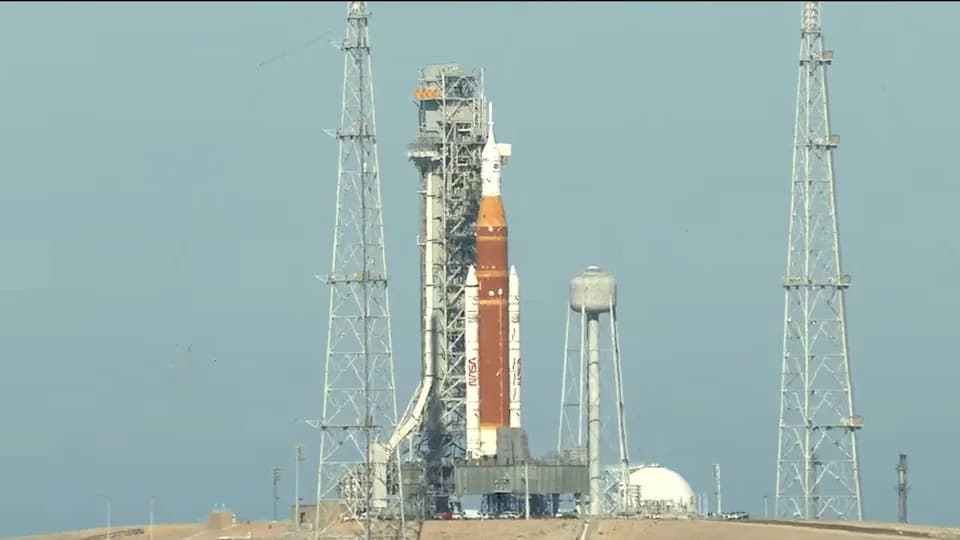
NASA’s Artemis 2 Space Launch System (SLS) rocket and Orion spacecraft are seen illuminated by lights Jan. 17 at Launch Complex 39B at NASA’s Kennedy Space Center in Florida.

The Artemis II crew poses in front of an Orion simulator Jan. 23, 2026 at NASA’s Johnson Space Center in Houston.
Help us improve.