Artemis II will be the first crewed mission beyond low Earth orbit since 1972, carrying four astronauts on a roughly 600,000-mile, 10-day lunar flyby to validate the SLS rocket and Orion capsule. Launch preparations include a wet dress rehearsal targeted for Feb. 2 and the first launch window beginning Feb. 6, with backups in February and additional dates in March and April. The mission will test life support, communications and navigation, perform biomedical and radiation studies, deploy four international CubeSats, and splash down in the Pacific off San Diego.
Artemis II: First Crewed Lunar Flyby in Over 50 Years — What to Know
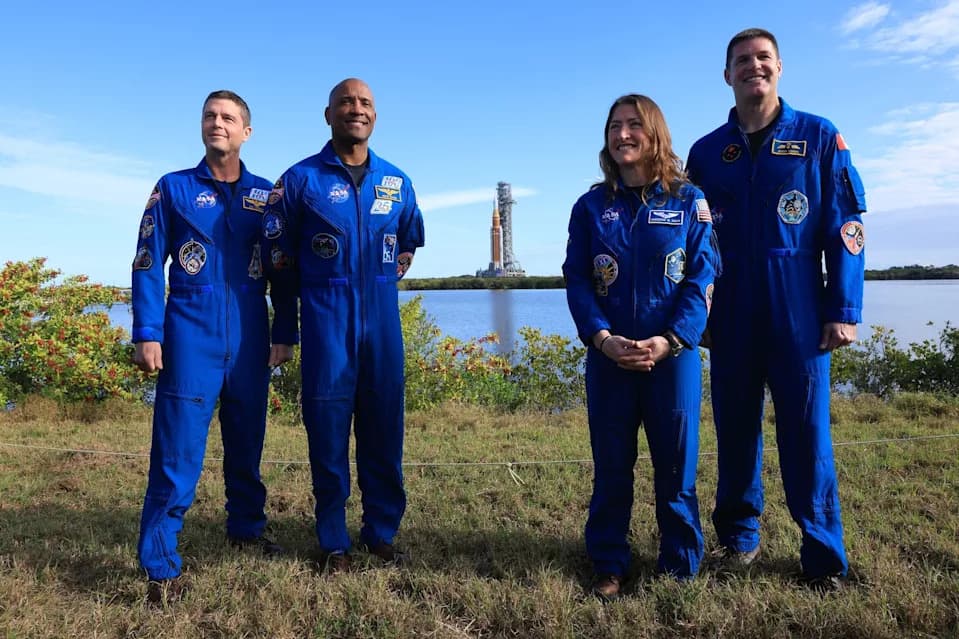
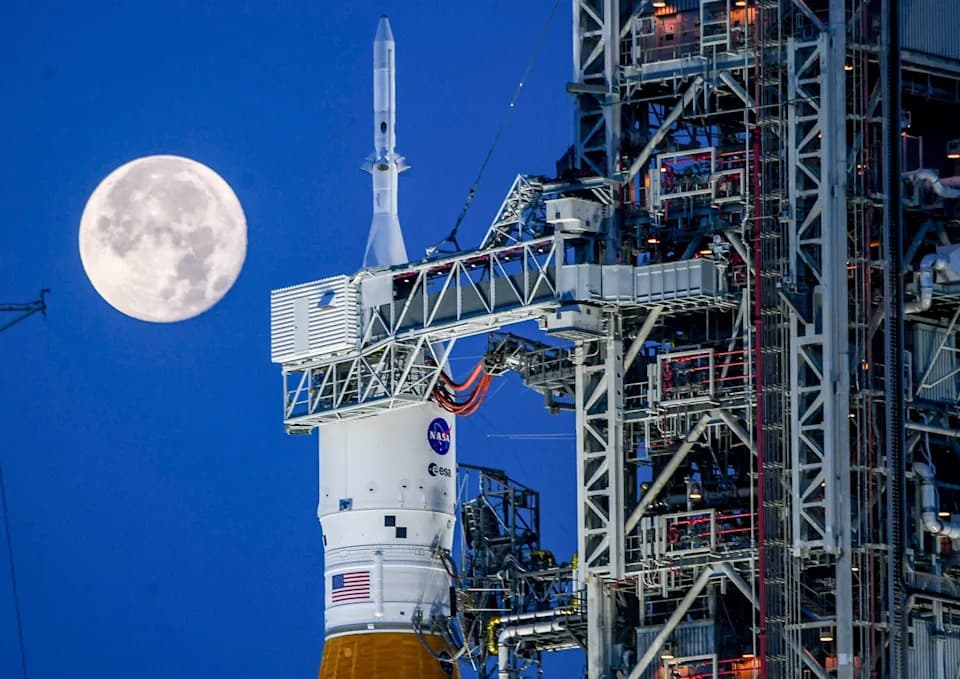
Joe Raedle/Getty Images - PHOTO: NASA's Artemis Rocket And Orion Spacecraft crew
More than three years after the uncrewed Artemis I test flight, Artemis II will return humans beyond low Earth orbit for the first time since Apollo 17 (1972). This 10-day, roughly 600,000-mile crewed lunar flyby will validate critical systems on NASA’s Space Launch System (SLS) rocket and the Orion crew capsule, and it will pave the way for a future Artemis lunar landing.
Why Artemis II Matters
Artemis II is a test mission: its primary goal is to demonstrate that the SLS rocket and the Orion spacecraft can safely carry astronauts to lunar distance and back while exercising life support, communications, navigation and operational procedures needed for Artemis III and later missions.
Historic Roots
President John F. Kennedy’s 1961 challenge to land a person on the moon set the stage for the Apollo program. NASA’s new Artemis program draws on that legacy while shifting the long-term focus toward sustained lunar exploration and eventual lunar surface operations near the moon’s South Pole.
Mission Overview
Mission Type: Crewed lunar flyby to validate deep-space systems and operations.
Duration: About 10 days.
Distance: Approximately 600,000 miles round trip.
Profile: Launch to Earth orbit, systems checks, translunar injection (TLI) burn, flyby of the lunar far side at an altitude between ~4,000 and 6,000 miles, then return to Earth and Pacific splashdown.
Crew And Spacecraft
The four-person crew will fly aboard the Orion crew module nicknamed “Integrity.”
- Reid Wiseman (Commander) — Former NASA chief astronaut and U.S. Navy test pilot; ~165 days in space on the ISS.
- Victor J. Glover Jr. (Pilot) — NASA astronaut and U.S. Navy captain; previously served a six-month long-duration mission aboard the ISS (Crew-1).
- Christina Koch (Mission Specialist) — Holds the record for the longest single spaceflight by a woman (328 days) and performed the first all-woman spacewalk.
- Jeremy Hansen (Mission Specialist) — Canadian Space Agency astronaut and former CF-18 fighter pilot; will be the first non-U.S. astronaut to travel to lunar distance as part of Artemis II.
Launch Schedule And Preparations
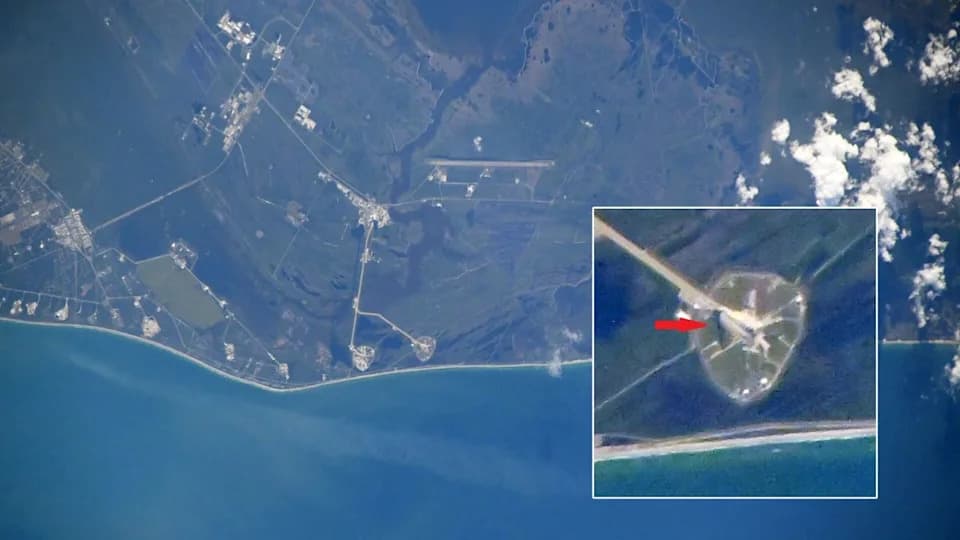
Launch Site: Kennedy Space Center, Launch Complex 39B (Florida). NASA has identified three broad launch windows across February, March and April. The first opportunity opens on Feb. 6 with backup opportunities on Feb. 7, 8, 10 and 11; additional backup dates are planned in early March and April.
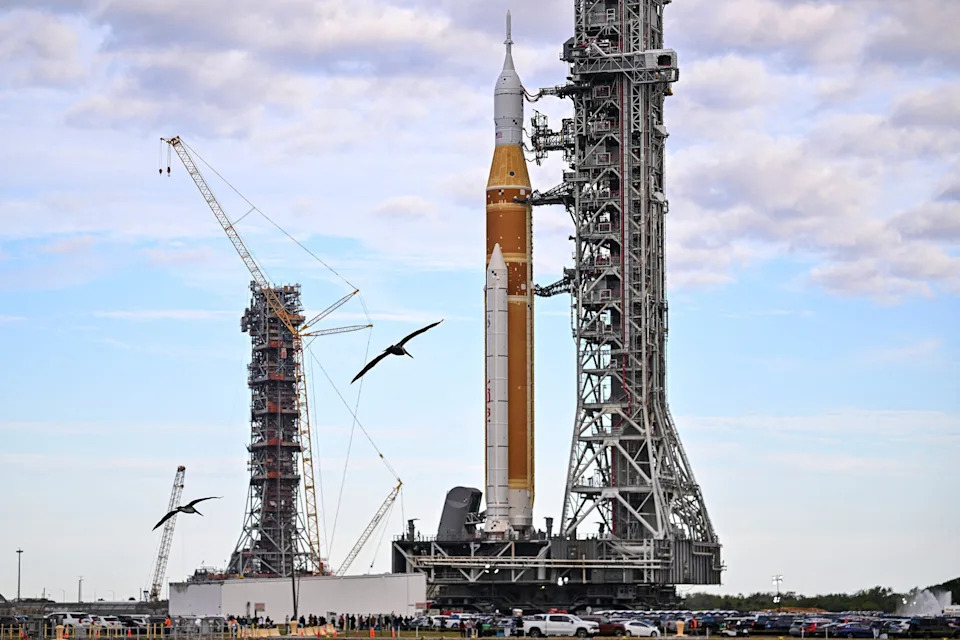
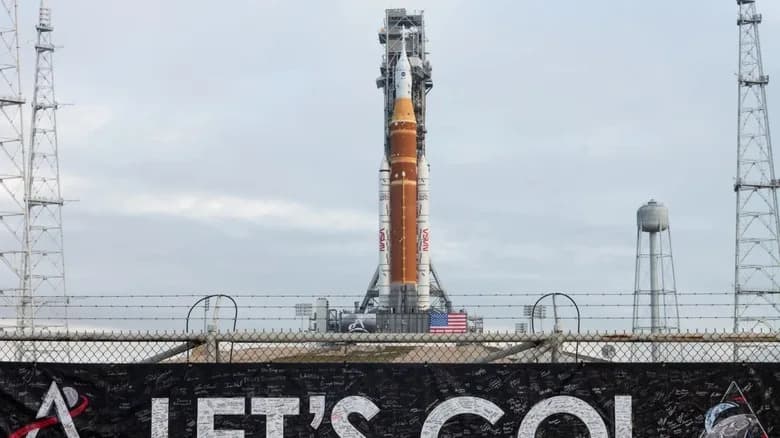
Miguel J. Rodriguez Carrillo/AFP via Getty Images - PHOTO: NASA's Artemis II Space Launch System rocket and Orion spacecraft are rolled out of the Vehicle Assembly Building to Launch Pad 39B at Kennedy Space Center in Florida on January 17, 2026, ahead of the crewed lunar mission.
NASA plans a "wet dress rehearsal" (fueling and full countdown rehearsal up to just before ignition) targeted for Feb. 2. Fueling has delayed past missions, so engineers will closely monitor that process before committing to a launch attempt.
Flight Profile
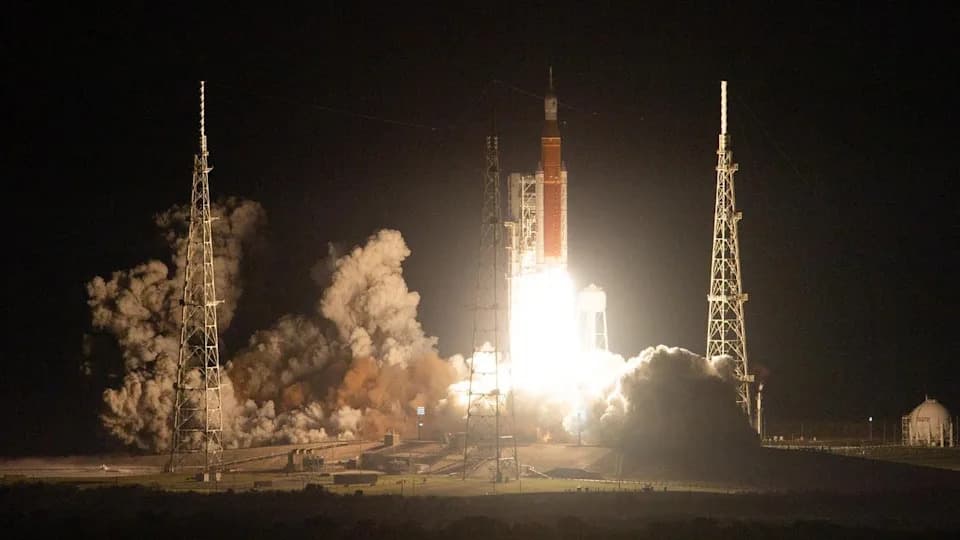
On launch day SLS will produce more than 8.8 million pounds of thrust to lift Orion and its crew into space. Orion will deploy its solar arrays and remain in low Earth orbit while the crew conducts system checks, including a manually flown Proximity Operations Demonstration around the upper stage. If systems are nominal, the service module will fire for translunar injection to send Orion toward the moon (about a three-day transit).
During the lunar encounter the spacecraft will pass over the far side at roughly 4,000–6,000 miles altitude. Astronauts will observe and photograph the far side, then use lunar gravity to return to Earth over another ~three-day transit.
Re-Entry And Recovery
Before re-entry the Orion service module (which contains engines, propellant, water and experiments) will separate and burn up in Earth’s atmosphere, exposing the crew module’s heat shield for entry. Orion is targeted to splash down in the Pacific Ocean off the coast of San Diego (weather and systems permitting). Two sets of parachutes will slow the capsule to about 17 mph for a safe splashdown. U.S. Navy recovery teams will retrieve the crew and spacecraft and transfer astronauts to a recovery ship medical bay, ideally within about two hours.
Science, Technology And International Contributions
Artemis II includes an integrated research campaign focused on human health and systems performance in deep space. Planned investigations include:
- Wearable monitoring of sleep and movement.
- Blood and saliva sampling to track immune biomarkers.
- Radiation sensors on crew and inside Orion to characterize deep-space exposure.
- "Organ-on-a-chip" experiments to study combined radiation and microgravity effects on human tissues.
- Lunar observations, photography and video of the far side.
- Deployment of four international CubeSats from Argentina, Germany, South Korea and Saudi Arabia.
Program Context And What Comes Next
Artemis builds on earlier programs (including Constellation and Orion’s long development history) and on Space Policy Directive 1 (2017), which re-established a national lunar exploration plan. Artemis I (2022) was the uncrewed validation flight. Artemis II is the critical crewed test flight that will enable Artemis III, which aims to land astronauts near the lunar South Pole using Orion, SLS and SpaceX’s Starship Human Landing System. Subsequent missions (IV–VI and beyond) will focus on assembling the Gateway lunar-orbit station and establishing a sustainable human presence on and around the moon.
Bottom line: Artemis II is a decisive test of hardware, procedures and human performance in deep space — a needed step on the path back to the lunar surface.
Help us improve.