Rice University researchers recreated early carbon-filament bulb tests and found that short, high-current pulses can transiently convert filament surfaces into graphene. Microscopy and spectroscopy confirmed the presence of graphene, though the patches quickly revert to graphite with continued use. Published in ACS Nano, the work highlights how modern techniques can uncover unexpected results from historical experiments.
Did Edison Accidentally Make Graphene 125 Years Early? New Study Recreates 1879 Bulb Tests
Did Edison Make a 'Wonder Material' 125 Years Before Its Official Creation?
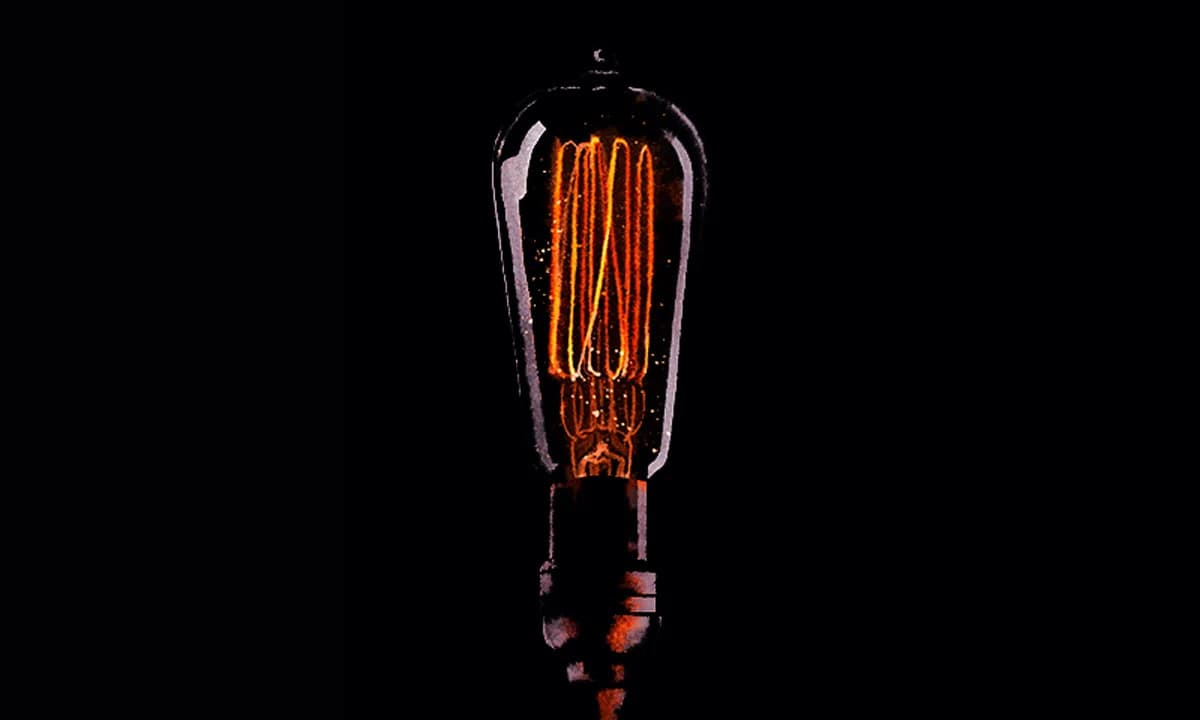
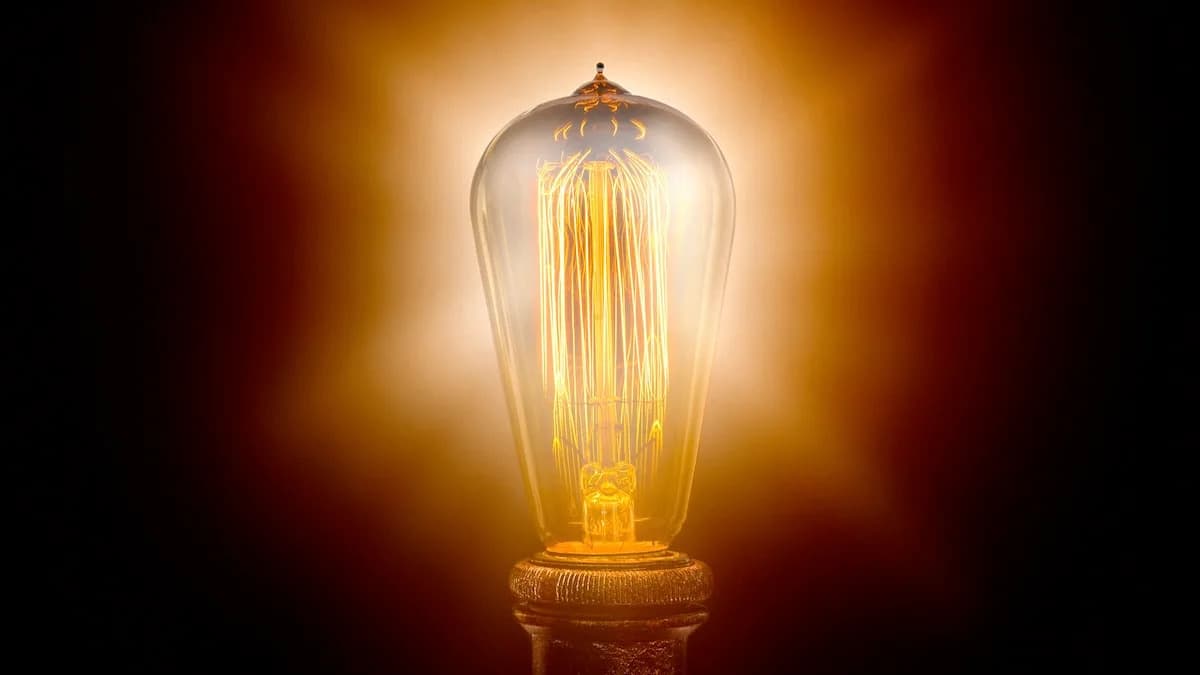
Researchers at Rice University report that Thomas Edison may have unintentionally produced microscopic patches of graphene while testing carbon-based light bulb filaments in 1879. The experiment — a modern recreation using replica bamboo-filament bulbs — suggests a flash-heating effect in early bulbs could have briefly transformed filament surfaces into single-atom-thick carbon sheets.
How the Researchers Tested the Idea
The Rice team used replica-style early light bulbs fitted with carbon-rich bamboo filaments. They applied a 110-volt DC supply in 20-second pulses to mimic the short bursts Edison might have used during bulb development. The approach was inspired by flash Joule heating, a laboratory method that converts resistive carbon materials into graphene by driving currents that raise temperatures above 2,000 °C (3,632 °F).
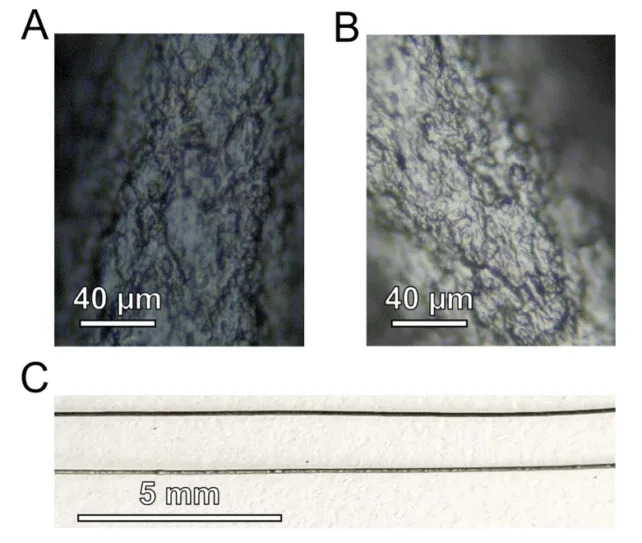
The carbon-based filament before (A) and after (B) being switched on for 20 seconds. A comparison of unused and used filaments can be seen in (C). (Eddy et al.,ACS Nano2026)
Findings
Under optical and electron microscopy the filament surface changed from gray to a silvery sheen after the pulses. Spectroscopic analysis confirmed that portions of the filament had converted into graphene. The researchers note the effect was local and transient: continued use converted the newly formed graphene into ordinary graphite unless it was removed immediately after formation.
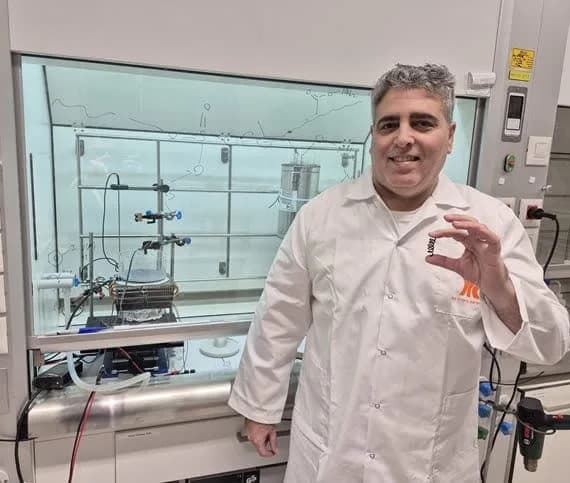
"I was trying to figure out the smallest, easiest piece of equipment you could use for flash Joule heating," said Lucas Eddy, a materials scientist at Rice University. "I remembered that early light bulbs often used carbon-based filaments."
Context And Implications
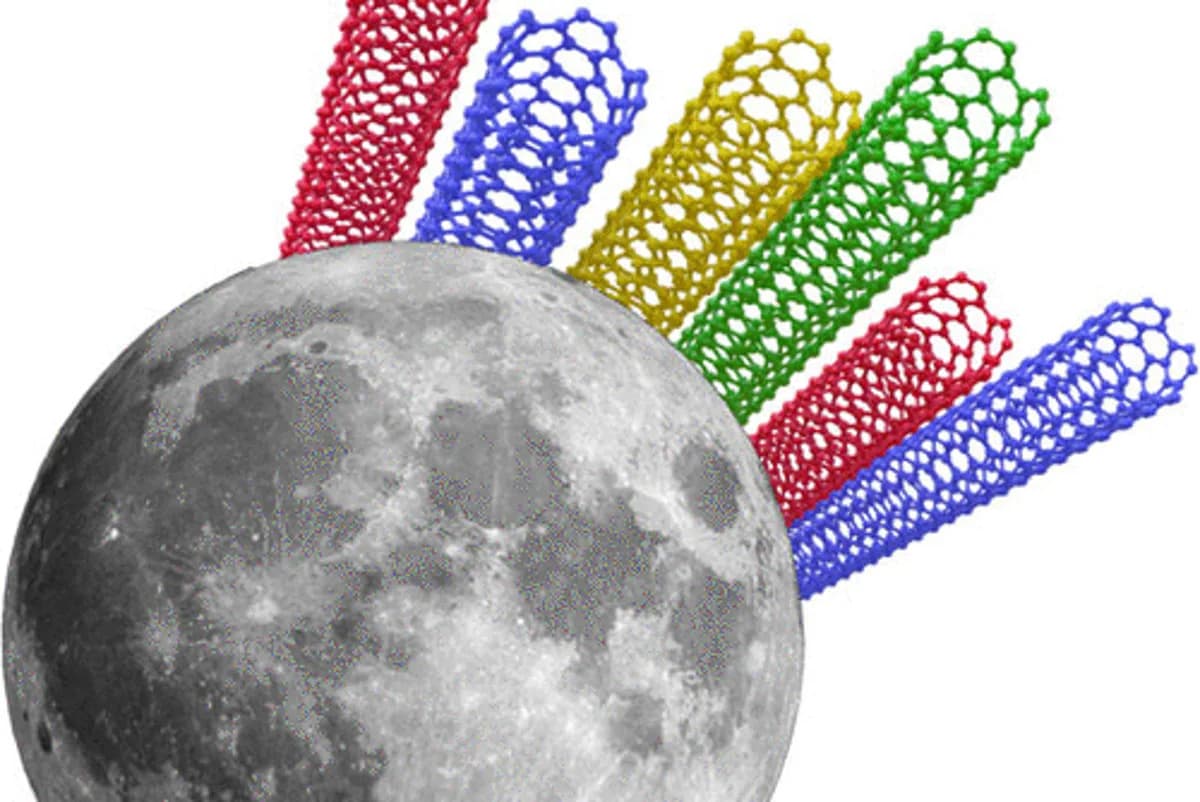
Graphene — a single-atom-thick sheet of carbon noted for exceptional strength, flexibility and intriguing electronic properties — was first proposed theoretically in 1947 and isolated in 2004 by Andre Geim and Konstantin Novoselov (work that earned them the 2010 Nobel Prize in Physics). The Rice paper, published in ACS Nano, does not claim Edison recognized or exploited graphene, but it does raise the intriguing possibility that modern analysis can reveal unexpected outcomes in historical experiments.

Audition now for ScienceAlert's Casting Call
As James Tour, a chemist at Rice University, put it: "Finding that he could have produced graphene inspires curiosity about what other information lies buried in historical experiments." Practically, graphene would have had limited use in Edison's era, but the study highlights how revisiting old setups with today's tools can yield new scientific insight.
Source: Rice University study published in ACS Nano.
Help us improve.