New chromosomal evidence points to comb jellies as the earliest animal branch. Researchers compared the positions of conserved gene groups on chromosomes in comb jellies, sponges, and the closest single‑celled relatives. They found 14 gene groups on separate chromosomes in both comb jellies and the single‑celled relatives, while sponges showed those groups rearranged into seven, indicating later divergence. The result settles a long debate and provides new insight into early animal evolution.
Comb Jelly Confirmed As The First Branch On The Animal Tree Of Life — Chromosomal Study Settles 600‑Million‑Year Debate

Experts Found First Branch On Animal Tree of LifeMitchell Pettigrew
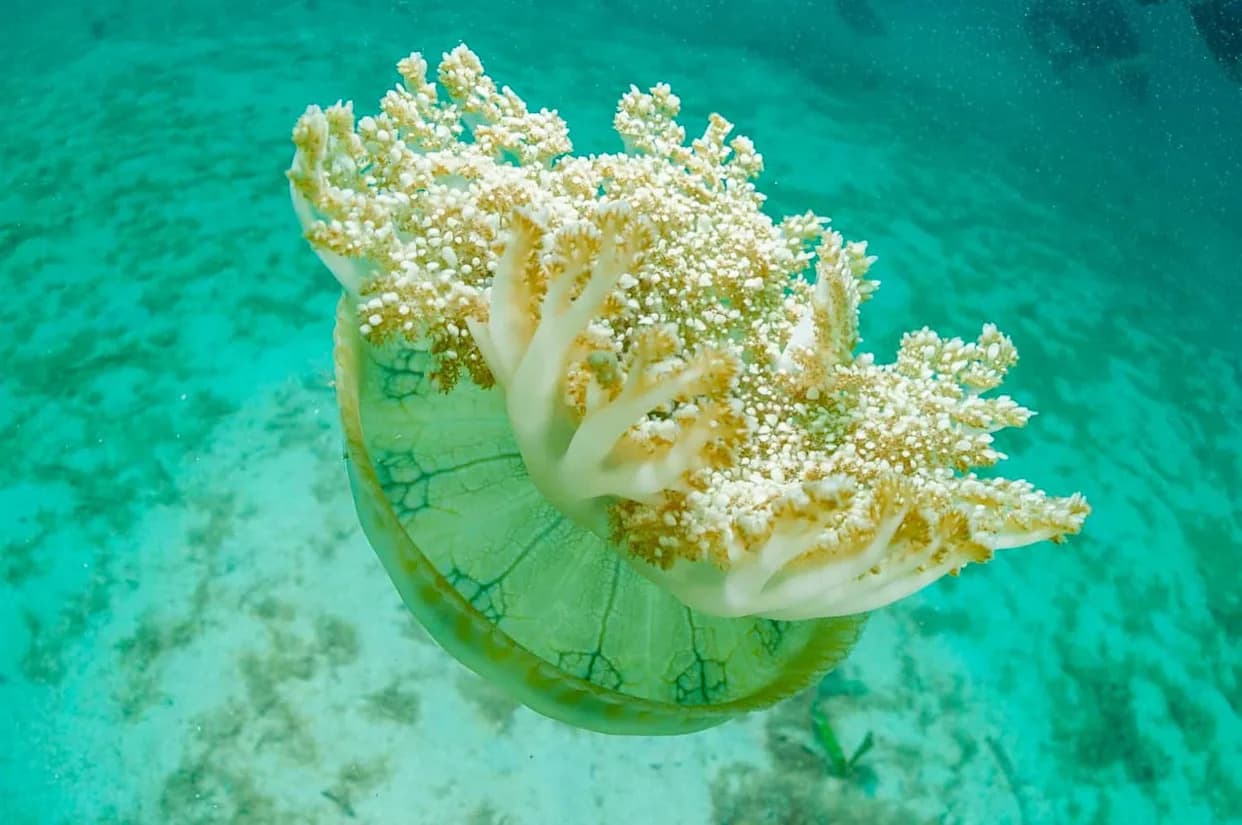
Scientists have identified the comb jelly as the earliest lineage to split from the common ancestor of all animals, resolving a decades‑long debate between supporters of sea sponges and those of comb jellies.
How researchers reached the conclusion
Rather than looking only at which genes animals carry, researchers examined where groups of genes sit on chromosomes. Over evolutionary time, chromosomes rearrange and gene blocks move. Crucially, once large blocks of genes change their chromosomal positions, they rarely revert to their original arrangement. That makes chromosomal organization a durable record of deep evolutionary history.
The team compared the chromosomal locations of several conserved gene groups in sponges, comb jellies, and the closest single‑celled relatives of animals. In both the single‑celled relatives and the comb jellies, the researchers found fourteen gene groups each located on separate chromosomes. In sponges, those same fourteen groups appeared to have been shuffled and combined into seven groups, indicating more chromosomal rearrangement since the common ancestor.
Conclusion: Comb jellies are the sister lineage
Because comb jellies retain a chromosomal layout closer to the inferred ancestral pattern, the study concludes that comb jellies split off first and are the sister lineage to all other animals. In other words, the comb jelly lineage represents the earliest branch on the animal tree of life.
Why this matters
This finding settles a long‑standing question about the very first animal divergence (an event that occurred roughly 600 million years ago) and gives scientists a firmer foundation for investigating how major animal traits and genomic architectures evolved. By knowing which lineage retained more ancestral chromosome structure, researchers can better infer the sequence of genomic changes that accompanied early animal evolution.
What comes next: Scientists will use this framework to reexamine the origin of key animal features and to study the mechanisms that drove early chromosomal rearrangements and trait evolution.
Help us improve.