This explainer reviews whether two ICE agents who fatally shot Minneapolis residents in January can face criminal or civil consequences. It summarizes the incidents involving Renee Good (Jan. 7) and Alex Pretti (Jan. 24), notes bystander videos that conflict with DHS accounts, and outlines state and federal standards for deadly force. The piece explains federal immunity from state prosecution, the high bar for federal criminal charges, and civil options including the Federal Tort Claims Act.
Explainer: Can ICE Agents Face Criminal Or Civil Charges Over The Minneapolis Shootings?
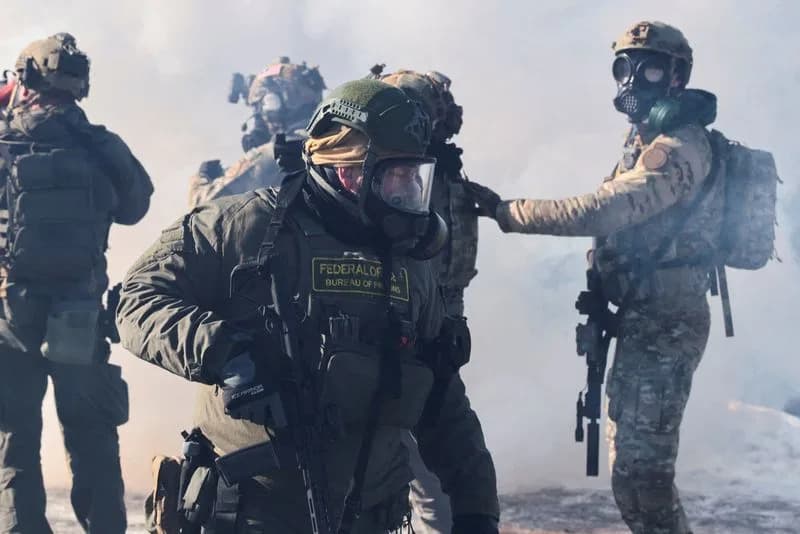
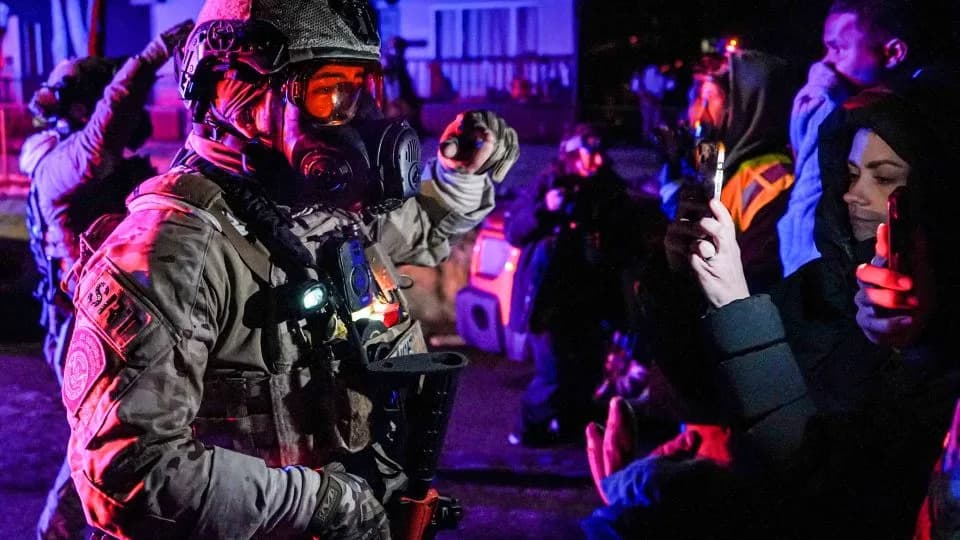
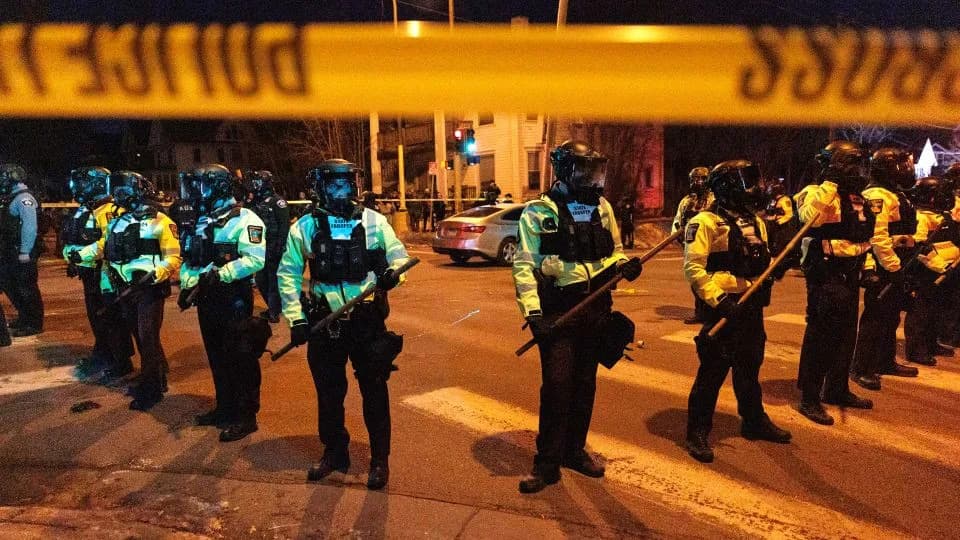
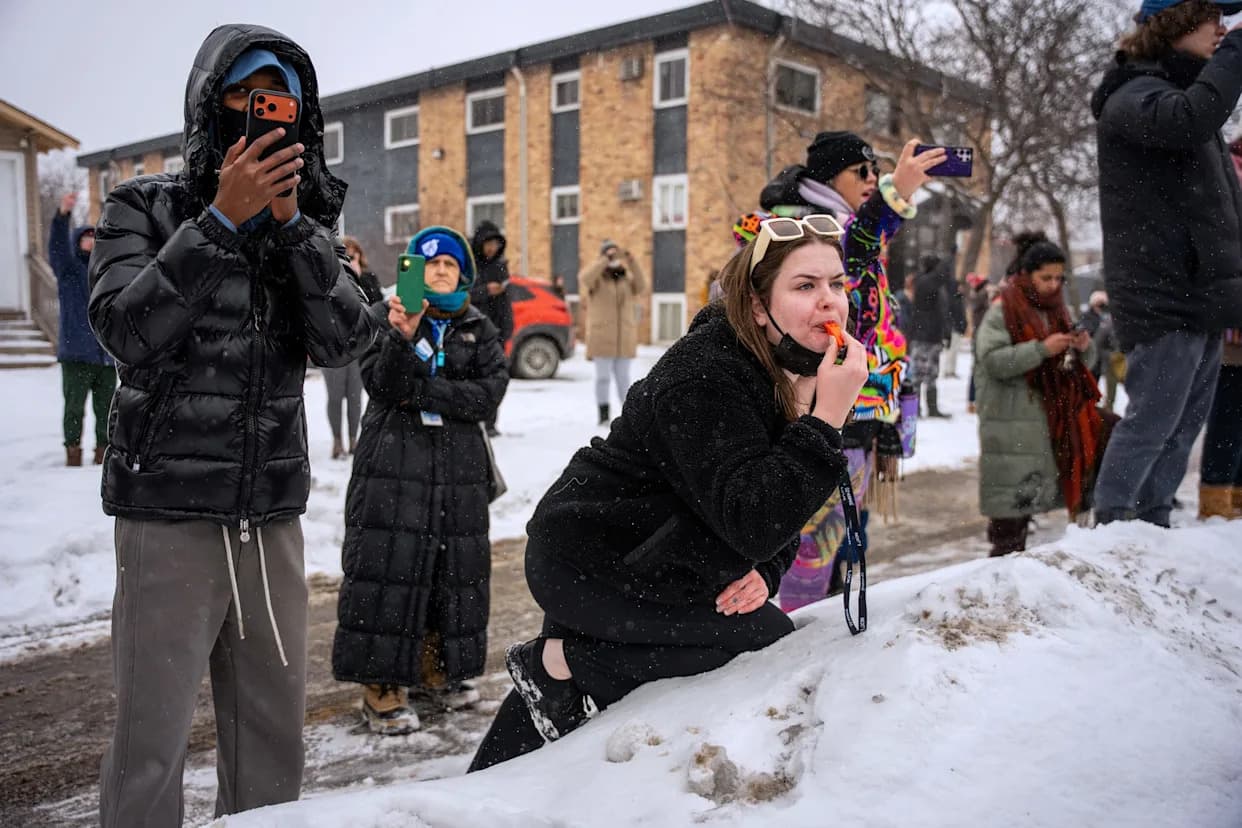
Federal agents stand amid tear gas to disperse people gathered near the scene where federal agents fatally shot a man while trying to detain him, in Minneapolis, Minnesota, U.S., January 24, 2026. REUTERS/Evelyn Hockstein
U.S. Immigration and Customs Enforcement (ICE) agents fatally shot two Minneapolis residents in January, raising questions about whether the officers can face criminal prosecution or civil liability. Bystander videos verified by Reuters conflict with official accounts from the Department of Homeland Security (DHS) and ICE, and local officials have disputed claims the shootings were acts of self-defense.
What happened?
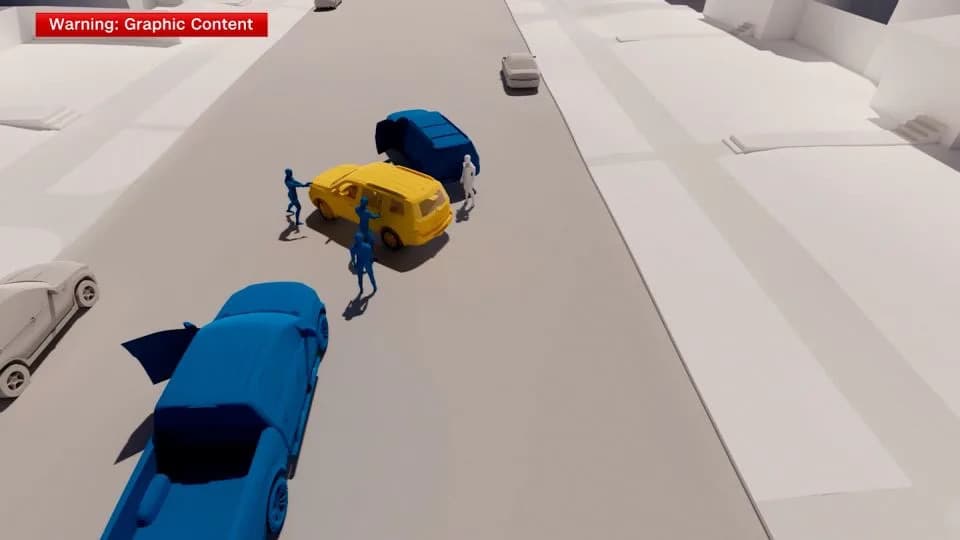
On Jan. 7, an ICE agent shot 37-year-old Renee Good while she was in her car. DHS described the officer's gunfire as "defensive shots" after the agent said Good attempted to run him over; bystander video verified by Reuters has cast doubt on that narrative.
In a separate incident on Jan. 24, ICE agents shot 37-year-old Alex Pretti. DHS said Pretti approached with a handgun and violently resisted disarmament. Bystander footage verified by Reuters, and a statement from Minneapolis Police Chief Brian O'Hara that Pretti was lawfully carrying a handgun, show him holding a phone and appearing to assist protesters after agents shoved people to the ground, creating conflicting accounts about whether he posed an immediate threat.
What Does The Law Say?
Minnesota law allows police to use deadly force only when a reasonable officer would believe it was necessary to prevent death or serious bodily harm to themselves or others. Federal standards are similar: federal officers may use deadly force when a reasonable officer has probable cause to believe a person poses an immediate threat of death or serious injury.
State Prosecution And Federal Immunity
Federal agents are generally protected from state criminal prosecution for acts taken within the scope of their federal duties. That protection applies only if the conduct was authorized by federal law and was necessary and proper. If Minnesota were to charge the agents, the officers could ask a federal court to remove the case to federal jurisdiction and argue they are immune from state prosecution. To overcome that claim, the state would need to show the agents acted outside their official duties or that their conduct was objectively unreasonable or clearly unlawful. If a judge finds an agent immune, the state charges would be dismissed and could not be refiled on the same grounds.
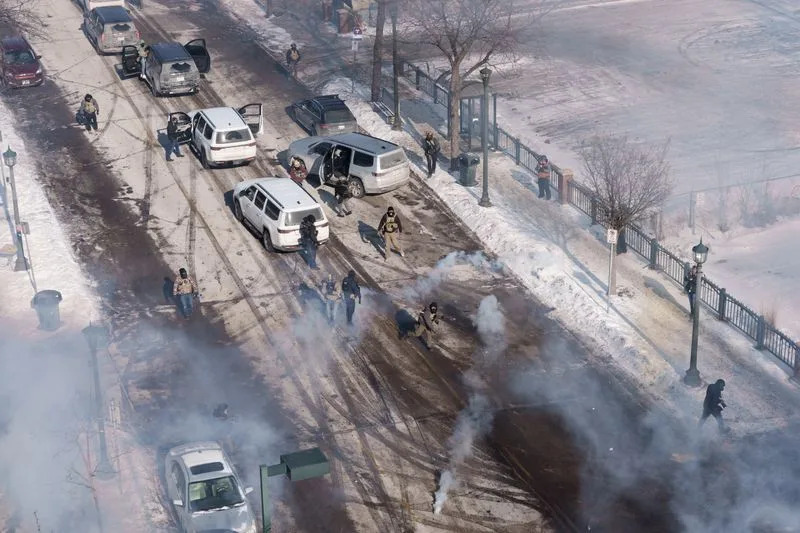
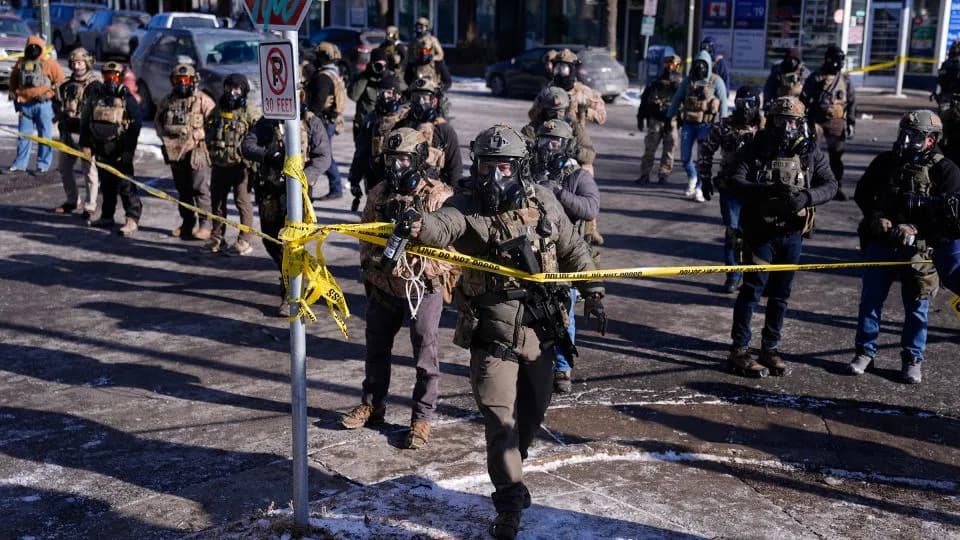
Federal agents launch tear gas and other munitions at demonstrators near the site where a man identified as Alex Pretti was fatally shot by federal agents trying to detain him, in Minneapolis, Minnesota, U.S., January 24, 2026. REUTERS/Tim Evans
Federal Criminal Charges
Federal prosecutors can bring criminal charges against law enforcement officers for fatal shootings, but convictions are rare because the legal standard is high. Prosecutors must generally prove that an officer knew his conduct was unlawful or acted with reckless disregard for constitutional limits on the use of force—an evidentiary bar that is difficult to meet. The current administration has publicly defended the agents' actions.
Possible Defenses For The Agents
Agents can assert several defenses: federal immunity from state prosecution, that their use of force was reasonable under the Constitution, that they acted in self-defense or defense of others, or that they lacked intent to harm. These legal defenses, coupled with evidentiary uncertainty, shape the prospects for both criminal charges and civil suits.
Civil Remedies And The Federal Tort Claims Act
Civil suits against federal officers are constrained by qualified immunity, which shields officials from damages unless they violated a "clearly established" constitutional right. Families can also seek compensation from the federal government under the Federal Tort Claims Act (FTCA) of 1946, which waives sovereign immunity for certain torts committed by government employees. FTCA claims typically allege negligence or wrongful conduct and allow relatives to seek wrongful-death damages, but these claims face statutory limits, procedural hurdles and do not always provide a direct route to holding individual officers personally accountable.
What Comes Next
Investigations by federal and local authorities, review of body and bystander camera footage, witness statements and forensic evidence will shape any prosecutorial decisions. Legal experts note that overcoming immunity protections and meeting the high standards for federal criminal charges are significant challenges—so the outcomes will likely hinge on the clarity and weight of the evidence.
Reporting: Blake Brittain in Washington; Editing by Alexia Garamfalvi and Deepa Babington. Original reporting by Jack Queen, Jan Wolfe and Blake Brittain.
Help us improve.