
Conflicting accounts surround the death of 37-year-old Renee Good after an ICE agent fired three shots as her car appeared to accelerate toward him on a snow-covered Minneapolis road. Supporters, including legal fellow Amy Swearer, say the agent reasonably feared imminent deadly harm; critics, among them Hillary Clinton and Minnesota officials, have condemned the killing. The FBI is leading the investigation, and DHS use-of-force rules allow shooting a vehicle operator when lethal force is otherwise justified.
Expert Says ICE Agent’s Use Of Deadly Force In Minneapolis Shooting Was ‘Absolutely Reasonable’ — Amid Conflicting Accounts and an Ongoing Federal Probe

People protest against the fatal shooting of Renee Good by a U.S. Immigration and Customs Enforcement agent during a rally outside the Whipple Building Jan. 8, 2026, in Minneapolis.
Conflicting accounts and raw video have fueled a national debate after an Immigration and Customs Enforcement (ICE) agent fatally shot 37-year-old Renee Good on a snow-covered Minneapolis road. Authorities say the agent fired three times after Good's car appeared to accelerate toward him while he stood near the vehicle; critics and supporters disagree about whether the shooting was justified.
What Happened
According to law enforcement statements and widely shared social media clips, ICE agents approached Good's stopped car and ordered her to exit. The agent who fired was positioned in front of the vehicle when the car appeared to move forward. The agent fired three shots, and Good died at the scene.
Official Statements and Legal Views
Amy Swearer, a senior legal fellow at Advancing American Freedom who specializes in firearm policy, told Fox News Digital she found the agent's use of force "absolutely reasonable." She said the officer, faced with an unknown, noncompliant driver operating a two-ton vehicle that seemed to be striking or about to strike him, reasonably could have perceived an imminent risk of death or serious bodily injury.
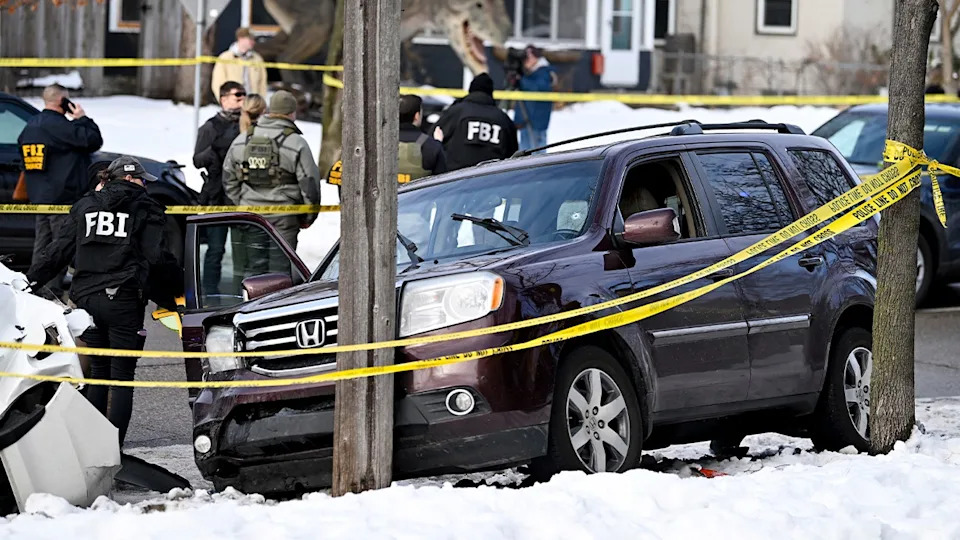
Members of law enforcement investigate a shooting by an ICE agent during federal operations Jan. 7, 2026, in Minneapolis.
"It is absolutely reasonable for him to fear death or serious bodily injury and to act in the way that he did to try to neutralize that threat," Swearer said.
Deputy Attorney General Todd Blanche emphasized the legal standard for officers under immediate threat: the law permits lethal force when officers face a "serious threat of harm" and must make split-second decisions in dynamic, chaotic circumstances.
Criticism and Public Response
Prominent critics have sharply condemned the shooting. Former Secretary of State Hillary Clinton called the agent's actions murder, and Minnesota Governor Tim Walz described the use of force as "brazen." Minneapolis Mayor Jacob Frey strongly rejected claims the agent acted in self-defense, and protesters gathered at the scene demanding ICE leave the state.
Observers on social media offered competing readings of video footage: some argued the vehicle was attempting to flee and posed a clear threat, while others suggested the steering appeared to show an attempt to avoid striking anyone.
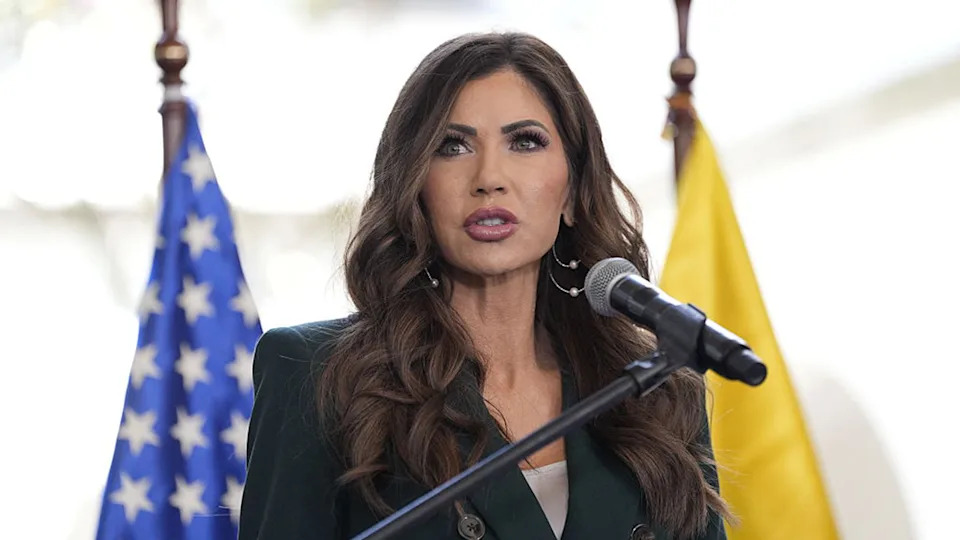
Homeland Security Secretary Kristi Noem gives remarks in July 2025.
Investigation and Policy Context
The FBI is leading the probe into the shooting; state officials say Minnesota authorities were not allowed to participate in the federal inquiry and the state's Bureau of Criminal Apprehension (BCA) was denied involvement. A Justice Department official told reporters that public remarks by local leaders raised concerns about whether the state intended to conduct a good-faith inquiry.
DHS maintains a use-of-force policy updated in 2023. The policy generally advises officers not to fire solely to disable a moving vehicle, but it does permit firing at the operator of a moving vehicle when lethal force is otherwise justified. Swearer said the agent's actions appear consistent with that framework.
Victim and Community Impact
Renee Good, a 37-year-old mother of three, reportedly had dropped her 6-year-old son at school earlier the morning of the shooting, according to The Associated Press. Her death has intensified local protests and calls for accountability from community leaders and civil-rights advocates.
What Comes Next
Federal investigators will collect and preserve evidence as part of a standard officer-involved shooting inquiry. Legal experts say the key questions will include whether the agent reasonably perceived an imminent threat and whether the use of force complied with DHS policy and constitutional standards. The public debate is likely to continue while investigators review video, witness statements and forensic evidence.
Help us improve.


