Researchers analyzed two corroded objects from the Treasure of Villena — a torc‑like bracelet and a hollow, gold‑trimmed hemisphere — and found elevated nickel levels consistent with meteoritic iron. Mass spectrometry of micro‑samples suggests both pieces were made around 1400–1200 BCE, contemporary with the hoard, resolving a longstanding dating puzzle. Authors say these may be the first meteoritic iron artifacts identified in the Iberian Peninsula, but recommend non‑invasive follow‑up analyses to confirm the find.
Meteorite Iron Identified in Two Late Bronze Age Pieces From the Treasure of Villena
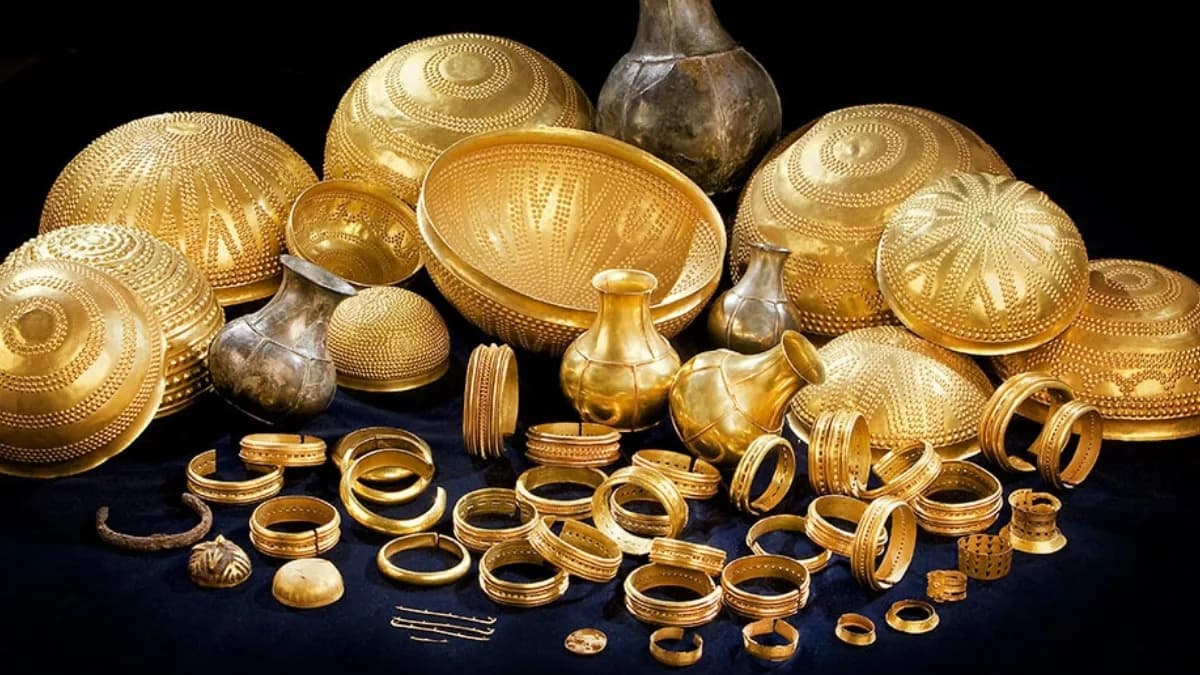
A collection of jewellery and other artifacts made of gold
Among the glittering gold of the Treasure of Villena, two heavily corroded items may be the hoard's most extraordinary finds. Researchers report that a dull, torc‑like bracelet and a rusted hollow hemisphere trimmed with gold were fashioned not from terrestrial iron but from meteoritic iron.
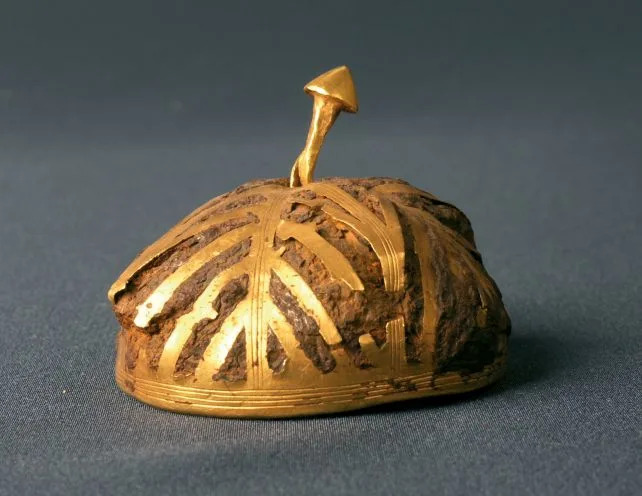
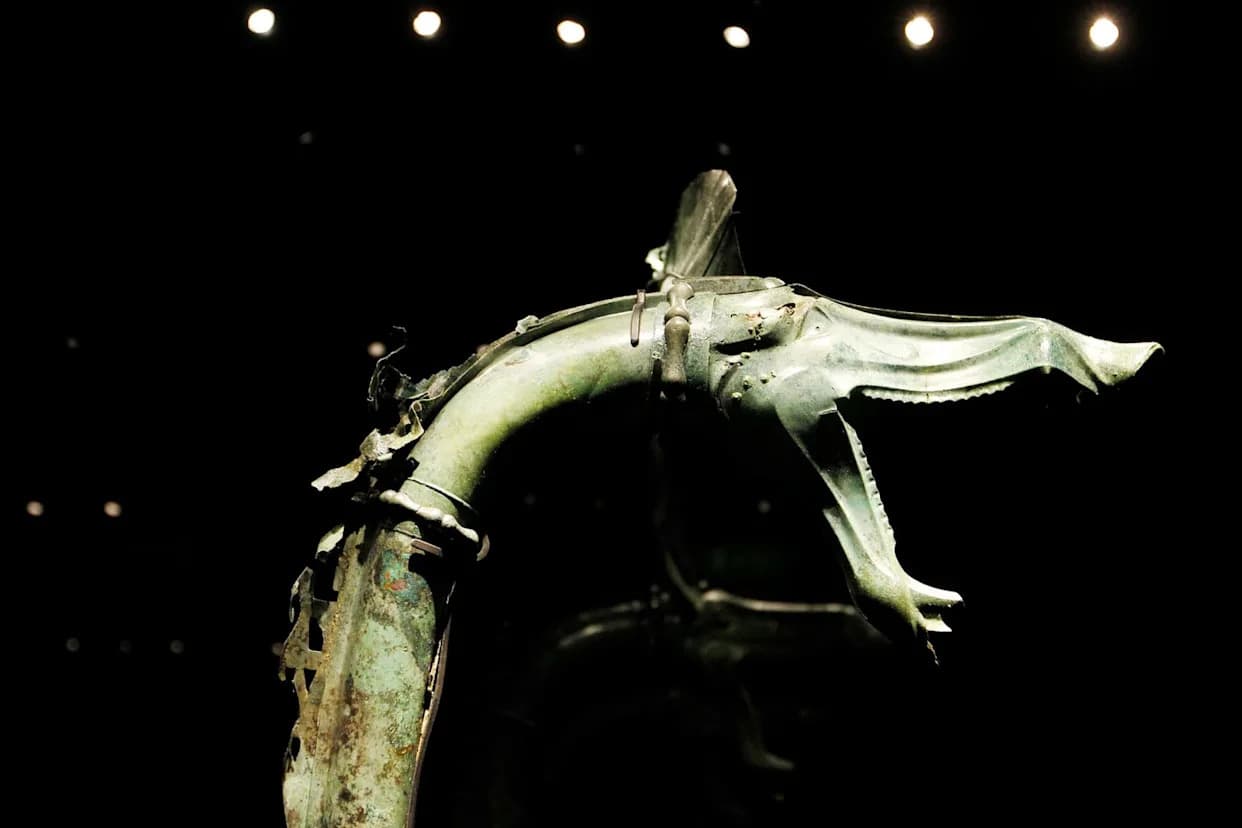
The iron-and-gold hemisphere, which has a maximum diameter of 4.5 centimeters (1.77 inches). (Villena Museum)
The study, led by Salvador Rovira‑Llorens, the now‑retired head of conservation at Spain's National Archaeological Museum, was published in 2024 in the journal Trabajos de Prehistoria. The Treasure of Villena — a hoard of 66 mostly gold objects discovered in 1963 near Villena (Alicante) — is considered one of the most important examples of Bronze Age goldsmithing in the Iberian Peninsula and across Europe.
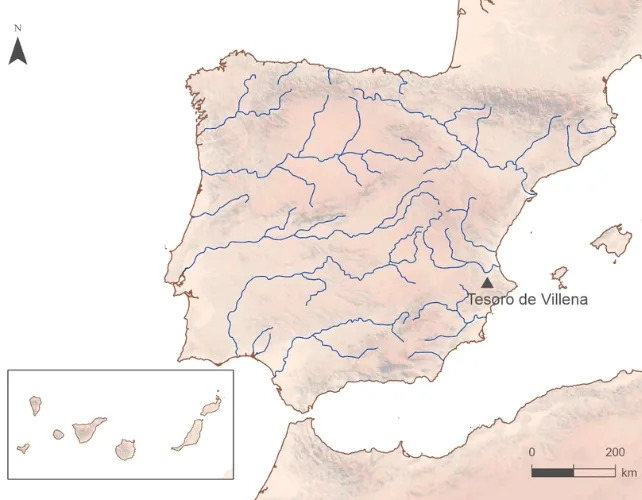
Location of the Villena Treasure (Alicante) in the Iberian Peninsula. (Rovira-Llorens et al.,Trabajos de Prehistoria, 2024)
Two objects have long stood out: a small hollow hemisphere, probably a cap for a scepter or sword hilt, and a single bracelet resembling a torc. Both display a strongly "ferrous" appearance — corrosion and surface features that suggest iron rather than gold or bronze — which posed a chronological puzzle because the hoard's gold is dated to roughly 1500–1200 BCE, whereas the Iberian Iron Age began much later, around 850 BCE.

Audition now for ScienceAlert's Casting Call
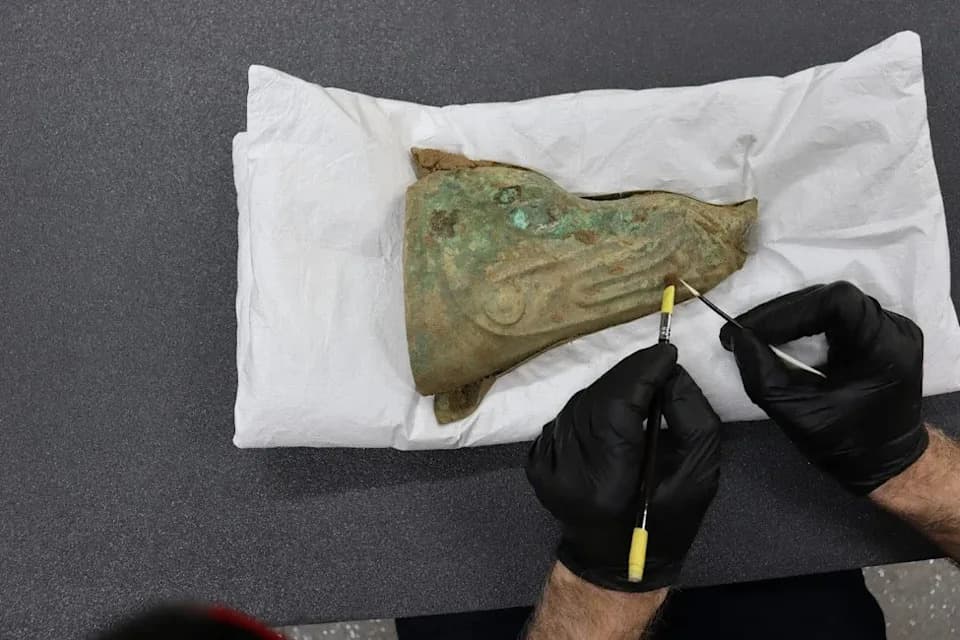
Earthly iron is not the only source of usable iron: ancient smiths occasionally worked iron from meteorites, which is typically richer in nickel than crustal iron. To test whether the Villena pieces came from meteorites, the research team obtained permission from the Municipal Archaeological Museum of Villena to take careful micro‑samples of both objects and analyze them by mass spectrometry.
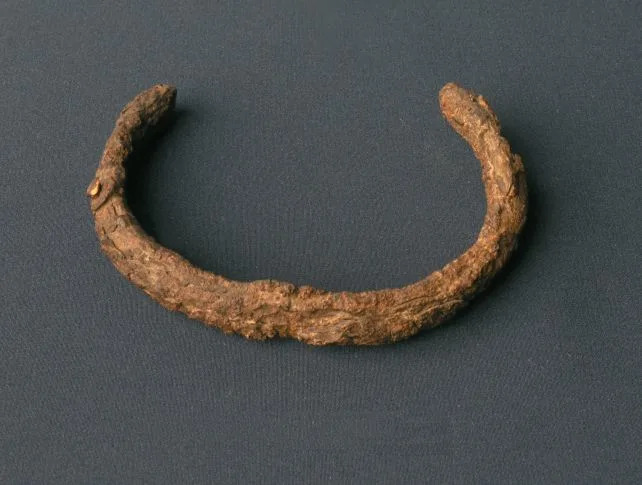
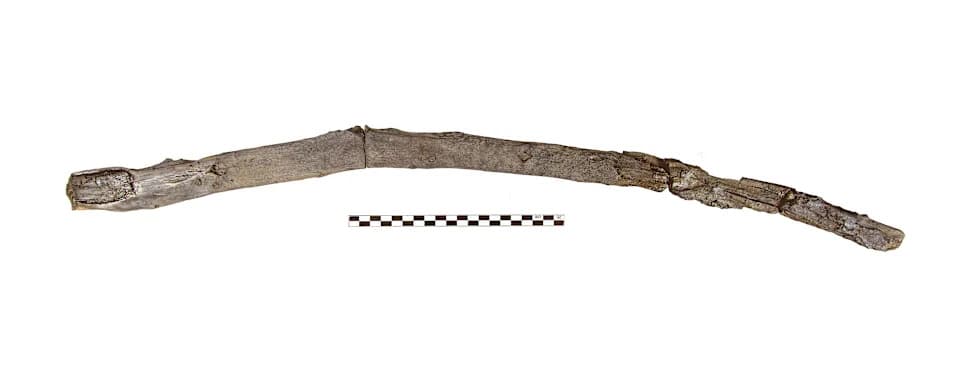
The iron bracelet, which measures 8.5 centimeters (3.35 inches) across. (Villena Museum)
Despite severe corrosion — which can alter surface chemistry and complicate measurements — the elemental analyses revealed elevated nickel consistent with meteoritic iron. The results strongly suggest that both the hollow cap and the bracelet were manufactured from meteoritic material, indicating they were contemporary with the rest of the hoard and likely date to about 1400–1200 BCE.
"The available data suggest that the cap and bracelet from the Treasure of Villena would currently be the first two pieces attributable to meteoritic iron in the Iberian Peninsula," the authors write — a conclusion compatible with a Late Bronze Age chronology, before widespread terrestrial ironworking.
The team notes that because corrosion is extensive, the evidence is persuasive but not definitive. They recommend follow‑up studies using modern, non‑invasive techniques — for example, portable X‑ray fluorescence (pXRF), micro‑computed tomography (micro‑CT), neutron tomography, or synchrotron‑based methods — to obtain more detailed compositional and structural data without further sampling.
If confirmed, the Villena finds would add to a small but important set of pre‑Iron Age meteoritic iron artifacts, such as the famous meteoritic dagger from the tomb of Pharaoh Tutankhamun, and would expand our understanding of Bronze Age metalworking and the value placed on extraterrestrial materials.
Help us improve.