Nearly 8 million Venezuelans left between 2014 and 2025 amid economic collapse, political repression and insecurity. The reported capture of Nicolás Maduro produced mixed reactions among the diaspora — initial celebration followed by deep uncertainty after Delcy Rodríguez became acting president. Most exiles say they would only return if institutions, public services and safety are reliably restored.
Venezuelan Diaspora Weighs Return After Maduro’s Ouster: Hope, Doubt and the Long Road Home
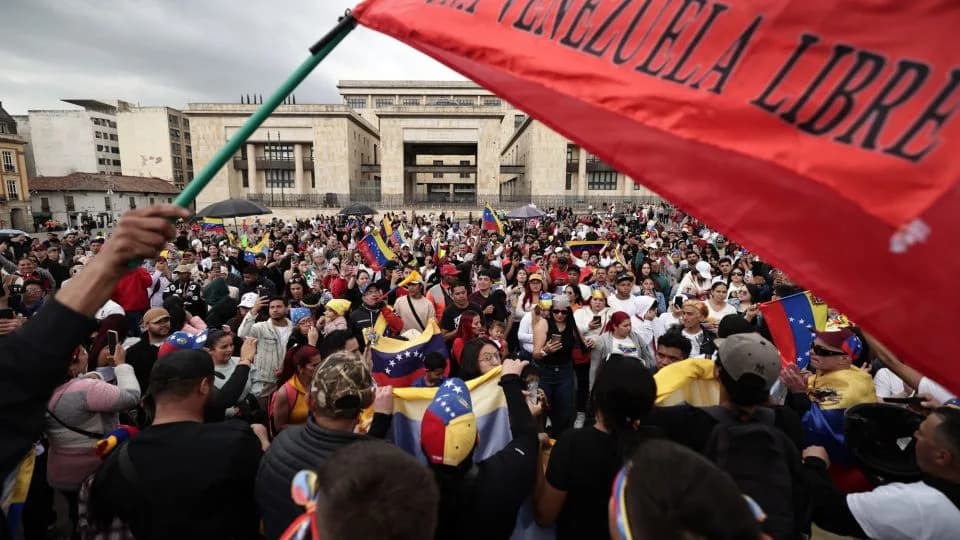
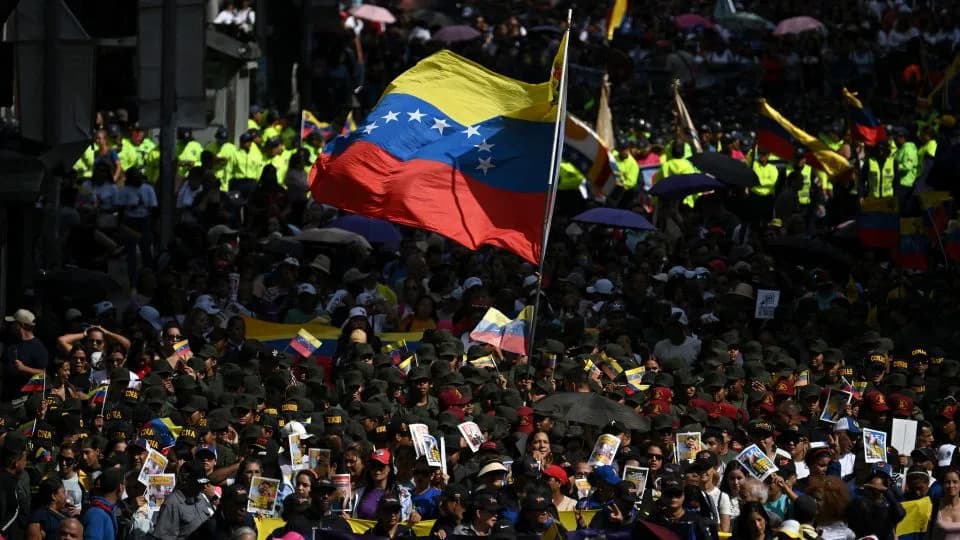
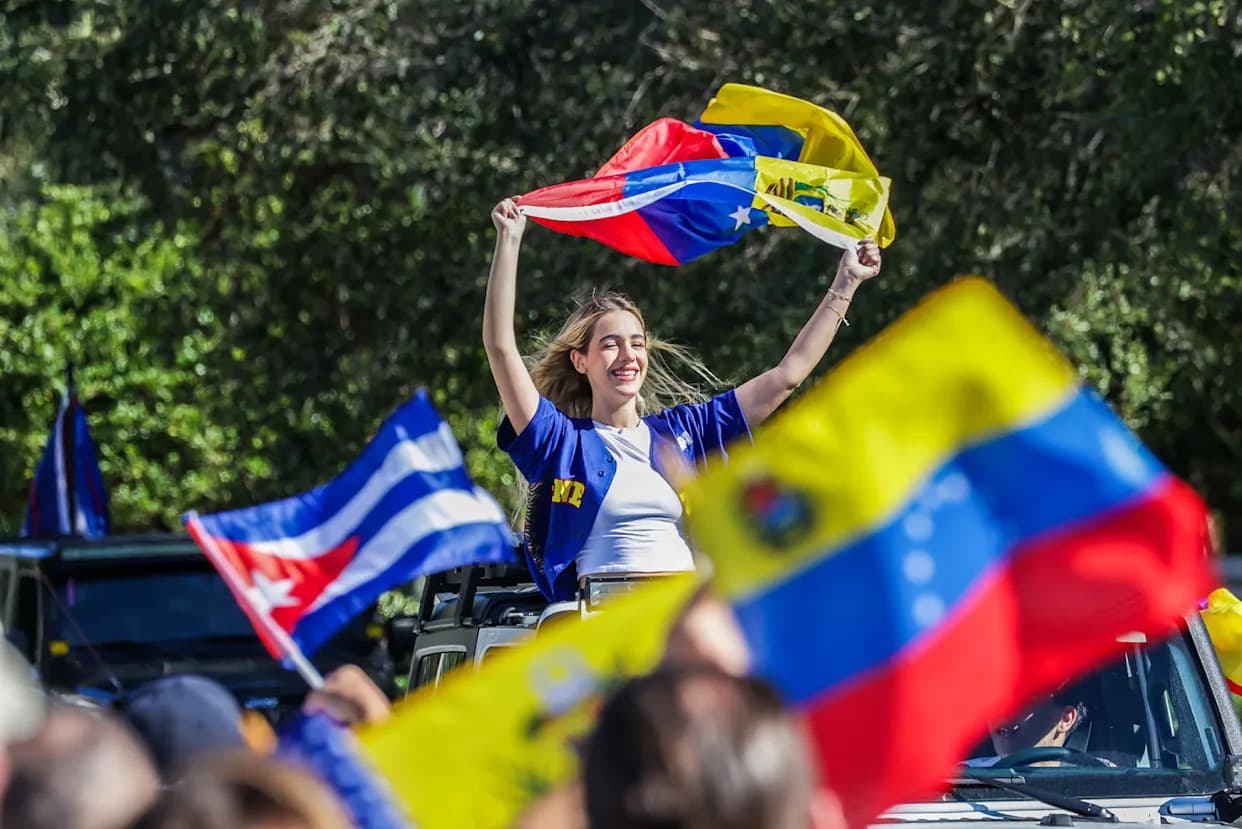
Venezuelans celebrate in Bogotá, Colombia, Saturday, Jan. 3, 2026, after U.S. President Donald Trump announced that U.S. forces had captured Venezuelan President Nicolás Maduro. - Jose Vargas/AP
Years of economic collapse, political repression and insecurity under Nicolás Maduro forced millions of Venezuelans to rebuild their lives abroad. The diaspora’s reaction to the reported capture of Maduro has ranged from celebration to profound uncertainty — especially after Vice President Delcy Rodríguez was named acting president.
Background: An Exodus and a Nation Transformed
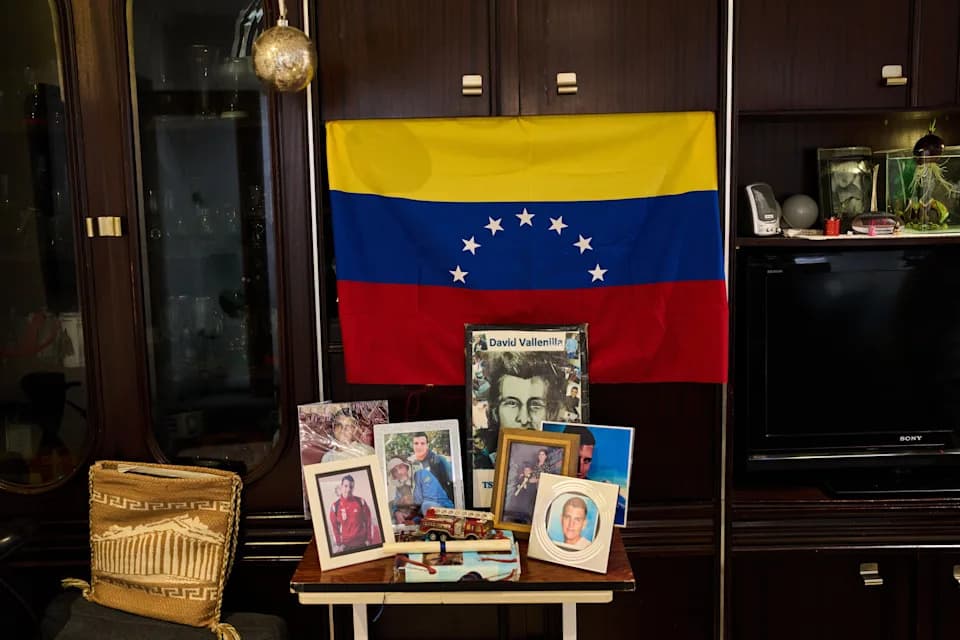
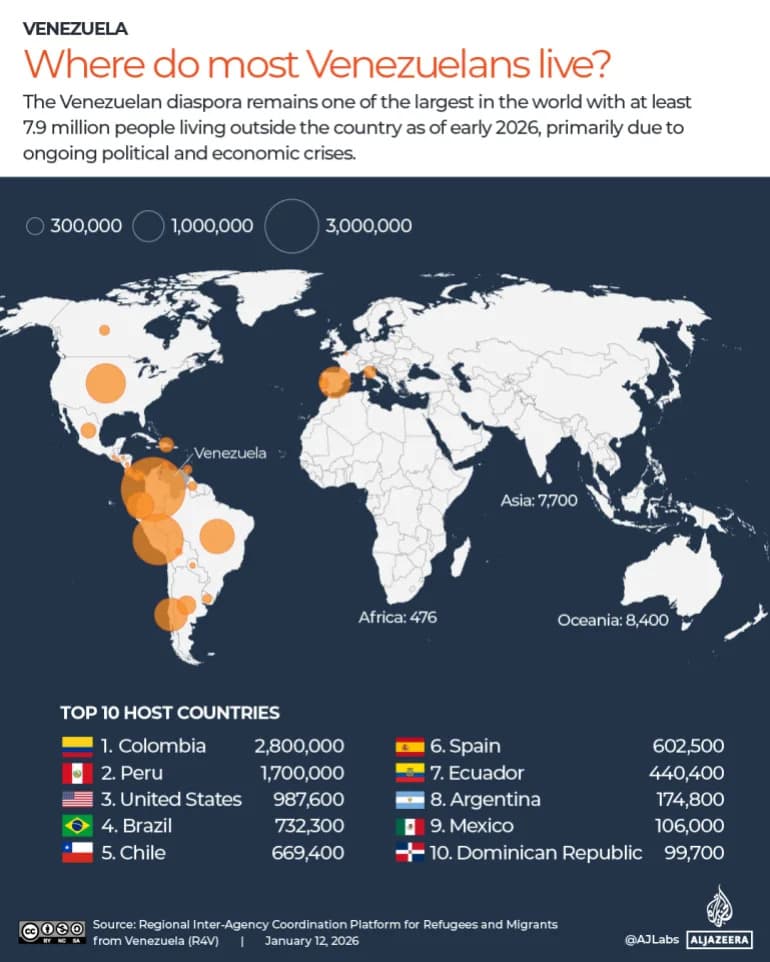
Between 2014 and 2025 nearly 8 million Venezuelans left the country, creating the largest displacement crisis in the region. According to official and international sources, Venezuela’s population fell by about 13% between 2015 and 2024, driven primarily by migration alongside higher mortality and a sharp drop in birth rates.
News, Reaction and Unanswered Questions
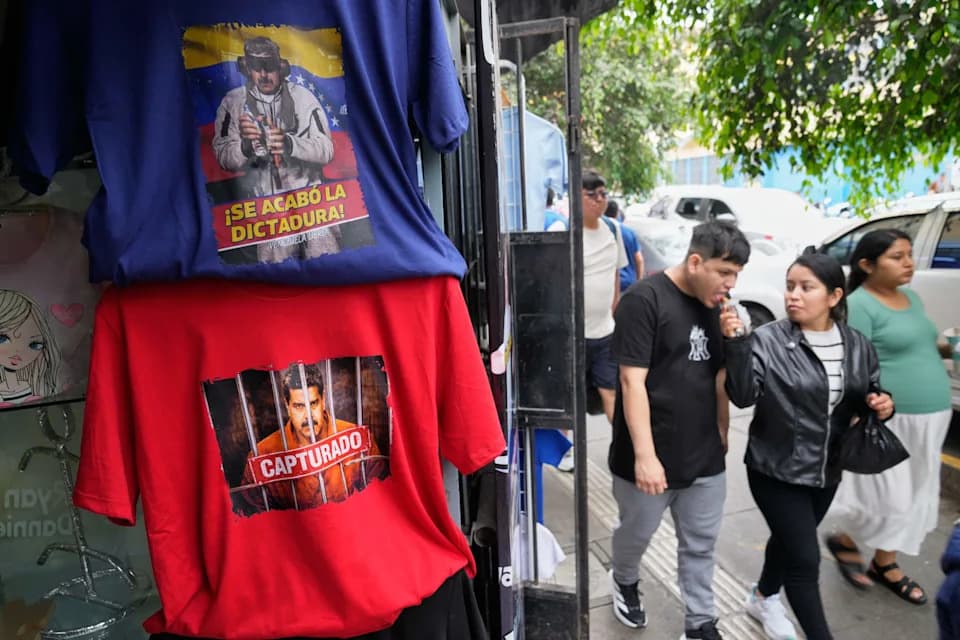
On January 3, an announcement from the United States said that Nicolás Maduro and his wife, Cilia Flores, had been captured in a U.S. military operation and detained in Brooklyn on charges including narco-terrorism conspiracy. Maduro denies the accusations and calls them politically motivated. The announcement initially sparked celebration among some in the diaspora, but the appointment of Delcy Rodríguez as acting president quickly produced caution and skepticism about the country’s political future.
Voices From Abroad
Many migrants describe a mixture of relief, disbelief and worry. Bárbara Briceño, who left Venezuela in 2017 for political safety and now lives in Mexico City, said she feels safer abroad and would only return if Venezuelans could be confident in their safety and institutions. Jean Carlo Cruz, who left in 2011 and has lived in Mexico City for 15 years, emphasizes that the Venezuela he left no longer exists and that any return would require stable services and solid institutions.
“I haven’t been to Venezuela since 2017. I long to return, but not while the same people are in power,” said Briceño.
Where Migrants Went And Who They Are
About 87% of those who left between 2014 and 2025 settled in Latin America or the Caribbean; roughly 11% went to the United States and Europe. Of the nearly 7.9 million Venezuelans counted by R4V, approximately 6.9 million were living in Latin America and the Caribbean as of November 2025.
Demographically, men aged 15–49 made up the largest share of migrants (51%–56% between 2017 and 2024). Age shifts show the 15–29 group dominated earlier flows (2017–2021), while 30–49-year-olds led the exodus from 2022–2024 — indicating a diaspora largely of working and voting age.
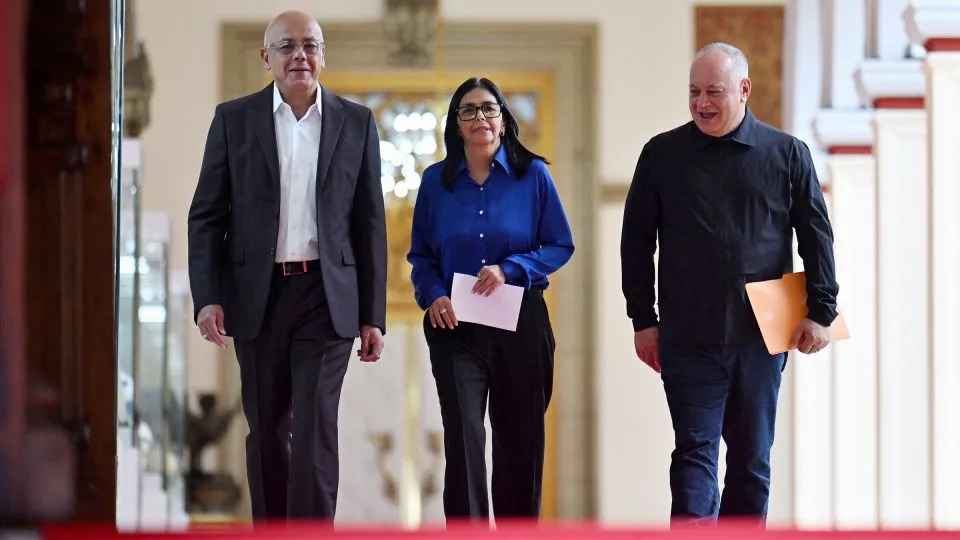
Venezuela's acting president Delcy Rodríguez, center, President of the National Assembly Jorge Rodríguez, left, and and Minister of the Popular Power for Interior Diosdado Cabello at the Miraflores Presidential Palace in Caracas on January 14. - Juan Barreto/AFP/Getty Images
Education, Work and Legal Status
Education profiles among migrants shifted significantly: those with only primary or secondary education rose from 40% in 2017 to 73% in 2024, while migrants with technical or university education fell from 52% to 26%. Seeking work remains the primary reason for leaving (78% in 2024), while family reunification rose from 4% to 10% between 2017 and 2024.
Regarding legal status, two-thirds of migrants have regular status: 29% hold temporary residence permits, 21% are residents and 12% have citizenship in their host country. About 12% remain in irregular situations and 23% have an unknown status, according to Encovi.
Economic Impact And Remittances
Remittances have become a crucial lifeline for many Venezuelan households. The Inter-American Development Bank and IOM note that remittance-receiving households have lower poverty rates, and Venezuelan migration contributes to regional economic activity — an IOM estimate places annual impact at more than US$10.6 billion through spending on housing, food, education and health.
Political Uncertainty And The Question Of Return
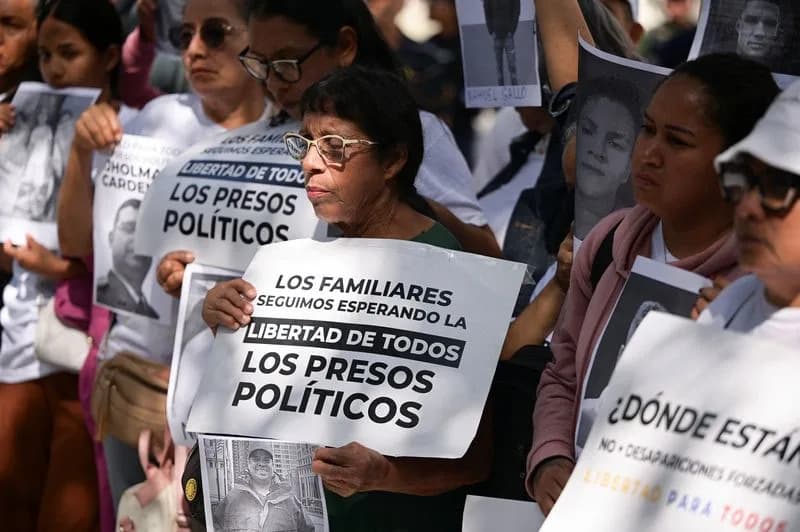
While some in the diaspora saw Maduro’s capture as a possible turning point, many remain wary because of the political transition’s opaque nature. The release of more than 140 political prisoners (Foro Penal reports) has been a hopeful sign for some, though more than 700 detainees reportedly remain in custody.
For most migrants, returning depends less on a single development and more on durable, verifiable improvements: functioning institutions, reliable services, economic opportunity and safety. As Alejandro Méndez, who settled in Colombia, put it, the dream is a Venezuela where strong institutions, not individuals, ensure the country works.
The diaspora’s decision to come home will hinge on measurable and lasting changes — not only leadership changes but rebuilt public services, a revived economy and guarantees of civic freedoms.
Help us improve.