
Nicolás Maduro, who rose from a Caracas subway bus driver to the presidency, was reported captured during a U.S. attack on Caracas. President Trump announced the capture and U.S. officials said Maduro and his wife face charges tied to a New York indictment. Maduro’s rule was defined by severe economic collapse, mass migration of over 7.7 million people and an ongoing ICC probe into alleged crimes against humanity. Contested elections, sanctions and renewed U.S. pressure culminated in the operation that removed him from power.
From Bus Driver to Captured President — Maduro’s Fall After Years in Chávez’s Shadow

President Nicolas Maduro waves a flag during a rally marking the anniversary of the Battle of Santa Ines, which took place during Venezuela's 19th-century Federal War, in Caracas, Venezuela, Wednesday, Dec. 10, 2025. (AP Photo/Cristian Hernandez)(ASSOCIATED PRESS)
Nicolás Maduro, who rose from a unionized Caracas subway bus driver to Venezuela’s presidency and presided over a decade of political repression and economic collapse, was reported captured Saturday during a U.S. attack on Caracas, according to statements from U.S. and Venezuelan officials.
Capture and Official Responses
U.S. President Donald Trump announced Maduro’s capture in an early-morning social media post. Venezuela’s Vice President Delcy Rodríguez later said the whereabouts of Maduro and his wife, Cilia Flores, were unknown. U.S. Attorney General Pam Bondi said both would face charges tied to an indictment filed in New York.
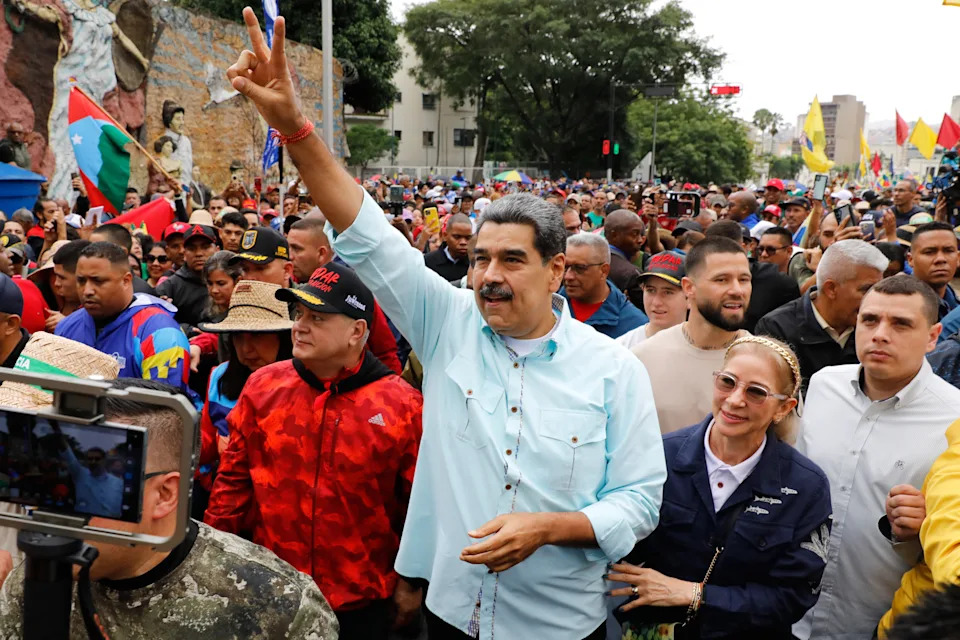
President Nicolas Maduro joins a rally marking the anniversary of the Battle of Santa Ines, which took place during Venezuela's 19th-century Federal War, in Caracas, Venezuela, Wednesday, Dec. 10, 2025. (AP Photo/Cristian Hernandez)(ASSOCIATED PRESS)
Rise From Humble Beginnings
Maduro’s political path began about four decades ago. In 1986 he spent a year in Cuba for ideological training—his only formal education after high school—and returned to Caracas to work as a bus driver for the city’s subway system, quickly becoming a union leader. Venezuelan intelligence in the 1990s identified him as a leftist with close ties to Cuba.
Political Career and Chávez’s Heir
After joining Hugo Chávez’s movement following Chávez’s 1994 pardon, Maduro rose through the ranks: six years as a lawmaker, president of the National Assembly, six years as foreign minister and a brief stint as vice president. Chávez used his final national address before dying in 2013 to endorse Maduro as his successor, a move that helped Maduro win a narrow six-year term but never conferred Chávez’s deep personal popularity.
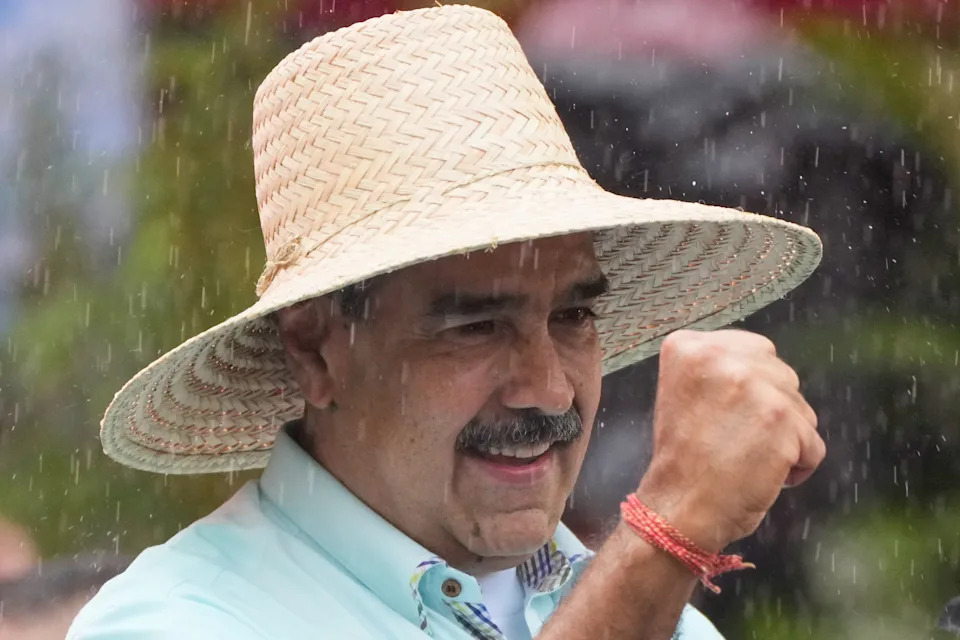
President Nicolas Maduro addresses supporters during a rally marking the anniversary of the Battle of Santa Ines, which took place during Venezuela's 19th-century Federal War, in Caracas, Venezuela, Wednesday, Dec. 10, 2025. (AP Photo/Ariana Cubillos)(ASSOCIATED PRESS)
Presidency Marked by Crisis and Repression
Maduro’s presidency saw a severe social, political and economic collapse. Millions fell into poverty, more than 7.7 million Venezuelans left the country, and thousands of perceived opponents were imprisoned—many allegedly tortured. Security forces and government-aligned institutions were used to suppress dissent and purge critics.
2014–2017 Protests and Legal ActionsMass protests in Maduro’s first year left dozens dead and hundreds arrested. In 2015 his party lost control of the National Assembly; in 2017 he created a pro-government Constituent Assembly to neutralize the opposition-controlled legislature. The ensuing crackdown resulted in more than 100 deaths and prompted the International Criminal Court to open an investigation into alleged crimes against humanity; the probe remained active in 2025.
Economic Collapse
Under Maduro, Venezuela’s economy contracted sharply: GDP fell roughly 71% between 2012 and 2020, inflation surged above 130,000%, and oil production—once the country’s lifeblood—fell below 400,000 barrels per day. Severe shortages of food and medicine forced many families to flee; those who stayed faced long lines and scarcity of basics.
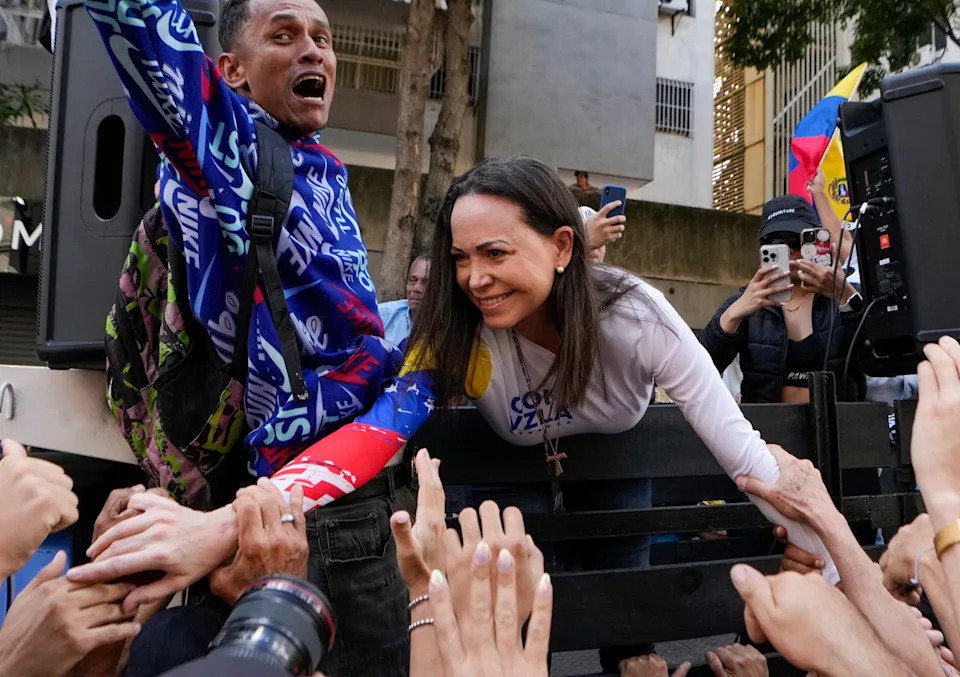
FILE - Opposition leader Maria Corina Machado greets supporters during a protest against Venezuelan President Nicolas Maduro the day before his inauguration for a third term in Caracas, Venezuela, Thursday, Jan. 9, 2025. (AP Photo/Matias Delacroix, file)(ASSOCIATED PRESS)
Elections, Sanctions and Negotiations
Ruling-party loyalists altered the December 2018 presidential calendar, barring key opposition figures and enabling Maduro to run with limited competition. Many countries refused to recognize the result. U.S. administrations imposed sweeping sanctions that froze Venezuelan government assets and restricted international business with state entities. In 2021, Maduro adopted economic measures that helped halt hyperinflation and engaged in negotiations with opposition figures, securing concessions such as a sanctions license for Chevron that provided crucial revenue.
Final Years and Contested 2024 Vote
Negotiations mediated by Norway failed to resolve core disputes. In 2023 the government barred María Corina Machado, his strongest opponent, from running. After the 2024 election, the National Electoral Council declared Maduro the winner without releasing detailed counts. Opposition-collected tally sheets from more than 80% of voting machines suggested rival Edmundo González had won by over 2-to-1, sparking mass protests and international rejection of the official result. The National Assembly nonetheless swore Maduro in for a third term in January 2025.
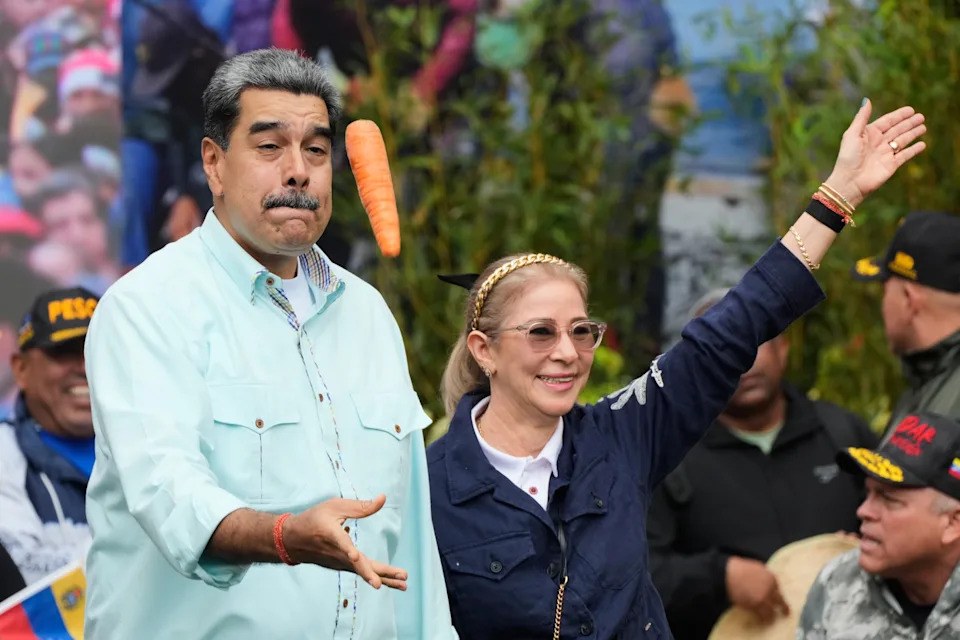
President Nicolas Maduro tosses a carrot next to his wife Cilia Flores during a rally marking the anniversary of the Battle of Santa Ines, which took place during Venezuela's 19th-century Federal War, in Caracas, Venezuela, Wednesday, Dec. 10, 2025. (AP Photo/Ariana Cubillos)(ASSOCIATED PRESS)
U.S. Pressure and the Endgame
Donald Trump’s return to the White House in January 2025 intensified pressure: deportation flights resumed, sanctions and diplomatic pressure increased, and the U.S. built up a military presence in the Caribbean. According to U.S. and Venezuelan statements, the heightened pressure culminated in the operation that led to Maduro’s capture.
Note: This account reflects reports available from U.S. and Venezuelan officials and contemporaneous media coverage. Some claims—especially those about legal proceedings, election tallies and the circumstances of the capture—remained contested or under investigation.
Help us improve.


