Winter cold, heavy rains and malnutrition are claiming lives across Gaza despite a months-long ceasefire. Ten children have died from hypothermia and a three-month-old infant recently died in hospital. Heavy storms have caused structural collapses that killed at least 24 people, while hunger, medicine shortages and contaminated water have fueled disease outbreaks. Humanitarian agencies warn hundreds of thousands remain displaced and urgently need shelter, food and medical care.
Winter Cold, Rains and Malnutrition Kill in Gaza Despite Ceasefire
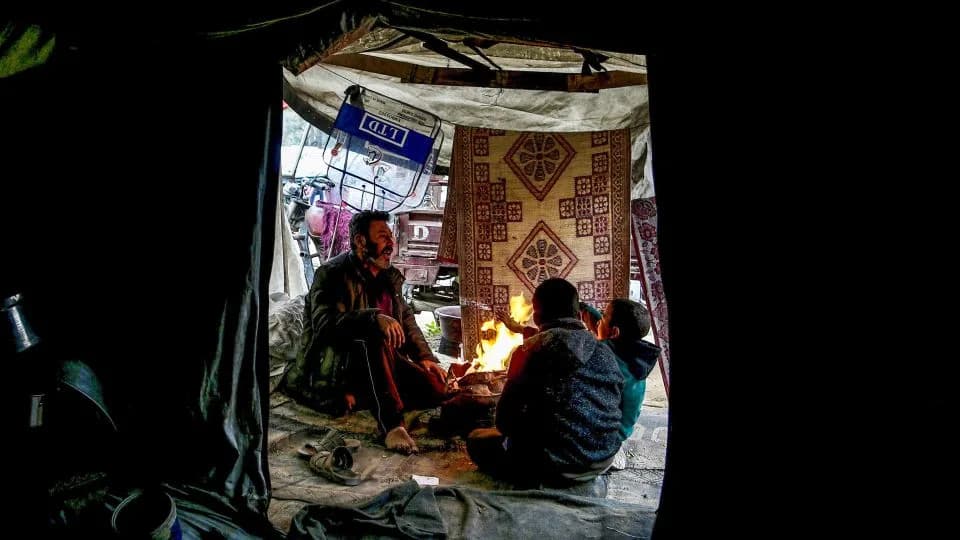
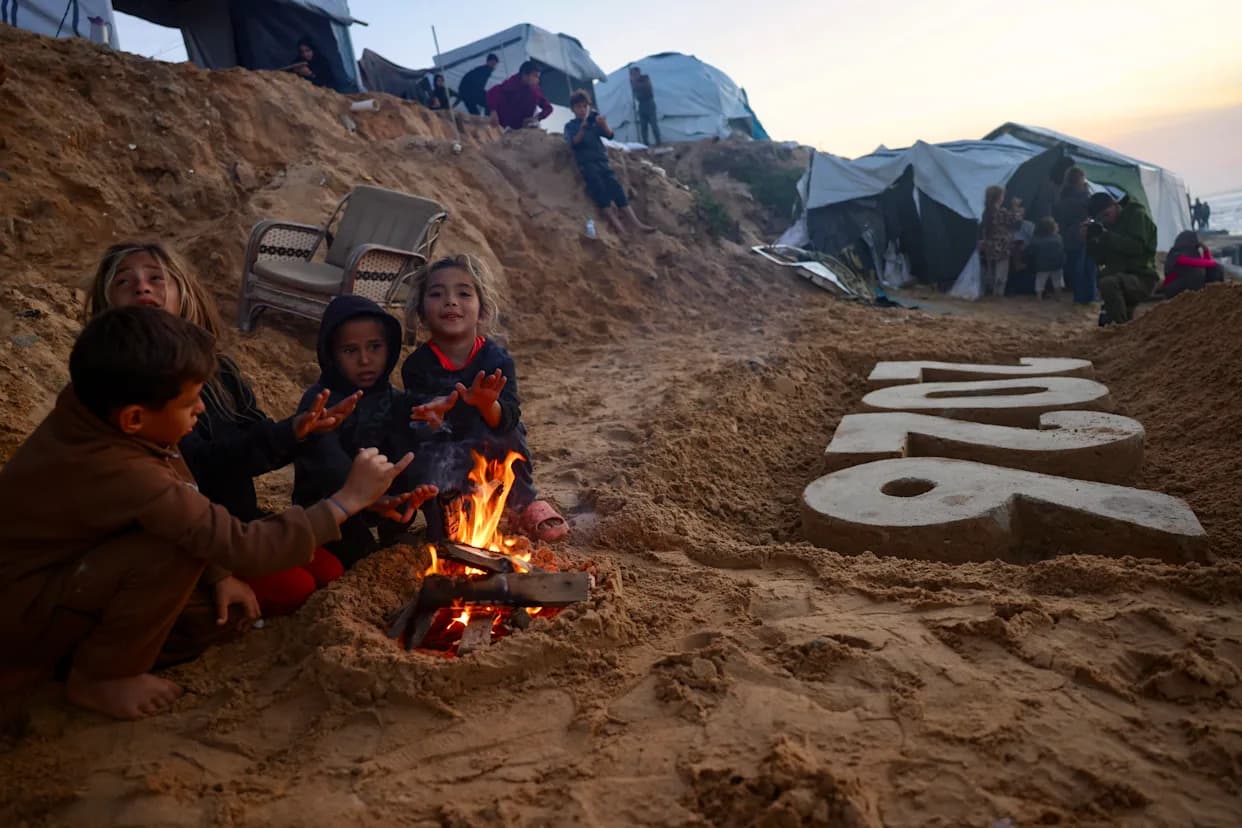
Palestinians gather around a fire to warm themselves as they struggle to survive amid the ruins of the Jabalia Refugee Camp in the northern Gaza Strip on January 22, 2026. - Saeed M. M. T. Jaras/Anadolu/Getty Images
Winter cold, heavy rains and widespread malnutrition are continuing to claim lives across Gaza even as a ceasefire enters its fourth month. Health authorities and humanitarian agencies warn the humanitarian situation is deteriorating as hundreds of thousands remain displaced and exposed to harsh weather.
Rising Death Toll Among Children
The Palestinian Health Ministry reported that ten children have died from hypothermia since the start of the winter. In the most recent 24-hour period a three-month-old infant died from severe cold at Al Aqsa Martyrs Hospital.
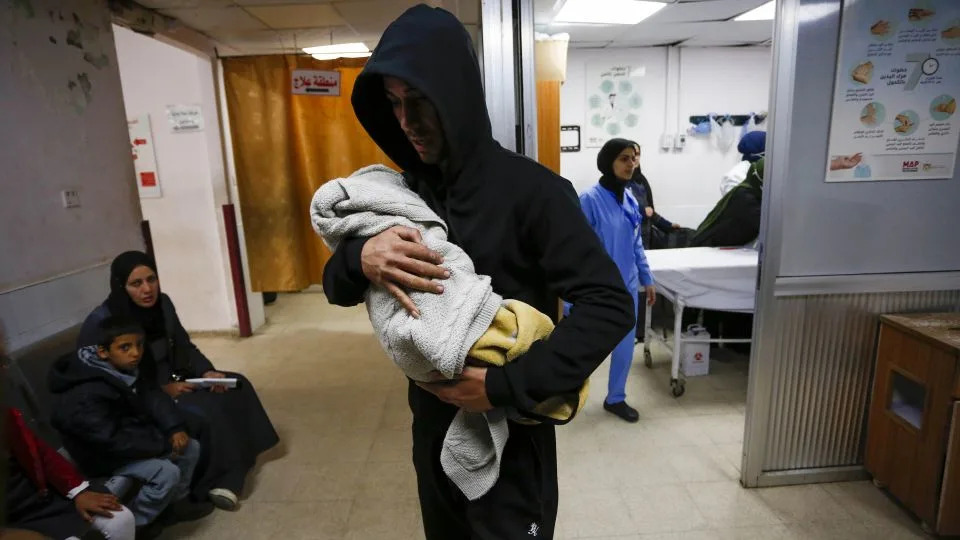
The body of three-month-old Palestinian infant Ali Abu Zur is transported to the Al-Aqsa Martyrs Hospital for funeral preparations after he died due to severe cold weather in Nuseirat Refugee Camp, in Deir al-Balah, Gaza on January 22, 2026. - Stringer/Anadolu/Getty Images
“When temperatures fall, the most affected group is children,” said Dr. Ahmad Al Faraa, head of pediatrics at Nasser Medical Complex in Khan Younis, noting that infants have limited fat tissue, proportionally larger surface area for heat loss, and low energy reserves. Premature and low-birth-weight babies are particularly vulnerable.
Displacement and Shelter Damage
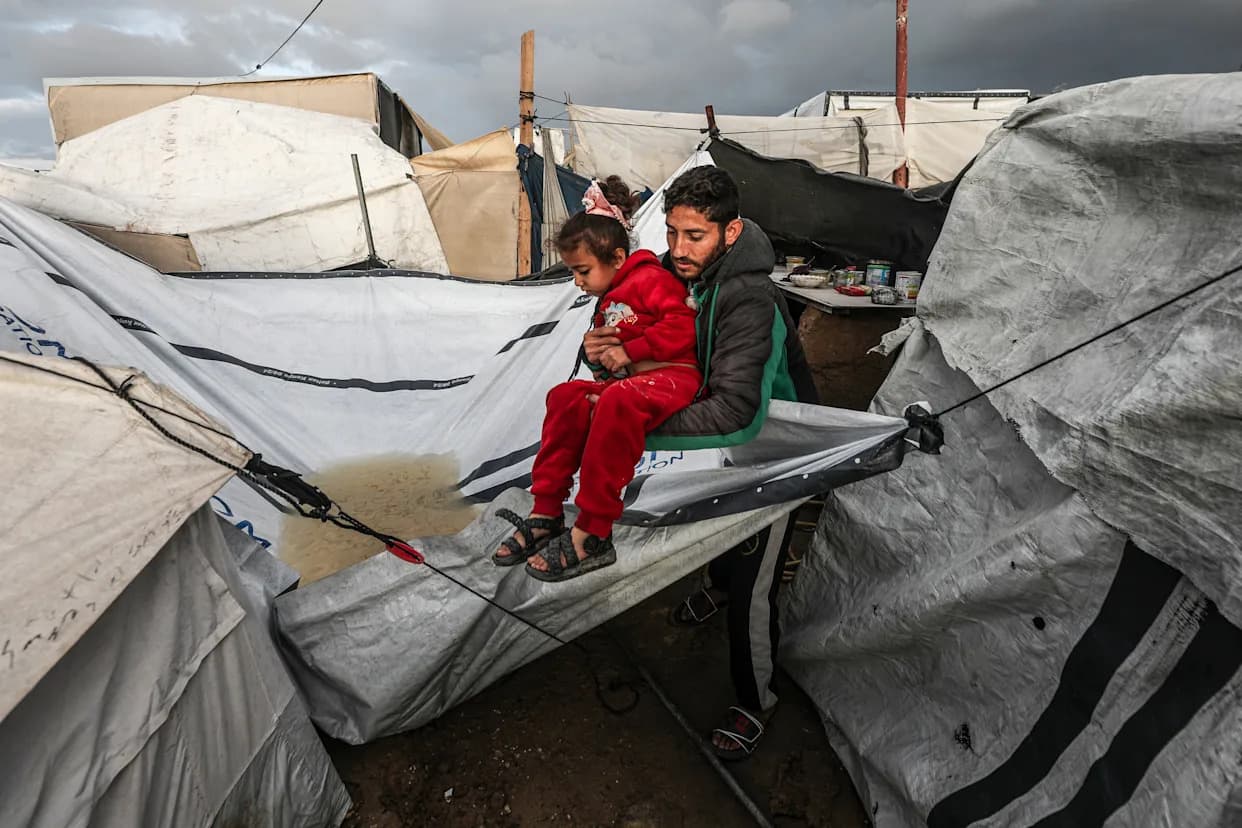
The United Nations Office for the Coordination of Humanitarian Affairs said hundreds of thousands of people remain in displacement sites exposed to cold, rain and wind. Strong gusts in recent days have damaged hundreds of tents, leaving families without adequate shelter.
Philippe Lazzarini, head of the main UN agency in the Palestinian territories, warned that plunging temperatures, wind, rain and floods are compounding suffering where most people remain forcibly displaced and living in tents or partially damaged buildings. He said an estimated 92% of homes have been damaged or destroyed and that large quantities of unexploded ordnance still need to be cleared.
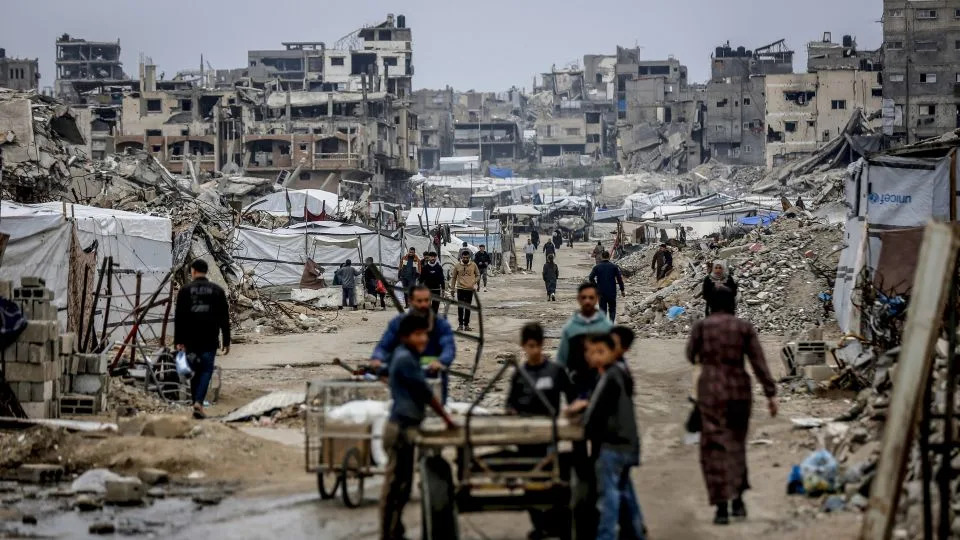
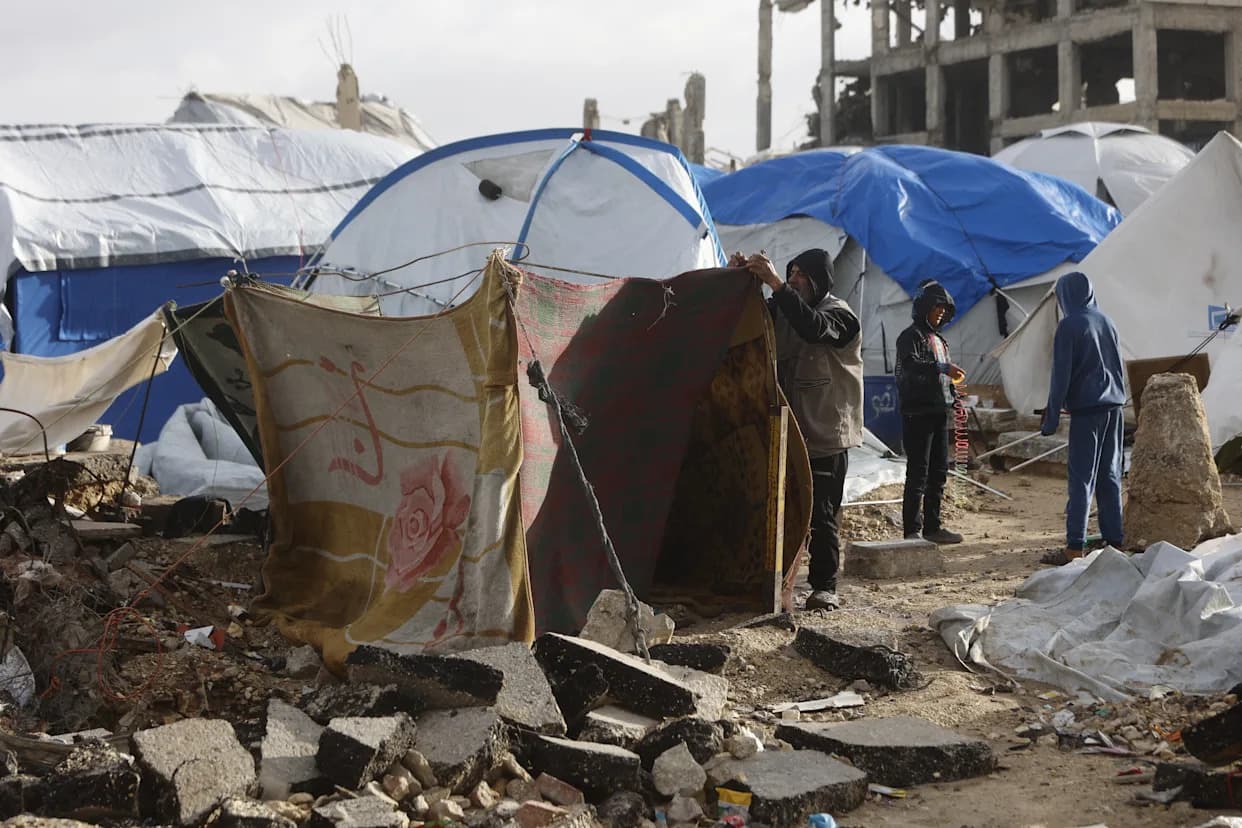
Widespread destruction in Jabalia Refugee Camp in northern Gaza has left residents facing severe shortages of water, restricted movement and ongoing insecurity. - Saeed M. M. T. Jaras/Anadolu/Getty Images
Health, Hunger and Disease
Heavy winter rains have also caused structural collapses. Dr. Munir Al-Barsh, Director General of the Health Ministry, reported that at least 24 people were killed when homes collapsed during recent storms. He further warned that hunger, shortages of medicines and contaminated water have weakened people’s bodies and contributed to outbreaks of disease.
Malnutrition is affecting pregnant women and newborns. Dr. Al Faraa said many babies are being born with low birth weights because of maternal malnutrition during pregnancy, psychological stress, gaps in prenatal care and shortages of vitamins and nutritional supplements.
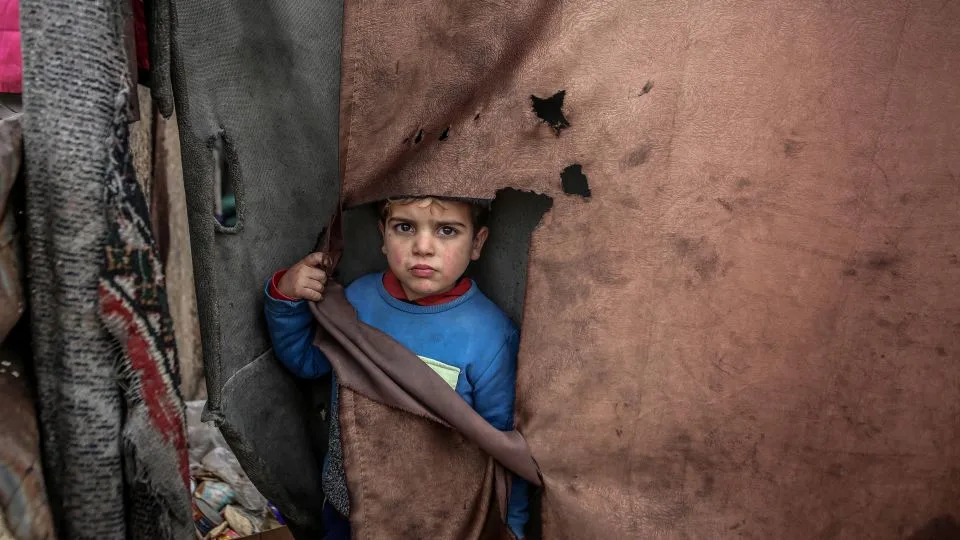
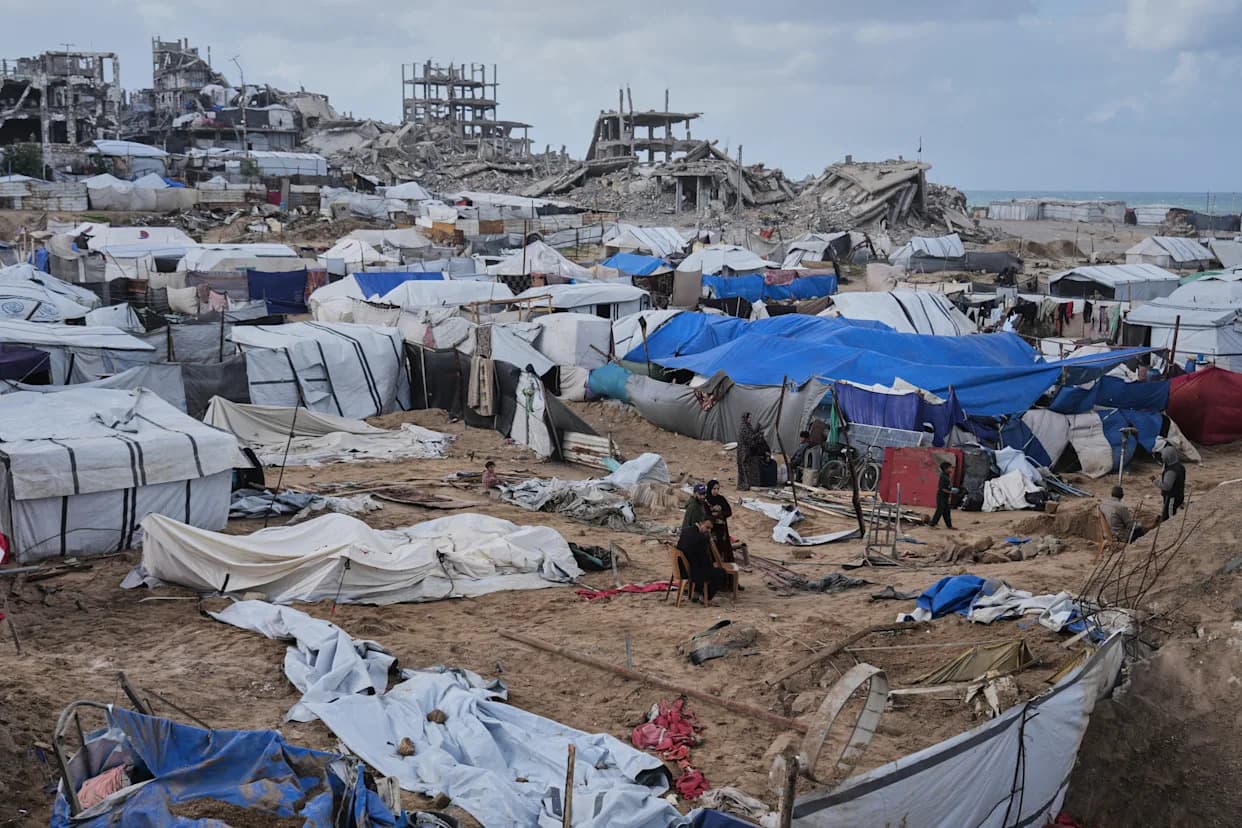
The humanitarian crisis in Gaza remains severe despite the current ceasefire. - Saeed M. M. T. Jaras/Anadolu/Getty Images
Security Incidents and Diplomacy
The Israel Defense Forces said troops operating in northern Gaza killed several militants who crossed the so-called Yellow Line, planted an explosive device and approached Israeli forces, reflecting that security incidents continue despite the ceasefire.
US envoys Steve Witkoff and Jared Kushner were reported to be meeting Israeli Prime Minister Benjamin Netanyahu to discuss Gaza and plans for the next phase of the truce, which would reportedly include arrangements for an international peacekeeping presence and measures aimed at disarming militant groups.
Humanitarian agencies emphasize immediate needs: winterized shelter, heating, clean water, food, maternal and pediatric care, and clearance of unexploded ordnance to allow safe access for assistance.
Help us improve.