Hubble’s parallel-field image of the N159 region in the Large Magellanic Cloud reveals dense hydrogen ridges, red ionized-gas emission, and bubble-like cavities carved by massive newborn stars. These structures are clear signs of stellar feedback—young stars both eroding and triggering star formation. N159 spans roughly 150 light-years and lies about 160,000 light-years away, making it a nearby laboratory for studying processes relevant to the early Universe.
Hubble Reveals Newborn Stars Carving Cavities in the N159 Region of the Large Magellanic Cloud
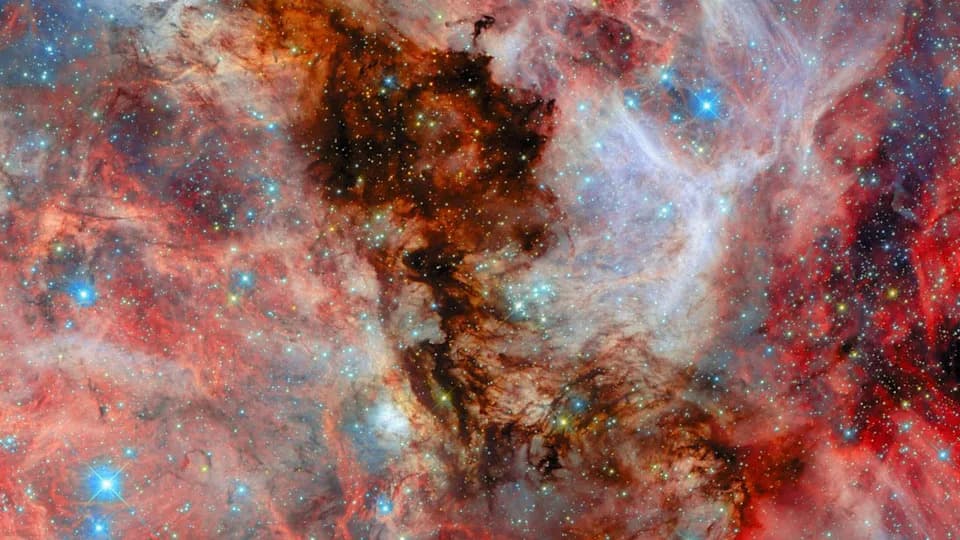
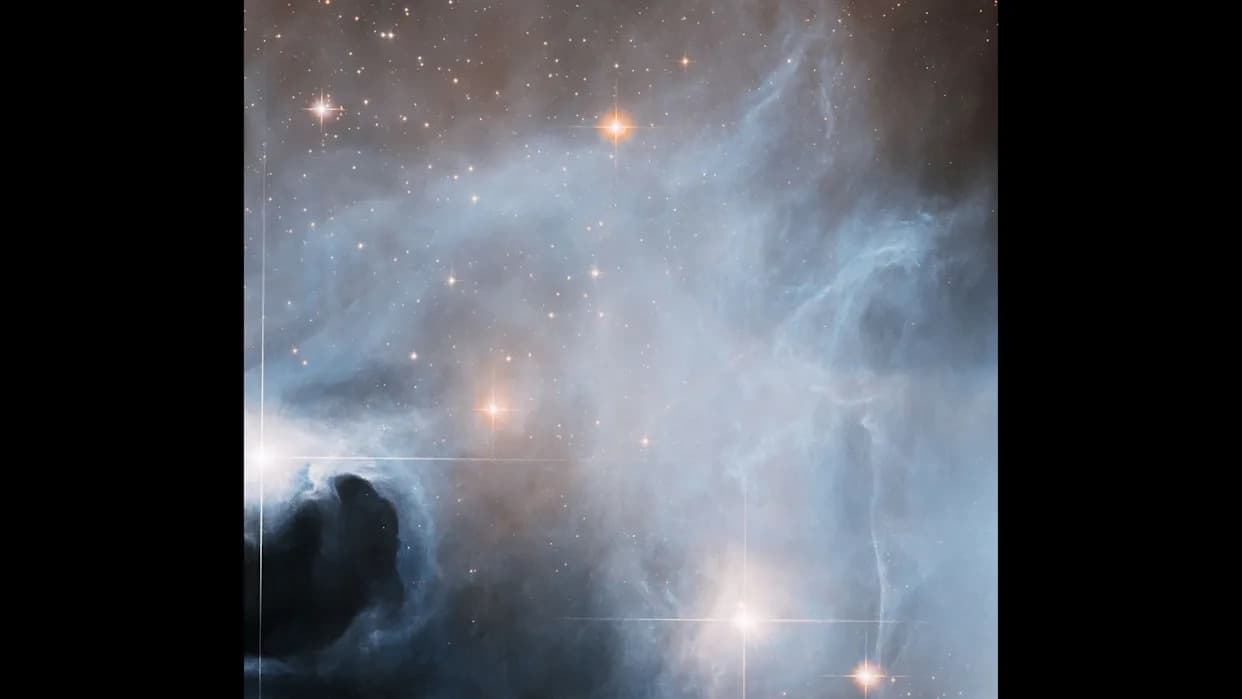
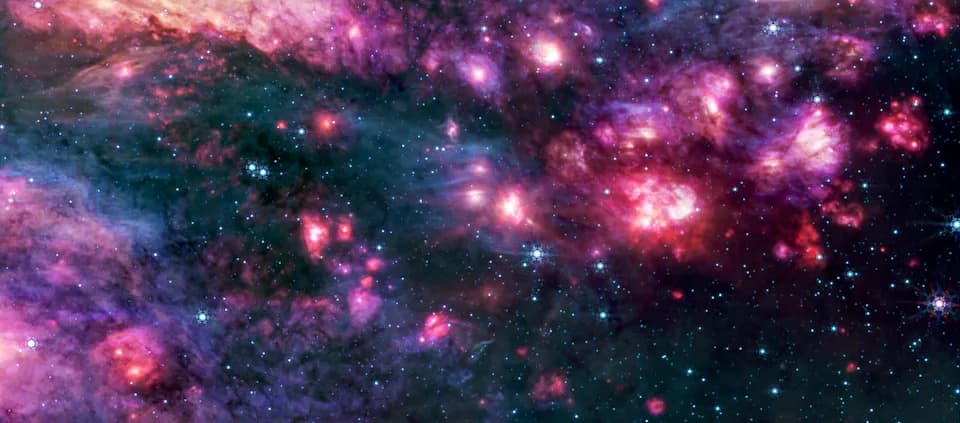
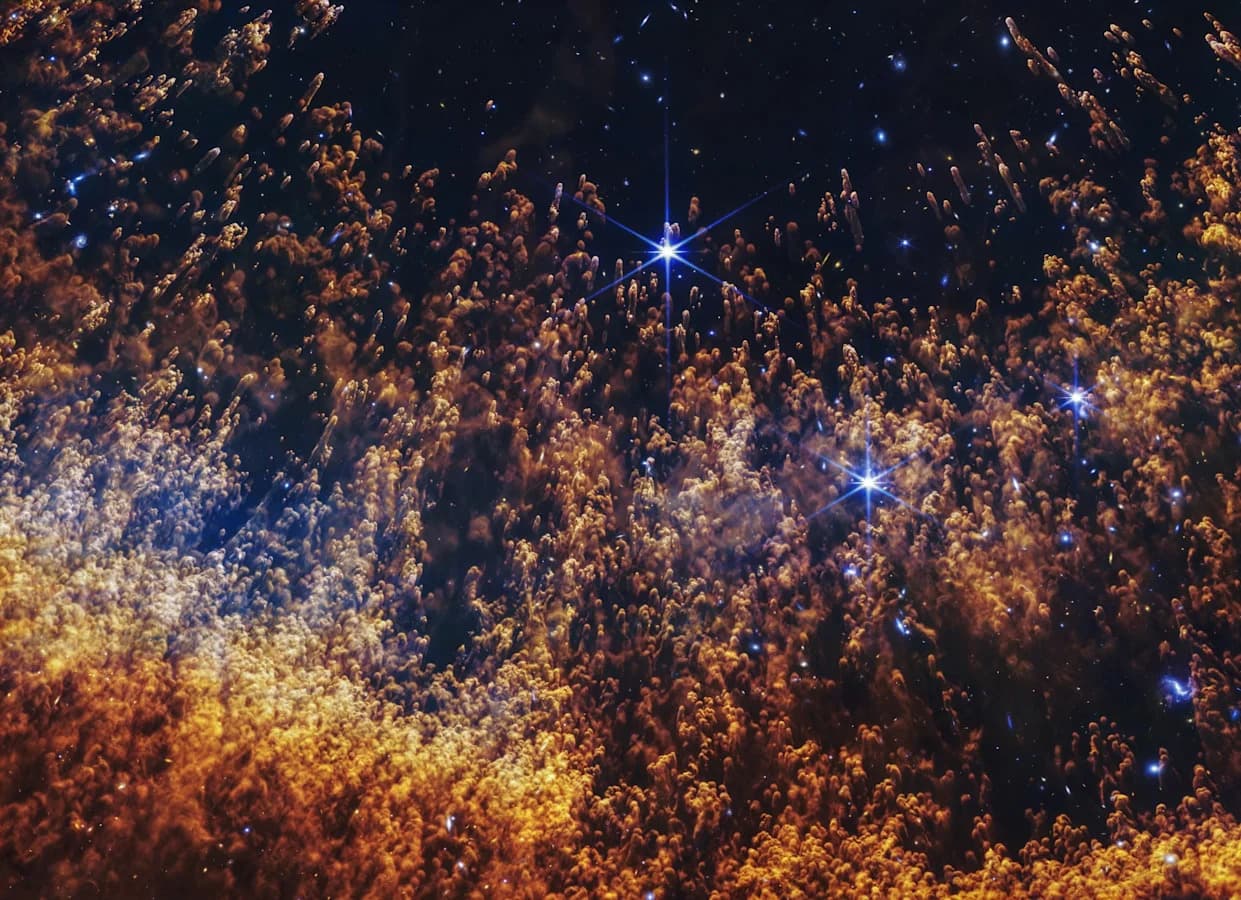
A look at the N159 star-forming complex in the Large Magellanic Cloud. | Credit: ESA/Hubble & NASA, R. Indebetouw
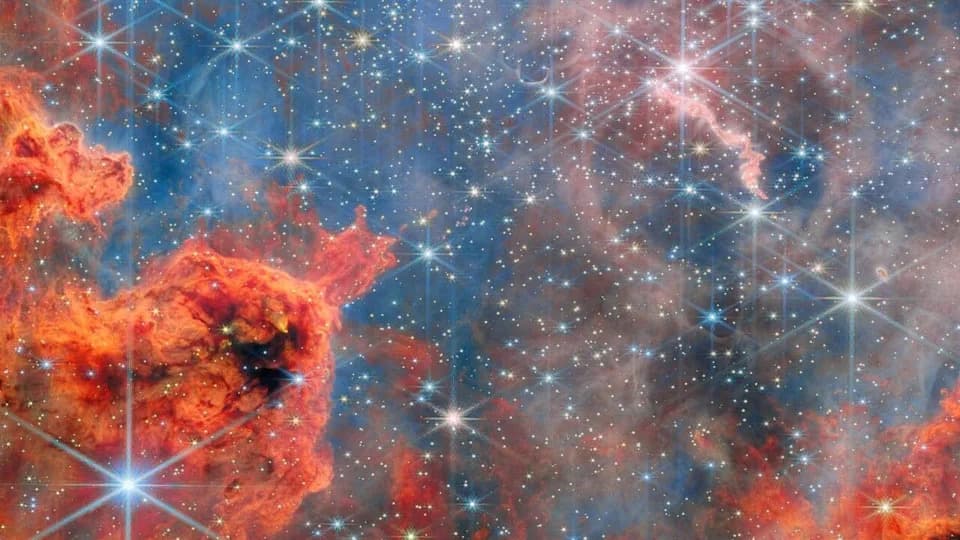
A recent Hubble Space Telescope parallel-field image illuminates the N159 star-forming complex in the Large Magellanic Cloud (LMC), one of the Milky Way’s closest galactic neighbors. The frame reveals intricate clouds of cold hydrogen gas, glowing red emission from ionized hydrogen, and bubble-like cavities carved by massive, newly formed stars.
What the Image Shows
Dense clouds and filaments of hydrogen fold into ridges and wisps across the scene. The deep red tones are emission from hydrogen that has been ionized and energized by intense ultraviolet radiation from young, hot stars. Where the glow is brightest, massive stars are actively heating and sculpting their surroundings.
Hubble captured this picture as a parallel field to a recently released observation of a neighboring area within the same sprawling complex. Together, these adjacent views let astronomers map the larger environment of a stellar nursery rather than focusing only on a single luminous hotspot.
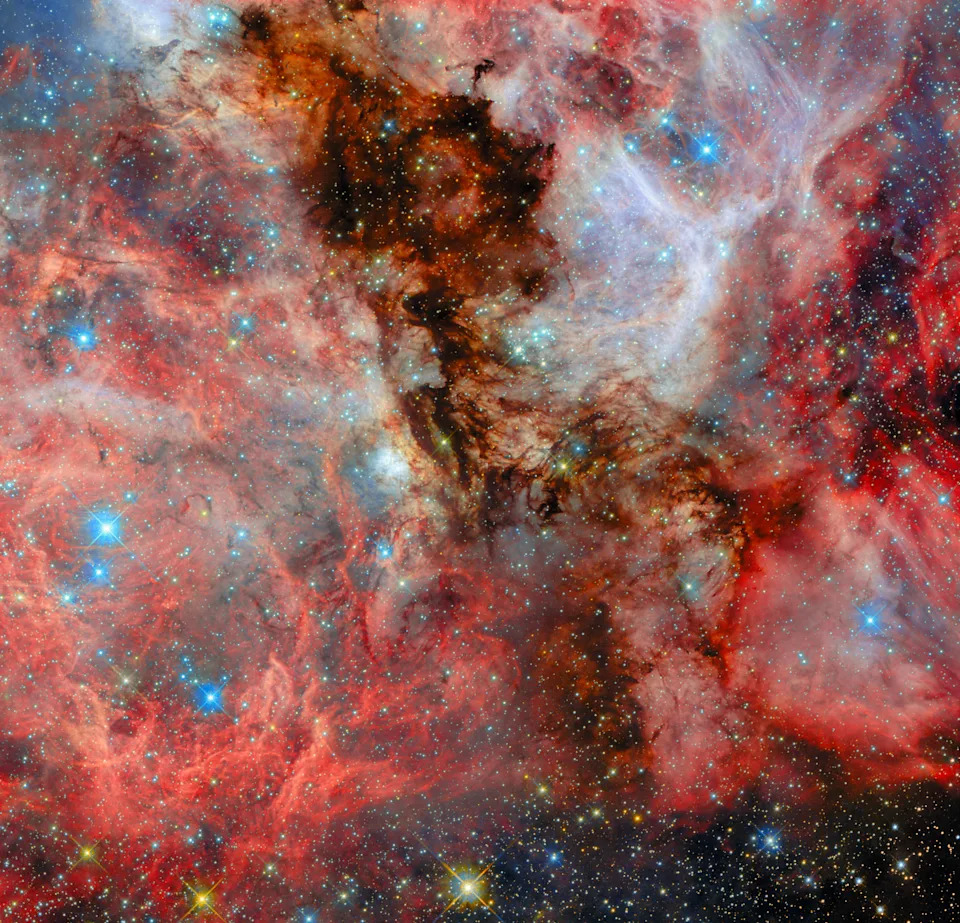
A parallel image from the Hubble Space Telescope shows the rich dynamics of star formation happening within the Large Magellanic Cloud. | Credit: ESA/Hubble & NASA, R. Indebetouw
Stellar Feedback: Destruction and Creation
Massive newborn stars do not sit quietly. Their fierce radiation and strong stellar winds push outward, carving bubble-like shells and hollow cavities in the surrounding gas. These features are classic signatures of stellar feedback, the process by which young stars both erode the clouds that birthed them and, in other locations, compress gas to trigger new episodes of star formation.
The N159 complex itself spans roughly 150 light-years across and lies within the LMC at a distance of about 160,000 light-years from Earth. As a nearby laboratory, the LMC lets astronomers study star formation in conditions that differ from those in our own Galaxy, improving our understanding of how stars formed in the early Universe.
Why This Matters
Images like this add detail to models of how stars form and how stellar feedback shapes the interstellar medium. By comparing multiple fields across a giant star factory, researchers can trace where feedback suppresses star birth and where it promotes new stellar nurseries—information that helps interpret observations of distant, early galaxies.
For more information, consult official Hubble mission resources and observatory updates to explore the full-resolution images and scientific analysis.
Help us improve.