Thailand holds a general election on February 8, with 57 parties and roughly 53 million eligible voters. All 500 House seats (400 constituency and 100 party-list) are contested, with 5,096 candidates registered. The outcome could produce a fourth prime minister in under three years; a candidate needs 251 parliamentary votes to form a government. Results must be certified within 60 days (by April 9) and the new parliament must convene within 15 days.
Factbox: Thailand Election By The Numbers — What To Know Ahead Of February 8 Vote
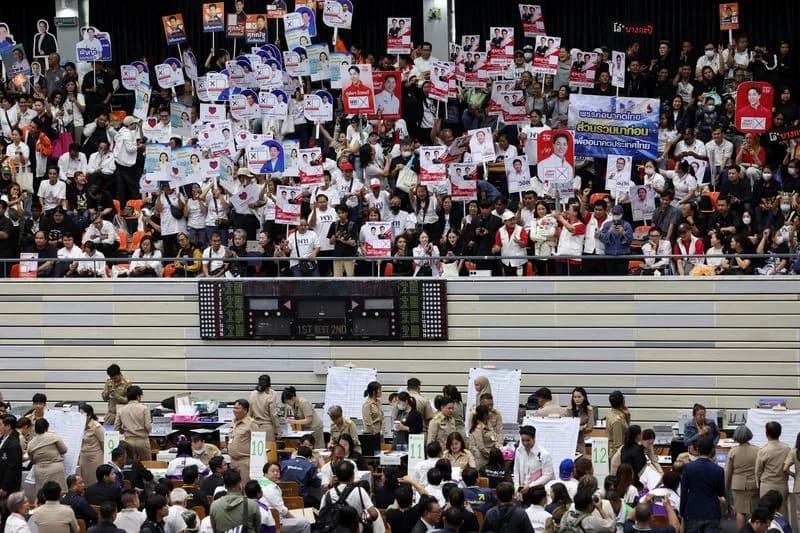
Supporters gather on the day candidates draw a number in their district for Thailand’s upcoming February 8 general election in Bangkok, Thailand, December 27, 2025. REUTERS/
Bangkok, Jan 21 (Reuters) - Thailand will hold a general election on February 8 in a direct contest among three major parties. The vote could produce the country's fourth prime minister in under three years. Below are the key facts and figures about the election.
Key Figures
Parties and Voters
- 57 parties have registered to contest the election.
- About 53 million people are eligible to vote.
Parliamentary Seats and Candidates
- There are 500 seats in the House of Representatives: 400 constituency seats and 100 party-list seats.
- A total of 5,096 candidates have registered: 3,526 for constituency contests and 1,570 for party-list seats.
Parties' Histories
- Two of the major parties, the People's Party and Pheu Thai, are third incarnations of earlier parties that were dissolved by Thai courts.
- Five of the last six national elections have been won by Pheu Thai or its predecessor parties.
Prime Minister Selection
- So far, 93 politicians from 43 parties have been formally submitted as potential prime minister candidates.
- A candidate needs 251 parliamentary votes to become prime minister.
- Since the 2023 election, Thailand has had three different prime ministers.
Voting and Timeline
- Voters receive three ballot papers: two for the election (constituency and party list) and one for a referendum on whether to pursue changes to the constitution.
- Election results must be certified by the election commission within 60 days of the vote, and in any case no later than April 9.
- The new parliament must convene within 15 days after results are confirmed.
Political Stability
- Only one elected Thai government has completed a full, four-year term in the past 25 years, underscoring frequent political change.
(Compiled by Martin Petty; Edited by Kate Mayberry)
Help us improve.