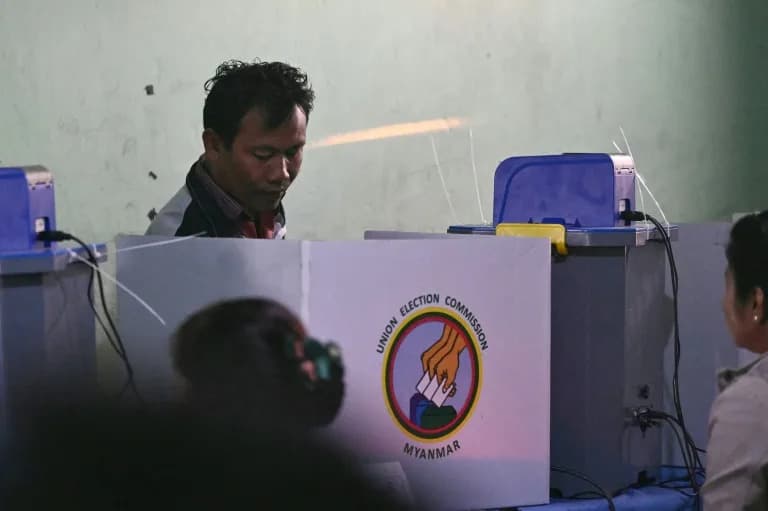
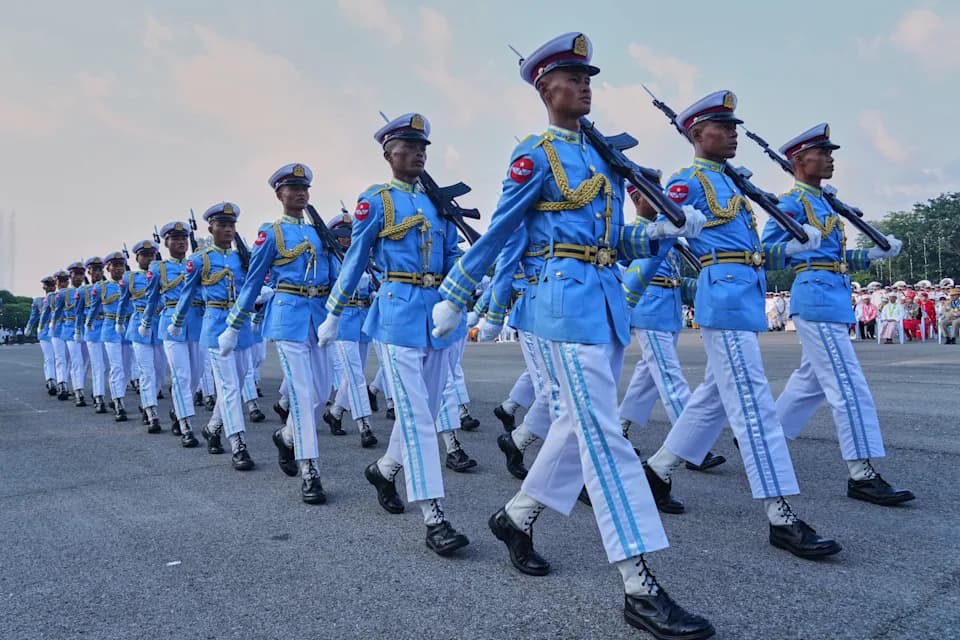
The military-backed USDP expanded its lead after Myanmar’s second round of voting, winning 86 of 100 contested lower-house seats and bringing its combined total to 182 elected seats from the first two phases. The staggered, three-phase election — held amid active armed conflict — will conclude with a final round on Jan. 25, though 65 townships will not participate due to fighting. Critics say the vote lacks legitimacy and serves to solidify the military’s hold after the 2021 coup; a new Election Protection Law has also led to charges against more than 330 people for criticizing the polls.
Military-Backed USDP Widens Lead, Poised For Parliamentary Majority As Myanmar Prepares Final Vote
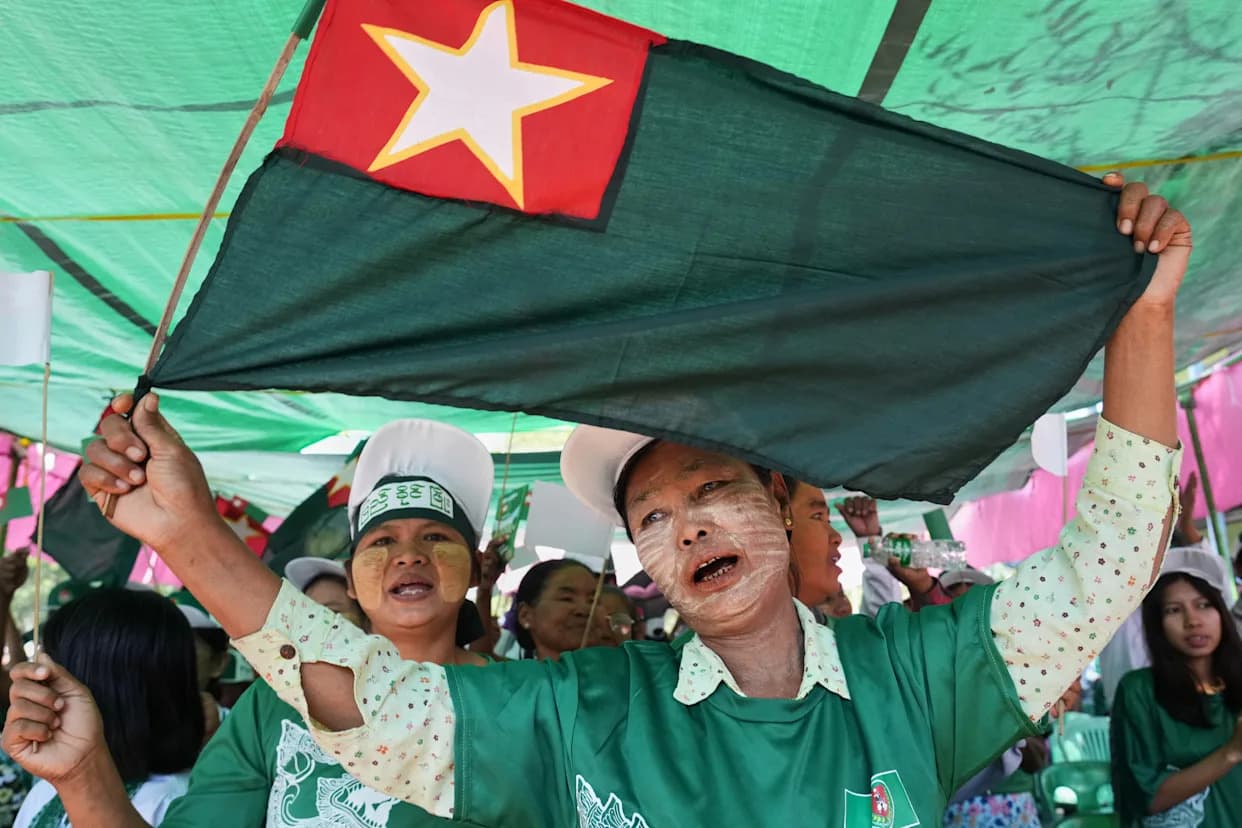
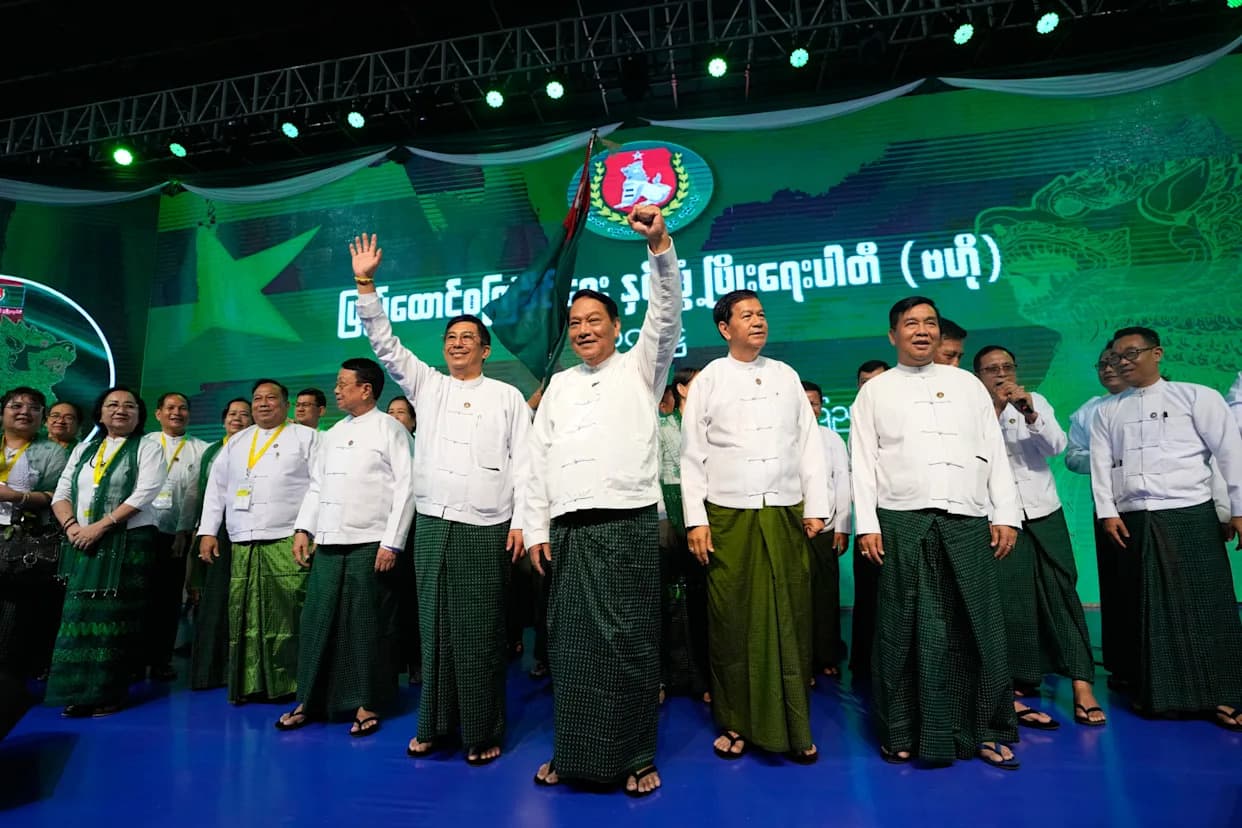
FILE - Supporters of the military-backed Union Solidarity and Development Party (USDP) dance during an election campaign in Wundwin Township, Mandalay Division, central Myanmar, Wednesday, Jan. 7, 2026. (AP Photo/Aung Shine Oo, File)(ASSOCIATED PRESS)
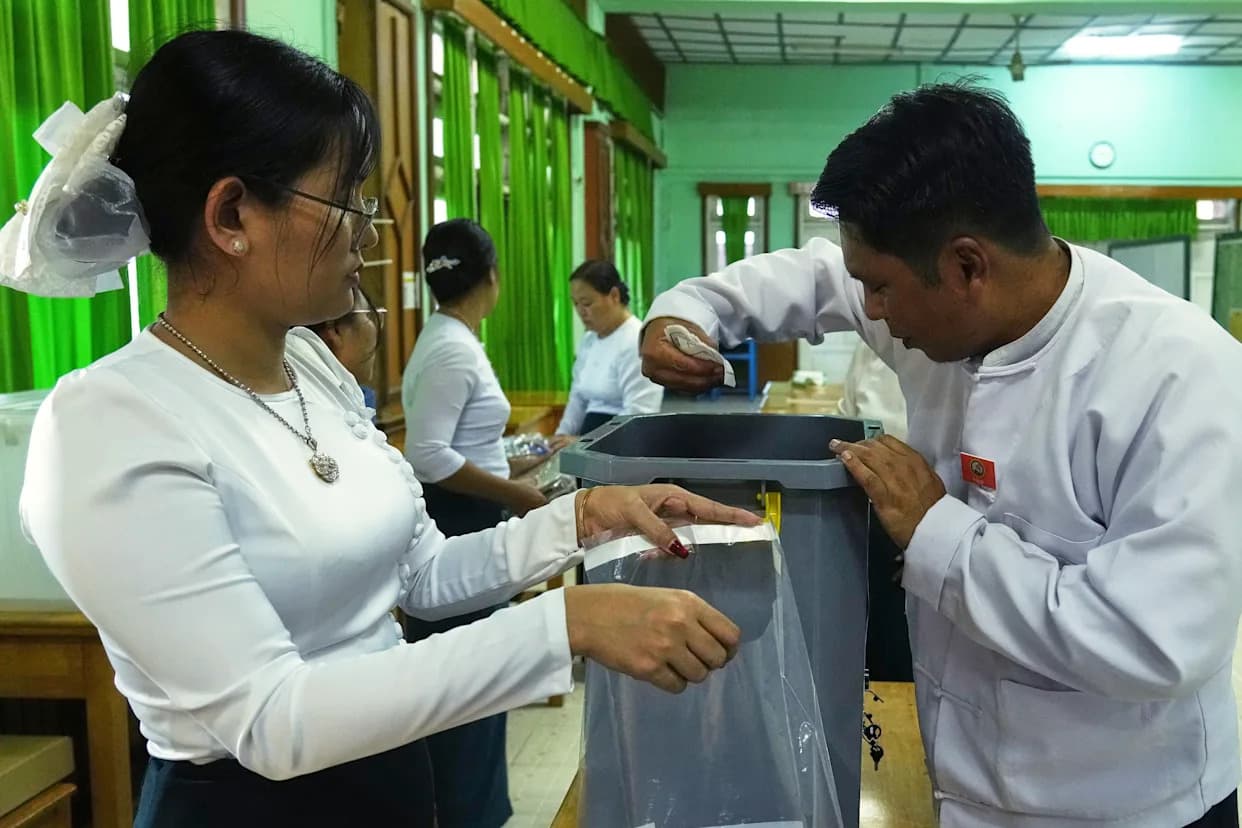
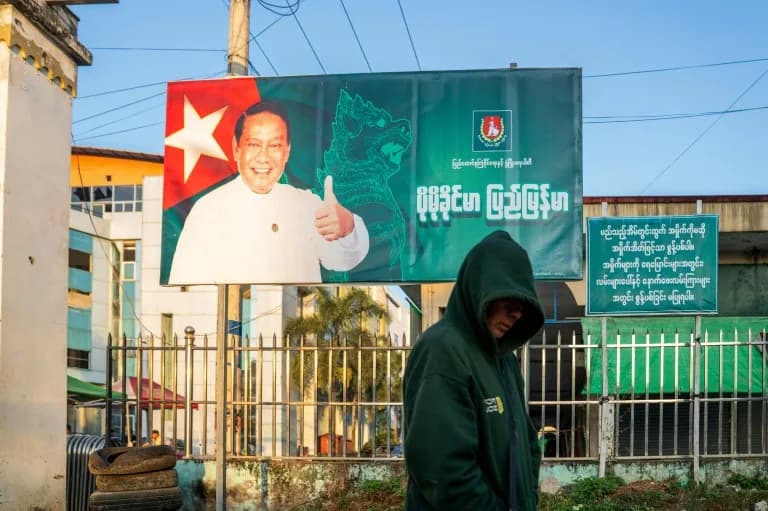
Official results released by Myanmar’s election body show the military-backed Union Solidarity and Development Party (USDP) extended its lead after the second round of voting, putting it on track for a parliamentary majority as the country moves into the final phase of a three-stage general election amid ongoing armed conflict.
Second Phase Results: State broadcaster MRTV, citing the Union Election Commission, reported that the USDP won 86 of the 100 contested seats in the lower house during the second phase held on Jan. 11. Combined with gains from the first phase, that brings the party’s total to 182 elected seats out of the 330-seat lower house, a slim elected majority ahead of the final round scheduled for Jan. 25.
Why This Matters: Myanmar’s national legislature comprises two houses totaling 664 seats. Under the constitution, the military automatically holds 25% of seats in each house. A party or coalition that secures a parliamentary majority can influence the choice of president and the formation of a new government, making these election results politically consequential.
Election Logistics And Security: The vote is being staged in three phases because of widespread fighting; the first and second phases took place in 202 of the country’s 330 townships on Dec. 28 and Jan. 11. The final phase will cover additional townships, but 65 townships will not participate because of active conflict. Officials expect final results for national and regional legislatures to be announced by late January.
Contestation And Restrictions: More than 4,800 candidates from 57 political parties are contesting seats in national and regional legislatures, though only six parties are contesting seats nationwide. One nationally contesting party, the People’s Pioneer Party, faces a possible dissolution after its chairwoman, Thet Thet Khine, and another senior official were investigated for meeting embassy representatives in Yangon without prior approval from the election commission.
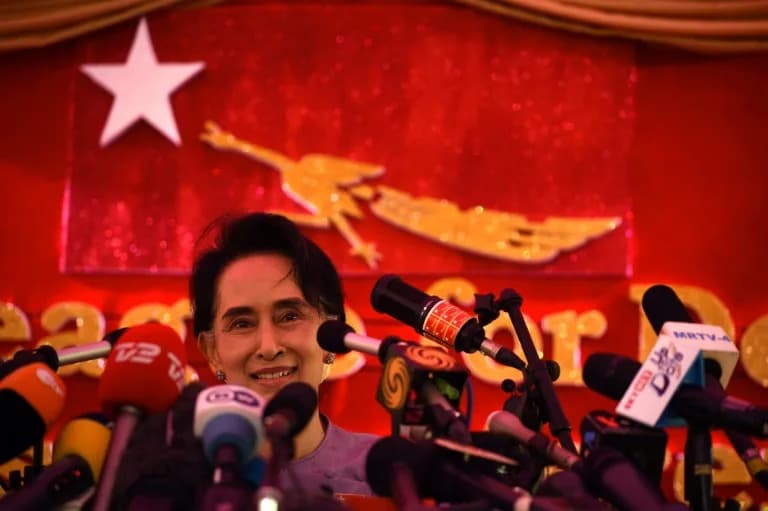
Rights groups and opposition figures have criticized the polls as neither free nor fair, arguing they serve to legitimize the military’s 2021 seizure of power from Aung San Suu Kyi’s elected government — an event that sparked widespread resistance and has grown into an armed conflict across parts of the country.
Authorities have used a newly enacted Election Protection Law to restrict criticism of the vote; more than 330 people have reportedly been charged recently for distributing leaflets or posting about the election online.
Violence Around The Vote: During the first two phases, the military government reported attacks by armed groups opposed to the army on polling stations and government buildings in many townships, underscoring the security challenges that have constrained voting in some areas.
Timeline: Military spokespeople have said both houses of parliament are expected to convene in March, with a new government to take office in April if results and seating proceed as planned.
Note: All figures cited are from official sources reported by state media and the Union Election Commission; critics and independent observers have raised concerns about the transparency and fairness of the process.
Help us improve.