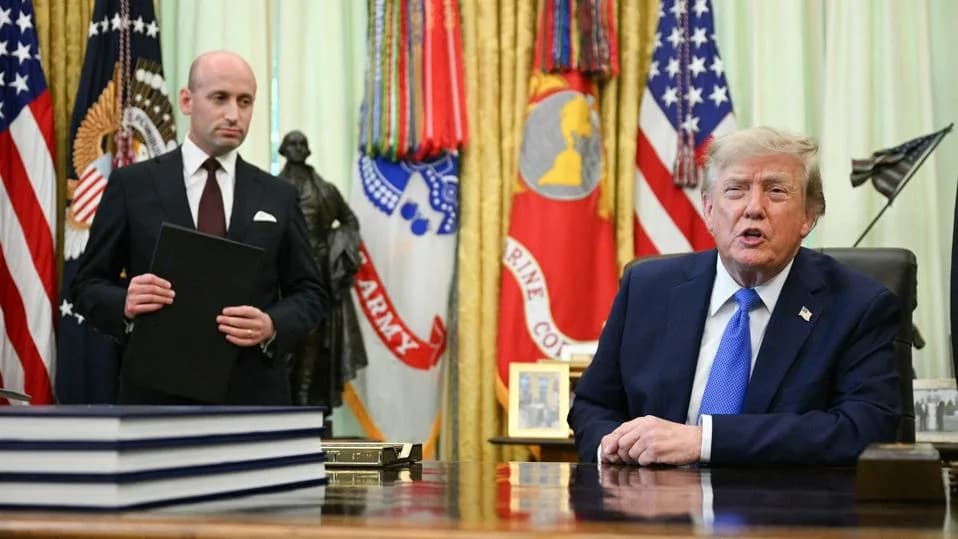
The Supreme Court has agreed to hear the merits of President Trump's executive order that sought to end birthright citizenship, after lower courts blocked the measure as unlawful. A Reagan-appointed judge called the order "blatantly unconstitutional," and Justice Sonia Sotomayor accused the government of "gamesmanship" for limiting earlier review to procedural issues. The Court's upcoming decision — expected by summer in some schedules — could definitively resolve whether a president can revoke birthright citizenship by executive order.
Supreme Court Poised To Decide Trump’s Bid To End Birthright Citizenship
One year after President Donald Trump issued an executive order attempting to end birthright citizenship, the Supreme Court has agreed to hear the case on its merits — setting up a potential constitutional reckoning this term.
The order, titled "Protecting the Meaning and Value of American Citizenship," was blocked by lower courts as unlawful. A Reagan-appointed federal judge, John Coughenour, described the move as "blatantly unconstitutional," calling birthright citizenship an "unequivocal" right and "one of the precious principles that makes the United States the great nation that it is." His ruling emphasized that a president cannot unilaterally erase that right by executive order.
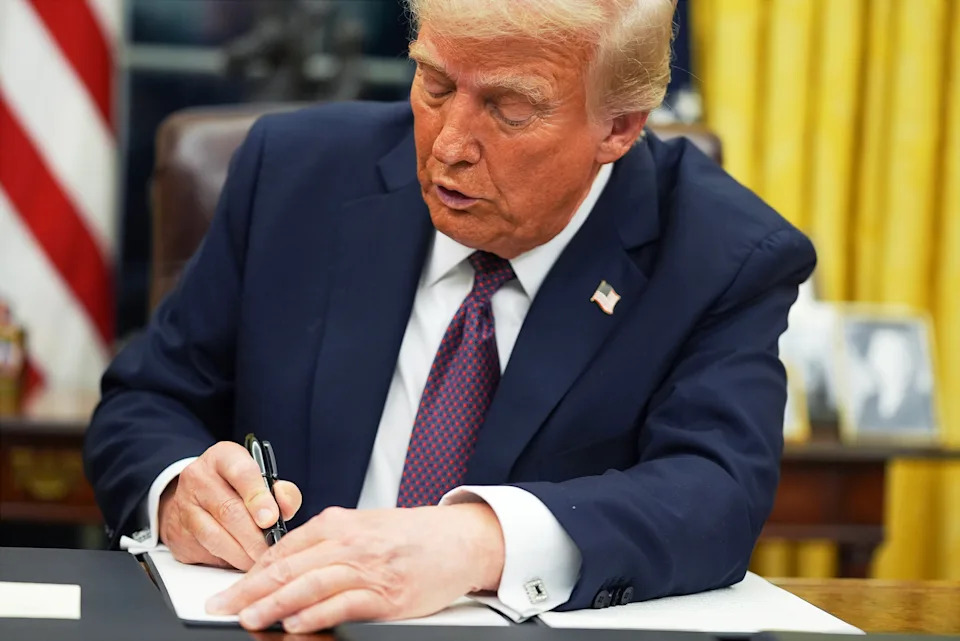
President Donald Trump signs an executive order on birthright citizenship on Jan. 20, 2025, in the Oval Office.(Evan Vucci / AP Photo)
Last term the Supreme Court considered a related appeal, Trump v. CASA, but confined its decision to a procedural question about the scope of injunctions blocking the order rather than resolving the order's constitutionality. The Trump administration had urged the Court to limit review to the procedural issue, a tactic that drew sharp dissents from the Court's liberal justices.
"To get such relief, the Government would have to show that the Order is likely constitutional, an impossible task in light of the Constitution's text, history, this Court's precedents, federal law, and Executive Branch practice," wrote Justice Sonia Sotomayor. "The gamesmanship in this request is apparent and the Government makes no attempt to hide it. Yet, shamefully, this Court plays along."
By agreeing to hear the merits this term, the Supreme Court has opened the door to a definitive ruling that could resolve whether a president may revoke birthright citizenship by executive action. Observers expect a decision could arrive by the summer, though timing depends on the Court's schedule.
The case presents high-stakes legal and political questions about constitutional text and history, precedent, and the limits of executive authority. A ruling against the order would reaffirm long-standing interpretations of the 14th Amendment; a ruling in favor of the administration — though viewed by many legal experts as unlikely — would represent a major shift in constitutional law.
Help us improve.