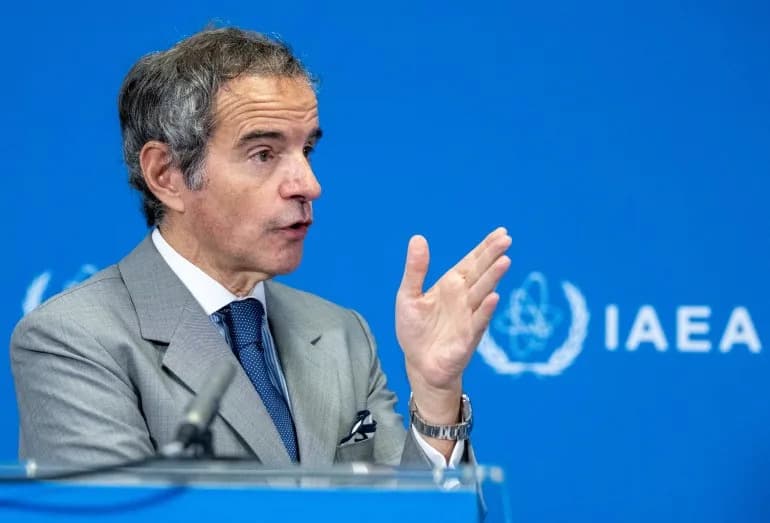
Experts warn that domestic unrest in Iran amid escalating U.S.-Iran tensions could expose Tehran's nuclear materials to theft, diversion or sabotage. The IAEA says it has been unable to verify the status or location of Iran's 440.9 kg of uranium enriched up to 60% since June, creating a gap in monitoring. Analysts say 60% HEU could theoretically be used for a weapon but would require more material and be harder to deliver; the Bushehr reactor also faces sabotage risk with potential regional fallout.
Iran Unrest Raises Fears of Nuclear Theft and Sabotage, Experts Warn
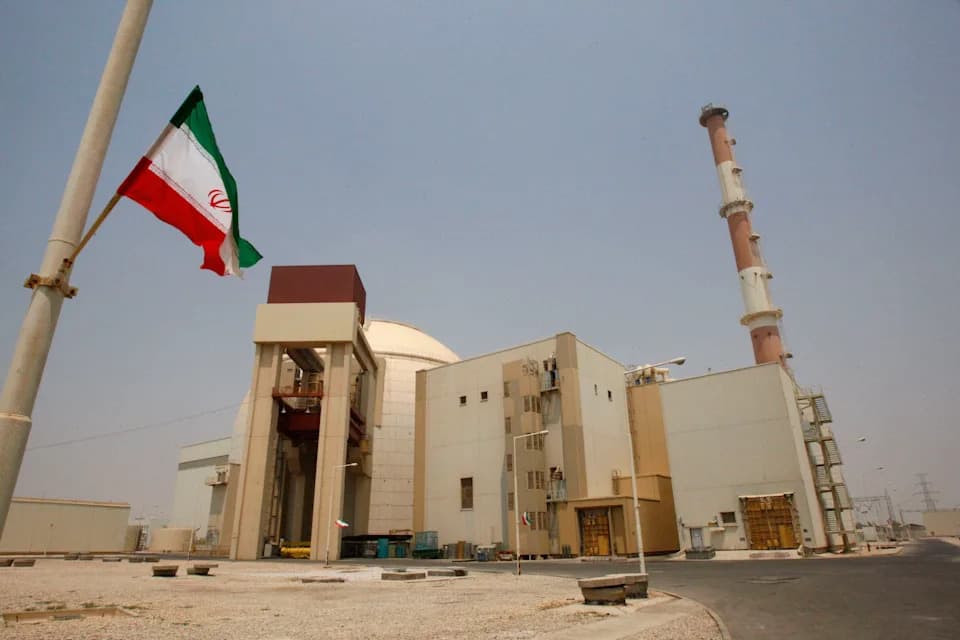
FILE - An Iranian flag flutters in front of the reactor building of the Bushehr nuclear power plant, just outside the southern city of Bushehr, Iran, Aug. 21, 2010. (AP Photo/Vahid Salemi, File)(ASSOCIATED PRESS)
VIENNA — As tensions between the United States and Iran intensify amid Tehran's forceful response to protests, experts warn that domestic instability could put Iran's nuclear materials at heightened risk of theft, diversion or sabotage.
In recent days, U.S. President Donald Trump appeared to step back from ordering a military strike on Iran, while publicly urging an end to Supreme Leader Ayatollah Ali Khamenei's nearly 40-year rule. The exchange followed Khamenei branding Trump a 'criminal' for supporting protesters and assigning blame to demonstrators for causing thousands of deaths. At the same time, a U.S. aircraft carrier transited past Singapore into the Strait of Malacca — a route that could ultimately bring it toward the Middle East.
IAEA Unable To Verify Key Stockpile
The International Atomic Energy Agency (IAEA) reported in November that it has not been able to verify the status or location of Iran's highly enriched uranium (HEU) stockpile since a June conflict. According to the agency, Iran holds 440.9 kilograms (972 pounds) of uranium enriched up to 60 percent — a significant technical step closer to weapons-grade material.
A diplomat familiar with the IAEA's work confirmed that Tehran has not provided updated information on the whereabouts or condition of that stockpile. The IAEA described this gap as a loss of 'continuity of knowledge' regarding declared inventories at sites affected by the conflict.
Experts Outline The Risks
David Albright, a former nuclear inspector and founder of the Institute for Science and International Security, said that in a scenario of domestic chaos the government could 'lose the ability to protect its nuclear assets.' He warned that Iran's HEU would be the most concerning material, and that some of it could be stolen.
Albright estimated the HEU could be stored in roughly 18 to 20 transport cylinders, each weighing about 50 kilograms (110 pounds) when full. 'Two people can easily carry it,' he said of each container.
Kelsey Davenport, director for nonproliferation policy at the Arms Control Association, said the stockpile could be diverted to a covert program, appropriated by a faction of the government or military, or sold to non-state actors if Iran's institutions destabilize. She called the risk 'real but difficult to assess' given current unknowns about the materials' status and location.
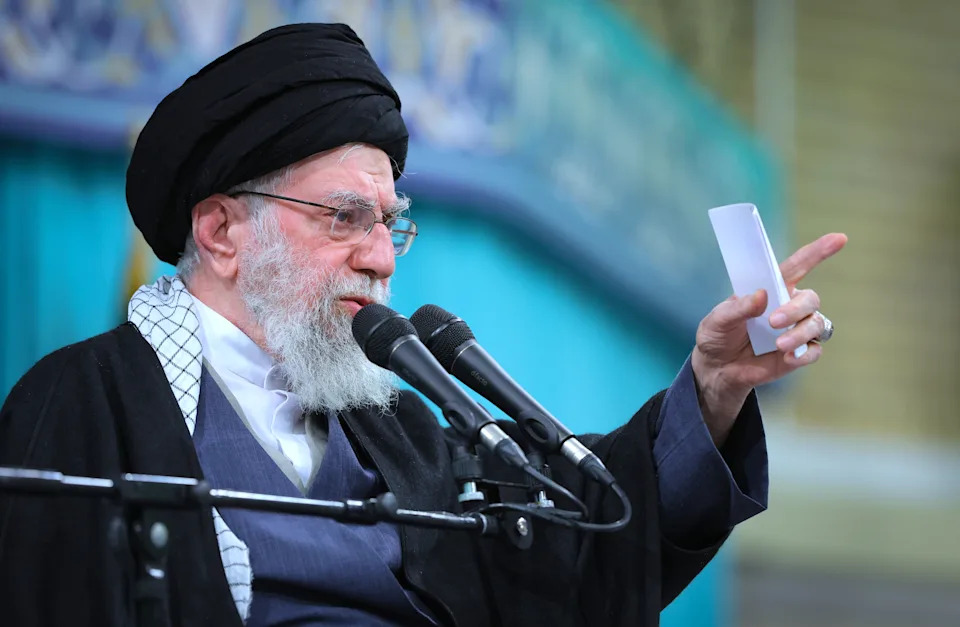
In this photo released by an official website of the office of the Iranian supreme leader, Supreme Leader Ayatollah Ali Khamenei speaks in a meeting, in Tehran, Iran, Saturday, Jan. 17, 2026. (Office of the Iranian Supreme Leader via AP)(ASSOCIATED PRESS)
Path To A Weapon Is Theoretical, But Concerning
Both Albright and Davenport said there is a theoretical pathway to a nuclear device from 60 percent enriched uranium, though Tehran maintains its program is peaceful. Eric Brewer, former U.S. intelligence analyst and deputy vice president at the Nuclear Threat Initiative, noted that a weapon built from 60 percent material would require more fissile material, making any device larger and less suitable for missile delivery — though it could still be detonated in an isolated location.
Brewer added that most information suggests the HEU remains difficult to access, possibly buried or dispersed as a result of strikes, and that Tehran's leadership would face a very high threshold for any decision to weaponize.
Reactor Risks And Regional Impact
Analysts also warn that Iran's sole commercial nuclear reactor at Bushehr, about 750 kilometers (465 miles) south of Tehran and fueled by Russian-supplied uranium, could be vulnerable to sabotage or attack amid internal chaos. David Albright pointed to a 1982 sabotage attempt on South Africa's Koeberg plant as an example of how nonstate or insurgent attacks can damage nuclear infrastructure without producing a nuclear release. However, he warned that a major accident at Bushehr could have cross-border consequences, with prevailing winds carrying fallout to the United Arab Emirates, Saudi Arabia and Oman within 12 to 15 hours.
To date, there has been no clear sign that Iran has lost overall command and control of its security forces, but experts say the risks rise as instability grows.
Correction: The cylinders holding Iran's highly enriched uranium are estimated to weigh about 50 kilograms (110 pounds) each when full, not 25 kilograms as previously reported.
The Associated Press receives support for nuclear security coverage from the Carnegie Corporation of New York and Outrider Foundation. The AP is solely responsible for all content.
Help us improve.