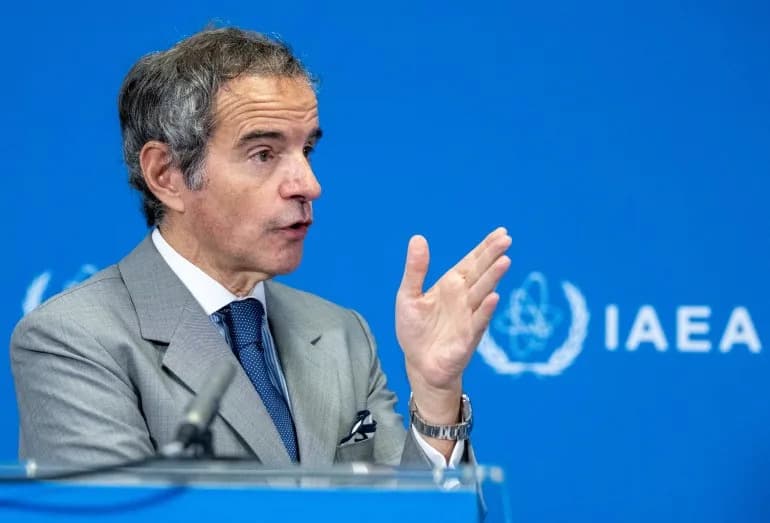
IAEA Director General Rafael Grossi warned in Davos that the impasse with Iran over inspections and accounting for roughly 440.9 kg of uranium enriched to 60% cannot continue indefinitely. The agency has inspected 13 declared sites that were not struck, but Natanz, Fordow and Isfahan remain inaccessible and Iran has not submitted the required special report. Grossi said failure to engage could lead to a declaration of non‑compliance and suggested a spring timeline to resolve the dispute.
IAEA Warns Standoff With Iran Over Nuclear Inspections Cannot Last
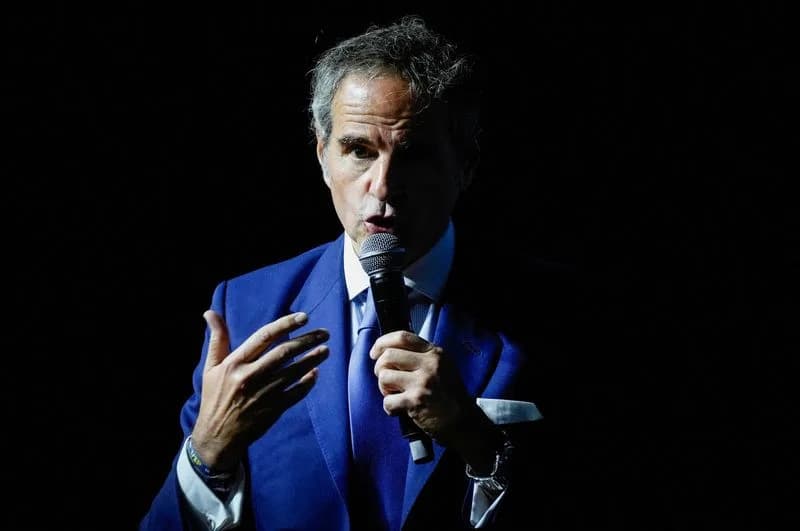
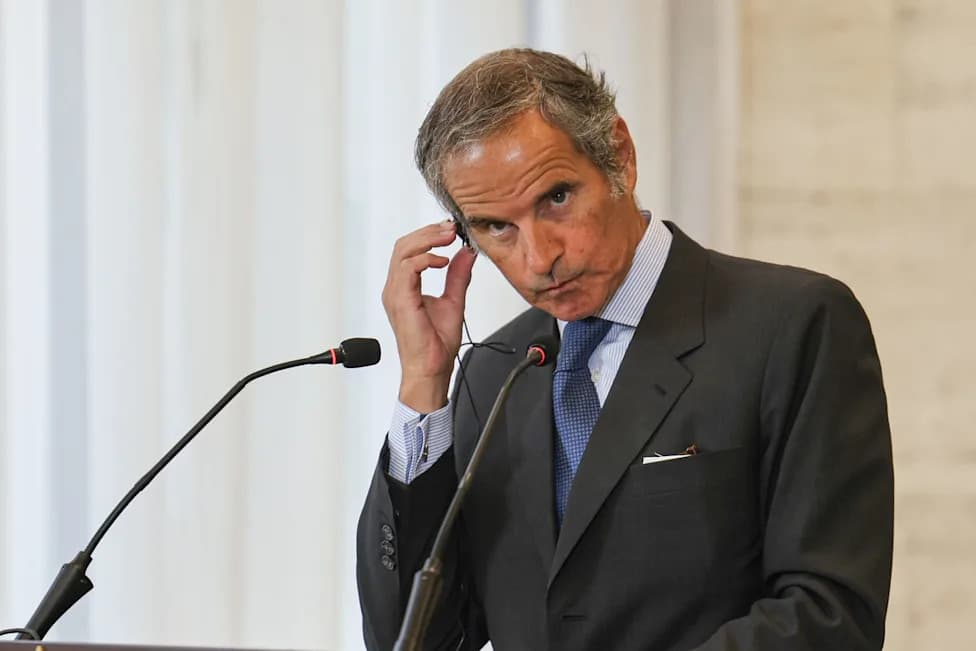
FILE PHOTO: Rafael Grossi, Director General of the International Atomic Energy Agency (IAEA), outlines his priorities as a candidate for United Nations Secretary-General during an event framing his bid around diplomacy, sustainable development and international cooperation, in Buenos Aires, Argentina, December 22, 2025. REUTERS/Mariana Nedelcu/File Photo
DAVOS, Switzerland — The deadlock between Iran and the International Atomic Energy Agency over accounting for highly enriched uranium and gaining access to nuclear sites struck in June by the United States and Israel cannot be sustained indefinitely, IAEA Director General Rafael Grossi said at the World Economic Forum in Davos.
The agency has inspected all 13 declared facilities in Iran that were not hit, but it has not been able to examine the three critical sites struck in June: Natanz, Fordow and Isfahan. Iran has not yet submitted the special report the IAEA requires describing what happened at those sites and the disposition of the material involved.
The material in question includes an estimated 440.9 kg of uranium enriched up to 60% — a level approaching the roughly 90% considered weapons-grade. According to IAEA metrics, that quantity, if further enriched, could be sufficient for about 10 nuclear weapons.
No 'A La Carte' Option
Grossi warned: "This cannot go on forever because at some point, I will have to say, 'Well, I don't have any idea where this material is,'" adding that prolonged uncertainty would undermine any assurance that material had not been diverted or concealed. He said he does not currently have a basis to conclude diversion has occurred but stressed Iran must engage with the agency.
It has been at least seven months since the IAEA last verified Iran's stockpile of highly enriched uranium; the agency's guidance calls for monthly verification. Grossi said he was exercising diplomatic prudence but insisted Iran must meet its responsibilities under the Nuclear Non‑Proliferation Treaty and cannot selectively comply with obligations.
Inspections, Diplomacy And Next Steps
The IAEA reported inspections of most facilities not struck by the attacks and carried out additional visits through late December. Grossi said inspections were impeded during periods of civil unrest in Iran and noted Iranian officials have since indicated the situation is calm and under control.
Grossi acknowledged ongoing diplomatic efforts led by U.S. special envoy Steve Witkoff aimed at a broader understanding between Washington and Tehran and said he could not ignore those talks. He described a spring timeframe to resolve outstanding issues as "reasonable" and said he expected to meet Iran's Deputy Foreign Minister Abbas Araqchi "in a matter of days, weeks."
Implications: If Iran does not provide the required report and allow timely inspections to resume, Grossi warned he may have to declare Iran in non‑compliance with its NPT obligations — a move with significant political and diplomatic consequences.
Iran says it is cooperating with the IAEA. At the Davos forum, Iranian officials could not immediately be reached for further comment.
Help us improve.