Researchers report that the Namib Desert darkling beetle Onymacris plana cools while running, making it the first known land animal to lower body temperature through exercise. Field data from the Gobabeb Namib Research Institute show running-generated airflow can reduce body temperature by up to 13℃. This adaptation lets a dark, heat-absorbing beetle sprint across dunes that can reach 50℃ and avoids lethal overheating.
Namib Desert Beetle Actually Cools Down While Running — First Land Animal Found To Do So
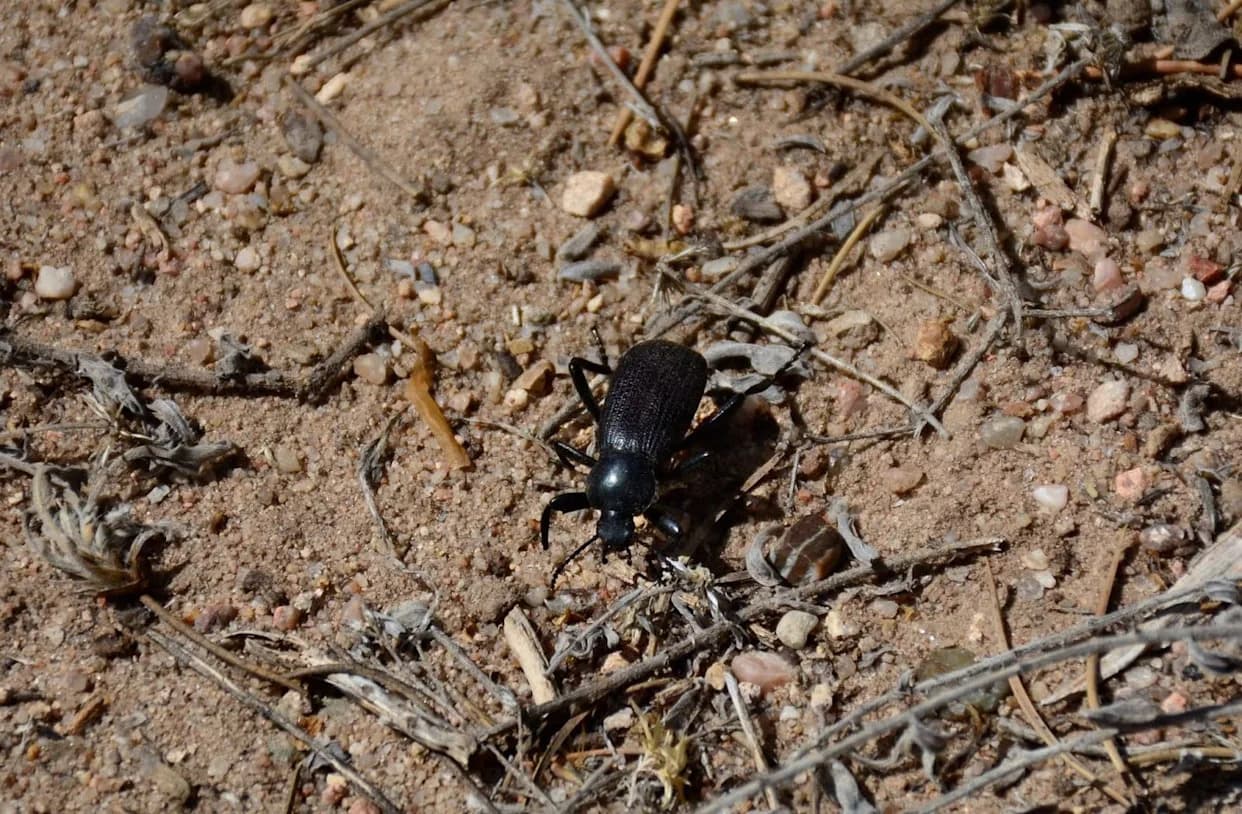
The Namib Desert darkling beetle Onymacris plana has surprised researchers by becoming cooler when it sprints across hot sand — the first known terrestrial animal observed to lower its body temperature through exercise.
Although the beetle's black body absorbs heat, field measurements from the Gobabeb Namib Research Institute in Namibia show that the airflow generated as the insect runs carries away absorbed heat. That wind-driven cooling can reduce the beetle's body temperature by as much as 13℃, helping it survive and remain active on dunes that can reach 50℃.
How Running Becomes Cooling
Most animals generate metabolic heat when they move, which raises body temperature. In contrast, Onymacris plana benefits from forced convection: its rapid movement produces airflow over the body that dissipates the sun-warmed surface heat faster than motion generates internal heat. This unique balance explains how a dark, heat-absorbing insect can still be the fastest recorded desert invertebrate.
'Standing still in the sun in windless conditions would have meant death by overheating,' a researcher wrote in The Conversation, noting that evolution has produced an animal that is cooled by running.
Why It Matters
This finding reveals an unusual thermoregulatory strategy among land animals and highlights how behavior and microclimate interact to enable survival in extreme environments. The discovery also offers insight into the diverse adaptations organisms use to cope with heat — knowledge that could be relevant as climates warm.
Help us improve.