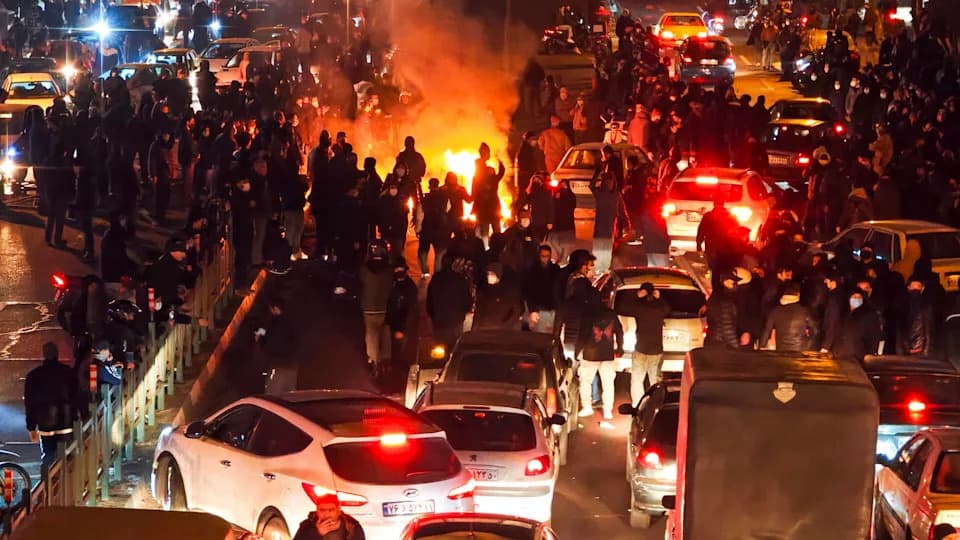
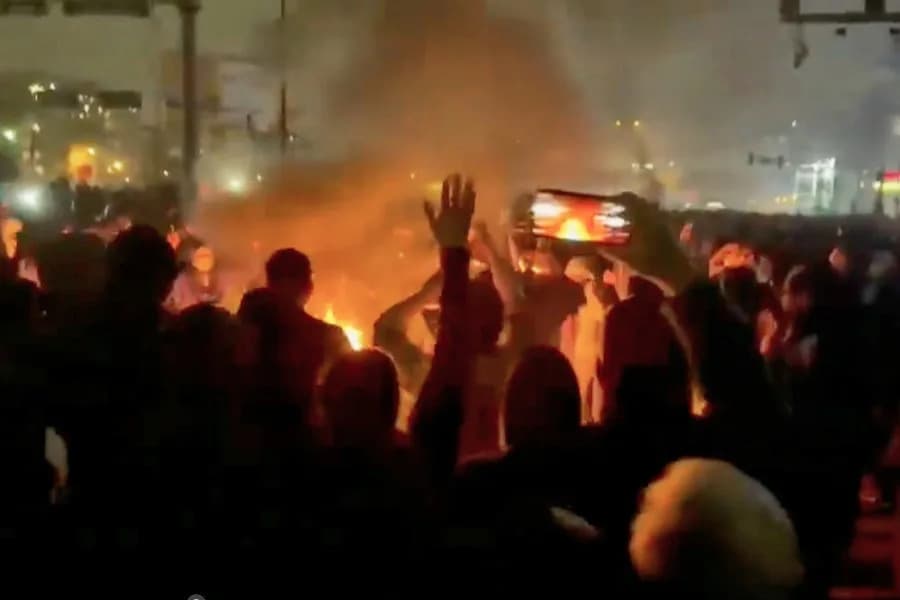
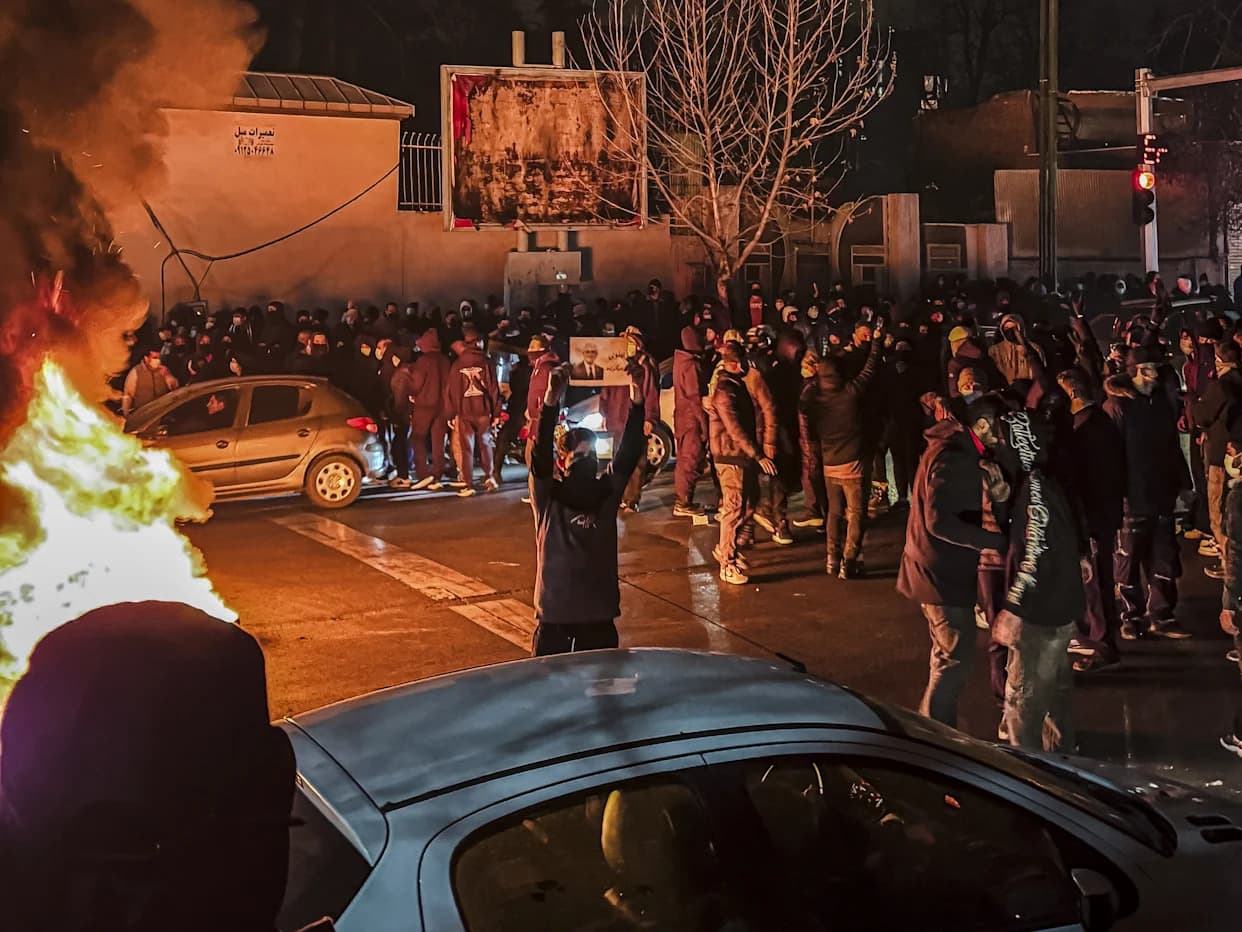
The KDPI, Iran's oldest Kurdish insurgent group, trains recruits at a mountain camp in northeastern Iraq roughly 13 miles (21 km) from the Iranian border. Leaders say nationwide protests and perceived fractures in Tehran have opened opportunities for increased action inside Iran. Units include men and women — gender equality is central to KDPI ideology — and recruits say they joined to defend Kurdish and women's rights despite threats from drone surveillance and cross-border strikes. Analysts warn that claims of imminent regime collapse remain uncertain and that escalation risks further violence.
“The Regime Is Weakening”: KDPI Trains Recruits Near Iran as Kurds See Opportunity
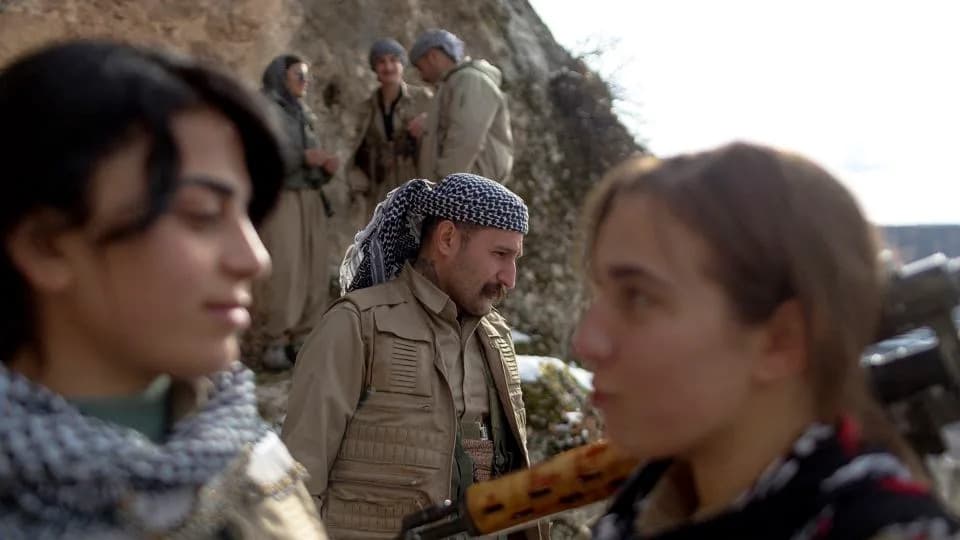
Members of the Kurdistan Democratic Party of Iran (KDPI) participate in a military drill in an outpost near Erbil, Kurdistan region of Iraq on January 15. - Osama Al Maqdoni/Middle East Images/AFP/Getty Images
Piece by piece, a young man wearing a black-and-white keffiyeh methodically disassembles his AK-47, laying the parts in a neat row on the rocky ground. He frowns as he struggles to reassemble the weapon; an instructor hands him another rifle and tells him to try again. Around him, comrades and commanders watch and laugh softly. The recruit — a peshmerga, a Kurdish term that means 'those who face death' — is clearly uncomfortable being the center of attention.
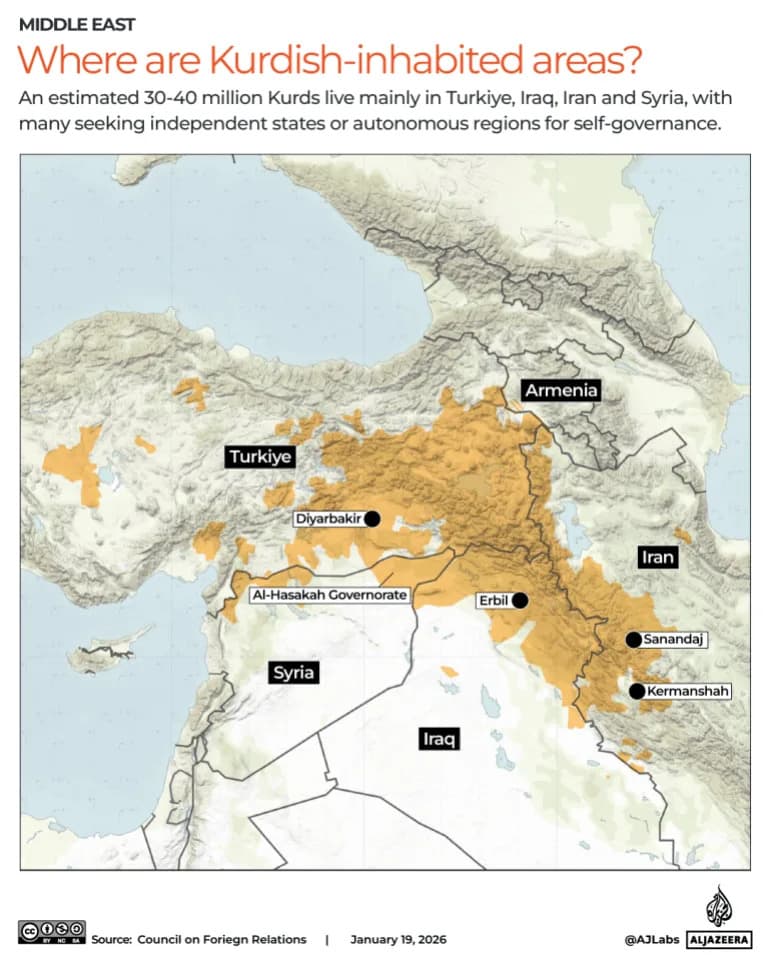
We met him at a mountain camp operated by the Kurdish Democratic Party-Iran (KDPI), more than 13 miles (about 21 kilometers) east of the Iranian border in northeastern Iraq. The KDPI, founded in 1945, is the oldest and one of the largest Iranian Kurdish insurgent groups. It campaigned against the Shah, and after the 1979 revolution continued its long-running struggle against Tehran.
Leaders See a Window of Opportunity
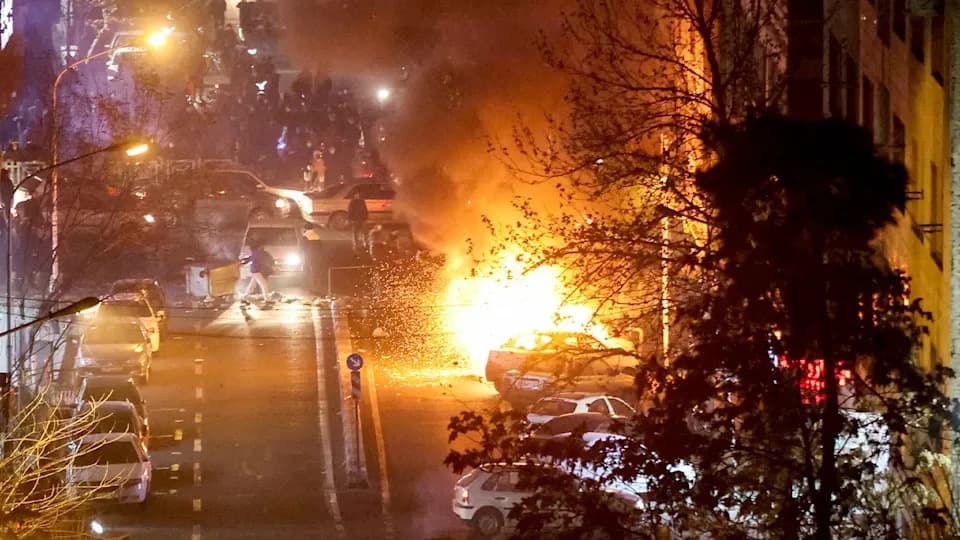
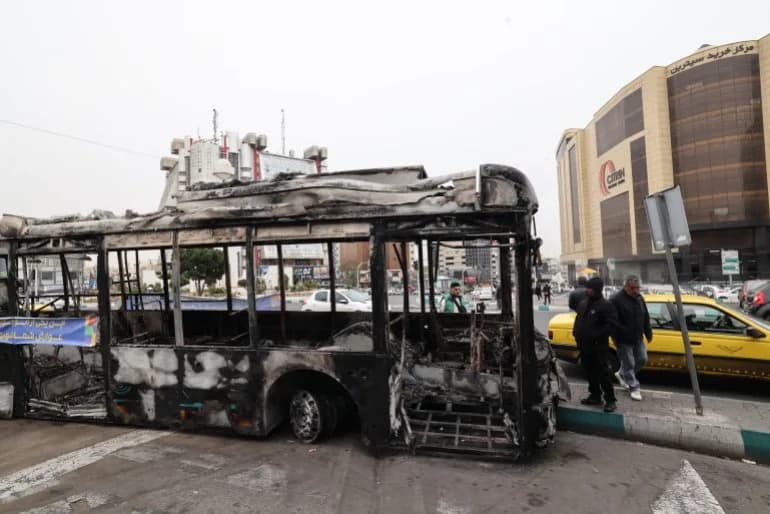
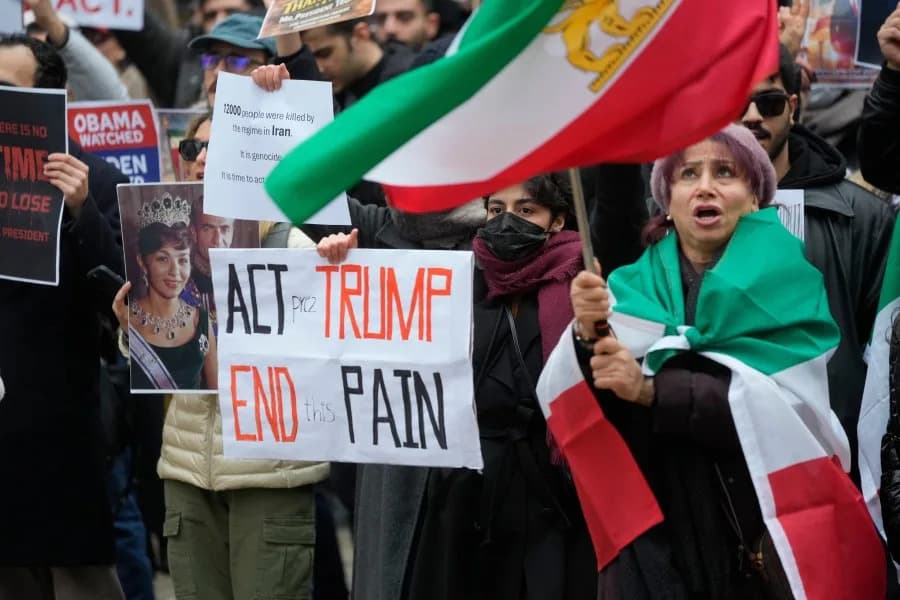
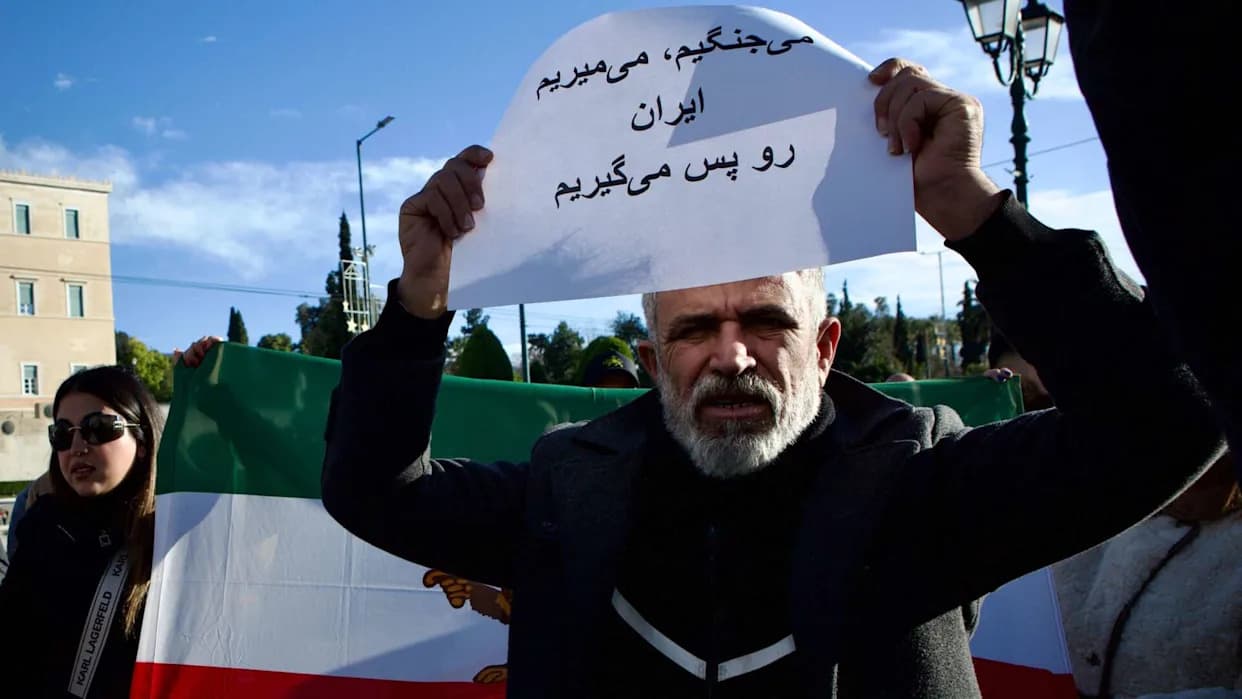
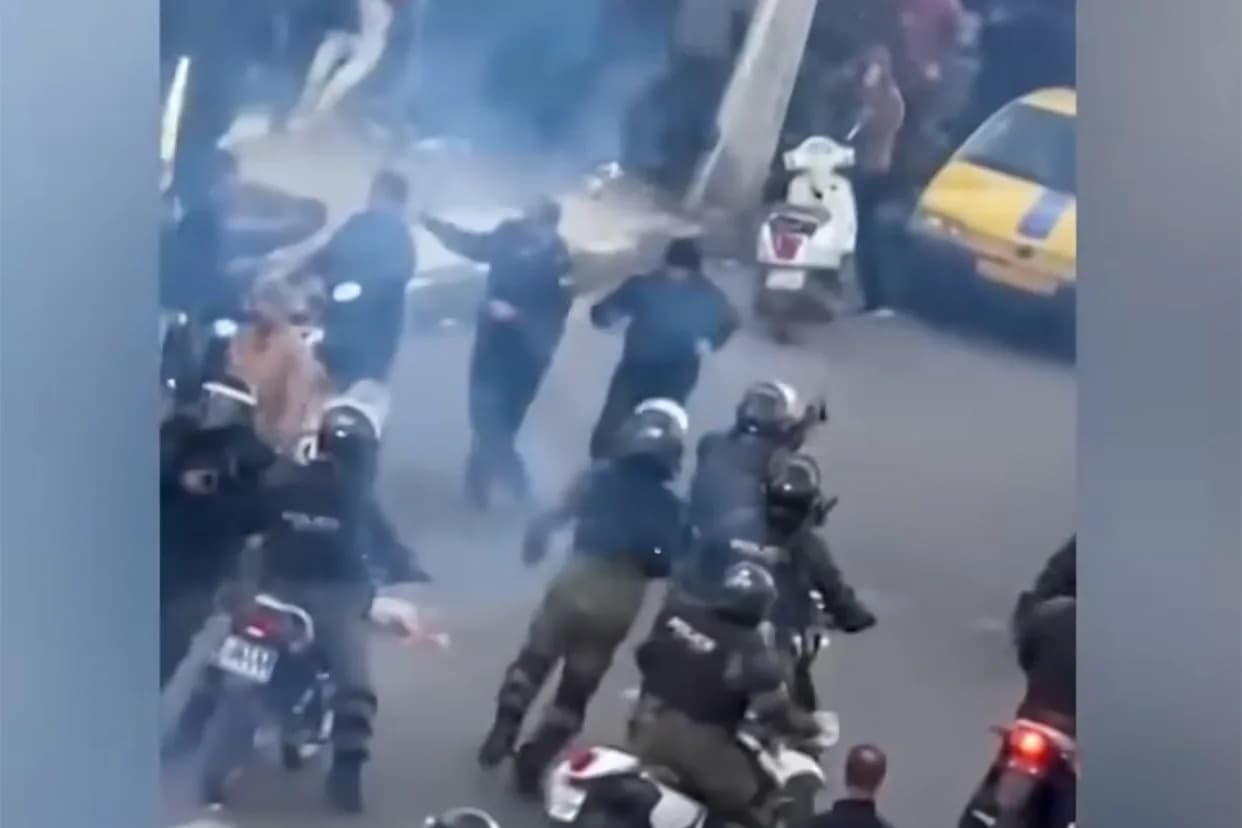
KDPI leaders say a nationwide wave of protests and apparent fractures in Tehran's authority have created new space for opposition groups. 'The regime is weakening daily,' says Mustafa Hijri, the KDPI's leader, who claims his party has extensive networks inside Iran and played a role in supporting recent demonstrations, particularly in western provinces.
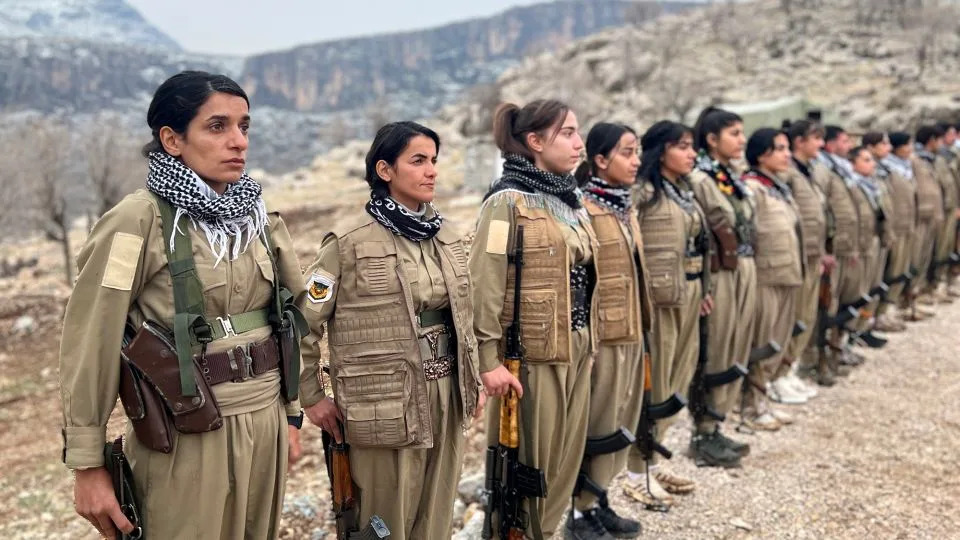
Fresh fighters undergo training at a camp run by the Kurdish Democratic Party-Iran, in Iraq, on January 18. - CNN
Karim Farkhapur, a senior KDPI figure at the camp, gestures toward the recruits and explains their inexperience: 'They are new.' Generations of young Iranian Kurds have crossed these mountains to join groups such as the KDPI, hoping to change their homeland. Kurdish activists estimate Kurds make up about 10% of Iran's population and have long pressed for greater rights, autonomy or independence.
Women Fighters and Ideology
Among the recruits is 19-year-old Farina, who carries a Soviet-era Dragunov sniper rifle fitted with a modern scope. She says she fled Iran after concluding there was no future for her there. 'Even if you study you can never become anything unless you are a regime supporter,' she says. 'We have no rights, especially as women. That's why I became a peshmerga: to defend my rights as a Kurd, and as a woman.'
Her unit includes both men and women — a hallmark of many Kurdish forces across Turkey, Syria, Iraq and Iran — and gender equality is central to their ideology and recruitment messaging.
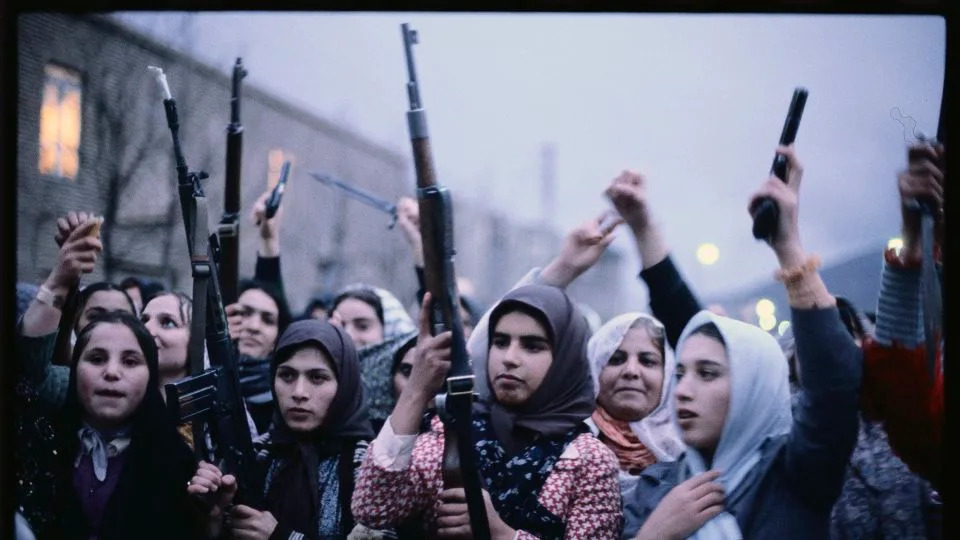
Kurdish rebels mounted a large campaign during the early 1980s against Iran, Iraq, and Turkey in an attempt to gain sovereignty. - Michel Setboun/Corbis/Getty Images
Risks, Surveillance and Cross-Border Strikes
The mountains provide concealment, but the shelter is far from absolute. 'Iran flies drones over us,' Farkhapur says as fighters trudge through slush and mud above the camp. In recent years Tehran has struck Kurdish rebel bases in northern Iraq, and analysts warn a wounded or cornered government could expand such operations.
Despite the risks, recruits say they expect to sacrifice for their cause. 'We put our lives on this path,' Farina says. 'We expect to have to sacrifice.'
What This Could Mean
For the KDPI and other Iranian opposition groups — including ethnic Baluch in the east and Arabs in the southwest — the current unrest is a potential turning point. Leaders portray the unrest as an opening to intensify political and sometimes armed pressure on Tehran. But analysts caution that claims about the regime's imminent collapse are premature, and any escalation risks further bloodshed and cross-border retaliation.
'The regime's weakness provides more space for us and other freedom-loving parties to strengthen their fight,'
Whether protests translate into sustained political change or a broader insurgency will depend on many factors: the durability of domestic unrest inside Iran, the cohesion of opposition groups, regional geopolitics and the extent to which foreign states become involved. For now, in a remote camp beneath snow-capped peaks, the KDPI continues to train, recruit and prepare — convinced opportunity is near, yet conscious of the dangers that come with it.
Help us improve.