The Syrian interim government and the Kurdish-led SDF have reached a ceasefire under which Damascus will assume control of Raqqa, Deir Az Zor and Hasakah while integrating the SDF into state ministries. President Ahmed al-Sharaa also issued a decree recognising Kurdish as a national language, restoring citizenship to many Kurds and declaring Newroz a paid holiday. The article outlines who the Kurds are — an estimated 30–40 million people across Turkey, Syria, Iraq and Iran — and reviews their modern history, major armed movements (YPG/SDF, PKK, PJAK), and recent political developments including the 2017 Iraqi referendum.
Who Are the Kurds? A Clear Guide to Their History, Politics and the Latest Ceasefire in Syria
(Al Jazeera)
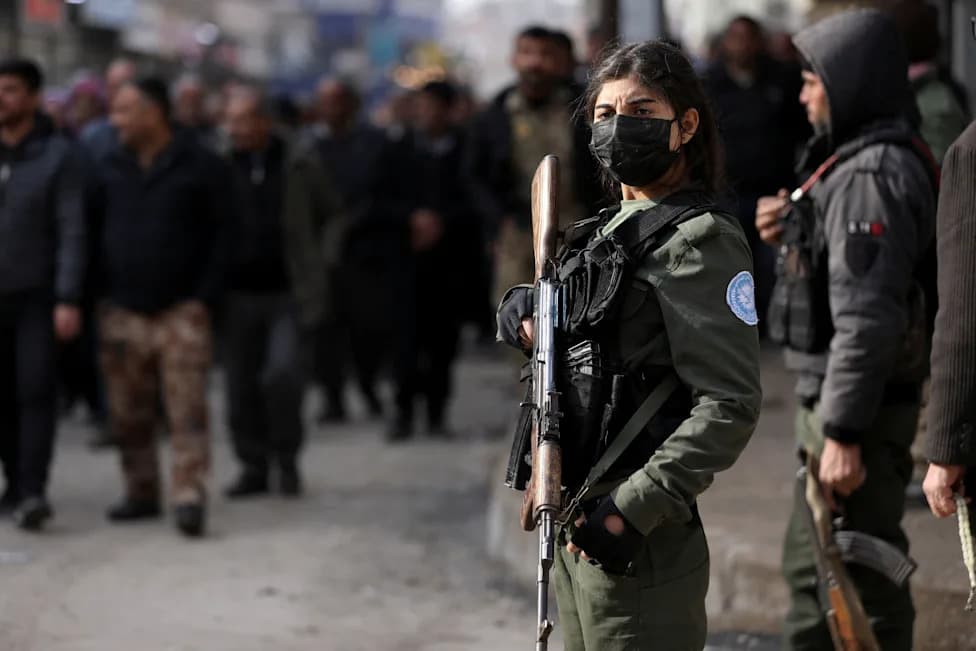
As Syria’s interim government pursues reunification after 14 years of civil war, it announced a ceasefire with the Kurdish-led Syrian Democratic Forces (SDF). The deal calls for Damascus to assume control of Raqqa, Deir Az Zor and Hasakah while the SDF is to be integrated into state security ministries under a wider 14-point agreement. Despite the pact, clashes were reported around an ISIL detention facility in al-Shadadi.
Ceasefire, Integration and Key Developments
President Ahmed al-Sharaa — who led opposition forces that ousted Bashar al-Assad in December 2024 and now serves as interim president — said the Syrian army would take control of the three provinces from the SDF. A Defence Ministry official reported that government-affiliated forces reached the outskirts of Hasakah under the agreement.
Al-Sharaa also issued a decree recognising Kurdish as a national language, restoring citizenship to Kurds stripped of nationality in the past and declaring Newroz, the Kurdish New Year, a paid national holiday. The decree bans ethnic or linguistic discrimination and calls for inclusive state messaging, though Kurdish administrators described it as only a "first step" toward lasting constitutional protections.
Who Are the Kurds?
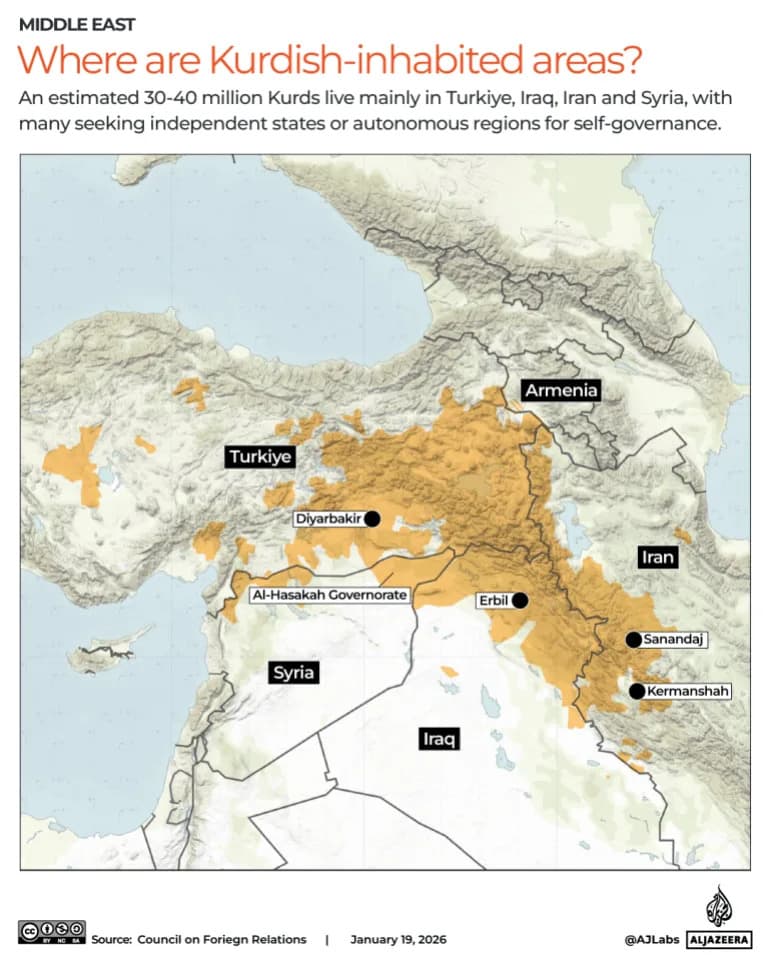
The Kurds are an ethnic people indigenous to the Mesopotamian plains and neighbouring highlands that today span southeastern Turkey, northeastern Syria, northern Iraq, northwestern Iran and southwestern Armenia. Kurdish communities number an estimated 30–40 million worldwide and form the largest stateless ethnic group. There is also a significant Kurdish diaspora in Europe, especially Germany.
Kurdish is a Northwestern Iranian language with several regional dialects. Most Kurds are Sunni Muslims, but Kurdish communities also include Shia Muslims, Alevis, Yazidis, Christians and practitioners of other faiths.
Historical Background
From the 1500s, large parts of Kurdish-inhabited territory came under Ottoman rule. After World War I the 1920 Treaty of Sèvres proposed an autonomous Kurdistan, but that provision was abandoned in the 1923 Treaty of Lausanne, and plans for a Kurdish state were never implemented. Since then, Kurds in the region have repeatedly sought greater autonomy or independence, with varying outcomes.
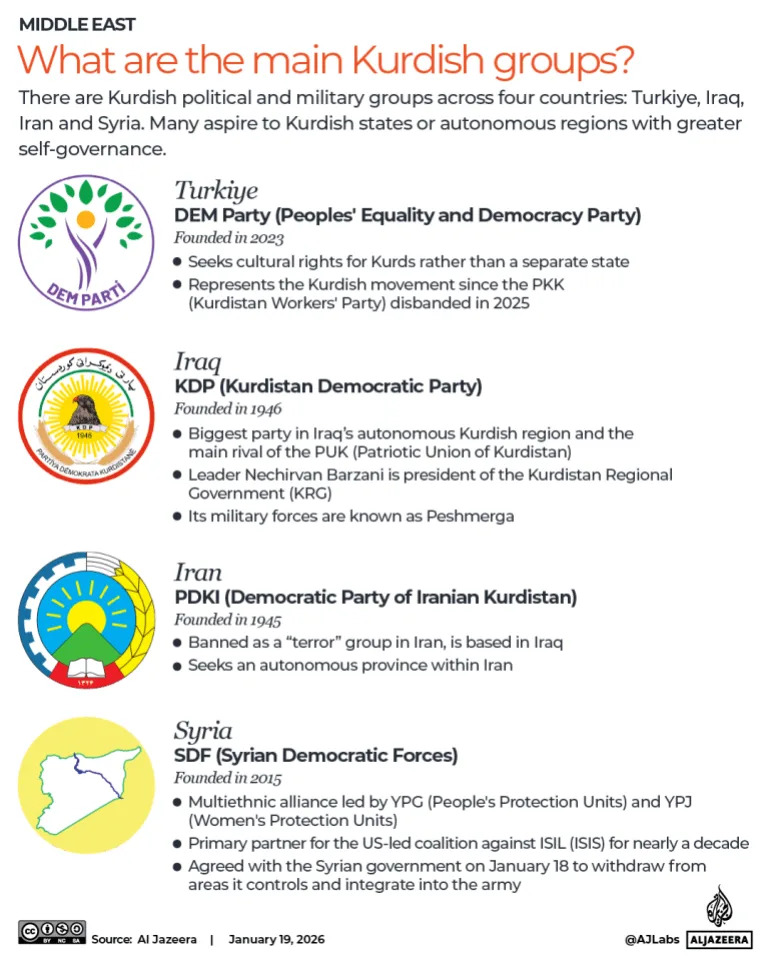
(Al Jazeera)
Kurdish Politics and Conflicts by Country
Syria
Kurds constitute roughly 10% of Syria’s population. A 1962 Hasakah census revoked Syrian citizenship from about 120,000 Kurds; estimates in 2011 suggested ~300,000 Kurds in Syria lacked citizenship. During the 2011 uprising, Kurdish groups initially remained neutral, but by 2012 they had taken control of many areas after government forces withdrew.
From 2013, ISIL attacked Kurdish-held areas. The People’s Protection Units (YPG), the armed wing of the Democratic Union Party (PYD), resisted these attacks and later helped form the multi-ethnic SDF in 2015 to combat ISIL across northern and eastern Syria. Backed by US-led coalition air power, the SDF captured Raqqa in 2017 and Baghouz in 2019, ending ISIL’s territorial control in Syria.
Turkey
Kurds are about 19% of Turkey’s population and have long faced restrictions on cultural expression and political rights. The Kurdistan Workers’ Party (PKK), founded by Abdullah Öcalan in 1978, launched an armed insurgency in 1984 seeking autonomy and, initially, independence. The insurgency has cost tens of thousands of lives and led to repeated crackdowns. The PKK is designated a terrorist organisation by Turkey, the EU and the US. Turkey also views some Kurdish groups in Syria as linked to the PKK; the SDF’s leadership has ideological links to the PKK, though international partners distinguished the SDF as an effective partner against ISIL.
Iran
Kurdish communities in Iran, roughly 8–10% of the population, have often clashed with Tehran over cultural and political rights. Armed groups such as the Kurdistan Free Life Party (PJAK) have carried out cross-border guerrilla operations from bases along the Iran–Iraq frontier since the early 2000s.
Iraq
Iraqi Kurds are roughly 15–20% of the population. The Kurdistan Regional Government (KRG) emerged in 1992 after a UN-protected safe zone was established following the 1991 uprisings against Saddam Hussein. The KRG evolved into a semi-autonomous regional authority; in 2005 Iraq’s constitution recognised the region’s status. In 2017 a regional independence referendum won over 90% support among voters, but Baghdad deemed the vote illegal and Iraqi forces retook disputed areas, including Kirkuk.
What Comes Next
The Syrian decree recognising Kurdish language rights and restoring citizenship marks a significant symbolic shift, but Kurdish representatives have urged constitutional guarantees and broader political reforms. The SDF’s integration into Syrian state institutions could reshape local security dynamics, yet the situation remains fragile: sporadic clashes and the legacy of mistrust mean implementing the agreement will be complex.
Bottom line: The ceasefire and legal recognitions in Syria are important steps — but long-term stability for Kurds in Syria and the wider region depends on durable political arrangements, accountability and inclusion.
Help us improve.